Difference between revisions of "User:Zhao Qi"
| (17 intermediate revisions by the same user not shown) | |||
| Line 13: | Line 13: | ||
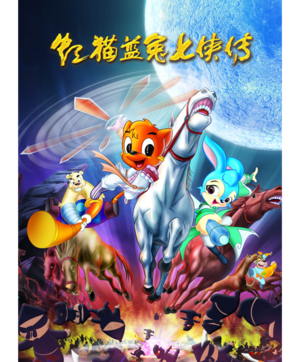
Howie & Landau presents a legendary struggle between good and evil set during the years 347 to 397 AD. Against the picturesque backdrop of Zhangjiajie, the narrative unfolds as Black-hearted Tiger, the leader of the Demonic Cult, attempts to capture the Qilin (a mythical beast) to enhance his martial arts abilities and achieve domination over the martial world. In response, seven chivalrous heroes unite their strength and execute the legendary Seven Sword Fusion technique to defeat him, though they are severely wounded in the process. Fifty years later, Black-hearted Tiger resurfaces with renewed force. Before his death in battle, Howie’s father entrusts him with the mission of seeking out the successors of the remaining six swords. Thus begins the perilous journey of young Howie. After enduring numerous trials, the Seven Swords reunite once more to vanquish Black-hearted Tiger and ultimately eradicate the Demonic Cult, restoring peace and harmony to the “Forest Kingdom.” | Howie & Landau presents a legendary struggle between good and evil set during the years 347 to 397 AD. Against the picturesque backdrop of Zhangjiajie, the narrative unfolds as Black-hearted Tiger, the leader of the Demonic Cult, attempts to capture the Qilin (a mythical beast) to enhance his martial arts abilities and achieve domination over the martial world. In response, seven chivalrous heroes unite their strength and execute the legendary Seven Sword Fusion technique to defeat him, though they are severely wounded in the process. Fifty years later, Black-hearted Tiger resurfaces with renewed force. Before his death in battle, Howie’s father entrusts him with the mission of seeking out the successors of the remaining six swords. Thus begins the perilous journey of young Howie. After enduring numerous trials, the Seven Swords reunite once more to vanquish Black-hearted Tiger and ultimately eradicate the Demonic Cult, restoring peace and harmony to the “Forest Kingdom.” | ||
| + | |||
| + | [[File:HowieLandau_1.png|300px|center|link=]] | ||
As the first chivalrous martial arts animation of its kind in China since the beginning of the 21st century (Ma Rui, 2022, p.102), Howie & Landau premiered on September 5, 2006, and was simultaneously broadcast on more than 2,000 television stations across the country. It swiftly rose to become the national leader in animation ratings and garnered immense popularity among primary and secondary school students. Renowned contemporary writer Yu Hua served as literary consultant, while celebrated visual artist Han Meilin—art advisor for the 2008 Olympic mascots—provided artistic direction. Most of the outdoor scenes were inspired by real landscapes in the Wuling Zhangjiajie Scenic Area (Shen Lin, 2020, p.100). | As the first chivalrous martial arts animation of its kind in China since the beginning of the 21st century (Ma Rui, 2022, p.102), Howie & Landau premiered on September 5, 2006, and was simultaneously broadcast on more than 2,000 television stations across the country. It swiftly rose to become the national leader in animation ratings and garnered immense popularity among primary and secondary school students. Renowned contemporary writer Yu Hua served as literary consultant, while celebrated visual artist Han Meilin—art advisor for the 2008 Olympic mascots—provided artistic direction. Most of the outdoor scenes were inspired by real landscapes in the Wuling Zhangjiajie Scenic Area (Shen Lin, 2020, p.100). | ||
| Line 18: | Line 20: | ||
== The Spirit of Wuxia in Howie & Landau == | == The Spirit of Wuxia in Howie & Landau == | ||
| − | One of the most compelling aspects of domestic wuxia film and television productions lies in their embodiment of the spirit of chivalry and the vivid portrayal of chivalrous heroes. The character development techniques in wuxia-themed animation are deeply influenced by the traditions of Chinese wuxia literature, particularly the narrative and character construction found in Jin Yong's novels. In Howie & Landau, the seven protagonists are portrayed as distinct and well-rounded individuals through three primary strategies: first, by using extraordinary encounters as a driving force for character growth and plot progression; second, by integrating historical and cultural context with detailed depictions; and third, by intertwining martial arts, chivalrous ideals, and romantic elements to enrich the characters’ narrative arcs (He Qian, 2011, p.22). | + | One of the most compelling aspects of domestic wuxia film and television productions lies in their embodiment of the spirit of chivalry and the vivid portrayal of chivalrous heroes. |
| + | |||
| + | [[File:HowieLandau_2.jpg|300px|center|link=]] | ||
| + | |||
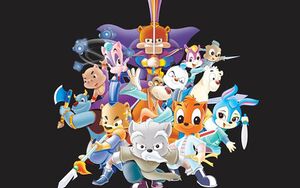
| + | The character development techniques in wuxia-themed animation are deeply influenced by the traditions of Chinese wuxia literature, particularly the narrative and character construction found in Jin Yong's novels. In Howie & Landau, the seven protagonists are portrayed as distinct and well-rounded individuals through three primary strategies: first, by using extraordinary encounters as a driving force for character growth and plot progression; second, by integrating historical and cultural context with detailed depictions; and third, by intertwining martial arts, chivalrous ideals, and romantic elements to enrich the characters’ narrative arcs (He Qian, 2011, p.22). | ||
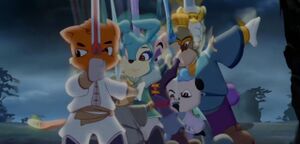
Howie & Landau retains the foundational framework of classical wuxia storytelling, with themes such as “eliminating evil and protecting the good” and “defending the homeland and protecting the people” as its central tenets. The series emphasizes collectivism and self-sacrifice while gradually moving away from the traditional focus on individual heroism that once characterized wuxia narratives. In accordance with Chinese cultural values that promote “harmony in diversity,” “peace is precious,” “gentle and sincere,” “universal love,” and “non-aggression,” the concept of "martial" in Chinese wuxia should be understood not as a tool for domination, but as a means of protection. The protagonists in Howie & Landau consistently adhere to the principle of safeguarding the Qilin and all sentient beings (Feng Qiuyue, 2022, pp.31–32). Although conflicts occasionally arise among the seven chivalrous heroes, they ultimately reunite in pursuit of a shared ideal, exemplifying a spirit of teamwork that transcends individualism. | Howie & Landau retains the foundational framework of classical wuxia storytelling, with themes such as “eliminating evil and protecting the good” and “defending the homeland and protecting the people” as its central tenets. The series emphasizes collectivism and self-sacrifice while gradually moving away from the traditional focus on individual heroism that once characterized wuxia narratives. In accordance with Chinese cultural values that promote “harmony in diversity,” “peace is precious,” “gentle and sincere,” “universal love,” and “non-aggression,” the concept of "martial" in Chinese wuxia should be understood not as a tool for domination, but as a means of protection. The protagonists in Howie & Landau consistently adhere to the principle of safeguarding the Qilin and all sentient beings (Feng Qiuyue, 2022, pp.31–32). Although conflicts occasionally arise among the seven chivalrous heroes, they ultimately reunite in pursuit of a shared ideal, exemplifying a spirit of teamwork that transcends individualism. | ||
| + | |||
| + | [[File:HowieLandau_3.jpg|300px|center|link=]] | ||
== Howie & Landau and Huxiang Culture == | == Howie & Landau and Huxiang Culture == | ||
The spiritual core of Howie & Landau is deeply rooted in the cultural tradition of Huxiang. Huxiang culture emphasizes the values of “enduring hardship, tolerating pressure, and asserting with strength,” as well as loyalty, martial valor, and an indomitable spirit. In the animation, Howie’s father, the White Cat, sacrifices himself to protect the younger generation, while the young Howie inherits his father’s will and fights for justice—embodying the Huxiang ethos of taking responsibility for the world. The seven chivalrous heroes, unafraid of formidable foes and undeterred by repeated setbacks, support one another through adversity and fulfill their shared mission, reflecting the fearless and pioneering spirit of “preferring death to dishonor and daring to be first” (Xu Jing, 2012, p.41). | The spiritual core of Howie & Landau is deeply rooted in the cultural tradition of Huxiang. Huxiang culture emphasizes the values of “enduring hardship, tolerating pressure, and asserting with strength,” as well as loyalty, martial valor, and an indomitable spirit. In the animation, Howie’s father, the White Cat, sacrifices himself to protect the younger generation, while the young Howie inherits his father’s will and fights for justice—embodying the Huxiang ethos of taking responsibility for the world. The seven chivalrous heroes, unafraid of formidable foes and undeterred by repeated setbacks, support one another through adversity and fulfill their shared mission, reflecting the fearless and pioneering spirit of “preferring death to dishonor and daring to be first” (Xu Jing, 2012, p.41). | ||
| + | |||
| + | [[File:HowieLandau_4.png|300px|center|link=]] | ||
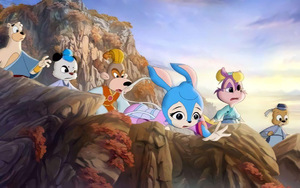
The visual design and scene construction of Howie & Landau extensively incorporate geographic and cultural elements native to Hunan. Iconic natural landscapes such as Tianmen Mountain, Baofeng Lake, and Yubi Peak in Zhangjiajie are artistically reimagined and animated, constructing a tangible “Forest Jianghu” imbued with regional characteristics. For instance, Howie’s home—the Jade Qilin Palace—is situated at the foot of a mountain deep within the forest, while Landau’s residence—the Serene Mountain Villa—is nestled in a tranquil woodland setting. These locations serve as artistic translations of Western Hunan’s natural beauty. Through this blend of realism and fantasy, the animation delivers both aesthetic enjoyment and subtle visual dissemination of local cultural identity (Zou Yi & He Wenlong, 2011, p.122). | The visual design and scene construction of Howie & Landau extensively incorporate geographic and cultural elements native to Hunan. Iconic natural landscapes such as Tianmen Mountain, Baofeng Lake, and Yubi Peak in Zhangjiajie are artistically reimagined and animated, constructing a tangible “Forest Jianghu” imbued with regional characteristics. For instance, Howie’s home—the Jade Qilin Palace—is situated at the foot of a mountain deep within the forest, while Landau’s residence—the Serene Mountain Villa—is nestled in a tranquil woodland setting. These locations serve as artistic translations of Western Hunan’s natural beauty. Through this blend of realism and fantasy, the animation delivers both aesthetic enjoyment and subtle visual dissemination of local cultural identity (Zou Yi & He Wenlong, 2011, p.122). | ||
| + | |||
| + | [[File:HowieLandau_5.jpg|300px|center|link=]] | ||
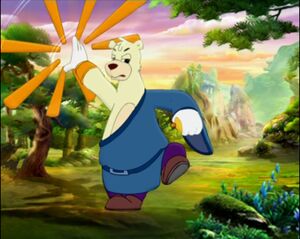
In addition, the character costume designs incorporate elements from Miao and Dong ethnic traditions. Patterns, colors, and accessories in the characters’ attire reflect a conscious respect for, and creative reinterpretation of, ethnic cultural symbols. | In addition, the character costume designs incorporate elements from Miao and Dong ethnic traditions. Patterns, colors, and accessories in the characters’ attire reflect a conscious respect for, and creative reinterpretation of, ethnic cultural symbols. | ||
| Line 35: | Line 47: | ||
Advocates of the suspension argued that, while the series was innovative in merging martial arts themes with anthropomorphic characters, it still contained scenes of violent conflict that were deemed unsuitable for young children. Specific moments—such as Landau’s wrist-slitting scene and the explosion of Black Tiger Jr.—were cited as excessively intense. Conversely, supporters of the series defended its high production quality, strong sense of justice, and promotion of the martial spirit and teamwork, asserting that the series represented a significant breakthrough in original Chinese animation (Zhang Ting, 2007, p.76). | Advocates of the suspension argued that, while the series was innovative in merging martial arts themes with anthropomorphic characters, it still contained scenes of violent conflict that were deemed unsuitable for young children. Specific moments—such as Landau’s wrist-slitting scene and the explosion of Black Tiger Jr.—were cited as excessively intense. Conversely, supporters of the series defended its high production quality, strong sense of justice, and promotion of the martial spirit and teamwork, asserting that the series represented a significant breakthrough in original Chinese animation (Zhang Ting, 2007, p.76). | ||
| + | |||
| + | [[File:HowieLandau_6.png|300px|center|link=]] | ||
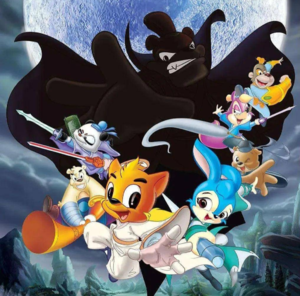
Following this polarized public response, the series resumed broadcast on March 28, 2007. The incident not only revealed tensions between domestic animation regulatory mechanisms and parental perceptions at the time, but also marked a turning point in the development of Chinese animation. It exposed longstanding challenges surrounding content rating systems, creative expression, and societal acceptance. Some scholars have argued that the educational potential of cultural representation in martial arts animation offers new possibilities for traditional culture instruction. Future development should further integrate technological innovation and pedagogical needs to promote the modernization and global dissemination of wuxia culture (Zhu X & Saelee S, 2025, p.450). | Following this polarized public response, the series resumed broadcast on March 28, 2007. The incident not only revealed tensions between domestic animation regulatory mechanisms and parental perceptions at the time, but also marked a turning point in the development of Chinese animation. It exposed longstanding challenges surrounding content rating systems, creative expression, and societal acceptance. Some scholars have argued that the educational potential of cultural representation in martial arts animation offers new possibilities for traditional culture instruction. Future development should further integrate technological innovation and pedagogical needs to promote the modernization and global dissemination of wuxia culture (Zhu X & Saelee S, 2025, p.450). | ||
| Line 126: | Line 140: | ||
《虹猫蓝兔七侠传》(下文简称《虹七》)是湖南宏梦卡通传播有限公司推出的系列长篇武侠动画,共108集,每集15分钟左右,主要讲述了虹猫蓝兔等七位侠士与魔教教主黑心虎斗争的故事。(邹毅&贺文龙,2011,121) | 《虹猫蓝兔七侠传》(下文简称《虹七》)是湖南宏梦卡通传播有限公司推出的系列长篇武侠动画,共108集,每集15分钟左右,主要讲述了虹猫蓝兔等七位侠士与魔教教主黑心虎斗争的故事。(邹毅&贺文龙,2011,121) | ||
| + | |||
《虹七》作为面向青少年的作品,不仅继承了中国古典武侠叙事结构中的忠义精神、集体主义、牺牲精神等核心内涵,同时也深度融合了湖湘文化中“敢为人先、坚韧不拔”的精神品格。动画以张家界自然景观为原型构建出极具地域特色的“森林王国”,在美术风格、人物设定和剧情表达上彰显了鲜明的中国传统文化色彩。 | 《虹七》作为面向青少年的作品,不仅继承了中国古典武侠叙事结构中的忠义精神、集体主义、牺牲精神等核心内涵,同时也深度融合了湖湘文化中“敢为人先、坚韧不拔”的精神品格。动画以张家界自然景观为原型构建出极具地域特色的“森林王国”,在美术风格、人物设定和剧情表达上彰显了鲜明的中国传统文化色彩。 | ||
| Line 131: | Line 146: | ||
《虹七》讲述了发生在公元347年至397年间的正邪之战。故事以风景如画的张家界为背景,魔教首领黑心虎为增强武功妄图捕捉灵兽麒麟、称霸武林。七位英雄合力施展七剑合璧击败黑心虎,却也身负重伤。五十年后,黑心虎卷土重来,虹猫之父战死前嘱托虹猫肩负重任。少年虹猫踏上寻找六剑传人的征途,在经历艰险与考验后,七剑再度集结,最终击败黑心虎,彻底铲除魔教,恢复了森林王国的和平与安宁。 | 《虹七》讲述了发生在公元347年至397年间的正邪之战。故事以风景如画的张家界为背景,魔教首领黑心虎为增强武功妄图捕捉灵兽麒麟、称霸武林。七位英雄合力施展七剑合璧击败黑心虎,却也身负重伤。五十年后,黑心虎卷土重来,虹猫之父战死前嘱托虹猫肩负重任。少年虹猫踏上寻找六剑传人的征途,在经历艰险与考验后,七剑再度集结,最终击败黑心虎,彻底铲除魔教,恢复了森林王国的和平与安宁。 | ||
| + | |||
《虹七》作为进入二十一世纪以来中国第一部江湖奇侠类动画作品(马瑞,2022,102),2006年9月5日首映后在全国两千多家各级电视台同步播放,迅速斩获了“全国动漫收视冠军”的成就,赢得了众多中小学生的喜爱。当代著名作家余华作为文学顾问,著名造型艺术家、2008年奥林匹克运动会吉祥物艺术顾问韩美林担任动画艺术顾问,片中的故事外景大部分是武陵张家界风景区的实景。(申琳,2020,100) | 《虹七》作为进入二十一世纪以来中国第一部江湖奇侠类动画作品(马瑞,2022,102),2006年9月5日首映后在全国两千多家各级电视台同步播放,迅速斩获了“全国动漫收视冠军”的成就,赢得了众多中小学生的喜爱。当代著名作家余华作为文学顾问,著名造型艺术家、2008年奥林匹克运动会吉祥物艺术顾问韩美林担任动画艺术顾问,片中的故事外景大部分是武陵张家界风景区的实景。(申琳,2020,100) | ||
| Line 136: | Line 152: | ||
国产武侠类影视作品最吸引和打动观众的,当属其中的侠义价值观及侠士形象。 | 国产武侠类影视作品最吸引和打动观众的,当属其中的侠义价值观及侠士形象。 | ||
| + | |||
武侠动画人物塑造的技巧深受中国传统武侠小说的影响,尤其是金庸武侠小说中的人物塑造。《虹七》按照以下三大技巧,塑造出主角团七位性格迥异的形象:一,将出奇的遭遇作为人物塑造与剧情发展的促进因素;二,结合丰富的历史文化背景知识与详尽的细节进行人物塑造;三,武术、侠义精神与爱情完美结合促进人物塑造。(何倩,2011,22) | 武侠动画人物塑造的技巧深受中国传统武侠小说的影响,尤其是金庸武侠小说中的人物塑造。《虹七》按照以下三大技巧,塑造出主角团七位性格迥异的形象:一,将出奇的遭遇作为人物塑造与剧情发展的促进因素;二,结合丰富的历史文化背景知识与详尽的细节进行人物塑造;三,武术、侠义精神与爱情完美结合促进人物塑造。(何倩,2011,22) | ||
| + | |||
《虹七》延续了传统武侠故事的基本框架:以“除暴安良、保家卫国”为核心主题,突出集体主义和牺牲精神。新世纪以来,中国武侠动画逐渐摒弃武侠精神中的个人英雄主义。中国人崇尚“和而不同”、“以和为贵”、“温柔敦厚”、“兼爱”、“非攻”,在中国武侠精神中的“武”表示的是使用武力并不是为了征服什么、打败什么,而是为了守护什么。《虹七》的主人公们也一直秉承着“守护”的原则,守护麒麟、守护天下众生。(冯秋月,2022,31-32)七侠之间虽偶有分歧,但始终为了共同的理想“再聚合璧”,展现出超越个人英雄主义的团队协作精神。 | 《虹七》延续了传统武侠故事的基本框架:以“除暴安良、保家卫国”为核心主题,突出集体主义和牺牲精神。新世纪以来,中国武侠动画逐渐摒弃武侠精神中的个人英雄主义。中国人崇尚“和而不同”、“以和为贵”、“温柔敦厚”、“兼爱”、“非攻”,在中国武侠精神中的“武”表示的是使用武力并不是为了征服什么、打败什么,而是为了守护什么。《虹七》的主人公们也一直秉承着“守护”的原则,守护麒麟、守护天下众生。(冯秋月,2022,31-32)七侠之间虽偶有分歧,但始终为了共同的理想“再聚合璧”,展现出超越个人英雄主义的团队协作精神。 | ||
| Line 142: | Line 160: | ||
《虹七》的精神核心深深植根于湖湘文化传统之中。湖湘文化强调“吃得苦、耐得烦、霸得蛮”,强调忠烈、尚武与不屈精神。在动画中,虹猫父亲白猫为救后辈挺身而出,虹猫少年承父志、为正义而战,体现了湖湘文化中“以天下为己任”的担当精神;七位侠士不畏强敌、屡败屡战,在困境中相互扶持、共赴使命,展现出“宁死不屈、敢为人先”的湖湘气概。(徐晶,2012,41) | 《虹七》的精神核心深深植根于湖湘文化传统之中。湖湘文化强调“吃得苦、耐得烦、霸得蛮”,强调忠烈、尚武与不屈精神。在动画中,虹猫父亲白猫为救后辈挺身而出,虹猫少年承父志、为正义而战,体现了湖湘文化中“以天下为己任”的担当精神;七位侠士不畏强敌、屡败屡战,在困境中相互扶持、共赴使命,展现出“宁死不屈、敢为人先”的湖湘气概。(徐晶,2012,41) | ||
| + | |||
《虹七》的视觉设计与场景构建也大量借用了湖南本土地理文化资源。动画背景多次出现天门山、宝峰湖、御笔峰等张家界自然地貌的动画化再创作,成功构建出一个具象化的“森林江湖”。如虹猫的家设于密林深处的山脚玉麒麟宫,蓝兔的家设于清幽山庄,均可视作对湘西自然景观的艺术性转译。通过这种“拟真又幻想”的场景设置,观众不仅获得审美愉悦,更在潜移默化中接受了湘西地域文化的视觉传播。(邹毅&贺文龙,2011,122) | 《虹七》的视觉设计与场景构建也大量借用了湖南本土地理文化资源。动画背景多次出现天门山、宝峰湖、御笔峰等张家界自然地貌的动画化再创作,成功构建出一个具象化的“森林江湖”。如虹猫的家设于密林深处的山脚玉麒麟宫,蓝兔的家设于清幽山庄,均可视作对湘西自然景观的艺术性转译。通过这种“拟真又幻想”的场景设置,观众不仅获得审美愉悦,更在潜移默化中接受了湘西地域文化的视觉传播。(邹毅&贺文龙,2011,122) | ||
| + | |||
此外,角色服饰设计也融入了苗侗等少数民族元素,如纹样、颜色与配饰都体现出对民族文化符号的尊重与再创。 | 此外,角色服饰设计也融入了苗侗等少数民族元素,如纹样、颜色与配饰都体现出对民族文化符号的尊重与再创。 | ||
| Line 148: | Line 168: | ||
《虹七》在播至第89集后,于2007年2月26日晚突然停播,引发轩然大波。观众未见第90集播出,在网络上迅速发酵,数以万计观众留言“围剿”央视,批评“刘叔叔”下令停播,引发一场“禁播风波”。导火索源于一位署名“老蛋”的网友在论坛发表帖文,称《虹七》内容“低级、暴力、恐怖、粗口”,并“误导儿童价值观”,引发争议。(贾淑品&高嵩,2007,66) | 《虹七》在播至第89集后,于2007年2月26日晚突然停播,引发轩然大波。观众未见第90集播出,在网络上迅速发酵,数以万计观众留言“围剿”央视,批评“刘叔叔”下令停播,引发一场“禁播风波”。导火索源于一位署名“老蛋”的网友在论坛发表帖文,称《虹七》内容“低级、暴力、恐怖、粗口”,并“误导儿童价值观”,引发争议。(贾淑品&高嵩,2007,66) | ||
| + | |||
主张“禁播”的声音认为,该剧虽创新融合武侠题材与动物形象,却未能完全脱离暴力冲突情节,部分桥段如蓝兔割腕、黑小虎爆炸等情节被指过于激烈,不适宜低龄儿童观看。另一方面,支持者指出该剧制作精良、情节正义感强,弘扬武侠精神与团队合作,是中国原创动画的重要突破。(张婷,2007,76) | 主张“禁播”的声音认为,该剧虽创新融合武侠题材与动物形象,却未能完全脱离暴力冲突情节,部分桥段如蓝兔割腕、黑小虎爆炸等情节被指过于激烈,不适宜低龄儿童观看。另一方面,支持者指出该剧制作精良、情节正义感强,弘扬武侠精神与团队合作,是中国原创动画的重要突破。(张婷,2007,76) | ||
| + | |||
在舆论的巨大反差下,《虹七》于2007年3月28日复播。这场风波不仅反映出当时国产动画管理制度与家长认知之间的张力,也成为中国动画发展过程中的一次重要转折事件,暴露出对内容分级制度、创作表达与社会接受度之间的长期矛盾。有学者认为,武侠动画中文化再现的教育路径为传统文化教育提供了新可能,未来发展应进一步结合技术创新与教育需求,以推动武侠文化影响力的现代化传播与全球化扩展。(Zhu X, Saelee S, 2025, p.450) | 在舆论的巨大反差下,《虹七》于2007年3月28日复播。这场风波不仅反映出当时国产动画管理制度与家长认知之间的张力,也成为中国动画发展过程中的一次重要转折事件,暴露出对内容分级制度、创作表达与社会接受度之间的长期矛盾。有学者认为,武侠动画中文化再现的教育路径为传统文化教育提供了新可能,未来发展应进一步结合技术创新与教育需求,以推动武侠文化影响力的现代化传播与全球化扩展。(Zhu X, Saelee S, 2025, p.450) | ||
| Line 192: | Line 214: | ||
1. 《虹猫蓝兔七侠传》是一部怎样的作品? | 1. 《虹猫蓝兔七侠传》是一部怎样的作品? | ||
| + | |||
2. 你如何理解武侠精神? | 2. 你如何理解武侠精神? | ||
| + | |||
3. 这部动画是如何展现湖湘文化的精神特质与地域特色的? | 3. 这部动画是如何展现湖湘文化的精神特质与地域特色的? | ||
| + | |||
4. 《虹猫蓝兔七侠传》被暂时停播的原因是什么?它引发了哪些社会讨论? | 4. 《虹猫蓝兔七侠传》被暂时停播的原因是什么?它引发了哪些社会讨论? | ||
| + | |||
5. 这部动画中,你看到了哪些中国传统价值? | 5. 这部动画中,你看到了哪些中国传统价值? | ||
| Line 200: | Line 226: | ||
1. 《虹猫蓝兔七侠传》是一部优秀的长篇武侠动画片,该片讲述了七位侠士与魔教黑心虎之间的正邪之战,不仅延续传统武侠的忠义精神,还融合了湖湘文化的精神特质,是中国进入21世纪后首部江湖奇侠类动画。 | 1. 《虹猫蓝兔七侠传》是一部优秀的长篇武侠动画片,该片讲述了七位侠士与魔教黑心虎之间的正邪之战,不仅延续传统武侠的忠义精神,还融合了湖湘文化的精神特质,是中国进入21世纪后首部江湖奇侠类动画。 | ||
| + | |||
2. 本题为开放性问题,无标准答案,表达个人理解即可。 | 2. 本题为开放性问题,无标准答案,表达个人理解即可。 | ||
| + | |||
3. 作品深植于湖湘文化传统,弘扬“吃得苦、耐得烦、霸得蛮”的精神气质。人物行为体现了忠烈与担当,如虹猫承父志,为正义而战。同时,美术设计大量借用了张家界的自然地貌,如天门山、宝峰湖、御笔峰,并融合苗侗民族元素,建构出极具地域文化特色的“森林江湖”世界。 | 3. 作品深植于湖湘文化传统,弘扬“吃得苦、耐得烦、霸得蛮”的精神气质。人物行为体现了忠烈与担当,如虹猫承父志,为正义而战。同时,美术设计大量借用了张家界的自然地貌,如天门山、宝峰湖、御笔峰,并融合苗侗民族元素,建构出极具地域文化特色的“森林江湖”世界。 | ||
| + | |||
4. 2007年2月26日,《虹七》在播放到第89集后突然停播,引发观众不满与网络声讨。停播导火索源于一位网友在论坛中发文批评该剧“低级、暴力、误导儿童”。反对者认为部分情节过于激烈,不适宜儿童观看;而支持者则认为该剧弘扬正义,制作精良。最终在3月28日复播,此事件反映出内容分级制度缺失与社会接受度之间的矛盾。 | 4. 2007年2月26日,《虹七》在播放到第89集后突然停播,引发观众不满与网络声讨。停播导火索源于一位网友在论坛中发文批评该剧“低级、暴力、误导儿童”。反对者认为部分情节过于激烈,不适宜儿童观看;而支持者则认为该剧弘扬正义,制作精良。最终在3月28日复播,此事件反映出内容分级制度缺失与社会接受度之间的矛盾。 | ||
| + | |||
5. 作品融合了多种中国传统价值观,塑造出鲜明的精神内核。作品突出忠义精神、集体主义与牺牲精神,以“除暴安良、保家卫国”为核心使命,体现了团队协作与守护众生的理念。同时,动画融入儒家思想中的“和而不同”“以和为贵”“兼爱”“非攻”等观念,强调和平与包容。湖湘文化精神如“敢为人先”“坚韧不拔”“以天下为己任”也贯穿始终,展现出勇于担当、不畏强敌的民族气质。 | 5. 作品融合了多种中国传统价值观,塑造出鲜明的精神内核。作品突出忠义精神、集体主义与牺牲精神,以“除暴安良、保家卫国”为核心使命,体现了团队协作与守护众生的理念。同时,动画融入儒家思想中的“和而不同”“以和为贵”“兼爱”“非攻”等观念,强调和平与包容。湖湘文化精神如“敢为人先”“坚韧不拔”“以天下为己任”也贯穿始终,展现出勇于担当、不畏强敌的民族气质。 | ||
| Line 225: | Line 255: | ||
[9] Zhu X, Saelee S. Formation Mechanism and Educational Path of Cultural Representation of Chinese Wuxia Animation Characters[J]. International Journal of Education and Literacy Studies, 2025, 13(2): 442-451. | [9] Zhu X, Saelee S. Formation Mechanism and Educational Path of Cultural Representation of Chinese Wuxia Animation Characters[J]. International Journal of Education and Literacy Studies, 2025, 13(2): 442-451. | ||
| − | = | + | = AI Statement = |
I used the following AI tool to assist in writing my final paper: ChatGPT 4o, Gemini 2.5 Flash. | I used the following AI tool to assist in writing my final paper: ChatGPT 4o, Gemini 2.5 Flash. | ||
| Line 233: | Line 263: | ||
=== Searching for and Reading English Literature === | === Searching for and Reading English Literature === | ||
| − | Prompt: | + | '''Prompt:''' |
| + | |||
I am writing a course paper on the Chinese wuxia animation Howie & Landau Seven Chivalrous Biography. I need to find relevant English-language references related to Chinese wuxia animation, the spirit of wuxia, and Huxiang culture. Please provide English search keywords. | I am writing a course paper on the Chinese wuxia animation Howie & Landau Seven Chivalrous Biography. I need to find relevant English-language references related to Chinese wuxia animation, the spirit of wuxia, and Huxiang culture. Please provide English search keywords. | ||
| − | Gemini Output: | + | |
| + | '''Gemini Output:''' | ||
| + | |||
Provided English search keywords based on four aspects: Howie & Landau Seven Chivalrous Biography, Chinese wuxia animation, the spirit of wuxia, and Huxiang culture. | Provided English search keywords based on four aspects: Howie & Landau Seven Chivalrous Biography, Chinese wuxia animation, the spirit of wuxia, and Huxiang culture. | ||
| − | My Edits: | + | |
| + | '''My Edits:''' | ||
| + | |||
I used the keywords suggested by Gemini and combined them in various ways to search for academic articles on Google Scholar. I then collected relevant English literature for reference. | I used the keywords suggested by Gemini and combined them in various ways to search for academic articles on Google Scholar. I then collected relevant English literature for reference. | ||
| − | Prompt: | + | |
| + | '''Prompt:''' | ||
| + | |||
[Paper Screenshot] Please translate the text in the image into Chinese. | [Paper Screenshot] Please translate the text in the image into Chinese. | ||
| − | ChatGPT Output: | + | |
| + | '''ChatGPT Output:''' | ||
| + | |||
Translated the text into Chinese. | Translated the text into Chinese. | ||
| − | My Edits: | + | |
| + | '''My Edits:''' | ||
| + | |||
I first browsed the paper’s content on the publisher’s website for an initial screening. For downloaded papers, I captured the abstract and conclusion sections to determine whether the paper was worth reading in full. If further reading was needed, I captured up to three images (since ChatGPT processes around 2,500 words at a time) and submitted them to GPT. I used GPT’s translations to identify quotable content and drafted the corresponding Chinese passages for use in my paper. | I first browsed the paper’s content on the publisher’s website for an initial screening. For downloaded papers, I captured the abstract and conclusion sections to determine whether the paper was worth reading in full. If further reading was needed, I captured up to three images (since ChatGPT processes around 2,500 words at a time) and submitted them to GPT. I used GPT’s translations to identify quotable content and drafted the corresponding Chinese passages for use in my paper. | ||
=== English Translation === | === English Translation === | ||
| − | Prompt: | + | '''Prompt:''' |
| + | |||
[Attachment: Chinese Text] Based on the context of the attached text, translate the following terms into English: 武侠、魔教、湖湘文化、张家界、麒麟、武林、剑、江湖、侠义精神、侠士、武术、天门山、宝峰湖、御笔峰、苗族、侗族. | [Attachment: Chinese Text] Based on the context of the attached text, translate the following terms into English: 武侠、魔教、湖湘文化、张家界、麒麟、武林、剑、江湖、侠义精神、侠士、武术、天门山、宝峰湖、御笔峰、苗族、侗族. | ||
| − | ChatGPT Output: | + | |
| + | '''ChatGPT Output:''' | ||
| + | |||
Translated the terms. | Translated the terms. | ||
| − | Prompt: | + | |
| + | '''Prompt:''' | ||
| + | |||
[Attachment: Chinese Text] Based on the context of the attached text, evaluate whether the following English translations are accurate and suggest any improvements: (Chinese terms + GPT's versions). | [Attachment: Chinese Text] Based on the context of the attached text, evaluate whether the following English translations are accurate and suggest any improvements: (Chinese terms + GPT's versions). | ||
| − | Gemini Output: | + | |
| + | '''Gemini Output:''' | ||
| + | |||
Provided suggestions for revising some of the terms. | Provided suggestions for revising some of the terms. | ||
| − | My Edits: | + | |
| + | '''My Edits:''' | ||
| + | |||
Finalized the translation of terms based on both versions. Reorganized the list of terms according to GPT’s categorization model. | Finalized the translation of terms based on both versions. Reorganized the list of terms according to GPT’s categorization model. | ||
| − | Prompt: | + | |
| + | '''Prompt: | ||
| + | ''' | ||
[Attachment: Terminology List] Please use the attached document as the reference standard for all subsequent translations. | [Attachment: Terminology List] Please use the attached document as the reference standard for all subsequent translations. | ||
| − | ChatGPT Output: | + | |
| + | '''ChatGPT Output:''' | ||
| + | |||
Memory updated. | Memory updated. | ||
| − | Gemini Output: | + | |
| + | '''Gemini Output:''' | ||
| + | |||
Understood! I'll use these terms as a reference for all future Chinese-to-English translations to ensure consistency and accuracy. | Understood! I'll use these terms as a reference for all future Chinese-to-English translations to ensure consistency and accuracy. | ||
| − | Prompt: | + | |
| + | '''Prompt:''' | ||
| + | |||
Translate the following text into English using formal academic language, with reference to the terminology list: [text sent in parts] | Translate the following text into English using formal academic language, with reference to the terminology list: [text sent in parts] | ||
| − | ChatGPT Output: | + | |
| + | '''ChatGPT Output:''' | ||
| + | |||
First draft translation. | First draft translation. | ||
| − | Prompt: | + | |
| + | '''Prompt:''' | ||
| + | |||
This text was translated from Chinese to English. Please identify any translation errors or optimization opportunities with reference to the terminology list: [Chinese text + GPT translation] | This text was translated from Chinese to English. Please identify any translation errors or optimization opportunities with reference to the terminology list: [Chinese text + GPT translation] | ||
| − | Gemini Output: | + | |
| + | '''Gemini Output:''' | ||
| + | |||
Provided suggestions for revision. | Provided suggestions for revision. | ||
| − | My Edits: | + | |
| + | '''My Edits:''' | ||
| + | |||
Revised the GPT draft based on Gemini’s optimization suggestions. | Revised the GPT draft based on Gemini’s optimization suggestions. | ||
| − | Prompt: | + | |
| + | '''Prompt:''' | ||
| + | |||
Translate the following references into English in accordance with the GB/T 7714-2015 citation format: [Chinese references] | Translate the following references into English in accordance with the GB/T 7714-2015 citation format: [Chinese references] | ||
| − | ChatGPT Output: | + | |
| + | '''ChatGPT Output:''' | ||
| + | |||
Draft citations. | Draft citations. | ||
| − | My Edits: | + | |
| + | '''My Edits:''' | ||
| + | |||
Unified and finalized formatting. | Unified and finalized formatting. | ||
=== Reference Answers === | === Reference Answers === | ||
| − | Prompt: | + | '''Prompt:''' |
| + | |||
[Attachment: Main Text] Based on the text, answer the following five questions. | [Attachment: Main Text] Based on the text, answer the following five questions. | ||
| − | ChatGPT Output: | + | |
| + | '''ChatGPT Output:''' | ||
| + | |||
Draft provided. | Draft provided. | ||
| + | |||
Issue: The responses were too general and lacked alignment with the text. | Issue: The responses were too general and lacked alignment with the text. | ||
| − | My Edits: | + | |
| + | '''My Edits:''' | ||
| + | |||
I categorized the questions. For open-ended questions, I did not provide reference answers; for questions with clear textual answers, I located the relevant passages. I also revised the phrasing of Question 5 to improve clarity for the LLM. | I categorized the questions. For open-ended questions, I did not provide reference answers; for questions with clear textual answers, I located the relevant passages. I also revised the phrasing of Question 5 to improve clarity for the LLM. | ||
| − | Prompt: | + | |
| + | '''Prompt:''' | ||
| + | |||
Based on the following text, extract the answers for Questions 1/3/4/5: [provided relevant excerpts] | Based on the following text, extract the answers for Questions 1/3/4/5: [provided relevant excerpts] | ||
| − | ChatGPT Output: | + | |
| + | '''ChatGPT Output:''' | ||
| + | |||
Optimized draft. | Optimized draft. | ||
| − | My Edits: | + | |
| + | '''My Edits:''' | ||
| + | |||
I refined the answers based on GPT's output and finalized the version. | I refined the answers based on GPT's output and finalized the version. | ||
=== Writing the AI Statement === | === Writing the AI Statement === | ||
| − | Prompt: | + | '''Prompt:''' |
| + | |||
What sections are typically included in an AI statement for academic writing? Please provide a simple template. | What sections are typically included in an AI statement for academic writing? Please provide a simple template. | ||
| − | ChatGPT Output: | + | |
| + | '''ChatGPT Output:''' | ||
| + | |||
Provided templates for both AI-assisted and non-AI-assisted statements. | Provided templates for both AI-assisted and non-AI-assisted statements. | ||
Issue: Too brief and lacked detail. | Issue: Too brief and lacked detail. | ||
| − | My Edits: | + | |
| + | '''My Edits:''' | ||
| + | |||
I determined the main structure should include: AI used, key prompts used, and which key parts were not supported by AI. | I determined the main structure should include: AI used, key prompts used, and which key parts were not supported by AI. | ||
| − | Prompt: | + | |
| + | '''Prompt:''' | ||
| + | |||
In the "Key Prompts Used" section, I want to include the prompt, AI output, and my edits. Please structure the content in alignment with the chronological workflow of the paper. Refer to the entire conversation above and provide a sample template. | In the "Key Prompts Used" section, I want to include the prompt, AI output, and my edits. Please structure the content in alignment with the chronological workflow of the paper. Refer to the entire conversation above and provide a sample template. | ||
| − | ChatGPT Output: | + | |
| + | '''ChatGPT Output:''' | ||
| + | |||
Grouped the process into four categories: keyword reference, Chinese-to-English translation, answer generation, and AI statement template creation. | Grouped the process into four categories: keyword reference, Chinese-to-English translation, answer generation, and AI statement template creation. | ||
| − | My Edits: | + | |
| + | '''My Edits:''' | ||
| + | |||
Used the template to write the Chinese version of the AI Statement. | Used the template to write the Chinese version of the AI Statement. | ||
| − | Prompt: | + | |
| + | '''Prompt:''' | ||
| + | |||
[Attachment: AI Statement] Please optimize the attached text. | [Attachment: AI Statement] Please optimize the attached text. | ||
| − | ChatGPT Output: | + | |
| + | '''ChatGPT Output:''' | ||
| + | |||
Optimized version provided. | Optimized version provided. | ||
| − | My Edits: | + | |
| + | '''My Edits:''' | ||
| + | |||
Revised the AI Statement based on the optimization suggestions and finalized the version. | Revised the AI Statement based on the optimization suggestions and finalized the version. | ||
| − | Prompt: | + | |
| + | '''Prompt:''' | ||
| + | |||
Translate the AI Statement into English. | Translate the AI Statement into English. | ||
| − | ChatGPT Output: | + | |
| + | '''ChatGPT Output:''' | ||
| + | |||
Translation provided. | Translation provided. | ||
| − | Prompt: | + | |
| + | '''Prompt:''' | ||
| + | |||
[Attachment: AI Statement (Chinese)] Based on the Chinese source text, please review whether the following English translation contains errors or could be improved: GPT-translated version. | [Attachment: AI Statement (Chinese)] Based on the Chinese source text, please review whether the following English translation contains errors or could be improved: GPT-translated version. | ||
| − | Gemini Output: | + | |
| + | '''Gemini Output:''' | ||
| + | |||
Optimization suggestions provided. | Optimization suggestions provided. | ||
| − | My Edits: | + | |
| + | '''My Edits:''' | ||
| + | |||
Incorporated suggestions to revise and finalize the English version. | Incorporated suggestions to revise and finalize the English version. | ||
Latest revision as of 17:19, 19 June 2025
Chinese wuxia animation: Howie & Landau Seven Chivalrous Biography
赵琪 202470081677
Abstract
Howie & Landau Seven Chivalrous Biography (hereinafter referred to as Howie & Landau) is a long-form wuxia animation series produced by Hunan Hongmeng Cartoon Communication Co., Ltd., consisting of 108 episodes, each approximately 15 minutes in length. The story follows seven chivalrous heroes, including Howie and Landau, as they battle against Black-hearted Tiger, the leader of the Demonic Cult (Zou Yi & He Wenlong, 2011, p.121).
As a youth-oriented production, Howie & Landau not only inherits the core narrative values of classical Chinese wuxia—such as the spirit of loyalty and righteousness, collectivism, and self-sacrifice—but also integrates the “daring to be first and unyielding” spirit characteristic of Huxiang culture. Drawing inspiration from the natural landscapes of Zhangjiajie, the animation constructs a “Forest Kingdom” with strong regional characteristics. Its art style, character design, and plot all showcase distinct traditional Chinese cultural elements.
Series Overview
Howie & Landau presents a legendary struggle between good and evil set during the years 347 to 397 AD. Against the picturesque backdrop of Zhangjiajie, the narrative unfolds as Black-hearted Tiger, the leader of the Demonic Cult, attempts to capture the Qilin (a mythical beast) to enhance his martial arts abilities and achieve domination over the martial world. In response, seven chivalrous heroes unite their strength and execute the legendary Seven Sword Fusion technique to defeat him, though they are severely wounded in the process. Fifty years later, Black-hearted Tiger resurfaces with renewed force. Before his death in battle, Howie’s father entrusts him with the mission of seeking out the successors of the remaining six swords. Thus begins the perilous journey of young Howie. After enduring numerous trials, the Seven Swords reunite once more to vanquish Black-hearted Tiger and ultimately eradicate the Demonic Cult, restoring peace and harmony to the “Forest Kingdom.”
As the first chivalrous martial arts animation of its kind in China since the beginning of the 21st century (Ma Rui, 2022, p.102), Howie & Landau premiered on September 5, 2006, and was simultaneously broadcast on more than 2,000 television stations across the country. It swiftly rose to become the national leader in animation ratings and garnered immense popularity among primary and secondary school students. Renowned contemporary writer Yu Hua served as literary consultant, while celebrated visual artist Han Meilin—art advisor for the 2008 Olympic mascots—provided artistic direction. Most of the outdoor scenes were inspired by real landscapes in the Wuling Zhangjiajie Scenic Area (Shen Lin, 2020, p.100).
The Spirit of Wuxia in Howie & Landau
One of the most compelling aspects of domestic wuxia film and television productions lies in their embodiment of the spirit of chivalry and the vivid portrayal of chivalrous heroes.
The character development techniques in wuxia-themed animation are deeply influenced by the traditions of Chinese wuxia literature, particularly the narrative and character construction found in Jin Yong's novels. In Howie & Landau, the seven protagonists are portrayed as distinct and well-rounded individuals through three primary strategies: first, by using extraordinary encounters as a driving force for character growth and plot progression; second, by integrating historical and cultural context with detailed depictions; and third, by intertwining martial arts, chivalrous ideals, and romantic elements to enrich the characters’ narrative arcs (He Qian, 2011, p.22).
Howie & Landau retains the foundational framework of classical wuxia storytelling, with themes such as “eliminating evil and protecting the good” and “defending the homeland and protecting the people” as its central tenets. The series emphasizes collectivism and self-sacrifice while gradually moving away from the traditional focus on individual heroism that once characterized wuxia narratives. In accordance with Chinese cultural values that promote “harmony in diversity,” “peace is precious,” “gentle and sincere,” “universal love,” and “non-aggression,” the concept of "martial" in Chinese wuxia should be understood not as a tool for domination, but as a means of protection. The protagonists in Howie & Landau consistently adhere to the principle of safeguarding the Qilin and all sentient beings (Feng Qiuyue, 2022, pp.31–32). Although conflicts occasionally arise among the seven chivalrous heroes, they ultimately reunite in pursuit of a shared ideal, exemplifying a spirit of teamwork that transcends individualism.
Howie & Landau and Huxiang Culture
The spiritual core of Howie & Landau is deeply rooted in the cultural tradition of Huxiang. Huxiang culture emphasizes the values of “enduring hardship, tolerating pressure, and asserting with strength,” as well as loyalty, martial valor, and an indomitable spirit. In the animation, Howie’s father, the White Cat, sacrifices himself to protect the younger generation, while the young Howie inherits his father’s will and fights for justice—embodying the Huxiang ethos of taking responsibility for the world. The seven chivalrous heroes, unafraid of formidable foes and undeterred by repeated setbacks, support one another through adversity and fulfill their shared mission, reflecting the fearless and pioneering spirit of “preferring death to dishonor and daring to be first” (Xu Jing, 2012, p.41).
The visual design and scene construction of Howie & Landau extensively incorporate geographic and cultural elements native to Hunan. Iconic natural landscapes such as Tianmen Mountain, Baofeng Lake, and Yubi Peak in Zhangjiajie are artistically reimagined and animated, constructing a tangible “Forest Jianghu” imbued with regional characteristics. For instance, Howie’s home—the Jade Qilin Palace—is situated at the foot of a mountain deep within the forest, while Landau’s residence—the Serene Mountain Villa—is nestled in a tranquil woodland setting. These locations serve as artistic translations of Western Hunan’s natural beauty. Through this blend of realism and fantasy, the animation delivers both aesthetic enjoyment and subtle visual dissemination of local cultural identity (Zou Yi & He Wenlong, 2011, p.122).
In addition, the character costume designs incorporate elements from Miao and Dong ethnic traditions. Patterns, colors, and accessories in the characters’ attire reflect a conscious respect for, and creative reinterpretation of, ethnic cultural symbols.
The Broadcast Suspension Controversy
After the airing of its 89th episode, Howie & Landau Seven Chivalrous Biography was abruptly suspended on the evening of February 26, 2007, sparking widespread public outcry. The anticipated 90th episode failed to appear as scheduled, and the issue quickly escalated online. Tens of thousands of viewers flooded internet forums with criticisms targeting China Central Television (CCTV), accusing “Uncle Liu” of ordering the suspension, which soon developed into what became known as the broadcast suspension controversy. The catalyst was a post by an internet user under the alias “Lao Dan,” who described the content of Howie & Landau as “vulgar, violent, terrifying, and profane,” further alleging that it “misguided children’s values” (Jia Shupin & Gao Song, 2007, p.66).
Advocates of the suspension argued that, while the series was innovative in merging martial arts themes with anthropomorphic characters, it still contained scenes of violent conflict that were deemed unsuitable for young children. Specific moments—such as Landau’s wrist-slitting scene and the explosion of Black Tiger Jr.—were cited as excessively intense. Conversely, supporters of the series defended its high production quality, strong sense of justice, and promotion of the martial spirit and teamwork, asserting that the series represented a significant breakthrough in original Chinese animation (Zhang Ting, 2007, p.76).
Following this polarized public response, the series resumed broadcast on March 28, 2007. The incident not only revealed tensions between domestic animation regulatory mechanisms and parental perceptions at the time, but also marked a turning point in the development of Chinese animation. It exposed longstanding challenges surrounding content rating systems, creative expression, and societal acceptance. Some scholars have argued that the educational potential of cultural representation in martial arts animation offers new possibilities for traditional culture instruction. Future development should further integrate technological innovation and pedagogical needs to promote the modernization and global dissemination of wuxia culture (Zhu X & Saelee S, 2025, p.450).
Terms and Expressions
wuxia:武侠
chivalrous hero:侠士
spirit of chivalry:侠义精神
jianghu:江湖
martial arts world:武林
sword:剑
martial arts:武术
Demon Sect:魔教
Qilin:麒麟
Forest Kingdom:森林王国
Huxiang culture:湖湘文化
Zhangjiajie:张家界
Wuling:武陵
Tianmen Mountain:天门山
Baofeng Lake:宝峰湖
Yubi Peak:御笔峰
Miao ethnic group:苗族
Dong ethnic group:侗族
Questions
1. What kind of work is Howie & Landau Seven Chivalrous Biography?
2. How do you understand the spirit of Wuxia?
3. How does this animation reflect the spiritual essence and regional characteristics of Huxiang culture?
4. What were the reasons behind the temporary suspension of Howie & Landau, and what kinds of public discourse did it trigger?
5. What traditional Chinese values can be identified in this animation?
Reference Answers
1. Howie & Landau is a landmark long-form wuxia animation. It tells the story of seven chivalrous heroes confronting the Demonic Cult led by Black-hearted Tiger. The series carries forward the traditional spirit of loyalty and righteousness found in Chinese wuxia while integrating the cultural essence of Huxiang culture. It is recognized as the first jianghu-style martial arts animation produced in China in the 21st century.
2. This is an open-ended question. There is no single correct answer—personal interpretation is welcome.
3. The animation deeply embodies the Huxiang cultural ethos, emphasizing “enduring hardship, tolerating pressure, and asserting with strength.” Characters demonstrate values such as loyalty and a strong sense of duty—for example, Howie inherits his father’s will to fight for justice. Visually, the series draws heavily on the natural landscapes of Zhangjiajie, including Tianmen Mountain, Baofeng Lake, and Yubi Peak. Ethnic elements from Miao and Dong cultures are also incorporated into the costume designs, creating a richly regionalized “Forest Jianghu.”
4. On February 26, 2007, after airing its 89th episode, the series was abruptly suspended, prompting online backlash. The trigger was a forum post criticizing the show as vulgar and misleading for children. Critics pointed to scenes such as Landau slitting her wrist and the explosion of Black Tiger Jr. as too violent for young viewers. Supporters countered that the show was well-made and promoted justice and teamwork. The series resumed on March 28, and the incident highlighted the tensions between creative freedom, content regulation, and public reception.
5. The series integrates various traditional Chinese values. It emphasizes loyalty and righteousness, collectivism, and the spirit of self-sacrifice, with “eliminating evil and protecting the good” and “defending the homeland” as its core missions. The teamwork and shared ideals of the seven heroes reflect a collective spirit. The series also incorporates Confucian values such as “harmony in diversity,” “peace is precious,” “universal love,” and “non-aggression,” underscoring ideals of peace and tolerance. Moreover, the Huxiang traits of “daring to be first,” “unyielding perseverance,” and “taking responsibility for the world” are prominently featured, reflecting a courageous and duty-driven cultural spirit.
References
[1] Zou Yi, He Wenlong. A brief discussion on the integration of animated works and Huxiang culture—Insights from the animated series Howie & Landau Seven Chivalrous Biography [J]. Literary Life (Art China), 2011(11): 121–122.
[2] Ma Rui. A Study on Domestic Wuxia Animation since the New Century [D]. Xihua University, 2022: 1–123.
[3] Shen Lin. A Study on Children’s IP Operation in China in the Pan-Entertainment Era [D]. Jilin University, 2020: 1–220.
[4] He Qian. A brief discussion on the techniques of character construction in wuxia works [J]. Literature Education (Lower Edition), 2011(10): 22–23.
[5] Feng Qiuyue. A Narrative Study of Wuxia Animation in the New Century [D]. Shanghai Theatre Academy, 2022: 1–59.
[6] Xu Jing. The Excavation of Animation Elements in Huxiang Culture [D]. Hunan Normal University, 2012: 1–69.
[7] Jia Shupin, Gao Song. Say “No” to vulgar animation [J]. Publishing and Distribution Research, 2007(07): 66–67.
[8] Zhang Ting. The controversy over the suspension of Howie & Landau: Pros and cons [J]. Western Broadcasting and Television, 2007(04): 76–78.
[9] Zhu X, Saelee S. Formation Mechanism and Educational Path of Cultural Representation of Chinese Wuxia Animation Characters [J]. International Journal of Education and Literacy Studies, 2025, 13(2): 442-451.
武侠动画:《虹猫蓝兔七侠传》
摘要
《虹猫蓝兔七侠传》(下文简称《虹七》)是湖南宏梦卡通传播有限公司推出的系列长篇武侠动画,共108集,每集15分钟左右,主要讲述了虹猫蓝兔等七位侠士与魔教教主黑心虎斗争的故事。(邹毅&贺文龙,2011,121)
《虹七》作为面向青少年的作品,不仅继承了中国古典武侠叙事结构中的忠义精神、集体主义、牺牲精神等核心内涵,同时也深度融合了湖湘文化中“敢为人先、坚韧不拔”的精神品格。动画以张家界自然景观为原型构建出极具地域特色的“森林王国”,在美术风格、人物设定和剧情表达上彰显了鲜明的中国传统文化色彩。
作品简介
《虹七》讲述了发生在公元347年至397年间的正邪之战。故事以风景如画的张家界为背景,魔教首领黑心虎为增强武功妄图捕捉灵兽麒麟、称霸武林。七位英雄合力施展七剑合璧击败黑心虎,却也身负重伤。五十年后,黑心虎卷土重来,虹猫之父战死前嘱托虹猫肩负重任。少年虹猫踏上寻找六剑传人的征途,在经历艰险与考验后,七剑再度集结,最终击败黑心虎,彻底铲除魔教,恢复了森林王国的和平与安宁。
《虹七》作为进入二十一世纪以来中国第一部江湖奇侠类动画作品(马瑞,2022,102),2006年9月5日首映后在全国两千多家各级电视台同步播放,迅速斩获了“全国动漫收视冠军”的成就,赢得了众多中小学生的喜爱。当代著名作家余华作为文学顾问,著名造型艺术家、2008年奥林匹克运动会吉祥物艺术顾问韩美林担任动画艺术顾问,片中的故事外景大部分是武陵张家界风景区的实景。(申琳,2020,100)
《虹猫蓝兔七侠传》的武侠精神
国产武侠类影视作品最吸引和打动观众的,当属其中的侠义价值观及侠士形象。
武侠动画人物塑造的技巧深受中国传统武侠小说的影响,尤其是金庸武侠小说中的人物塑造。《虹七》按照以下三大技巧,塑造出主角团七位性格迥异的形象:一,将出奇的遭遇作为人物塑造与剧情发展的促进因素;二,结合丰富的历史文化背景知识与详尽的细节进行人物塑造;三,武术、侠义精神与爱情完美结合促进人物塑造。(何倩,2011,22)
《虹七》延续了传统武侠故事的基本框架:以“除暴安良、保家卫国”为核心主题,突出集体主义和牺牲精神。新世纪以来,中国武侠动画逐渐摒弃武侠精神中的个人英雄主义。中国人崇尚“和而不同”、“以和为贵”、“温柔敦厚”、“兼爱”、“非攻”,在中国武侠精神中的“武”表示的是使用武力并不是为了征服什么、打败什么,而是为了守护什么。《虹七》的主人公们也一直秉承着“守护”的原则,守护麒麟、守护天下众生。(冯秋月,2022,31-32)七侠之间虽偶有分歧,但始终为了共同的理想“再聚合璧”,展现出超越个人英雄主义的团队协作精神。
《虹猫蓝兔七侠传》与湖湘文化
《虹七》的精神核心深深植根于湖湘文化传统之中。湖湘文化强调“吃得苦、耐得烦、霸得蛮”,强调忠烈、尚武与不屈精神。在动画中,虹猫父亲白猫为救后辈挺身而出,虹猫少年承父志、为正义而战,体现了湖湘文化中“以天下为己任”的担当精神;七位侠士不畏强敌、屡败屡战,在困境中相互扶持、共赴使命,展现出“宁死不屈、敢为人先”的湖湘气概。(徐晶,2012,41)
《虹七》的视觉设计与场景构建也大量借用了湖南本土地理文化资源。动画背景多次出现天门山、宝峰湖、御笔峰等张家界自然地貌的动画化再创作,成功构建出一个具象化的“森林江湖”。如虹猫的家设于密林深处的山脚玉麒麟宫,蓝兔的家设于清幽山庄,均可视作对湘西自然景观的艺术性转译。通过这种“拟真又幻想”的场景设置,观众不仅获得审美愉悦,更在潜移默化中接受了湘西地域文化的视觉传播。(邹毅&贺文龙,2011,122)
此外,角色服饰设计也融入了苗侗等少数民族元素,如纹样、颜色与配饰都体现出对民族文化符号的尊重与再创。
禁播风波
《虹七》在播至第89集后,于2007年2月26日晚突然停播,引发轩然大波。观众未见第90集播出,在网络上迅速发酵,数以万计观众留言“围剿”央视,批评“刘叔叔”下令停播,引发一场“禁播风波”。导火索源于一位署名“老蛋”的网友在论坛发表帖文,称《虹七》内容“低级、暴力、恐怖、粗口”,并“误导儿童价值观”,引发争议。(贾淑品&高嵩,2007,66)
主张“禁播”的声音认为,该剧虽创新融合武侠题材与动物形象,却未能完全脱离暴力冲突情节,部分桥段如蓝兔割腕、黑小虎爆炸等情节被指过于激烈,不适宜低龄儿童观看。另一方面,支持者指出该剧制作精良、情节正义感强,弘扬武侠精神与团队合作,是中国原创动画的重要突破。(张婷,2007,76)
在舆论的巨大反差下,《虹七》于2007年3月28日复播。这场风波不仅反映出当时国产动画管理制度与家长认知之间的张力,也成为中国动画发展过程中的一次重要转折事件,暴露出对内容分级制度、创作表达与社会接受度之间的长期矛盾。有学者认为,武侠动画中文化再现的教育路径为传统文化教育提供了新可能,未来发展应进一步结合技术创新与教育需求,以推动武侠文化影响力的现代化传播与全球化扩展。(Zhu X, Saelee S, 2025, p.450)
术语和表达
wuxia:武侠
chivalrous hero:侠士
spirit of chivalry:侠义精神
jianghu:江湖
martial arts world:武林
sword:剑
martial arts:武术
Demon Sect:魔教
Qilin:麒麟
Forest Kingdom:森林王国
Huxiang culture:湖湘文化
Zhangjiajie:张家界
Wuling:武陵
Tianmen Mountain:天门山
Baofeng Lake:宝峰湖
Yubi Peak:御笔峰
Miao ethnic group:苗族
Dong ethnic group:侗族
问题
1. 《虹猫蓝兔七侠传》是一部怎样的作品?
2. 你如何理解武侠精神?
3. 这部动画是如何展现湖湘文化的精神特质与地域特色的?
4. 《虹猫蓝兔七侠传》被暂时停播的原因是什么?它引发了哪些社会讨论?
5. 这部动画中,你看到了哪些中国传统价值?
参考答案
1. 《虹猫蓝兔七侠传》是一部优秀的长篇武侠动画片,该片讲述了七位侠士与魔教黑心虎之间的正邪之战,不仅延续传统武侠的忠义精神,还融合了湖湘文化的精神特质,是中国进入21世纪后首部江湖奇侠类动画。
2. 本题为开放性问题,无标准答案,表达个人理解即可。
3. 作品深植于湖湘文化传统,弘扬“吃得苦、耐得烦、霸得蛮”的精神气质。人物行为体现了忠烈与担当,如虹猫承父志,为正义而战。同时,美术设计大量借用了张家界的自然地貌,如天门山、宝峰湖、御笔峰,并融合苗侗民族元素,建构出极具地域文化特色的“森林江湖”世界。
4. 2007年2月26日,《虹七》在播放到第89集后突然停播,引发观众不满与网络声讨。停播导火索源于一位网友在论坛中发文批评该剧“低级、暴力、误导儿童”。反对者认为部分情节过于激烈,不适宜儿童观看;而支持者则认为该剧弘扬正义,制作精良。最终在3月28日复播,此事件反映出内容分级制度缺失与社会接受度之间的矛盾。
5. 作品融合了多种中国传统价值观,塑造出鲜明的精神内核。作品突出忠义精神、集体主义与牺牲精神,以“除暴安良、保家卫国”为核心使命,体现了团队协作与守护众生的理念。同时,动画融入儒家思想中的“和而不同”“以和为贵”“兼爱”“非攻”等观念,强调和平与包容。湖湘文化精神如“敢为人先”“坚韧不拔”“以天下为己任”也贯穿始终,展现出勇于担当、不畏强敌的民族气质。
参考文献
[1]邹毅,贺文龙.浅谈动画作品与湖湘文化的对接——来自动画剧《虹猫蓝兔七侠传》的启示[J].文艺生活(艺术中国),2011,(11):121-122.
[2]马瑞.新世纪以来的国产武侠动画研究[D].西华大学,2022:1-123.
[3]申琳.泛娱乐时代我国儿童IP运营研究[D].吉林大学,2020:1-220.
[4]何倩.武侠人物塑造技巧例谈[J].文学教育(下),2011,(10):22-23.
[5]冯秋月.新世纪武侠动画叙事研究[D].上海戏剧学院,2022:1-59.
[6]徐晶.湖湘文化中动画元素的发掘[D].湖南师范大学,2012:1-69.
[7]贾淑品,高嵩.对低俗动漫当说“不”[J].出版发行研究,2007,(07):66-67.
[8]张婷.《虹猫蓝兔七侠传》遭禁播正反观点大PK[J].西部广播电视,2007,(04):76-78.
[9] Zhu X, Saelee S. Formation Mechanism and Educational Path of Cultural Representation of Chinese Wuxia Animation Characters[J]. International Journal of Education and Literacy Studies, 2025, 13(2): 442-451.
AI Statement
I used the following AI tool to assist in writing my final paper: ChatGPT 4o, Gemini 2.5 Flash.
Key Prompts Used
Searching for and Reading English Literature
Prompt:
I am writing a course paper on the Chinese wuxia animation Howie & Landau Seven Chivalrous Biography. I need to find relevant English-language references related to Chinese wuxia animation, the spirit of wuxia, and Huxiang culture. Please provide English search keywords.
Gemini Output:
Provided English search keywords based on four aspects: Howie & Landau Seven Chivalrous Biography, Chinese wuxia animation, the spirit of wuxia, and Huxiang culture.
My Edits:
I used the keywords suggested by Gemini and combined them in various ways to search for academic articles on Google Scholar. I then collected relevant English literature for reference.
Prompt:
[Paper Screenshot] Please translate the text in the image into Chinese.
ChatGPT Output:
Translated the text into Chinese.
My Edits:
I first browsed the paper’s content on the publisher’s website for an initial screening. For downloaded papers, I captured the abstract and conclusion sections to determine whether the paper was worth reading in full. If further reading was needed, I captured up to three images (since ChatGPT processes around 2,500 words at a time) and submitted them to GPT. I used GPT’s translations to identify quotable content and drafted the corresponding Chinese passages for use in my paper.
English Translation
Prompt:
[Attachment: Chinese Text] Based on the context of the attached text, translate the following terms into English: 武侠、魔教、湖湘文化、张家界、麒麟、武林、剑、江湖、侠义精神、侠士、武术、天门山、宝峰湖、御笔峰、苗族、侗族.
ChatGPT Output:
Translated the terms.
Prompt:
[Attachment: Chinese Text] Based on the context of the attached text, evaluate whether the following English translations are accurate and suggest any improvements: (Chinese terms + GPT's versions).
Gemini Output:
Provided suggestions for revising some of the terms.
My Edits:
Finalized the translation of terms based on both versions. Reorganized the list of terms according to GPT’s categorization model.
Prompt: [Attachment: Terminology List] Please use the attached document as the reference standard for all subsequent translations.
ChatGPT Output:
Memory updated.
Gemini Output:
Understood! I'll use these terms as a reference for all future Chinese-to-English translations to ensure consistency and accuracy.
Prompt:
Translate the following text into English using formal academic language, with reference to the terminology list: [text sent in parts]
ChatGPT Output:
First draft translation.
Prompt:
This text was translated from Chinese to English. Please identify any translation errors or optimization opportunities with reference to the terminology list: [Chinese text + GPT translation]
Gemini Output:
Provided suggestions for revision.
My Edits:
Revised the GPT draft based on Gemini’s optimization suggestions.
Prompt:
Translate the following references into English in accordance with the GB/T 7714-2015 citation format: [Chinese references]
ChatGPT Output:
Draft citations.
My Edits:
Unified and finalized formatting.
Reference Answers
Prompt:
[Attachment: Main Text] Based on the text, answer the following five questions.
ChatGPT Output:
Draft provided.
Issue: The responses were too general and lacked alignment with the text.
My Edits:
I categorized the questions. For open-ended questions, I did not provide reference answers; for questions with clear textual answers, I located the relevant passages. I also revised the phrasing of Question 5 to improve clarity for the LLM.
Prompt:
Based on the following text, extract the answers for Questions 1/3/4/5: [provided relevant excerpts]
ChatGPT Output:
Optimized draft.
My Edits:
I refined the answers based on GPT's output and finalized the version.
Writing the AI Statement
Prompt:
What sections are typically included in an AI statement for academic writing? Please provide a simple template.
ChatGPT Output:
Provided templates for both AI-assisted and non-AI-assisted statements. Issue: Too brief and lacked detail.
My Edits:
I determined the main structure should include: AI used, key prompts used, and which key parts were not supported by AI.
Prompt:
In the "Key Prompts Used" section, I want to include the prompt, AI output, and my edits. Please structure the content in alignment with the chronological workflow of the paper. Refer to the entire conversation above and provide a sample template.
ChatGPT Output:
Grouped the process into four categories: keyword reference, Chinese-to-English translation, answer generation, and AI statement template creation.
My Edits:
Used the template to write the Chinese version of the AI Statement.
Prompt:
[Attachment: AI Statement] Please optimize the attached text.
ChatGPT Output:
Optimized version provided.
My Edits:
Revised the AI Statement based on the optimization suggestions and finalized the version.
Prompt:
Translate the AI Statement into English.
ChatGPT Output:
Translation provided.
Prompt:
[Attachment: AI Statement (Chinese)] Based on the Chinese source text, please review whether the following English translation contains errors or could be improved: GPT-translated version.
Gemini Output:
Optimization suggestions provided.
My Edits:
Incorporated suggestions to revise and finalize the English version.
Parts Not Supported by AI
The structural design and content of the main body, as well as the formulation of the discussion questions, were completed independently without the assistance of AI.