Difference between revisions of "Chinese Film Timeline"
Jump to navigation
Jump to search
Jessica G-2 (talk | contribs) |
Jessica G-2 (talk | contribs) |
||
| Line 1: | Line 1: | ||
==Invention== | ==Invention== | ||
| − | [[File:wheeloflife.jpg| | + | [[File:wheeloflife.jpg|80px|thumb|right| Wheel of Life Click [http://inventors.about.com/library/inventors/blmotionpictures.htm here] for original source.]] |
The “Wheel of Life” was the first machine to show moving drawings. This device was patented by William Lincoln in 1867. | The “Wheel of Life” was the first machine to show moving drawings. This device was patented by William Lincoln in 1867. | ||
Filmmaking was introduced to China in 1896. | Filmmaking was introduced to China in 1896. | ||
| + | |||
| + | ==Beginning of CHinese Film== | ||
The first attempt at motion picture in China was Conquering Jun Mountain, in 1905. | The first attempt at motion picture in China was Conquering Jun Mountain, in 1905. | ||
| + | [[File:conqueringjunmountain.jpg|100px|thumb|left| Conquering Jun Mountain Click [http://www.china.org.cn/english/features/film/84966.htm here] for original source.]] | ||
The Songstress, Red Peony was the first talking motion picture by the Chinese. | The Songstress, Red Peony was the first talking motion picture by the Chinese. | ||
| + | In the 1930s, many films reflected resistance against imperialism and feudalism such as, Torrents. There were also many films that brought out attributes of art and literature. Street Angel being one example. | ||
Revision as of 02:12, 4 December 2012
Invention

Wheel of Life Click here for original source.
The “Wheel of Life” was the first machine to show moving drawings. This device was patented by William Lincoln in 1867. Filmmaking was introduced to China in 1896.
Beginning of CHinese Film
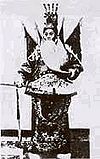
The first attempt at motion picture in China was Conquering Jun Mountain, in 1905.

Conquering Jun Mountain Click here for original source.
The Songstress, Red Peony was the first talking motion picture by the Chinese. In the 1930s, many films reflected resistance against imperialism and feudalism such as, Torrents. There were also many films that brought out attributes of art and literature. Street Angel being one example.