Difference between revisions of "20210601 culture3"
(→Terms) |
|||
| (132 intermediate revisions by 8 users not shown) | |||
| Line 19: | Line 19: | ||
Please write another chapter of the textbook on any cultural phenomenon in China. | Please write another chapter of the textbook on any cultural phenomenon in China. | ||
| − | The | + | =李欣玥 - Marriage accompanying songs in Hunan= |
| − | =Lǐ Yìhào 李艺浩 The | + | by 201730092013 17翻译李欣玥 |
| + | |||
| + | ==1.Introduction== | ||
| + | Hunan folk songs are accumulated in the long-term social labor and life of Hunan people. Custom songs are a type of folk songs that are sung in specific custom activities and directly reflect the basic content and characteristics of the custom activities. Folklore needs folk songs to complete its content, and folklore needs folklore as a carrier to pass on. Weddings and funerals are several very important events in a person's life, and are an important part of folklore. Custom songs about weddings and funerals account for a very large proportion of the total number of folk songs in Hunan.(Wen Qiaofeng,2018,1) | ||
| + | |||
| + | The folk custom of crying for marriage is popular in many areas of our country, and the custom of crying for marriage is unique in Hunan. It is called "marriage accompanying" in many places in Hunan, and the marriage lament is an important part of Hunan folk songs. The marriage accompanying songs of Chenzhou and Yongzhou in southern Hunan Province have long been famous for their rich and unique singing. Among them, the marriage accompanying songs of Chenzhou are the most representative. In different regions, there are many different names for this accompanying marriage activity, such as "crying in the singing hall", "crying in the garden", etc. The songs sung in this custom activity are called,"Zuotang Song", "Garden Song" and so on. (Wen Qiaofeng,2018,chapter1,5) | ||
| + | |||
| + | ==2.Legend about marriage accompanying songs in Hunan== | ||
| + | There is also a very interesting legend about its origin. According to legend, the king of the Chu Kingdom was named Chu Yidi, and he had a daughter named Chu Yu. One day when Chu yu was traveling, she met Chen Xianyun, a fugitive woman from a county in southern Hunan. After learning about her unfortunate coming marriage, she provided her with many things , gave a lot of help, and then led a group of fairies to Chen Xianyun's home on the eve of her marriage to cheer her up. The two girls sang and sang hundreds of narrative songs in succession. The fairies also sang and danced to the beat. From time to time, they sang a few words in antithesis with the princess and Chen Xianyun. The princess and the fairies didn’t return until dawn was about to show up. (Wen Qiaofeng,2018,chapter1,6) | ||
| + | |||
| + | ==3.Significance of marriage accompanying songs== | ||
| + | Marriage accompanying songs is a kind of farewell activity that female companions do with the girl’s expressions of singing. The most prominent feature is around the bride’s marriage, confiding her feelings of parting, and it also expresses their resentment towards the feudal marriage system and the old ethics. Anger and resistance are dominant. According to incomplete statistics, there are still more than 1,200 songs about marriage accompanying in southern Hunan. | ||
| + | |||
| + | In 1993, Jiahe county in southern Hunan was named the "Hometown of Folk Songs" by the Provincial Department of Culture. After the founding of the People's Republic of China, the southern Hunan wedding lament was protected as an artistic wonder in the national characteristic culture. In 1978, the Provincial Department of Culture held a provincial folk song concert in Chenzhou, Hunan and named Chengguan Town as the "Hometown of Folk Songs" in the province. | ||
| + | |||
| + | The Central Conservatory of Music, Shanghai Conservatory of Music and other professional colleges also use the county folk songs (namely wedding lament songs) as teaching materials. The original wedding folk songs are used in films such as "Hibiscus Town", "The Tortuous Mountain Path", "Gongs and Drums in towns". On May 24, 2021, the marriage lament declared by Jiahe County, Chenzhou City, Hunan Province, was approved by the State Council to be included in the fifth batch of national intangible cultural heritage representative projects. (Chinese government website, 2021, 06) | ||
| + | |||
| + | ==4. Types of marriage accompanying songs== | ||
| + | Marriage accompanying songs are not limited to the inherent types. There are long songs, marriage joking songs, and crying songs, as well as teasing bridegroom songs. But accompaniment dances are always performed during singing process . | ||
| + | |||
| + | First of all, for long songs, they mainly tell sad stories, express unwilling emotions and sad emotions. Existing long songs mostly focus on marital tragedies. Taking into account the weak rhythm and complex thinking of the songs, they are generally sung by high-level artists and singers. | ||
| + | |||
| + | Secondly, in terms of marriage jokes, this type of songs have a large number, distinctive features, and flexible structure. It is a kind of songs that women prefer. The song has a simple sentence pattern, mostly four sentences, and the artistic expression is rich and diverse. This kind of joking songs can be expressed with the help of multi-section style expressions and single style expressions, which are rich in content and involve not only interesting children's songs but also sad songs. Regarding the crying marriage song, it focuses on expressing emotions in the form of crying. The theme of the song focuses on nostalgia and complaining. Both the crying and the song are played casually, and the artistic characteristics are different from other types of songs. | ||
| + | |||
| + | Thirdly, as far as the teasing bridegroom songs are concerned, this type of song is an important manifestation of folklore and occupies a certain position in the wedding song. It mainly tells the plot of the groom being teased. The structure and sentence pattern are relatively simple. Finally, as for the accompaniment dance, the dance is closely related to marriage joking songs and is a free dance that is not restricted by props. Any daily necessities can be used as dance props, which is the main embodiment of humorous thoughts.(Liao Xinglin, 2020, 08) | ||
| + | |||
| + | ==5. Process of marriage accompanying== | ||
| + | Traditional marrying accompanying is divided into two steps. Two nights before the wedding, the bride and her female friends sits in the singing hall to accompany the marriage, mainly singing "marriage joking songs". This is called "short marriage accompanying ".It starts after dinner and ends in the middle of the night. Sitting in the singing hall on the eve of marriage is called "long marriage accompanying ". It also starts after dinner, but it doesn't stop all night, and it will continue to sing until dawn the next day. | ||
| + | |||
| + | Girls singing marriage joking songs in the middle of the night, singing a long song in the second half of the night, and performing the accompaniment dances at dawn the next day, then the bride will come out to cry for marriage. | ||
| + | |||
| + | The word for crying for marriage is to see people crying, improvised, mainly to express the feelings of farewell. The content of the accompaniment songs is very rich, there are those who spread history and production knowledge, some who sing about women's labor life, customs, and astronomy and geography, some who laugh and play, there are guessing songs, love songs, and everything. | ||
| + | |||
| + | But the most sung songs are the songs that tell parting and reflect the pain of women. When dancing, everything you encounter can be used as a dance tool, which is very lively and free, and has a strong breath of life. The bride cried and sang farewell to relatives and friends at home and then boarded the sedan chair. The sisters were sent to the pavilion on the way and then returned. The whole marriage process was completed. The bride’s brothers, uncles and cousins (all men) will send the family and guests to the husband’s house. (kekeshici, 2019, 05) | ||
| + | |||
| + | ==References== | ||
| + | *廖星麟.嘉禾伴嫁歌的音乐特征与演唱特征研究[J].戏剧之家,2020(08):56-57. | ||
| + | *文巧风. 论湖南风俗民歌[D].湖南师范大学,2018. | ||
| + | *可可诗词网,湘南嘉禾伴嫁歌,https://www.kekeshici.com,2019 | ||
| + | *李琴,李跃忠.嘉禾“伴嫁歌”研究综述[J].文教资料,2019(31):87-89. | ||
| + | *中国政府网,国务院关于公布第五批国家级非物质文化遗产代表性项目名录的通知,http://www.gov.cn/zhengce/content/2021-06/10/content_5616457,2021,05 | ||
| + | |||
| + | ==Terms and expressions== | ||
| + | marriage accompanying songs 伴嫁歌 | ||
| + | |||
| + | marriage accompanying 伴嫁 | ||
| + | |||
| + | crying in the singing hall 坐歌堂 | ||
| + | |||
| + | crying in the garden 坐花园 | ||
| + | |||
| + | Zuotang Song 坐堂歌 | ||
| + | |||
| + | Wedding lament songs/crying songs 哭嫁歌 | ||
| + | |||
| + | long songs 长歌 | ||
| + | |||
| + | marriage joking songs耍歌 | ||
| + | |||
| + | teasing bridegroom songs 徒歌 | ||
| + | |||
| + | accompaniment dances 伴嫁舞 | ||
| + | |||
| + | Hibiscus Town 《芙蓉镇》 | ||
| + | |||
| + | The Tortuous Mountain Path 《山路弯弯》 | ||
| + | |||
| + | Gongs and Drums in towns 《乡镇锣鼓》 | ||
| + | |||
| + | ==Questions== | ||
| + | 1. What kind of song does the marriage accompanying song in southern Hunan belong to? | ||
| + | |||
| + | 2. Who will sing the marriage accompanying song? | ||
| + | |||
| + | 3. List at least 3 themes that marriage accompanying songs would cover. | ||
| + | |||
| + | 4. What types of marriage accompanying songs are there? | ||
| + | |||
| + | 5. During the singing activity process,would singers sing for the whole night in the "short marriage accompanying "? | ||
| + | |||
| + | ==Answers== | ||
| + | 1. folk song | ||
| + | |||
| + | 2. the bride and her female friends | ||
| + | |||
| + | 3. history and production knowledge, women's labor life, customs, astronomy and geography, parting and reflect the pain of women,nostalgia and complaining.(and so on) | ||
| + | |||
| + | 4. long songs, marriage joking songs, crying songs, as well as teasing bridegroom songs. | ||
| + | |||
| + | 5. No,it would only last until the midnight. | ||
| + | |||
| + | =Lǐ Yìhào 李艺浩 The Longevity Lock= | ||
The long-life lock is a popular traditional Chinese mascot, which is used to bless babies healthy and longevous and to drive away disasters and diseases. | The long-life lock is a popular traditional Chinese mascot, which is used to bless babies healthy and longevous and to drive away disasters and diseases. | ||
==A. The historical origin of the long-life lock == | ==A. The historical origin of the long-life lock == | ||
| − | Zhu Suo,a colorful rope in the Han Dynasty, is the earliest form of the long-life | + | Zhu Suo,a colorful rope in the Han Dynasty, is the earliest form of the long-life locks. It is a portal decoration at Dragon Boat Festival in the Han Dynasty. The record in the History of the Later Han Dynasty is evidence of this statement, because it records that Zhu Suo was as a door decoration to stop evil. (Wang Haina,2010:59)(The History of the Later Han Dynasty) |
| − | In the Wei,Jin and Northern and Southern Dynasties, frequent wars, plague and famine is pervasive, so the vast number of people at that time strongly yearned for peace. So every Dragon Boat Festival, people used five silk | + | In the Wei,Jin and Northern and Southern Dynasties, frequent wars, plague and famine is pervasive, so the vast number of people at that time strongly yearned for peace. So every Dragon Boat Festival, people used five silk ropes, five colors,to wove a colorful rope called Wu Se Sheng and then tied them to the arms of women and children so as to pray for exorcism, longevity and health. And this custom spread to Jing ,Chu and other places. (Gong Ting,2013:55)(Ying Zhao)(Zhou Chu) |
| − | In the Song Dynasty, this custom is not only popular with women and children, but also with the men. And in addition to that, it is also fashionable in the court. Before the Dragon Boat Festival, Emperors | + | In the Song Dynasty, this custom is not only popular with women and children, but also with the men. And in addition to that, it is also fashionable in the court. Before the Dragon Boat Festival, Emperors gave Wu Se Sheng to their intimate ministers so that they could ward off evil spirits and had good fortune. The record in the History of the Song Dynasty is evidence of this statement, because it records that emperors gave 100 officials Wu Se Sheng. In the Song Dynasty, there are so another colorful silk rope plaits called "Pearl Knot" and "Colored Thread Knot" . Their shapes and systems are more complicated. |
| + | (Gong Ting,2013:55)(The History of Song Dynasty) | ||
| − | In the Ming Dynasty, this custom changing, adult male and female | + | In the Ming Dynasty, this custom changing, adult male and female wears it less and usually the locks specifically used for children. And they are given children in children’s full one year of life and until the year of an adult. And also in this Dynasty, Wu Se Sheng had developed into the long-life lock and was popular. (Gong Ting,2013:55) |
==B. The materials and the shapes of the Long-life Lock== | ==B. The materials and the shapes of the Long-life Lock== | ||
| − | The long-life | + | The long-life locks can be made of different materials such as gold, silver, copper, iron, wood, stone, jade, bone, tooth and horn. In the old days, gold, jade and tooth were commonly used in rich families, and silver, copper, stone and wood were generally used in poor families. Among them, with the development of Chinese silverware during the Ming and Qing Dynasties and during the Republic of China, the silver long-life locks became extremely popular in China. (Gong Ting,2013:57)(Wang Haina,2010:61) |
| + | |||
| + | The long-life locks are in different shapes, such as square, round, long, single or double.The long-life locks are often in conjunction with necklaces or necklace rings, or with silk ropes. The symbolic meaning of the long-life locks is main, so most of them cannot be opened with a key, but a few with a key. (Gong Ting,2013:56) | ||
| − | |||
Rectangular long life locks mostly imitate the ancient copper locks which is simple and elegant, and they generally can open the lock with a key and suitable for enjoying. | Rectangular long life locks mostly imitate the ancient copper locks which is simple and elegant, and they generally can open the lock with a key and suitable for enjoying. | ||
The long life locks in the shapes of cashew nut and gold ingot are unique, conveying the auspicious hidden meanings and its crafts are relatively complicated and brilliant. | The long life locks in the shapes of cashew nut and gold ingot are unique, conveying the auspicious hidden meanings and its crafts are relatively complicated and brilliant. | ||
| − | + | (Gong Ting,2013:56) | |
==C. The pattern design of the Long-life Lock== | ==C. The pattern design of the Long-life Lock== | ||
The pattern designs of the long-life locks are mainly traditional auspicious patterns, such as folk auspicious words, flowers, birds, insects, animals and mythical characters. | The pattern designs of the long-life locks are mainly traditional auspicious patterns, such as folk auspicious words, flowers, birds, insects, animals and mythical characters. | ||
1. Folk auspicious language | 1. Folk auspicious language | ||
| − | This pattern has the words of | + | This pattern has the words of Long life of abundance and respectability,many happy returns and good fortune as one wishes and so on. (Wang Haina,2010:61)(Gong Ting,2013:56) |
| + | |||
2. Flowers, birds, insects and animals | 2. Flowers, birds, insects and animals | ||
| − | Animals, such as bats, butterflies, fish, deer, magpies, and mythical animals, such as dragons, phoenix, are often used. Flowers and plants, such as peonies, plum blossoms, lotus, pines and cypresses, are also commonly used. | + | Animals, such as bats, butterflies, fish, deer, magpies, and mythical animals, such as dragons, phoenix, are often used. Flowers and plants, such as peonies, plum blossoms, lotus, pines and cypresses, are also commonly used.(Gong Ting,2013:56)(Wang Haina,2010:61) |
| + | |||
3.Fairy tales | 3.Fairy tales | ||
| − | Traditional mythical characters are always typical themes such as Kylin Sends Sons. The Kylin is a legendary mythical beast as one of "Four Spirits", symbolizing good fortune. | + | Traditional mythical characters are always typical themes such as Kylin Sends Sons. The Kylin is a legendary mythical beast as one of "Four Spirits", symbolizing good fortune.(Wang Haina,2010:61) |
| − | + | --[[User:Liu Tingyang|Liu Tingyang]] ([[User talk:Liu Tingyang|talk]]) 10:33, 14 June 2021 (UTC) 已修改 | |
| − | |||
| − | The differences in the long-life | + | ==D. The culture behind the Long-life Lock== |
| − | However, this is an obviously different point when it comes to China. Because of its unique cultural environment bring its unique ideology, Chinese people create the long-life | + | In the past, many Chinese babies died of diseases because of human's limited ability to medical care. Therefore, there is a saying in folk that the King of Hell accepts babies. Therefore, adults were afraid that their babies died in infancy, and so adults worn a long-life lock for their children. They thought that the lock could lock their children so as not to let the evil spirits go into the body, not to be entangled by the evil spirits and not to be taken away their lives by the King of Hell, and to pray for the healthy and smooth growth of their children and pray for their long lives. Children are not allowed to pick their long-life lock until they became adults. |
| − | ==Terms== | + | |
| + | The differences in the long-life locks between Chinese and Western culture are obvious. Western people pursue liberty and do not like to be shackled, so they regard something like the long-life lock is a fetter. As a result, they do not have the long-life locks and this custom. | ||
| + | However, this is an obviously different point when it comes to China. Because of its unique cultural environment bring its unique ideology, Chinese people create the long-life locks. | ||
| + | |||
| + | ==Terms and Expressions== | ||
The History of the Later Han Dynasty 《后汉书》 | The History of the Later Han Dynasty 《后汉书》 | ||
| Line 71: | Line 169: | ||
Jinchu place 荆楚之地 | Jinchu place 荆楚之地 | ||
| − | + | Long life of abundance and respectability 长命富贵 | |
| − | + | Many happy returns 长命百岁 | |
| − | + | Good fortune as one wishes 吉祥如意 | |
| + | |||
| + | --[[User:Liu Tingyang|Liu Tingyang]] ([[User talk:Liu Tingyang|talk]]) 10:33, 14 June 2021 (UTC) 已修改 | ||
==Questions== | ==Questions== | ||
| + | 1.What is the earliest form of the long-life lock? | ||
| + | |||
| + | 2.When is it not only popular with women and children, but also with the men? | ||
| + | |||
| + | 3.When is it usually specifically used for children? | ||
| + | |||
| + | 4.During the Ming and Qing Dynasties and during the Republic of China, which material does the long-life locks become extremely popular in China? | ||
| + | |||
| + | 5.Which pattern designs of the long-life locks are mainly used? | ||
| + | |||
| + | ==Answers== | ||
| + | 1. Zhu Suo,a colorful rope in the Han Dynasty, is the earliest form of the long-life lock. | ||
| + | |||
| + | 2. In the Song Dynasty | ||
| + | |||
| + | 3. In the Ming Dynasty | ||
| + | |||
| + | 4. The silver long-life lock | ||
| + | |||
| + | 5. Traditional auspicious patterns | ||
| + | |||
==References== | ==References== | ||
| + | *Gong Ting 宫婷, Longevitylock-Chinese Typical Amul, 长命锁_中国式护身符(2013) | ||
| + | https://kns.cnki.net/kcms/detail/detail.aspxdbcode=CJFD&dbname=CJFD2013&filename=YSSC201318013&v=eQ0KagdHfzacgXFD4Y2ktCJq2sy%25mmd2B2Bdid1bQ3J2rRhhPZ2ecVNX7yabQgARMo8vA | ||
| + | *Wang Haina 王海娜,A Brief Study of Long-life Lock, 长命锁及其演变 (2011) | ||
| + | https://kns.cnki.net/kcms/detail/detail.aspx?dbcode=CJFD&dbname=CJFD2011&filename=FSKS201103015&v=Bb2HBzxT%25mmd2Bws3wt3wdA0ZgjEGldZkkewEBkeRXrV1y%25mmd2FC33cgr7tjS1eJMrPCn%25mmd2FwQa | ||
| + | *The History of the Later Han Dynasty,《后汉书 ·礼仪志》:“五月五日, 朱索五色印为门户饰, 以难止恶气。” | ||
| + | *Ying Zhao应劭,《风俗演义·佚文》:“五月五日以五彩丝系臂,曰长命缕, 一名续命缕, 一名辟兵缯, 一名五色缕,一名朱索 。” | ||
| + | *Zhou Chu 周处,《风土记》,晋代:“荆楚人端午日以五彩系臂, 辟兵鬼气, 一名长命缕, 今百索也。” | ||
| + | *The History of the Later Han Dynasty,《宋史 ·礼志》:“ … …以一彩丝续命缕分赐百官 。” | ||
| + | --[[User:LiYihao|Li Yihao]] ([[User talk:Li Yihao|talk]]) 12:11, 13 June 2021 (UTC) | ||
| + | |||
<span style="color:red">ok</span> | <span style="color:red">ok</span> | ||
| − | =Liú Tíngyáng 刘廷阳 The Ethnic Minorities' Costumes = | + | =Liú Tíngyáng 刘廷阳 The Ethnic Minorities' Costumes 201930096009= |
| − | ==Terms== | + | ==A.Introduction== |
| + | China is a country of ancient civilization, with a long history and splendid culture. As an element of culture, the costume has made great contributions to the reproduction and development of the Chinese nation. And the costumes of 55 ethnic minorities are also wonderful flowers in the kingdom of Chinese costumes, blooming with dazzling brilliance. (Wei Ronghui, 2004, preface1) | ||
| + | |||
| + | It conveys the political, economic, cultural, religious, aesthetic, and other aspects of the minority information. Its formation and evolution marks not only the gradual improvement of the material and spiritual civilization of the Chinese nation, but also the concentrated expression of aesthetic concepts and cultural characteristics. (Wei Ronghui, 2004, preface2) | ||
| + | --[[User:Liu Zhuofan|Liu Zhuofan]] ([[User talk:Liu Zhuofan|talk]]) 10:48, 14 June 2021 (UTC)已修改 | ||
| + | |||
| + | ==B.Types of National Costumes== | ||
| + | There are various national costumes. Here, we will only introduce the most basic four categories: robes, trousers, jackets, and skirts. | ||
| + | |||
| + | 1. The robe | ||
| + | The robe is one of the oldest clothing styles in China. Some ethnic groups, who live in the plateau, mountainous area, or grassland where the climate is cold or the temperature changes intensely between day and night, make robes with animal skins as raw materials. The gowns keep them warm. They can also be easily removed and be used for more than one garment. As a result, robes have strong practicality and applicability. With the development of society, there are various raw materials and styles of robes, like cloth robes, silk robes and so on.(Qi Chunying, 2018, 12) | ||
| + | |||
| + | 2.Pants | ||
| + | Since an ancient King, King Wuling of Zhao in the Warring States era, carried out the reform of "Clothes Worn by Hu People when Riding a Horse and Shooting", pants have become the common costume of the southern and northern ethnic groups. Because of the cold climate, pants are more practical in the north, which can not only protect against the cold weather and keep people warm, but also adapt the life on horseback archery.(Qi Chunying, 2018, 20) | ||
| + | |||
| + | 3.Coat | ||
| + | The jacket is common clothing of all ethnic groups. Some of them are short to the chest, to the large one; some sleeveless, some sleeves one or two meters long; some chamberlain, some chamberlain; some have a collar, some have no collar, full head. From the craft, there are batik, cross-stitch, embroidery or sewing shellfish beads, silver pieces, and other ornaments. (Qi Chunying, 2018, 22) | ||
| + | |||
| + | 4.Dress | ||
| + | The dress of ethnic minorities in China has various styles and exquisite craftsmanship. | ||
| + | From the aspect of length, there are long skirts, tube skirts, dresses and so on; From the aspect of craftsmanship, there are flower skirts, pleated skirts, ribbon skirts, batik skirts and so on.(Qi Chunying, 2018, 35) | ||
| + | |||
| + | --[[User:Liu Zhuofan|Liu Zhuofan]] ([[User talk:Liu Zhuofan|talk]]) 11:25, 14 June 2021 (UTC)已修改 | ||
| + | |||
| + | ==C. An Introduction to Four Ethnic Minority Costumes== | ||
| + | The Zhuang nationality, the Hui nationality, the Manchu, and the Uyghur are the four most populous ethnic groups in China, so we choose these four to introduce to you. | ||
| + | |||
| + | ===1. The Zhuang nationality=== | ||
| + | The Zhuang men usually wear double-breasted clothes, with six to eight pairs of cloth buttons nailed, a small pocket sewn on the chest, and two large pockets sewn on the abdomen. Their trousers are short and wide, with wearing embroidered turbans. They always wear straw sandals on weekdays and wear wide-cloth shoes on festival days. | ||
| + | |||
| + | The Zhuang women usually wear dark low collar jackets, collars, cuffs, with the edge of the embroidered color lace, matched with the wide black trousers. In some areas, Zhuang women wear black pleated skirts decorated with embroidery. They love to wear an apron with a cloth sticker and embroideries. It’s their tradition to wear an embroidered black kerchief, with embroidered shoulder pads made of homespun fabric to go to festivals or the special market field. | ||
| + | |||
| + | The national costume of the Zhuang nationality is mostly made of Zhuang brocade. Zhuang brocade is an original textile handicraft created by the Zhuang group. It was a famous tribute in Tang, Song, Ming, and Qing Dynasties which was loved by the royal family and the common people. (Wei Ronghui, 2004, 27) | ||
| + | |||
| + | ===2.The Hui nationality=== | ||
| + | The Hui nationality’s clothes and ornaments are simple and bright in color. Elderly men generally wear a black or gray long shirt or a low round collar button-down shirt; middle-aged people usually wear white button-down shirts, coats with black vests and wear white pants with socks made of white cloth and homemade squared, curved shoes or hemp sandals. Most young people wear the same clothes, trousers, and shoes as the Han nationality expect for religious ceremonies. Women wear big right club clothes. Children's clothes, regardless of men and women, are made of printed cloth and other pure colors and embroidered with various patterns on the cuffs and pants knees, which are lively and beautiful. (Wei Ronghui, 2004, 7) | ||
| + | |||
| + | The origin of some costumes of the Hui nationality, especially its religious personnel, is related to the influence of Arabia, neighboring countries, and Islam. For example, the custom of Hui women wearing a headcover is influenced by Arab women. | ||
| + | |||
| + | About the dressing color, the Hui nationality advocates white, such as white shirt, white cover, etc., which is caused by religious belief. Muhammad taught his parishioners that white is the best dressing color. Also, the Hui people regard white as the cleanest color. (Wei Ronghui, 2004, 10) | ||
| + | |||
| + | ===3.The Manchu=== | ||
| + | For an ethnic group regarded as a horseman and archer, all the costumes should be neat, so as to facilitate galloping on horseback. For example, their trousers have front, back, left, and right sides to open around, obviously for the convenience of riding. Also, like the "Arrow Sleeve" on the Manchu robes, it is connected with the robes cuff of a long about half a foot of the semicircular cuff; because of its shape like "horseshoe", it is also known as the "Horseshoe Sleeve".(Xu Haiyan, 2004, 5) | ||
| + | |||
| + | Among the Manchu costumes, the most prominent one is the well-known cheongsam. Cheongsam is the clothing of the Manchu people. At first, it is not the favorite of the Manchu women, but the clothes worn by men, women, and children all year round. It has the same style, with different monolayer, double-deck, and leather designs. Manchu people are also called "cheongsam people". One of the characteristics of the robe is that it does not show people’s bodies, especially in its later period. It is wide and straight, with trousers inside the cheongsam, and sometimes the legs of the trousers can be revealed faintly under the cheongsam. The second characteristic of the cheongsam is the thick fabric. It has many jacquards with tedious ornaments. (Xu Haiyan, 2004, 6) | ||
| + | |||
| + | ===4.The Uyghur=== | ||
| + | The Uyghur men generally wear a full-length shirt inside and a long gown with wide sleeves and button-down outside, which is commonly known as "Loop". Their pants are always in blue, gray, black, white, and brown. The belt is woven of fine cotton thread with a pattern embroidered. (Wei Ronghui, 2004, 15) | ||
| + | |||
| + | Women usually wear knee-length colored shirts inside and skirts with wide sleeves and edges outsides. In the past, they used to wear black velvet on their dresses, with silver and gold pieces at the edge and lace decorations. In winter, they also wore a long "Loop". Now, most women like to wear western jackets and skirts, wearing stockings, and children often wear short clothes. | ||
| + | |||
| + | The Uyghur men and women must wear floret hats when they go out. In winter, they prefer leather hats and boots. Their clothes are made of fine materials, usually pure wool, silk, cotton, and real leather. (Wei Ronghui, 2004, 16) | ||
| + | |||
| + | --[[User:Liu Zhuofan|Liu Zhuofan]] ([[User talk:Liu Zhuofan|talk]]) 11:25, 14 June 2021 (UTC)已修改 | ||
| + | |||
| + | ==Terms and Expressions== | ||
| + | 1.Robe 袍子 | ||
| + | |||
| + | 2.Arabia 阿拉伯半岛 | ||
| + | |||
| + | 3.Islam 伊斯兰教 | ||
| + | |||
| + | 4.Clothes Worn by Hu People when Riding a Horse and Shooting 胡服骑射 | ||
| + | |||
| + | 5.The Manchu 满族 | ||
| + | |||
| + | 6.Arrow Sleeve 箭袖 | ||
| + | |||
| + | 7.Horseshoe Sleeves 马蹄袖 | ||
| + | |||
| + | 8.Cheongsam 旗袍 | ||
| + | |||
| + | 9.Uygur 维吾尔族 | ||
| + | |||
| + | 10.Loop 袷袢 | ||
| + | |||
| + | 11.Fine cotton thread 细棉线 | ||
| + | |||
| + | 12.Real leather 真皮 | ||
| + | |||
==Questions== | ==Questions== | ||
| + | 1.What kinds of information could Ethnic Minorities' Costumes convey? | ||
| + | |||
| + | 2.What are the most basic four categories of Ethnic Minorities' Costumes? | ||
| + | |||
| + | 3.Which nationality’s fabric was a famous tribute in ancient times? | ||
| + | |||
| + | 4.What color the Hui people advocate? | ||
| + | |||
| + | 5.What’s the common material of Uyghur’s costumes? | ||
| + | |||
| + | ==Answers== | ||
| + | 1.It conveys the political, economic, cultural, religious, aesthetic, and other aspects of the minority information. | ||
| + | |||
| + | 2.There are robes, trousers, jackets, and skirts. | ||
| + | |||
| + | 3.Zhuang brocade. | ||
| + | |||
| + | 4.White. | ||
| + | |||
| + | 5.Their clothes are usually made of pure wool, silk, cotton, and real leather. | ||
| + | |||
==References== | ==References== | ||
| − | + | 1.Qi Chunying祁春英.(2018).中国最美 第3辑 民族服饰[China's Most Beautiful Series 3nd National Costumes]. Hubei Fine Arts Publishing House湖北美术出版社.(12-35) | |
| + | |||
| + | 2.Wei Ronghui韦荣慧(2004).中国少数民族服饰 [Chinese Minority Costumes].中国画报出版社China Pictorial Publishing House.(preface1-2,7-27) | ||
| + | |||
| + | 3.Xu Haiyan徐海燕(2004).满族服饰[Manchu costume].沈阳出版社Publishing House.(5-6) | ||
| + | |||
| + | --[[User:Liu Tingyang|Liu Tingyang]] ([[User talk:Liu Tingyang|talk]]) 10:18, 14 June 2021 (UTC) | ||
| + | |||
=Chinese Incense Culture - Liú Zhuōfán 刘卓凡 201930096025= | =Chinese Incense Culture - Liú Zhuōfán 刘卓凡 201930096025= | ||
[[File:incense.jpg|200px|thumb|left|incense culture(https://image.baidu.com/search/detail?ct=503316480&z=0&ipn=d&word=%E9%A6%99%E6%96%87%E5%8C%96&step_word=&hs=0&pn=0&spn=0&di=87560&pi=0&rn=1&tn=baiduimagedetail&is=0%2C0&istype=2&ie=utf-8&oe=utf-8&in=&cl=2&lm=-1&st=-1&cs=2494549926%2C558087557&os=979130336%2C2702455471&simid=4150210600%2C647460510&adpicid=0&lpn=0&ln=1247&fr=&fmq=1623411554985_R&fm=detail&ic=0&s=undefined&hd=undefined&latest=undefined©right=undefined&se=&sme=&tab=0&width=&height=&face=undefined&ist=&jit=&cg=&bdtype=0&oriquery=&objurl=https%3A%2F%2Fgimg2.baidu.com%2Fimage_search%2Fsrc%3Dhttp%3A%2F%2F5b0988e595225.cdn.sohucs.com%2Fimages%2F20180814%2Fa7083c7091dc447590cf75437b8e1e8c.jpeg%26refer%3Dhttp%3A%2F%2F5b0988e595225.cdn.sohucs.com%26app%3D2002%26size%3Df9999%2C10000%26q%3Da80%26n%3D0%26g%3D0n%26fmt%3Djpeg%3Fsec%3D1626003622%26t%3D3a95a25698adff75d5c986be96fa5a42&fromurl=ippr_z2C%24qAzdH3FAzdH3Fooo_z%26e3Bf5i7_z%26e3Bv54AzdH3FwAzdH3Fd908camc0_lllabnb8&gsm=1&rpstart=0&rpnum=0&islist=&querylist=&nojc=undefined)]] | [[File:incense.jpg|200px|thumb|left|incense culture(https://image.baidu.com/search/detail?ct=503316480&z=0&ipn=d&word=%E9%A6%99%E6%96%87%E5%8C%96&step_word=&hs=0&pn=0&spn=0&di=87560&pi=0&rn=1&tn=baiduimagedetail&is=0%2C0&istype=2&ie=utf-8&oe=utf-8&in=&cl=2&lm=-1&st=-1&cs=2494549926%2C558087557&os=979130336%2C2702455471&simid=4150210600%2C647460510&adpicid=0&lpn=0&ln=1247&fr=&fmq=1623411554985_R&fm=detail&ic=0&s=undefined&hd=undefined&latest=undefined©right=undefined&se=&sme=&tab=0&width=&height=&face=undefined&ist=&jit=&cg=&bdtype=0&oriquery=&objurl=https%3A%2F%2Fgimg2.baidu.com%2Fimage_search%2Fsrc%3Dhttp%3A%2F%2F5b0988e595225.cdn.sohucs.com%2Fimages%2F20180814%2Fa7083c7091dc447590cf75437b8e1e8c.jpeg%26refer%3Dhttp%3A%2F%2F5b0988e595225.cdn.sohucs.com%26app%3D2002%26size%3Df9999%2C10000%26q%3Da80%26n%3D0%26g%3D0n%26fmt%3Djpeg%3Fsec%3D1626003622%26t%3D3a95a25698adff75d5c986be96fa5a42&fromurl=ippr_z2C%24qAzdH3FAzdH3Fooo_z%26e3Bf5i7_z%26e3Bv54AzdH3FwAzdH3Fd908camc0_lllabnb8&gsm=1&rpstart=0&rpnum=0&islist=&querylist=&nojc=undefined)]] | ||
Chinese incense culture has thousands of years of historical accumulation, and the world of incense is profound and colorful. Its concept and practice have also penetrated into all aspects of Chinese traditional culture. Incense culture is a rare cultural category with the body practice of olfactory senses as the core and it is indispensable to explore Chinese traditional culture. (Sun Liang, 2018:5) | Chinese incense culture has thousands of years of historical accumulation, and the world of incense is profound and colorful. Its concept and practice have also penetrated into all aspects of Chinese traditional culture. Incense culture is a rare cultural category with the body practice of olfactory senses as the core and it is indispensable to explore Chinese traditional culture. (Sun Liang, 2018:5) | ||
==A. Overview of Chinese incense culture== | ==A. Overview of Chinese incense culture== | ||
| − | Chinese incense culture is a cultural practice and ideology of fragrant smell | + | Chinese incense culture is a cultural practice and ideology of fragrant smell centered on the recognition, processing and usage of various spices developed by the Chinese people in the long process of civilization. Incense can not only be used to connect with God, but also to help people be sensible or reasonable. In the cultural life of Chinese people, all the systematic cultural practices based on the sense of smell to experience and recognize the fragrance can be regarded as the incense culture. Olfaction, perfume material, odour and smog are the four basic aspects of the study of incense culture. (Sun Liang, Zhang Duo, 2018:6) |
Olfaction is not only a physiological issue but a cultural one. From the cultural point of view, different cultural groups have great differences in the perception and acceptance of olfaction. For example, the smell of stinky tofu in southern China is a scent that can induce appetite, but it is described as stinky. Indeed, many people do not think the smell of stinky tofu is fragrant. So there are great differences in the olfactory experience of certain odors in human cultures. (Sun Liang, Zhang Duo, 2018:6) | Olfaction is not only a physiological issue but a cultural one. From the cultural point of view, different cultural groups have great differences in the perception and acceptance of olfaction. For example, the smell of stinky tofu in southern China is a scent that can induce appetite, but it is described as stinky. Indeed, many people do not think the smell of stinky tofu is fragrant. So there are great differences in the olfactory experience of certain odors in human cultures. (Sun Liang, Zhang Duo, 2018:6) | ||
| − | The smog produced by burning incense is also paid attention to. In the use of incense by Chinese people, burning is one of the most important ways, especially in religious field. The smog produced by burning incense is often a sign of the effectiveness of rituals. It is composed of visible particles, which gather and move in the air in large quantities, forming a visual sensation besides the smell of fragrance. Smog is the byproduct of burning incense, but it also has its own unique cultural meaning. For example, in ancient heaven worship ceremony, a column of smog is the medium connecting the heaven and human beings. (Sun Liang, Zhang Duo, 2018:6) | + | The smog produced by burning incense is also paid attention to. In the use of incense by Chinese people, burning is one of the most important ways, especially in the religious field. The smog produced by burning incense is often a sign of the effectiveness of rituals. It is composed of visible particles, which gather and move in the air in large quantities, forming a visual sensation besides the smell of fragrance. Smog is the byproduct of burning incense, but it also has its own unique cultural meaning. For example, in ancient heaven worship ceremony, a column of smog is the medium connecting the heaven and human beings. (Sun Liang, Zhang Duo, 2018:6) |
Perfume material is the basis of incense culture. Commonly used perfume materials can be roughly divided into three categories: plant, animal and auxiliary materials. Plant material accounts for the largest proportion, about 90%. Normally, it is divided its into six kinds: flower, leaf, fruit, root, stem, wood and lipid. Animal material refers to the aromatic substances obtained from the secretions of animals, mainly from the secretions or body surface attachments of animals such as sperm whale (ambergris), forest musk deer (musk), hemifusus tuba (Turbo cornutus Solander) and so on. Auxiliary materials such as carbon, Glauber's salt and honey normally do not give off a strong fragrant smell, but have special uses in producing incense. The production form of incense products can be divided into raw incense materials, string incense, stick incense, dish incense, tower incense, cone incense, pill, powder, cream, soup, sachet, pillow and other main categories. (Sun Liang, Zhang Duo, 2018:8-9) | Perfume material is the basis of incense culture. Commonly used perfume materials can be roughly divided into three categories: plant, animal and auxiliary materials. Plant material accounts for the largest proportion, about 90%. Normally, it is divided its into six kinds: flower, leaf, fruit, root, stem, wood and lipid. Animal material refers to the aromatic substances obtained from the secretions of animals, mainly from the secretions or body surface attachments of animals such as sperm whale (ambergris), forest musk deer (musk), hemifusus tuba (Turbo cornutus Solander) and so on. Auxiliary materials such as carbon, Glauber's salt and honey normally do not give off a strong fragrant smell, but have special uses in producing incense. The production form of incense products can be divided into raw incense materials, string incense, stick incense, dish incense, tower incense, cone incense, pill, powder, cream, soup, sachet, pillow and other main categories. (Sun Liang, Zhang Duo, 2018:8-9) | ||
| Line 114: | Line 352: | ||
Incense can be found everywhere, from exorcism to pest prevention, from the expression of missing to the expression of love, from house cleaning to banquets and entertainment. The beauty culture derived from cosmetics with incense as the core is also a focus of folk custom study. (Sun Liang, Zhang Duo, 2018:14) | Incense can be found everywhere, from exorcism to pest prevention, from the expression of missing to the expression of love, from house cleaning to banquets and entertainment. The beauty culture derived from cosmetics with incense as the core is also a focus of folk custom study. (Sun Liang, Zhang Duo, 2018:14) | ||
| − | Chinese people use incense | + | Chinese people use incense in many important festivals. Incense is used to worship ancestors during the Spring Festival. It is also used when sweeping tombs on Tomb-Sweeping Day. The Dragon Boat Festival is full of incense. From the hanging of mugwort and calamus at the door to the wearing of sachets, these are the embodiments of incense culture. (Sun Liang, Zhang Duo, 2018:14) |
Ancestor worship is the core value element in Chinese folk beliefs, and incense must be used to worship ancestors. Incense is not only a medium to communicate with ancestors, but also a symbol of family prosperity. (Sun Liang, Zhang Duo, 2018:14) | Ancestor worship is the core value element in Chinese folk beliefs, and incense must be used to worship ancestors. Incense is not only a medium to communicate with ancestors, but also a symbol of family prosperity. (Sun Liang, Zhang Duo, 2018:14) | ||
| Line 179: | Line 417: | ||
--[[User:Liu Zhuofan|Liu Zhuofan]] ([[User talk:Liu Zhuofan|talk]]) 13:24, 23 May 2021 (UTC) | --[[User:Liu Zhuofan|Liu Zhuofan]] ([[User talk:Liu Zhuofan|talk]]) 13:24, 23 May 2021 (UTC) | ||
| − | =Péng Jiāyù 彭佳钰= | + | --[[User:Peng Jiayu|Peng Jiayu]] ([[User talk:Peng Jiayu|talk]]) 06:07, 16 June 2021 (UTC) |
| − | + | ||
| + | =Péng Jiāyù 彭佳钰 Wu Zetian: The Only Female Emperor of Imperial China= | ||
| + | |||
| + | |||
| + | =='''Text'''== | ||
| + | |||
| + | ==='''Brief Introduction'''=== | ||
| + | [[File:4558.jpeg|thumb|right|Wu Zetian (https://www.worldhistory.org/uploads/images/4558.jpeg?v=1623024902)]] | ||
| + | |||
| + | Empress Wu Zetian (Empress Consort Wu, Wu Hou, Wu Mei Niang, Mei-Niang, and Wu Zhao, l. 624-705 CE, r. 690-704 CE) was the only female emperor of Imperial China. She reigned during the Tang Dynasty (618-907 CE) and was one of the most effective and controversial monarchs in China's history. (Mark, 2016) | ||
| + | |||
| + | |||
| + | |||
| + | ==='''Politics'''=== | ||
| + | |||
| + | One of the most important apparatus of government which fell into Wu Zetian's power was the imperial examination system: the basic theory and practice of which was to recruit into government service those men who were the best educated, talented, and having the best potential to perform their duties, and to do so by testing a pool of candidates in order to determine this objectively. Wu Zetian continued to use the imperial examination system to recruit officials in feudal times, and she introduced major changes in regard to the system that she inherited, including increasing the pool of candidates permitted to take the test, by allowing commoners and gentry, who were previously disqualified by their background, to take them. Another thing she did was to expand the governmental examination system and to greatly increase the importance of this method of recruiting government officials, which she did since 693. Wu provided increased opportunity for the representation within government to people of the North China Plain, versus people of the northwestern aristocratic families, (whom she decimated, anyway); and, the successful candidates who were recruited through the examination system became an elite group within her government. (''The New Book of Tang'') | ||
| + | |||
| + | Additionally, at the beginning of Wu Zetian’s period of ascendency, Guanzhong was still the stronghold of the most nationally powerful aristocratic families, despite the fact that economic development in other parts of China had improved the lot of families in other regions. (''The New Book of Tang'') | ||
| + | |||
| + | However, the Guanlong aristocracy was not willing to relinquish their hold on the reins of government; while, at the same time, some of the more newly wealthy families in other areas, such as the North China Plain or Hubei were eager for a larger share of national power of their own. Most of the opposition to Wu was from the Guanlong families of northwest China. Accordingly, she repressed them, instead favoring less privileged families, thus raising to the ranks of power many talented, but less aristocratic families, often recruited through the official examination system. Many of those so favored originated from the North China plain. Through a process of eliminating or diminishing the power of the established aristocracy, whom she perceived as disloyal to her, and establishing a reformed upper class in China loyal to her, Wu Zetian made major social changes. | ||
| + | |||
| + | [[File:IMG_0410.jpg|200px|thumb|left|China during Wu Zetian’s Reign (https://www.worldhistory.org/uploads/images/4649.png?v=1614250808)]] | ||
| + | Another important characteristics of Wu Zetian's governance is that her consolidation of power in part relied on a system of spies. She used informants to choose people to eliminate, a process which peaked in 697, with the wholesale demotion, exile, or killing of various aristocratic families and scholars, furthermore prohibiting their sons from holding office. | ||
| + | |||
| + | Wu Zetian eliminated many of her real, potential, or perceived rivals to power by means of death (including execution, suicide by command, and more-or-less directly killing people), demotion, and exile. Mostly this was carried out by her secret police, led by individuals like Wan Guojun and Lai Junchen--who were known to have written a document called ''the Manual of Accusation'', which detailed steps for interrogation and obtaining confessions by torture. (''The New Book of Tang'') | ||
| + | |||
| + | |||
| + | |||
| + | |||
| + | |||
| + | |||
| + | |||
| + | |||
| + | ==='''Economy'''=== | ||
| + | |||
| + | Many of Wu Zetian's measures were of a popular nature, and helped her to gain support for her governance. Wu Zetian came to power during a time in China in which the people were fairly contented, the administration was run well, and the economy was characterized by rising living standards. Wu Zetian, as far as the masses were for the most part concerned, continued in this manner. She was determined that free, self-sufficient farmers would continue to work on their own farm land, so she periodically used the System of Land Equalization, which also can be called as equal-field system, together with updated census figures to ensure fair land allocations, re-allocating as necessary. Much of her success was due to her various edicts (including those known as her "Acts of Grace") which helped to satisfy the needs of the lower classes through various acts of relief, her widening recruitment to government service to include previously excluded gentry and commoners, and by her generous promotions and pay raises for the lower ranks. (''The Old Book of Tang'') | ||
| + | |||
| + | |||
| + | |||
| + | ==='''Culture'''=== | ||
| + | |||
| + | About Modified Chinese characters, Empress Dowager Wu's cousin's son Zong Qinke submitted a number of modified Chinese characters intended to showcase Empress Dowager Wu's greatness in 690. She adopted them, and she took one of the modified characters, Zhao (曌), to be her formal name (i.e., the name by which the people would exercise naming taboo on). Zhao was made from two other characters: Ming (明) on top, meaning "light" or "clarity", and Kong (空) at the bottom, meaning "sky." The implication appeared to be that she would be like the light shining in the sky. (Zhao (照), meaning "shine", from which Zhao (曌) was derived, might have been her original name, but evidence of that is inconclusive.) (''The New Book of Tang'') | ||
| + | |||
| + | When it comes to literature, Wu Zetian's court was a focus of literary creativity besides her own literary work. Forty-six of Wu's poems are collected in ''the Collected Tang Poems'' and sixty-one essays under her name are recorded in ''the Collected Tang Essays''. Although a lot of those writings serve political ends, there is one poem in which she laments her mother after she died and expresses her despair at not being able to see her again. | ||
| + | [[File:IMG_0404.JPG|200px|thumb|right|Anime Figure]] | ||
| + | |||
| + | During Wu Zetian's reign, the imperial court produced various works for which she was a sponsor, such as the anthology of the poetry of her court known as ''the Collection of Precious Glories'', which contained poems by Cui Rong, Li Jiao, Zhang Yue, and others, arranged according to the official rank at the court of the individuals included. Among the literary developments that took place during the time of Wu Zetian (and partly at her court) was the final stylistic development of the "New Style" poetry of the regulated verse, by the poetic pair Song Zhiwen and Shen Quanqi. (''The Old Book of Tang'') | ||
| + | |||
| + | |||
| + | |||
| + | ==='''Comments'''=== | ||
| + | |||
| + | Empress Wu is a real historical figure, a vivid image of literature and art gallery. She is a distorted image of the patriarchal discourse for a long time. Departure from the Wu Zetian’s Female characteristics, from a gender perspective, this image has an important social and practical significance. (Liu Jian, 2013) | ||
| + | |||
| + | The Blank Stele standing on the east side of the passage at the Qianling mausoleum in Shanxi province was built for Wu Zetian. Due to lack of historical records, its date and builder are still unknown, making the stele a mystery. Maybe this is just what Wu Zetian wanted—no one could define her whole life except time and history. (Zhang Yu, 2014) | ||
| + | |||
| + | |||
| + | |||
| + | =='''Terms and Expressions'''== | ||
| + | |||
| + | Wu Mei Niang 武媚娘 | ||
| + | |||
| + | the imperial examination system 科举制度 | ||
| + | |||
| + | officials in feudal times 臣子,臣民 | ||
| + | |||
| + | Guanzhong 关中地区 | ||
| + | |||
| + | Guanlong aristocracy 关陇集团 | ||
| + | |||
| + | North China Plain 华北平原 | ||
| + | |||
| + | a system of spies 酷吏政治 | ||
| + | |||
| + | secret police 酷吏 | ||
| + | |||
| + | Wan Guojun 万国俊 | ||
| + | |||
| + | Lai Junchen 来俊臣 | ||
| + | |||
| + | the Manual of Accusation 《罗织经》 | ||
| + | |||
| + | System of Land Equalization 均田制 | ||
| + | |||
| + | Gentry 乡绅 | ||
| + | |||
| + | Modified Chinese characters 则天文字 | ||
| + | |||
| + | the Collected Tang Poems 《全唐诗》 | ||
| + | |||
| + | the Collected Tang Essays 《全唐文》 | ||
| + | |||
| + | regulated verse 格律诗 | ||
| + | |||
| + | The Blank Stele 无字碑 | ||
| + | |||
| + | the Qianling mausoleum 乾陵 | ||
| + | |||
| + | |||
| + | =='''Questions'''== | ||
| + | |||
| + | 1. Who was the only female emperor of Imperial China? | ||
| + | |||
| + | 2. Who wrote ''the Manual of Accusation''? | ||
| + | |||
| + | 3. What system has been used to keep free, self-sufficient farmers continuing to work on their own farm land? | ||
| + | |||
| + | 4. How many poems which were written by Wu Zetian are collected in ''the Collected Tang Poems''? | ||
| + | |||
| + | 5. How many essays under Wu Zetian’s name are recorded in ''the Collected Tang Essays''? | ||
| + | |||
| + | 6. Did Wu Zetian write anything on her stele? | ||
| + | |||
| + | |||
| + | =='''Answers'''== | ||
| + | |||
| + | 1. Wu Zetian was the only female emperor of Imperial China. | ||
| + | |||
| + | 2. Wan Guojun and Lai Junchen wrote ''the Manual of Accusation''. | ||
| + | |||
| + | 3. The System of Land Equalization, which also can be called as equal-field system, has been used to keep free, self-sufficient farmers continuing to work on their own farm land. | ||
| + | |||
| + | 4. Forty-six. | ||
| + | |||
| + | 5. Sixty-one. | ||
| + | |||
| + | 6. No, she didn’t write anything on her stele, and this is the reason why it called The Blank Stele. | ||
| + | |||
| + | |||
| + | =='''References'''== | ||
| + | |||
| + | [1] Mark, E. (2016, March 17). Wu Zetian. World History Encyclopedia. Retrieved from https://www.worldhistory.org/Wu_Zetian/ | ||
| + | |||
| + | [2] ''The New Book of Tang'' 《新唐书·卷四·本纪第四》 | ||
| + | |||
| + | [3] ''The Old Book of Tang'' 《旧唐书·卷六·本纪第六》 | ||
| + | |||
| + | [4] Liu Jian 刘健.(2013).武则天形象演变研究(硕士学位论文,陕西理工学院).https://kns.cnki.net/KCMS/detail/detail.aspx?dbname=CMFD201402&filename=1014211402.nh | ||
| + | |||
| + | [5] Zhang Yu 张宇.(2014).武则天的“无字碑”真的无字吗?. 中国国家博物馆馆刊(11),63-70. doi:CNKI:SUN:ZLBK.0.2014-11-010. | ||
=Shū Lín 舒琳 Tea-picking Opera = | =Shū Lín 舒琳 Tea-picking Opera = | ||
| − | + | [[File:hhhh.jpg|200px|left|(https://image.baidu.com/search/detail?ct=503316480&z=0&tn=baiduimagedetail&ipn=d&word=%E9%87%87%E8%8C%B6%E6%88%8F%E5%9B%BE%E7%89%87&step_word=&ie=utf-8&in=&cl=2&lm=-1&st=-1&hd=undefined&latest=undefined©right=undefined&cs=1814759717,2156596348&os=700373864,326755818&simid=0,0&pn=13&rn=1&di=69850&ln=1350&fr=&fmq=1623772133561_R&ic=undefined&s=undefined&se=&sme=&tab=0&width=undefined&height=undefined&face=undefined&is=0,0&istype=2&ist=&jit=&bdtype=0&spn=0&pi=0&gsm=0&objurl=https%3A%2F%2Fgimg2.baidu.com%2Fimage_search%2Fsrc%3Dhttp%253A%252F%252Fjxgz.wenming.cn%252Fwmbb%252F201610%252FW020161017794595530147.jpg%26refer%3Dhttp%253A%252F%252Fjxgz.wenming.cn%26app%3D2002%26size%3Df9999%2C10000%26q%3Da80%26n%3D0%26g%3D0n%26fmt%3Djpeg%3Fsec%3D1626364131%26t%3D777868773daa5d17c1db0c142150970a&rpstart=0&rpnum=0&adpicid=0&nojc=undefined)]] | |
| − | + | ==A.Overview== | |
| + | |||
| + | Tea-picking opera is a kind of opera category popular in Jiangxi, Hubei, Anhui, Fujian, Guangdong and other provinces, and it is one of the regional cultures with strong local characteristics in China[7]. It is produced in the Ming and Qing Dynasties, and has more than 400 years of history of a wide variety of distinctive features. On May 20, 2006, tea-picking opera was approved by the State Council and included in the first batch of the National Intangible Cultural Heritage Lists.[1][2] | ||
| + | |||
| + | Tea-picking opera in the provinces take local names to distinguish according to the regions, such as Guangdong's "Guangdong North Tea-picking Drama", Hubei's "Yangxin Tea-picking Drama," "Yellow Mei-Tea Opera," "YuChun Tea-picking Opera" and so on.(xi-qu.com) | ||
| + | |||
| + | ==B.The Origin of Tea-picking Opera== | ||
| + | The production of tea-picking opera is related to the abundance of tea. According to historical records in the Ming Dynasty, in the tea area in the South of Fujian Province, east, south and north of Jiangxi Province, working women went up the mountain, picked tea while singing mountain songs to encourage labor enthusiasm. | ||
| + | |||
| + | In special festival or time in rural areas such as at the time of widespread tea tress in March and harvesting, people sing in the tea forest with the joy of harvesting. Mountain songs and ditties sang by them are in vivid form and rich contents expressing the joy of labor and love between men and women. This kind of mountain songs circulating in the tea area are known as "tea-picking songs." Tea-picking opera developed from the folk tea-picking songs and tea-picking lamp singing, and then become a kind of folk drama with characters and storyline. Because it is generally only two female roles and one clown, or a painted role, a female role, and a clown three persons’ performance, it is also known as “Three characters’ troupe.”[3] The drama has many sorts, such as Jiangxi tea-picking opera, that is, Gannan Tea-picking Opera, Fuzhou tea-picking opera, Nanchang tea-picking opera, Gaoan tea-picking opera, Wuning tea-picking opera, Gandong tea-picking opera, Ji'an tea-picking opera, Jingdezhen tea-picking opera and Ningdu tea-picking opera and so on. (Zhu Feiye, 2021) | ||
| + | |||
| + | There are several stages from tea-picking song to tea-picking opera. Tea-picking songs were first sung in minor tunes, with only four lyrics per line, which were lively and euphemistic. After the development of the tea-picking song, it was composed of tea-picking ditty, which was called twelve-month tea-picking songs. Later, the twelve-month tea-picking songs combined with folk dances became tea-picking lantern opera. The form of tea-picking lantern opera is relatively simple, pure collective performance of song and dance, but it has taken a step towards the tea-picking opera.(Zhu Feiye, 2021) | ||
| + | |||
| + | ==C.The Development of Tea-picking Opera== | ||
| + | Tea-picking opera has experienced a tortuous process of development. In the Ming Dynasty, tea farmers in the Jiulong Mountain Tea District of Anyuan County, Jiangxi Province, which is rich in famous tea, often performed impromptu programs related to tea picking in the form of tea-picking lantern opera in order to receive tea merchants from Guangdong. This kind of performance is already the prototype of tea-picking opera. | ||
| + | |||
| + | Before the founding of the People's Republic of China, the performance of tea-picking opera was often interfered and banned by the rulers. The first reason was that there were few literati involved in tea picking, and the cultural level of the artists was not high, so the rulers thought these plays were very vulgar and difficult to be elegant. Secondly, in order to cater to the audience, the actors added some unhealthy contents during the performance. Some plays appear to be very vulgar and indecent, and even disturb social order.(Zhu Feiye, 2021) | ||
| + | |||
| + | In the middle Guangxu (光绪) period of the Qing Dynasty (about 1891), some Qi opera artists and half-troupe performers could independently perform high-tone and disordered-tone repertoire. The original plays of Qi opera and half-troupe repertoire coexisted on the half-troupe stage, so they were called Half Mix Opera. Around 10 years in the Republic of China, Half Mix Opera disintegrated, caused the reproduction of “seven tight eight loose nine free and unrestrained” half-troupe. They performed in the mountains until the eve of liberation.(Zhu Feiye, 2021) | ||
| + | |||
| + | After the foundation of the People's Republic of China, professional opera troupes were established. They not only excavated, arranged and made excellent traditional repertoire, but also created a number of new repertoires, such as One Heart, Send Straw Shoes, New Neighbors and the adaptation of Legend of Luang Knife. Ningdu Hakka Tea Picking Opera not only has a complete range of skills, beautiful tunes, but also has a variety of performance procedures. It has become a regular drama class capable of singing and dancing, modern and ancient, large and small, and martial arts, and has become a unique style of drama in China.(Zhu Feiye, 2021) | ||
| + | |||
| + | If there is no tea picking and other tea work, there will be no tea-picking songs and dances, and no tea-picking opera, which is widely popular in many provinces and regions in southern China. Therefore, tea picking is not only related to tea, but also a splendid culture derived from tea culture in the field of opera or absorbed by opera culture. | ||
| + | |||
| + | ==D.Gannan Tea-picking Opera== | ||
| + | Gannan Tea- Picking Opera is an important school of Tea picking Oper, mainly popular in southern Jiangxi, that is, Ganzhou. | ||
| + | In the tea-picking opera groups, the characteristics of tea picking in southern Jiangxi are reflected in the following aspects: First, it belongs to the Hakka ethnic group. The dialect of the South Jiangxi is Hakka, so the traditional repertoire of Gannan Tea-peaking Opera is basically performed in Hakka. Second, tea picking in southern Jiangxi originated early and had an impact on the early development of various tea picking operas. | ||
| + | |||
| + | Its origin can be traced back to the late Ming and early Qing dynasties. In the first year of Qianlong's reign, Yu Zhaoyue, governor of Jiangxi Province, mentioned in a note that “the custom of pretending to be a sex play is forbidden”[4]485. Drama experts believe that the “sex play” here is the tea-picking opera in southern Jiangxi Province[5], so it is speculated that its birth date should be earlier than this. Thirdly, in terms of artistic form, the traditional repertory of tea-picking opera in southern Jiangxi still retains the form of “three small operas”. And many other types of tea-picking opera have a trend of development to the big drama. For example, tea-picking opera in northern Jiangxi (Jiujiang tea-picking opera, Nanchang tea-picking opera, etc.), influenced by Huangmei Opera in Hubei, has developed into a “half-troupe”, which can be used to perform ancient costume drama. In addition, a symbolic difference between different types of operas is music. The music of the tea-picking opera in southern Jiangxi belongs to the combination of Qupai(曲牌). There are as many as two or three hundred Qupai, with beautiful melodies, which are well known to the local people[6].(Wang Jingbo 2020) | ||
| + | |||
| + | The main performance forms of Gannan Tea-peaking Opera include dwarf step, single sleeve and fan, which deeply depict the character image and perform the story plot incisively and vividly. The main Musical Instruments used in the accompaniment of Gannan Tea-peaking Opera are hooks, Suona horn, bamboo flute, gong, drum, cymbals and other folk instruments, which is full of local atmosphere. | ||
| + | |||
| + | As a native Gannan culture, tea picking is a portrayal of Hakka people's life in the mountains. It expresses the joys and sorrows of Gannan people's life through comedy and farce. It is also a folk activity created in the tea-picking work and the main leisure and entertainment activity of the people after dinner. Tea-picking opera is a local opera developed from folk songs and dances and lanterns, and its repertoire mostly reflects the life of working people. Its music and singing styles are also folk songs, so it is deeply loved by the people.(xi-qu.com) | ||
| + | |||
| + | The general characteristics of Gannan tea-picking opera are: cheerful performance, humorous, singing and dancing, strong comedy, rich local flavor, quite popular with the masses. The representative works include Pairs of Flowers, Picking Tea in Jiulong Mountain, Digging Bamboo Shoots and so on. | ||
==Terms== | ==Terms== | ||
| − | + | Tea-picking Opera 采茶戏 | |
| − | + | ||
| + | Gannan Tea-picking Opera赣南采茶戏 | ||
| + | |||
| + | Fuzhou Tea-picking Opera 抚州采茶戏 | ||
| + | |||
| + | Nanchang Tea-picking Opera 南昌采茶戏 | ||
| + | |||
| + | Gao'an Tea-picking Opera 高安采茶戏 | ||
| + | |||
| + | Wuning Tea-picking Opera 武宁采茶戏 | ||
| + | |||
| + | Gandong Tea-picking Opera 赣东采茶戏 | ||
| + | |||
| + | mountain songs 山歌 | ||
| + | |||
| + | the twelve-month tea-picking songs 十二月采茶歌 | ||
| + | |||
| + | Tea-picking lantern opera 采茶灯 | ||
| + | |||
| + | Three characters’troupe 三角班 | ||
| + | |||
| + | The National Intangible Cultural Heritage Lists 国家级非物质文化遗产名录 | ||
| + | |||
| + | Qi Opera 祁剧 | ||
| + | |||
| + | Half Mix Opera 半整杂 | ||
| + | |||
| + | high-tone and disordered-tone 高腔和弹腔 | ||
| + | |||
| + | The Republic of China 民国 | ||
| + | |||
| + | half-troupe stage 半班舞台 | ||
| + | |||
| + | ''Legend of Luang Knife'' 《銮刀记》 | ||
==Questions== | ==Questions== | ||
| + | 1. Where is tea-picking opera popular? | ||
| + | |||
| + | 2. When does tea-picking opera originate? | ||
| + | |||
| + | 3. What is the nickname of tea-picking opera? | ||
| + | |||
| + | 4. What are the main performance forms of Gannan Tea-picking Opera? | ||
| + | |||
| + | 5. What are the general characteristics of Gannan Tea-picking Opera? | ||
| + | |||
| + | 6. What are the representative works of Gannan Tea-picking Opera? | ||
| + | |||
| + | ==Answers== | ||
| + | 1. Tea-picking opera is a kind of opera category popular in Jiangxi, Hubei, Anhui, Fujian, Guangdong and other provinces. | ||
| + | |||
| + | 2. It is originated in the Ming and Qing Dynasties. | ||
| + | |||
| + | 3. Because it is generally only two female roles and one clown, or a painted role, a female role, and a clown three persons’ performance, it is also known as “Three characters’ troupe.” | ||
| + | |||
| + | 4. The main performance forms of Gannan Tea-picking Opera include dwarf step, single sleeve and fan. | ||
| + | |||
| + | 5. The general characteristics of Gannan Tea-picking Opera are: cheerful performance, humorous, singing and dancing, strong comedy, rich local flavor, quite popular with the masses. | ||
| + | |||
| + | 6. The representative works include Pairs of Flowers, Picking Tea in Jiulong Mountain, Digging Bamboo Shoots and so on. | ||
| + | |||
==References== | ==References== | ||
| − | =Sū Xiāo 苏潇 The | + | *[1]采茶戏简介和影响_采茶戏历史_中国戏曲网 (xi-qu.com) |
| − | + | ||
| + | *[2]国务院关于公布第一批国家级 非物质文化遗产名录的通知 国发〔2006〕18号 .中国政府网 | ||
| + | |||
| + | *[3]试论我国采茶戏的形成与发展 - 中国知网 (cnki.net) 朱飞晔 2016 | ||
| + | |||
| + | *[4]清实录( 第九册) ·高宗纯皇帝实录: 卷十九[G].北京: 中华书局,1985: 485. | ||
| + | |||
| + | *[5]苏子裕.赣南采茶戏的发展历程及其艺术形态[G]∥中国戏曲声腔剧种考.北京: 新华出版社,2001: 192. | ||
| + | |||
| + | *[6]从传统到现代:赣南采茶戏的变迁与多元传承 - 中国知网 (cnki.net) 王静波 | ||
| + | |||
| + | *[7]施德玉.中国地方小戏音乐之探讨[M].台北: 学海出版社,2000: 241. | ||
| + | |||
| + | *[8]采茶戏_百度百科 (baidu.com) | ||
| + | |||
| + | --[[User:Shu Lin|Shu Lin]] ([[User talk:Shu Lin|talk]]) 05:30, 14 June 2021 (UTC) | ||
| + | |||
| + | --[[User:Su Xiao|Su Xiao]] ([[User talk:Su Xiao|talk]]) 06:03, 16 June 2021 (UTC)已修改 | ||
| + | |||
| + | =Sū Xiāo 苏潇 The Culture of Mount Tai= | ||
| + | ==Text== | ||
| + | ===A. Introduction=== | ||
| + | |||
| + | [[File:Mount Tai.jpg|300px|thumb|right| Mount Tai (https://image.baidu.com/search/detail?ct=503316480&z=0&ipn=d&word=%E6%B3%B0%E5%B1%B1&step_word=&hs=0&pn=12&spn=0&di=57860&pi=0&rn=1&tn=baiduimagedetail&is=0%2C0&istype=2&ie=utf-8&oe=utf-8&in=&cl=2&lm=-1&st=-1&cs=3450486865%2C100894551&os=2998600338%2C4050705434&simid=3289339882%2C371146313&adpicid=0&lpn=0&ln=1846&fr=&fmq=1623779968717_R&fm=result&ic=&s=undefined&hd=&latest=©right=&se=&sme=&tab=0&width=&height=&face=undefined&ist=&jit=&cg=&bdtype=0&oriquery=&objurl=https%3A%2F%2Fgimg2.baidu.com%2Fimage_search%2Fsrc%3Dhttp%3A%2F%2Fn.sinaimg.cn%2Fsinacn08%2F194%2Fw640h354%2F20180328%2Ff356-fysqfnh7181142.jpg%26refer%3Dhttp%3A%2F%2Fn.sinaimg.cn%26app%3D2002%26size%3Df9999%2C10000%26q%3Da80%26n%3D0%26g%3D0n%26fmt%3Djpeg%3Fsec%3D1626371984%26t%3D8548a115be768863ed41740266584cb1&fromurl=ippr_z2C%24qAzdH3FAzdH3Fh_z%26e3Bftgw_z%26e3Bv54_z%26e3BvgAzdH3Fw6ptvsj_m9dmd9a08b_80uabwmvjaa8aamd40_z%26e3Bip4s%3Fu654%3Dp6wejs&gsm=d&rpstart=0&rpnum=0&islist=&querylist=&nojc=undefined)]] | ||
| + | Mount Tai, regarded as “The Most Revered of the Five Sacred Mountains”, stands like a giant on the land of Qilu (Shandong Province), silently looking down on all creatures at the foot. It is not only a member of nature, but also an unusual cultural symbol.Over the past 2,000 years, Mount Tai has become the spiritual home of the Chinese nation, with feudal emperors offering sacrifices to heaven, literati coming to express their feelings and ordinary people bowing in worship. The profound cultural deposits have contributed to the status of Mount Tai as the "national mountain" and "sacred mountain" in China. As Ji Xianlin, a master of Chinese culture, once said, "Mount Tai is one of the main symbols of Chinese culture. If we want to carry forward Chinese culture, we must carry forward Mount Tai culture first."(Wei Wei, Fan Hongliang,2020,7) | ||
| + | |||
| + | ===B. The Content of the Culture of Mount Tai=== | ||
| + | As is mentioned above, the culture of Mount Tai can be roughly understood from the following three aspects. | ||
| + | |||
| + | '''1. The Culture of Sacrificial Ceremony (Fengshan)''' | ||
| + | [[File:R1Sfc0765308b526a86a81dfc4818bb95.jpg|200px|thumb|left| Sacrificial Ceremony (Fengshan)(https://image.baidu.com/search/detail?ct=503316480&z=0&ipn=d&word=%E5%B0%81%E7%A6%85&step_word=&hs=0&pn=1&spn=0&di=113960&pi=0&rn=1&tn=baiduimagedetail&is=0%2C0&istype=2&ie=utf-8&oe=utf-8&in=&cl=2&lm=-1&st=-1&cs=1788733681%2C3363775309&os=3065253812%2C366172319&simid=3443118911%2C554498160&adpicid=0&lpn=0&ln=1820&fr=&fmq=1623767925869_R&fm=result&ic=&s=undefined&hd=&latest=©right=&se=&sme=&tab=0&width=&height=&face=undefined&ist=&jit=&cg=&bdtype=0&oriquery=&objurl=https%3A%2F%2Fgimg2.baidu.com%2Fimage_search%2Fsrc%3Dhttp%3A%2F%2Fi.3233.cn%2Fa%2F202011%2F9a9213101502bcae.jpeg%26refer%3Dhttp%3A%2F%2Fi.3233.cn%26app%3D2002%26size%3Df9999%2C10000%26q%3Da80%26n%3D0%26g%3D0n%26fmt%3Djpeg%3Fsec%3D1626360324%26t%3D28beedae81d4507cc4f5770d4b42230e&fromurl=ippr_z2C%24qAzdH3FAzdH3Fooo_z%26e3Bndnn_z%26e3BvgAzdH3FgAzdH3F3zm7-8nd9d_z%26e3Bip4s&gsm=3&rpstart=0&rpnum=0&islist=&querylist=&nojc=undefined)]] | ||
| + | |||
| + | Fengshan is a grand sacrificial ceremony held in ancient times by emperors after ascending to the top of Mount Tai to pay tributes to heaven and earth, announce their achievements, thank gods for having brought them and their people good fortune, and inscribe their achievements on a huge stone. (Key Concepts in Chinese Thought and Culture) | ||
| + | |||
| + | ''Guanzi'', an academic work of the pre-Qin dynasty, records that there are 72 ancient tribal chiefs who once climbed Mount Tai. After entering the feudal society, First Emperor of Qin, Emperor Wu of the Han Dynasty, Emperor Gaozong of the Tang Dynasty and Empress Wu Zetian, Emperor Xuanzong of the Tang Dynasty, Emperor Zhenzong of the Song Dynasty, Emperor Kangxi of the Qing Dynasty and Emperor Qianlong of the Qing Dynasty came to Mount Tai to pay homage and offer sacrifices, among which Emperor Wu of the Han Dynasty paid homage to Mount Tai for eight times. | ||
| + | |||
| + | It is a unique cultural phenomenon for emperors to pay homage to Mount Tai. Any emperor who wanted to strengthen his rule and report his achievements to heaven and earth would come to Mount Tai to pay homage as a symbol of his great achievements. Therefore, the culture of sacrificial ceremony (Fengshan) is an important part of the culture of Mount Tai.(Jin Lei,2021,108; Hou Xiaolin,2020,100) | ||
| + | |||
| + | '''2. The Culture of Literati''' | ||
| + | |||
| + | Mount Tai holds a very important position in the minds of Chinese literati. They seem to have a kind of innate Mount Tai complex that cannot be removed. | ||
| + | |||
| + | Confucius, known as "the greatest sage and teacher", sighed at the grandeur of Mount Tai, saying, "The world is smaller on the top of Mount Tai" ("When one looks down from the peak of Mount Tai, the whole earth comes into view"), which is recorded in The Analects of Confucius. Mencius, known as "The Second Sage", said that "The mountain is so high that it could reach the sky and clouds," which is a kind of interpretation of Confucius' words toward Mount Tai. Since then, the literati have never cut off their respect for Mount Tai. The poet Du Fu of the Tang Dynasty wrote in his poem “Gazing on Mount Tai", "I must ascend the mountain's crest; it dwarfs all peaks under my feet." Yuan Dynasty poet Zhang Zhichun wrote the poem “Welcome Rain of Mount Tai," saying "So beautiful the scenery of Mount Tai; so considerate the rain pervades the earth." There is also the Jin Dynasty poet Xie Daoyun writing in "Mount Tai Ode," saying “Majestic and tall Mount Tai, straight into the sky with a very exquisite aura.”There are no less than one thousand pieces of literal works by ancient scholars praising Mount Tai, which shows the importance of Mount Tai in literati's hearts.(Zou Boyang,2020,99) | ||
| + | |||
| + | '''3. The Culture of Folk Belief''' | ||
| + | [[File:Bixiayuanjun.jpg|200px|thumb|right| Blue Rosy Cloud Fairy (Bixiayuanjun)(https://baike.baidu.com/pic/%E7%A2%A7%E9%9C%9E%E5%85%83%E5%90%9B/2199062/0/42166d224f4a20a4462391eb191e8f22720e0cf37ac0?fr=lemma&ct=single#aid=0&pic=42166d224f4a20a4462391eb191e8f22720e0cf37ac0)]] | ||
| + | When it comes to the folk beliefs of Mount Tai, "The God of Mount Tai" and "Blue Rosy Cloud Fairy (Bixiayuanjun)" have to be mentioned. | ||
| + | |||
| + | It is said that The God of Mount Tai is in charge of the birth power of all creatures (including plants, animals and people). As the incarnation of Mount Tai, he is the messenger of communication between heaven and earth, and the protector god of all emperors who were ordered by heaven to govern the world. | ||
| + | |||
| + | Blue Rosy Cloud Fairy (Bixiayuanjun) is the most influential goddess of Mount Tai. According to Taoism, she "blessed all living beings and connects the spirit across the whole China." She helps the weak and punishes the evil, delivers children to families in need and responds to every request. | ||
| + | |||
| + | Through the ages, people have a great belief in the two folk deities of Mount Tai. The Mount Tai Temple Fair that appeared in the Northern Song Dynasty extended the worship of Mount Tai to the lowest level of the society. On the birthday of The God of Mount Tai and Mount Tai Grandmother, pilgrims gathered from all sides to hold various celebrations. In the minds of the people, the folk gods of Mount Tai are a kind of belief, a spiritual sustenance and a spiritual comfort. They go to pray for the blessings of the gods, from their own personal interests, so as to get the satisfaction of the soul. | ||
| + | |||
| + | The culture of folk belief represented by The God of Mount Tai and Blue Rosy Cloud Fairy (Bixiayuanjun) has played an important role in expanding the influence of the culture of Mount Tai.(Hou Xiaolin,2020,100) | ||
| + | |||
| + | ===C. The Spiritual Symbolism of Mount Tai=== | ||
| + | |||
| + | Originated from the content of Mount Tai culture, Mount Tai has developed its own symbolic meaning for many precious spirits. | ||
| + | |||
| + | '''1.Positive and Progressive Spirit''' | ||
| + | |||
| + | Mount Tai's lofty posture inspires people to climb up to the top. As long as you have the determination and the courage to climb, everybody could reach the top of Mount Tai and the top of the mountain in your heart. | ||
| + | |||
| + | '''2.Righteous Spirit''' | ||
| + | |||
| + | For Chinese people, Desperate Correspondent (Shigandang) is the representative of Mount Tai's justice and he is the hero to punish the evil and support the right in the minds of the people. | ||
| + | |||
| + | '''3.Inclusive Spirit''' | ||
| + | |||
| + | Mount Tai has a broad mind and can accommodate all the spiritual aspirations of people. The integration of Confucianism, Taoism and Buddhism in Mount Tai culture reflects the broad mind and inclusive spirit of Mount Tai. | ||
| + | |||
| + | '''4.The Value Orientation Symbolized by Mount Tai''' | ||
| + | |||
| + | Mount Tai has become a symbol of a noble personality because it gives people a dignified and steady visual feeling.(Sun Li,2006,206;Hou Xiaolin,2020,101) | ||
| + | |||
| + | [[File:tiaoshangong.jpg|200px|thumb|left| Heavers in Mount Tai(https://image.baidu.com/search/detail?ct=503316480&z=0&ipn=d&word=%E6%B3%B0%E5%B1%B1%E6%8C%91%E5%B1%B1%E5%B7%A5%E7%85%A7%E7%89%87&step_word=&hs=2&pn=11&spn=0&di=83820&pi=0&rn=1&tn=baiduimagedetail&is=0%2C0&istype=0&ie=utf-8&oe=utf-8&in=&cl=2&lm=-1&st=-1&cs=2663231516%2C4177806335&os=2993403728%2C374856785&simid=4121616394%2C802514520&adpicid=0&lpn=0&ln=1211&fr=&fmq=1623780666825_R&fm=rs5&ic=undefined&s=undefined&hd=undefined&latest=undefined©right=undefined&se=&sme=&tab=0&width=undefined&height=undefined&face=undefined&ist=&jit=&cg=&bdtype=0&oriquery=%E6%B3%B0%E5%B1%B1%E6%8C%91%E5%B1%B1%E5%B7%A5&objurl=https%3A%2F%2Fgimg2.baidu.com%2Fimage_search%2Fsrc%3Dhttp%3A%2F%2F5b0988e595225.cdn.sohucs.com%2Fimages%2F20181127%2Fa6d0352a5dbd49abaf3cd7abbf962aea.jpeg%26refer%3Dhttp%3A%2F%2F5b0988e595225.cdn.sohucs.com%26app%3D2002%26size%3Df9999%2C10000%26q%3Da80%26n%3D0%26g%3D0n%26fmt%3Djpeg%3Fsec%3D1626372676%26t%3D81e0a10200195f4b5264f58ecacedcd0&fromurl=ippr_z2C%24qAzdH3FAzdH3Fooo_z%26e3Bf5i7_z%26e3Bv54AzdH3FwAzdH3Fd0ba0dcla_0n0ama&gsm=c&rpstart=0&rpnum=0&islist=&querylist=&nojc=undefined)]] | ||
| + | |||
| + | |||
| + | |||
| + | At present, China has entered a new era, and the spirit of Mount Tai has been injected with new vitality and become a new driving force for social development. As President Xi mentioned during his visit to Shandong Province, we should keep an indomitable attitude to struggle, never to be idle in spirit, learning the spirit of those heavers in Mount Tai.This also reflects the continuous enrichment of the cultural connotation of Mount Tai with the times going on. | ||
| + | |||
| + | ==References== | ||
| + | [1] Wei Wei, Fan Hongliang.魏伟; 范宏亮. 山中之山,文化泰山. [The Cultural Mount Tai]. 走向世界 (2020-10-01) 期刊 | ||
| + | |||
| + | [2] 中国思想文化术语 Key Concepts in Chinese Thought and Culture学科,文艺 -专辑,第八辑 术语库TERMBASES https://www.chinesethought.cn/shuyu_show.aspx?shuyu_id=4336 | ||
| + | |||
| + | [3] Jin Lei.金磊. 关于弘扬泰山文化的思考.Reflections on Carrying Forward the Culture of Mount Tai 传媒论坛 (2021-03-10) 期刊 | ||
| + | |||
| + | [4] Hou Xiaolin.侯晓琳. 关于泰山精神文化的研究探讨 北方文学(2020-08-15) 期刊 | ||
| + | |||
| + | [5] Zou Boyang.邹博杨. 雄伟泰山——华夏文化繁盛之魂 炎黄地理(2020-02-25) 期刊 | ||
| + | |||
| + | [6] Sun Li.孙莉. 浅论泰山精神 东岳论丛(2006-10-28) 期刊 | ||
| + | |||
| + | |||
| + | ==Terms and Expressions== | ||
| + | The Most Revered of the Five Sacred Mountains 五岳独尊 | ||
| + | |||
| + | the land of Qilu 齐鲁大地 | ||
| + | |||
| + | national mountain 国山 | ||
| + | |||
| + | sacred mountain 圣山 | ||
| + | |||
| + | Sacrificial Ceremony (Fengshan) 封禅 | ||
| + | |||
| + | ''Guanzi'' 《管子》 | ||
| + | |||
| + | First Emperor of Qin 秦始皇 | ||
| + | |||
| + | Emperor Wu of the Han Dynasty 汉武帝 | ||
| + | |||
| + | Emperor Gaozong of the Tang Dynasty 唐高宗 | ||
| + | |||
| + | Empress Wu Zetian 武则天 | ||
| + | |||
| + | Emperor Xuanzong of the Tang Dynasty 唐玄宗 | ||
| + | |||
| + | Emperor Zhenzong of the Song Dynasty 宋真宗 | ||
| + | |||
| + | Emperor Kangxi of the Qing Dynasty 清康熙皇帝 | ||
| + | |||
| + | Emperor Qianlong of the Qing Dynasty 清乾隆皇帝 | ||
| + | |||
| + | Confucius 孔子 | ||
| + | |||
| + | the greatest sage and teacher 至圣先师 | ||
| + | |||
| + | ''The Analects of Confucius'' 《论语》 | ||
| + | |||
| + | Mencius 孟子 | ||
| + | |||
| + | The Second Sage 亚圣 | ||
| + | |||
| + | ''Gazing on Mount Tai'' 《望岳》 | ||
| + | |||
| + | ''Welcome Rain of Mount Tai'' 《泰山喜雨》 | ||
| + | |||
| + | ''Mount Tai Ode'' 《泰山咏》 | ||
| + | |||
| + | The God of Mount Tai 泰山神 | ||
| + | |||
| + | Blue Rosy Cloud Fairy (Bixiayuanjun) 碧霞元君(Mount Tai Grandmother 泰山老奶奶) | ||
| + | |||
| + | The Mount Tai Temple Fair 东岳庙会 | ||
| + | |||
| + | Desperate Correspondent (Shigandang) 石敢当 | ||
| + | |||
| + | Confucianism, Taoism and Buddhism 儒、道、释 | ||
| + | |||
| + | heavers in Mount Tai 泰山挑山工 | ||
| + | |||
| + | |||
| + | ==Questions== | ||
| + | 1. Which master of Chinese culture once stressed the importance of carrying forward the culture of Mount Tai? | ||
| + | |||
| + | 2. How many times did Emperor Wu of the Han Dynasty come to Mount Tai to pay homage? | ||
| + | |||
| + | 3. When did The Mount Tai Temple Fair appear? | ||
| + | |||
| + | 4. Which three religious cultures merge in the culture of Mount Tai? | ||
| + | |||
| + | 5. What is the embodiment of the Mount Tai spirit in the new era? | ||
| + | |||
| + | ==Answers== | ||
| + | 1.Ji Xianlin. | ||
| + | |||
| + | 2.Eight. | ||
| + | |||
| + | 3.In the Northern Song Dynasty. | ||
| + | |||
| + | 4.Confucianism, Taoism and Buddhism. | ||
| + | |||
| + | 5.The spirit of heavers in Mount Tai. | ||
| + | |||
| + | |||
| + | |||
| + | |||
| + | They seem to have a kind of innate Mount Tai complex that cannot be resolved → removed. | ||
| + | --[[User:Tang Hui|Tang Hui]] ([[User talk:Tang Hui|talk]]) 15:08, 15 June 2021 (UTC) | ||
Latest revision as of 23:02, 13 July 2021
Final Exam Paper Page. Please write now here and improve until grading on 2021 06 15
- Link to return to Course Homepage.
- Link to the other Final Exam paper pages: Final Exams 1 Bào Qìnwén 鲍沁雯 - Dù Xīnyǔ 杜心语; Final Exams 2 Guō Yàbō 郭亚波 - Huáng Zǐlóng 黄梓龙; Final Exams 3 Lǐ Yìhào 李艺浩 - Sū Xiāo 苏潇; Final Exams 4 Tāng Huì 汤惠 - Wáng Qìnyú 王沁瑜; Final Exams 5 Wáng Zǐhán 王子涵 - Zhào Kē 赵轲.
1. Every student should write a new English text on a phenomenon in Chinese culture as a new chapter in the text book. Please also make a comparisons to similar or different cultural phenomenons in Europe and/or the USA.
2. Please find a paper you want to proof read, contact the author, proof read (by copying each paragraph and make corrections/suggestions in the copy) and sign until May 25. The author then finalizes (works in the suggestions) until the final deadline June 1! Please proof read a fellow students' paper by copying each paragraph and make your corrections in the paragraph. In a final step, the original author of the paper has to decide, what of the corrections he/she will accept and work into the paper. The final version submitted on the deadline should not carry any of the fellow student's paragraphs and comments.
- You can use the texts in the coursebook as an example (like Unit 1, Text A). You only need to write Text A (like "Longevity Noodles") or Text B ("Mooncakes"), not a whole Unit. But please try to find fellow students who topics fit under the same Unit title ("Festival Meals") and arrange it accordingly.
- In the topic, please write the category, then the topic - your name and student no.
- For the text, please indicate ALL SOURCES with bibliographical references. That means: At least for every paragraph, sometimes for single sentences, you have to indicate at the end, where you have found this information. E.g. (Liu Miqing 2010, 17). This means you have found it in the book or paper written by Ms Liu on page 17.
- Add a section at the end called "References". There you write the full version of the reference: Liu Miqing 刘宓庆. (2010). 翻译基础 [Translation Basis]. Shanghai: East China Normal University 华东师范大学. Similarly, you do it for papers: Jin Wenlu`靳文璐. (2019). 机器翻译可以取代人工翻译吗? [Can machine translation replace human translation?]. 智库时代 Think Tank Times (40) 282-284.
- Please also add a list "Terms and Expressions".
- Please add a "Questions" section.
- Please add a "Answers" section.
This is the the first page with the final exam papers.
Please write another chapter of the textbook on any cultural phenomenon in China.
李欣玥 - Marriage accompanying songs in Hunan
by 201730092013 17翻译李欣玥
1.Introduction
Hunan folk songs are accumulated in the long-term social labor and life of Hunan people. Custom songs are a type of folk songs that are sung in specific custom activities and directly reflect the basic content and characteristics of the custom activities. Folklore needs folk songs to complete its content, and folklore needs folklore as a carrier to pass on. Weddings and funerals are several very important events in a person's life, and are an important part of folklore. Custom songs about weddings and funerals account for a very large proportion of the total number of folk songs in Hunan.(Wen Qiaofeng,2018,1)
The folk custom of crying for marriage is popular in many areas of our country, and the custom of crying for marriage is unique in Hunan. It is called "marriage accompanying" in many places in Hunan, and the marriage lament is an important part of Hunan folk songs. The marriage accompanying songs of Chenzhou and Yongzhou in southern Hunan Province have long been famous for their rich and unique singing. Among them, the marriage accompanying songs of Chenzhou are the most representative. In different regions, there are many different names for this accompanying marriage activity, such as "crying in the singing hall", "crying in the garden", etc. The songs sung in this custom activity are called,"Zuotang Song", "Garden Song" and so on. (Wen Qiaofeng,2018,chapter1,5)
2.Legend about marriage accompanying songs in Hunan
There is also a very interesting legend about its origin. According to legend, the king of the Chu Kingdom was named Chu Yidi, and he had a daughter named Chu Yu. One day when Chu yu was traveling, she met Chen Xianyun, a fugitive woman from a county in southern Hunan. After learning about her unfortunate coming marriage, she provided her with many things , gave a lot of help, and then led a group of fairies to Chen Xianyun's home on the eve of her marriage to cheer her up. The two girls sang and sang hundreds of narrative songs in succession. The fairies also sang and danced to the beat. From time to time, they sang a few words in antithesis with the princess and Chen Xianyun. The princess and the fairies didn’t return until dawn was about to show up. (Wen Qiaofeng,2018,chapter1,6)
3.Significance of marriage accompanying songs
Marriage accompanying songs is a kind of farewell activity that female companions do with the girl’s expressions of singing. The most prominent feature is around the bride’s marriage, confiding her feelings of parting, and it also expresses their resentment towards the feudal marriage system and the old ethics. Anger and resistance are dominant. According to incomplete statistics, there are still more than 1,200 songs about marriage accompanying in southern Hunan.
In 1993, Jiahe county in southern Hunan was named the "Hometown of Folk Songs" by the Provincial Department of Culture. After the founding of the People's Republic of China, the southern Hunan wedding lament was protected as an artistic wonder in the national characteristic culture. In 1978, the Provincial Department of Culture held a provincial folk song concert in Chenzhou, Hunan and named Chengguan Town as the "Hometown of Folk Songs" in the province.
The Central Conservatory of Music, Shanghai Conservatory of Music and other professional colleges also use the county folk songs (namely wedding lament songs) as teaching materials. The original wedding folk songs are used in films such as "Hibiscus Town", "The Tortuous Mountain Path", "Gongs and Drums in towns". On May 24, 2021, the marriage lament declared by Jiahe County, Chenzhou City, Hunan Province, was approved by the State Council to be included in the fifth batch of national intangible cultural heritage representative projects. (Chinese government website, 2021, 06)
4. Types of marriage accompanying songs
Marriage accompanying songs are not limited to the inherent types. There are long songs, marriage joking songs, and crying songs, as well as teasing bridegroom songs. But accompaniment dances are always performed during singing process .
First of all, for long songs, they mainly tell sad stories, express unwilling emotions and sad emotions. Existing long songs mostly focus on marital tragedies. Taking into account the weak rhythm and complex thinking of the songs, they are generally sung by high-level artists and singers.
Secondly, in terms of marriage jokes, this type of songs have a large number, distinctive features, and flexible structure. It is a kind of songs that women prefer. The song has a simple sentence pattern, mostly four sentences, and the artistic expression is rich and diverse. This kind of joking songs can be expressed with the help of multi-section style expressions and single style expressions, which are rich in content and involve not only interesting children's songs but also sad songs. Regarding the crying marriage song, it focuses on expressing emotions in the form of crying. The theme of the song focuses on nostalgia and complaining. Both the crying and the song are played casually, and the artistic characteristics are different from other types of songs.
Thirdly, as far as the teasing bridegroom songs are concerned, this type of song is an important manifestation of folklore and occupies a certain position in the wedding song. It mainly tells the plot of the groom being teased. The structure and sentence pattern are relatively simple. Finally, as for the accompaniment dance, the dance is closely related to marriage joking songs and is a free dance that is not restricted by props. Any daily necessities can be used as dance props, which is the main embodiment of humorous thoughts.(Liao Xinglin, 2020, 08)
5. Process of marriage accompanying
Traditional marrying accompanying is divided into two steps. Two nights before the wedding, the bride and her female friends sits in the singing hall to accompany the marriage, mainly singing "marriage joking songs". This is called "short marriage accompanying ".It starts after dinner and ends in the middle of the night. Sitting in the singing hall on the eve of marriage is called "long marriage accompanying ". It also starts after dinner, but it doesn't stop all night, and it will continue to sing until dawn the next day.
Girls singing marriage joking songs in the middle of the night, singing a long song in the second half of the night, and performing the accompaniment dances at dawn the next day, then the bride will come out to cry for marriage.
The word for crying for marriage is to see people crying, improvised, mainly to express the feelings of farewell. The content of the accompaniment songs is very rich, there are those who spread history and production knowledge, some who sing about women's labor life, customs, and astronomy and geography, some who laugh and play, there are guessing songs, love songs, and everything.
But the most sung songs are the songs that tell parting and reflect the pain of women. When dancing, everything you encounter can be used as a dance tool, which is very lively and free, and has a strong breath of life. The bride cried and sang farewell to relatives and friends at home and then boarded the sedan chair. The sisters were sent to the pavilion on the way and then returned. The whole marriage process was completed. The bride’s brothers, uncles and cousins (all men) will send the family and guests to the husband’s house. (kekeshici, 2019, 05)
References
- 廖星麟.嘉禾伴嫁歌的音乐特征与演唱特征研究[J].戏剧之家,2020(08):56-57.
- 文巧风. 论湖南风俗民歌[D].湖南师范大学,2018.
- 可可诗词网,湘南嘉禾伴嫁歌,https://www.kekeshici.com,2019
- 李琴,李跃忠.嘉禾“伴嫁歌”研究综述[J].文教资料,2019(31):87-89.
- 中国政府网,国务院关于公布第五批国家级非物质文化遗产代表性项目名录的通知,http://www.gov.cn/zhengce/content/2021-06/10/content_5616457,2021,05
Terms and expressions
marriage accompanying songs 伴嫁歌
marriage accompanying 伴嫁
crying in the singing hall 坐歌堂
crying in the garden 坐花园
Zuotang Song 坐堂歌
Wedding lament songs/crying songs 哭嫁歌
long songs 长歌
marriage joking songs耍歌
teasing bridegroom songs 徒歌
accompaniment dances 伴嫁舞
Hibiscus Town 《芙蓉镇》
The Tortuous Mountain Path 《山路弯弯》
Gongs and Drums in towns 《乡镇锣鼓》
Questions
1. What kind of song does the marriage accompanying song in southern Hunan belong to?
2. Who will sing the marriage accompanying song?
3. List at least 3 themes that marriage accompanying songs would cover.
4. What types of marriage accompanying songs are there?
5. During the singing activity process,would singers sing for the whole night in the "short marriage accompanying "?
Answers
1. folk song
2. the bride and her female friends
3. history and production knowledge, women's labor life, customs, astronomy and geography, parting and reflect the pain of women,nostalgia and complaining.(and so on)
4. long songs, marriage joking songs, crying songs, as well as teasing bridegroom songs.
5. No,it would only last until the midnight.
Lǐ Yìhào 李艺浩 The Longevity Lock
The long-life lock is a popular traditional Chinese mascot, which is used to bless babies healthy and longevous and to drive away disasters and diseases.
A. The historical origin of the long-life lock
Zhu Suo,a colorful rope in the Han Dynasty, is the earliest form of the long-life locks. It is a portal decoration at Dragon Boat Festival in the Han Dynasty. The record in the History of the Later Han Dynasty is evidence of this statement, because it records that Zhu Suo was as a door decoration to stop evil. (Wang Haina,2010:59)(The History of the Later Han Dynasty)
In the Wei,Jin and Northern and Southern Dynasties, frequent wars, plague and famine is pervasive, so the vast number of people at that time strongly yearned for peace. So every Dragon Boat Festival, people used five silk ropes, five colors,to wove a colorful rope called Wu Se Sheng and then tied them to the arms of women and children so as to pray for exorcism, longevity and health. And this custom spread to Jing ,Chu and other places. (Gong Ting,2013:55)(Ying Zhao)(Zhou Chu)
In the Song Dynasty, this custom is not only popular with women and children, but also with the men. And in addition to that, it is also fashionable in the court. Before the Dragon Boat Festival, Emperors gave Wu Se Sheng to their intimate ministers so that they could ward off evil spirits and had good fortune. The record in the History of the Song Dynasty is evidence of this statement, because it records that emperors gave 100 officials Wu Se Sheng. In the Song Dynasty, there are so another colorful silk rope plaits called "Pearl Knot" and "Colored Thread Knot" . Their shapes and systems are more complicated. (Gong Ting,2013:55)(The History of Song Dynasty)
In the Ming Dynasty, this custom changing, adult male and female wears it less and usually the locks specifically used for children. And they are given children in children’s full one year of life and until the year of an adult. And also in this Dynasty, Wu Se Sheng had developed into the long-life lock and was popular. (Gong Ting,2013:55)
B. The materials and the shapes of the Long-life Lock
The long-life locks can be made of different materials such as gold, silver, copper, iron, wood, stone, jade, bone, tooth and horn. In the old days, gold, jade and tooth were commonly used in rich families, and silver, copper, stone and wood were generally used in poor families. Among them, with the development of Chinese silverware during the Ming and Qing Dynasties and during the Republic of China, the silver long-life locks became extremely popular in China. (Gong Ting,2013:57)(Wang Haina,2010:61)
The long-life locks are in different shapes, such as square, round, long, single or double.The long-life locks are often in conjunction with necklaces or necklace rings, or with silk ropes. The symbolic meaning of the long-life locks is main, so most of them cannot be opened with a key, but a few with a key. (Gong Ting,2013:56)
Rectangular long life locks mostly imitate the ancient copper locks which is simple and elegant, and they generally can open the lock with a key and suitable for enjoying. The long life locks in the shapes of cashew nut and gold ingot are unique, conveying the auspicious hidden meanings and its crafts are relatively complicated and brilliant. (Gong Ting,2013:56)
C. The pattern design of the Long-life Lock
The pattern designs of the long-life locks are mainly traditional auspicious patterns, such as folk auspicious words, flowers, birds, insects, animals and mythical characters. 1. Folk auspicious language This pattern has the words of Long life of abundance and respectability,many happy returns and good fortune as one wishes and so on. (Wang Haina,2010:61)(Gong Ting,2013:56)
2. Flowers, birds, insects and animals Animals, such as bats, butterflies, fish, deer, magpies, and mythical animals, such as dragons, phoenix, are often used. Flowers and plants, such as peonies, plum blossoms, lotus, pines and cypresses, are also commonly used.(Gong Ting,2013:56)(Wang Haina,2010:61)
3.Fairy tales Traditional mythical characters are always typical themes such as Kylin Sends Sons. The Kylin is a legendary mythical beast as one of "Four Spirits", symbolizing good fortune.(Wang Haina,2010:61)
--Liu Tingyang (talk) 10:33, 14 June 2021 (UTC) 已修改
D. The culture behind the Long-life Lock
In the past, many Chinese babies died of diseases because of human's limited ability to medical care. Therefore, there is a saying in folk that the King of Hell accepts babies. Therefore, adults were afraid that their babies died in infancy, and so adults worn a long-life lock for their children. They thought that the lock could lock their children so as not to let the evil spirits go into the body, not to be entangled by the evil spirits and not to be taken away their lives by the King of Hell, and to pray for the healthy and smooth growth of their children and pray for their long lives. Children are not allowed to pick their long-life lock until they became adults.
The differences in the long-life locks between Chinese and Western culture are obvious. Western people pursue liberty and do not like to be shackled, so they regard something like the long-life lock is a fetter. As a result, they do not have the long-life locks and this custom. However, this is an obviously different point when it comes to China. Because of its unique cultural environment bring its unique ideology, Chinese people create the long-life locks.
Terms and Expressions
The History of the Later Han Dynasty 《后汉书》
Zhu Suo 朱索
Pearl Knot 珠儿结
Kylin 麒麟
The King of Hell 阎王
Four spirits 四大神兽
The History of the Song Dynasty 《宋史》
Jinchu place 荆楚之地
Long life of abundance and respectability 长命富贵
Many happy returns 长命百岁
Good fortune as one wishes 吉祥如意
--Liu Tingyang (talk) 10:33, 14 June 2021 (UTC) 已修改
Questions
1.What is the earliest form of the long-life lock?
2.When is it not only popular with women and children, but also with the men?
3.When is it usually specifically used for children?
4.During the Ming and Qing Dynasties and during the Republic of China, which material does the long-life locks become extremely popular in China?
5.Which pattern designs of the long-life locks are mainly used?
Answers
1. Zhu Suo,a colorful rope in the Han Dynasty, is the earliest form of the long-life lock.
2. In the Song Dynasty
3. In the Ming Dynasty
4. The silver long-life lock
5. Traditional auspicious patterns
References
- Gong Ting 宫婷, Longevitylock-Chinese Typical Amul, 长命锁_中国式护身符(2013)
- Wang Haina 王海娜,A Brief Study of Long-life Lock, 长命锁及其演变 (2011)
- The History of the Later Han Dynasty,《后汉书 ·礼仪志》:“五月五日, 朱索五色印为门户饰, 以难止恶气。”
- Ying Zhao应劭,《风俗演义·佚文》:“五月五日以五彩丝系臂,曰长命缕, 一名续命缕, 一名辟兵缯, 一名五色缕,一名朱索 。”
- Zhou Chu 周处,《风土记》,晋代:“荆楚人端午日以五彩系臂, 辟兵鬼气, 一名长命缕, 今百索也。”
- The History of the Later Han Dynasty,《宋史 ·礼志》:“ … …以一彩丝续命缕分赐百官 。”
--Li Yihao (talk) 12:11, 13 June 2021 (UTC)
ok
Liú Tíngyáng 刘廷阳 The Ethnic Minorities' Costumes 201930096009
A.Introduction
China is a country of ancient civilization, with a long history and splendid culture. As an element of culture, the costume has made great contributions to the reproduction and development of the Chinese nation. And the costumes of 55 ethnic minorities are also wonderful flowers in the kingdom of Chinese costumes, blooming with dazzling brilliance. (Wei Ronghui, 2004, preface1)
It conveys the political, economic, cultural, religious, aesthetic, and other aspects of the minority information. Its formation and evolution marks not only the gradual improvement of the material and spiritual civilization of the Chinese nation, but also the concentrated expression of aesthetic concepts and cultural characteristics. (Wei Ronghui, 2004, preface2) --Liu Zhuofan (talk) 10:48, 14 June 2021 (UTC)已修改
B.Types of National Costumes
There are various national costumes. Here, we will only introduce the most basic four categories: robes, trousers, jackets, and skirts.
1. The robe The robe is one of the oldest clothing styles in China. Some ethnic groups, who live in the plateau, mountainous area, or grassland where the climate is cold or the temperature changes intensely between day and night, make robes with animal skins as raw materials. The gowns keep them warm. They can also be easily removed and be used for more than one garment. As a result, robes have strong practicality and applicability. With the development of society, there are various raw materials and styles of robes, like cloth robes, silk robes and so on.(Qi Chunying, 2018, 12)
2.Pants Since an ancient King, King Wuling of Zhao in the Warring States era, carried out the reform of "Clothes Worn by Hu People when Riding a Horse and Shooting", pants have become the common costume of the southern and northern ethnic groups. Because of the cold climate, pants are more practical in the north, which can not only protect against the cold weather and keep people warm, but also adapt the life on horseback archery.(Qi Chunying, 2018, 20)
3.Coat The jacket is common clothing of all ethnic groups. Some of them are short to the chest, to the large one; some sleeveless, some sleeves one or two meters long; some chamberlain, some chamberlain; some have a collar, some have no collar, full head. From the craft, there are batik, cross-stitch, embroidery or sewing shellfish beads, silver pieces, and other ornaments. (Qi Chunying, 2018, 22)
4.Dress The dress of ethnic minorities in China has various styles and exquisite craftsmanship. From the aspect of length, there are long skirts, tube skirts, dresses and so on; From the aspect of craftsmanship, there are flower skirts, pleated skirts, ribbon skirts, batik skirts and so on.(Qi Chunying, 2018, 35)
--Liu Zhuofan (talk) 11:25, 14 June 2021 (UTC)已修改
C. An Introduction to Four Ethnic Minority Costumes
The Zhuang nationality, the Hui nationality, the Manchu, and the Uyghur are the four most populous ethnic groups in China, so we choose these four to introduce to you.
1. The Zhuang nationality
The Zhuang men usually wear double-breasted clothes, with six to eight pairs of cloth buttons nailed, a small pocket sewn on the chest, and two large pockets sewn on the abdomen. Their trousers are short and wide, with wearing embroidered turbans. They always wear straw sandals on weekdays and wear wide-cloth shoes on festival days.
The Zhuang women usually wear dark low collar jackets, collars, cuffs, with the edge of the embroidered color lace, matched with the wide black trousers. In some areas, Zhuang women wear black pleated skirts decorated with embroidery. They love to wear an apron with a cloth sticker and embroideries. It’s their tradition to wear an embroidered black kerchief, with embroidered shoulder pads made of homespun fabric to go to festivals or the special market field.
The national costume of the Zhuang nationality is mostly made of Zhuang brocade. Zhuang brocade is an original textile handicraft created by the Zhuang group. It was a famous tribute in Tang, Song, Ming, and Qing Dynasties which was loved by the royal family and the common people. (Wei Ronghui, 2004, 27)
2.The Hui nationality
The Hui nationality’s clothes and ornaments are simple and bright in color. Elderly men generally wear a black or gray long shirt or a low round collar button-down shirt; middle-aged people usually wear white button-down shirts, coats with black vests and wear white pants with socks made of white cloth and homemade squared, curved shoes or hemp sandals. Most young people wear the same clothes, trousers, and shoes as the Han nationality expect for religious ceremonies. Women wear big right club clothes. Children's clothes, regardless of men and women, are made of printed cloth and other pure colors and embroidered with various patterns on the cuffs and pants knees, which are lively and beautiful. (Wei Ronghui, 2004, 7)
The origin of some costumes of the Hui nationality, especially its religious personnel, is related to the influence of Arabia, neighboring countries, and Islam. For example, the custom of Hui women wearing a headcover is influenced by Arab women.
About the dressing color, the Hui nationality advocates white, such as white shirt, white cover, etc., which is caused by religious belief. Muhammad taught his parishioners that white is the best dressing color. Also, the Hui people regard white as the cleanest color. (Wei Ronghui, 2004, 10)
3.The Manchu
For an ethnic group regarded as a horseman and archer, all the costumes should be neat, so as to facilitate galloping on horseback. For example, their trousers have front, back, left, and right sides to open around, obviously for the convenience of riding. Also, like the "Arrow Sleeve" on the Manchu robes, it is connected with the robes cuff of a long about half a foot of the semicircular cuff; because of its shape like "horseshoe", it is also known as the "Horseshoe Sleeve".(Xu Haiyan, 2004, 5)
Among the Manchu costumes, the most prominent one is the well-known cheongsam. Cheongsam is the clothing of the Manchu people. At first, it is not the favorite of the Manchu women, but the clothes worn by men, women, and children all year round. It has the same style, with different monolayer, double-deck, and leather designs. Manchu people are also called "cheongsam people". One of the characteristics of the robe is that it does not show people’s bodies, especially in its later period. It is wide and straight, with trousers inside the cheongsam, and sometimes the legs of the trousers can be revealed faintly under the cheongsam. The second characteristic of the cheongsam is the thick fabric. It has many jacquards with tedious ornaments. (Xu Haiyan, 2004, 6)
4.The Uyghur
The Uyghur men generally wear a full-length shirt inside and a long gown with wide sleeves and button-down outside, which is commonly known as "Loop". Their pants are always in blue, gray, black, white, and brown. The belt is woven of fine cotton thread with a pattern embroidered. (Wei Ronghui, 2004, 15)
Women usually wear knee-length colored shirts inside and skirts with wide sleeves and edges outsides. In the past, they used to wear black velvet on their dresses, with silver and gold pieces at the edge and lace decorations. In winter, they also wore a long "Loop". Now, most women like to wear western jackets and skirts, wearing stockings, and children often wear short clothes.
The Uyghur men and women must wear floret hats when they go out. In winter, they prefer leather hats and boots. Their clothes are made of fine materials, usually pure wool, silk, cotton, and real leather. (Wei Ronghui, 2004, 16)
--Liu Zhuofan (talk) 11:25, 14 June 2021 (UTC)已修改
Terms and Expressions
1.Robe 袍子
2.Arabia 阿拉伯半岛
3.Islam 伊斯兰教
4.Clothes Worn by Hu People when Riding a Horse and Shooting 胡服骑射
5.The Manchu 满族
6.Arrow Sleeve 箭袖
7.Horseshoe Sleeves 马蹄袖
8.Cheongsam 旗袍
9.Uygur 维吾尔族
10.Loop 袷袢
11.Fine cotton thread 细棉线
12.Real leather 真皮
Questions
1.What kinds of information could Ethnic Minorities' Costumes convey?
2.What are the most basic four categories of Ethnic Minorities' Costumes?
3.Which nationality’s fabric was a famous tribute in ancient times?
4.What color the Hui people advocate?
5.What’s the common material of Uyghur’s costumes?
Answers
1.It conveys the political, economic, cultural, religious, aesthetic, and other aspects of the minority information.
2.There are robes, trousers, jackets, and skirts.
3.Zhuang brocade.
4.White.
5.Their clothes are usually made of pure wool, silk, cotton, and real leather.
References
1.Qi Chunying祁春英.(2018).中国最美 第3辑 民族服饰[China's Most Beautiful Series 3nd National Costumes]. Hubei Fine Arts Publishing House湖北美术出版社.(12-35)
2.Wei Ronghui韦荣慧(2004).中国少数民族服饰 [Chinese Minority Costumes].中国画报出版社China Pictorial Publishing House.(preface1-2,7-27)
3.Xu Haiyan徐海燕(2004).满族服饰[Manchu costume].沈阳出版社Publishing House.(5-6)
--Liu Tingyang (talk) 10:18, 14 June 2021 (UTC)
Chinese Incense Culture - Liú Zhuōfán 刘卓凡 201930096025

Chinese incense culture has thousands of years of historical accumulation, and the world of incense is profound and colorful. Its concept and practice have also penetrated into all aspects of Chinese traditional culture. Incense culture is a rare cultural category with the body practice of olfactory senses as the core and it is indispensable to explore Chinese traditional culture. (Sun Liang, 2018:5)
A. Overview of Chinese incense culture
Chinese incense culture is a cultural practice and ideology of fragrant smell centered on the recognition, processing and usage of various spices developed by the Chinese people in the long process of civilization. Incense can not only be used to connect with God, but also to help people be sensible or reasonable. In the cultural life of Chinese people, all the systematic cultural practices based on the sense of smell to experience and recognize the fragrance can be regarded as the incense culture. Olfaction, perfume material, odour and smog are the four basic aspects of the study of incense culture. (Sun Liang, Zhang Duo, 2018:6)
Olfaction is not only a physiological issue but a cultural one. From the cultural point of view, different cultural groups have great differences in the perception and acceptance of olfaction. For example, the smell of stinky tofu in southern China is a scent that can induce appetite, but it is described as stinky. Indeed, many people do not think the smell of stinky tofu is fragrant. So there are great differences in the olfactory experience of certain odors in human cultures. (Sun Liang, Zhang Duo, 2018:6)
The smog produced by burning incense is also paid attention to. In the use of incense by Chinese people, burning is one of the most important ways, especially in the religious field. The smog produced by burning incense is often a sign of the effectiveness of rituals. It is composed of visible particles, which gather and move in the air in large quantities, forming a visual sensation besides the smell of fragrance. Smog is the byproduct of burning incense, but it also has its own unique cultural meaning. For example, in ancient heaven worship ceremony, a column of smog is the medium connecting the heaven and human beings. (Sun Liang, Zhang Duo, 2018:6)
Perfume material is the basis of incense culture. Commonly used perfume materials can be roughly divided into three categories: plant, animal and auxiliary materials. Plant material accounts for the largest proportion, about 90%. Normally, it is divided its into six kinds: flower, leaf, fruit, root, stem, wood and lipid. Animal material refers to the aromatic substances obtained from the secretions of animals, mainly from the secretions or body surface attachments of animals such as sperm whale (ambergris), forest musk deer (musk), hemifusus tuba (Turbo cornutus Solander) and so on. Auxiliary materials such as carbon, Glauber's salt and honey normally do not give off a strong fragrant smell, but have special uses in producing incense. The production form of incense products can be divided into raw incense materials, string incense, stick incense, dish incense, tower incense, cone incense, pill, powder, cream, soup, sachet, pillow and other main categories. (Sun Liang, Zhang Duo, 2018:8-9)
B. Development
In ancient times, the ancestors of the Chinese nation began to burn woods to produce smog to pray to the heaven and the earth. This is the beginning of the sacrificial incense. Meanwhile, incense used in normal life can also be traced back to ancient times. (Liu Yuying, Hu Jianjun, Yi Xin 2018:82)
During the Han Dynasty, the development of incense culture in China began to take shape. Incense was popular among the upper classes represented by the nobles and princes. The introduction of incense into the etiquette of royal court was also an important sign of development. (Liu Yuying, Hu Jianjun, Yi Xin 2018:82)
In the Sui and Tang dynasties, incense had developed to the stage of refinement and systematization. The kinds of incense are more abundant, and the production and use of incense are more elaborate. (Liu Yuying, Hu Jianjun, Yi Xin 2018:82)
The Song Dynasty was another glorious period in the history of Chinese incense culture. At this time, the development of incense culture also entered a peak stage. Incense culture has penetrated into every aspect of society. Besides, incense was very popular among the literary people in the Song Dynasty. It also enriches the inner content and artistic quality of incense culture. (Liu Yuying, Hu Jianjun, Yi Xin 2018:83)
The incense culture of the Ming and Qing Dynasties inherited the prosperity of the Song and Yuan Dynasties and developed further. Incense is further popular in society. In particular, there are many depictions of incense in novels and operas of the Ming and Qing Dynasties such as A Dream in Red Mansions. The extensive depiction of incense in the book also reflects the wide use of incense. (Liu Yuying, Hu Jianjun, Yi Xin 2018:83)
Since the late Qing Dynasty, Chinese society has suffered an unprecedented impact. Consequently, the incense culture has also entered a difficult period. (Liu Yuying, Hu Jianjun, Yi Xin 2018:83)
C. Incense in folk custom
Incense can be found everywhere, from exorcism to pest prevention, from the expression of missing to the expression of love, from house cleaning to banquets and entertainment. The beauty culture derived from cosmetics with incense as the core is also a focus of folk custom study. (Sun Liang, Zhang Duo, 2018:14)
Chinese people use incense in many important festivals. Incense is used to worship ancestors during the Spring Festival. It is also used when sweeping tombs on Tomb-Sweeping Day. The Dragon Boat Festival is full of incense. From the hanging of mugwort and calamus at the door to the wearing of sachets, these are the embodiments of incense culture. (Sun Liang, Zhang Duo, 2018:14)
Ancestor worship is the core value element in Chinese folk beliefs, and incense must be used to worship ancestors. Incense is not only a medium to communicate with ancestors, but also a symbol of family prosperity. (Sun Liang, Zhang Duo, 2018:14)
When expressing love, affection, blessing and missing, Chinese people often choose sachets as keepsake. Sachet embodies people's cherishing of beautiful feelings in family life. It symbolizes auspicious happiness and peace and can be used to dispel disease and evil. Also, it represents begging for sons and prolonging life. (Sun Liang, Zhang Duo, 2018:14)
D. Comparison between the east and the west
In the long process of the development of incense culture, China and the West have different characteristics in the way of using incense and different attitudes towards incense. Westerners refine various perfume materials into fragrant oils and essence, and mix them into perfumes, which are sprayed on the body, clothes or rooms. By contrast, China and the eastern countries affected by it, such as Korea and Japan, retain and develop burning incense, wearing incense products and other ways. They have formed the incense culture for thousands of years. (Guo Xue, 2015)
Terms
Olfaction 嗅觉
Odor 气味
Heaven worship ceremony 祭天仪式
Sperm whale (ambergris) 抹香鲸(龙涎香)
Forest musk deer (musk) 林麝(麝香)
Hemifusus tuba (Turbo cornutus Solander) 管角螺(甲香)
Glauber's salt 芒硝
Exorcism 驱邪
Mugwort and calamus 艾草和菖蒲
Fragrant oils 香油
Essence 香精
Perfume 香水
Questions
1.What are the basic aspects of the study of incense culture?
2.What is the basis of incense culture?
3.What categories can perfume materials be divided into?
4.When does Chinese incense culture develop best?
5.What are the functions of incense in Chinese folk custom?
6.What is the difference between west and east incense cultures?
Answers
1. Olfaction, perfume material, odour and smog are the four basic aspects of the study of incense culture.
2. Perfume material is the basis of incense culture.
3. Commonly used perfume materials can be roughly divided into three categories: plant, animal and auxiliary materials.
4. Song dynasty.
5. Incense can be found everywhere, from exorcism to pest prevention, from the expression of missing to the expression of love, from house cleaning to banquets and entertainment. It also can be found in cosmetics. Chinese people use incense on many important festivals. Incense must be used to worship ancestors. It can be used to express love, affection, blessing and missing.
6. Westerners refine various perfume materials into fragrant oils and essence, and mix them into perfumes. China and the eastern countries affected by it, such as Korea and Japan, retain and develop burning incense, wearing incense products and other ways.
References
- Guo Xue 郭雪, To probe into Chinese and western culture based on the difference of using incense, 从用香差异窥探中西方文化 (2015) http://art.people.com.cn/n/2015/0309/c206244-26660620.html
- Liu Yuying 刘玉莹, Hu Jianjun 胡建君, Yi Xin 一心, On the revival and development of Chinese incense culture, 浅谈中国香文化的复兴与发展 (2018)
- Sun Liang 孙亮, Zhang Duo 张多, The academic domain and contemporary revival of Chinese incense culture 中国香文化的学术论域与当代复兴 (2018)
--Liu Zhuofan (talk) 13:24, 23 May 2021 (UTC)
--Peng Jiayu (talk) 06:07, 16 June 2021 (UTC)
Péng Jiāyù 彭佳钰 Wu Zetian: The Only Female Emperor of Imperial China
Text
Brief Introduction

Empress Wu Zetian (Empress Consort Wu, Wu Hou, Wu Mei Niang, Mei-Niang, and Wu Zhao, l. 624-705 CE, r. 690-704 CE) was the only female emperor of Imperial China. She reigned during the Tang Dynasty (618-907 CE) and was one of the most effective and controversial monarchs in China's history. (Mark, 2016)
Politics
One of the most important apparatus of government which fell into Wu Zetian's power was the imperial examination system: the basic theory and practice of which was to recruit into government service those men who were the best educated, talented, and having the best potential to perform their duties, and to do so by testing a pool of candidates in order to determine this objectively. Wu Zetian continued to use the imperial examination system to recruit officials in feudal times, and she introduced major changes in regard to the system that she inherited, including increasing the pool of candidates permitted to take the test, by allowing commoners and gentry, who were previously disqualified by their background, to take them. Another thing she did was to expand the governmental examination system and to greatly increase the importance of this method of recruiting government officials, which she did since 693. Wu provided increased opportunity for the representation within government to people of the North China Plain, versus people of the northwestern aristocratic families, (whom she decimated, anyway); and, the successful candidates who were recruited through the examination system became an elite group within her government. (The New Book of Tang)
Additionally, at the beginning of Wu Zetian’s period of ascendency, Guanzhong was still the stronghold of the most nationally powerful aristocratic families, despite the fact that economic development in other parts of China had improved the lot of families in other regions. (The New Book of Tang)
However, the Guanlong aristocracy was not willing to relinquish their hold on the reins of government; while, at the same time, some of the more newly wealthy families in other areas, such as the North China Plain or Hubei were eager for a larger share of national power of their own. Most of the opposition to Wu was from the Guanlong families of northwest China. Accordingly, she repressed them, instead favoring less privileged families, thus raising to the ranks of power many talented, but less aristocratic families, often recruited through the official examination system. Many of those so favored originated from the North China plain. Through a process of eliminating or diminishing the power of the established aristocracy, whom she perceived as disloyal to her, and establishing a reformed upper class in China loyal to her, Wu Zetian made major social changes.

Another important characteristics of Wu Zetian's governance is that her consolidation of power in part relied on a system of spies. She used informants to choose people to eliminate, a process which peaked in 697, with the wholesale demotion, exile, or killing of various aristocratic families and scholars, furthermore prohibiting their sons from holding office.
Wu Zetian eliminated many of her real, potential, or perceived rivals to power by means of death (including execution, suicide by command, and more-or-less directly killing people), demotion, and exile. Mostly this was carried out by her secret police, led by individuals like Wan Guojun and Lai Junchen--who were known to have written a document called the Manual of Accusation, which detailed steps for interrogation and obtaining confessions by torture. (The New Book of Tang)
Economy
Many of Wu Zetian's measures were of a popular nature, and helped her to gain support for her governance. Wu Zetian came to power during a time in China in which the people were fairly contented, the administration was run well, and the economy was characterized by rising living standards. Wu Zetian, as far as the masses were for the most part concerned, continued in this manner. She was determined that free, self-sufficient farmers would continue to work on their own farm land, so she periodically used the System of Land Equalization, which also can be called as equal-field system, together with updated census figures to ensure fair land allocations, re-allocating as necessary. Much of her success was due to her various edicts (including those known as her "Acts of Grace") which helped to satisfy the needs of the lower classes through various acts of relief, her widening recruitment to government service to include previously excluded gentry and commoners, and by her generous promotions and pay raises for the lower ranks. (The Old Book of Tang)
Culture
About Modified Chinese characters, Empress Dowager Wu's cousin's son Zong Qinke submitted a number of modified Chinese characters intended to showcase Empress Dowager Wu's greatness in 690. She adopted them, and she took one of the modified characters, Zhao (曌), to be her formal name (i.e., the name by which the people would exercise naming taboo on). Zhao was made from two other characters: Ming (明) on top, meaning "light" or "clarity", and Kong (空) at the bottom, meaning "sky." The implication appeared to be that she would be like the light shining in the sky. (Zhao (照), meaning "shine", from which Zhao (曌) was derived, might have been her original name, but evidence of that is inconclusive.) (The New Book of Tang)
When it comes to literature, Wu Zetian's court was a focus of literary creativity besides her own literary work. Forty-six of Wu's poems are collected in the Collected Tang Poems and sixty-one essays under her name are recorded in the Collected Tang Essays. Although a lot of those writings serve political ends, there is one poem in which she laments her mother after she died and expresses her despair at not being able to see her again.

During Wu Zetian's reign, the imperial court produced various works for which she was a sponsor, such as the anthology of the poetry of her court known as the Collection of Precious Glories, which contained poems by Cui Rong, Li Jiao, Zhang Yue, and others, arranged according to the official rank at the court of the individuals included. Among the literary developments that took place during the time of Wu Zetian (and partly at her court) was the final stylistic development of the "New Style" poetry of the regulated verse, by the poetic pair Song Zhiwen and Shen Quanqi. (The Old Book of Tang)
Comments
Empress Wu is a real historical figure, a vivid image of literature and art gallery. She is a distorted image of the patriarchal discourse for a long time. Departure from the Wu Zetian’s Female characteristics, from a gender perspective, this image has an important social and practical significance. (Liu Jian, 2013)
The Blank Stele standing on the east side of the passage at the Qianling mausoleum in Shanxi province was built for Wu Zetian. Due to lack of historical records, its date and builder are still unknown, making the stele a mystery. Maybe this is just what Wu Zetian wanted—no one could define her whole life except time and history. (Zhang Yu, 2014)
Terms and Expressions
Wu Mei Niang 武媚娘
the imperial examination system 科举制度
officials in feudal times 臣子,臣民
Guanzhong 关中地区
Guanlong aristocracy 关陇集团
North China Plain 华北平原
a system of spies 酷吏政治
secret police 酷吏
Wan Guojun 万国俊
Lai Junchen 来俊臣
the Manual of Accusation 《罗织经》
System of Land Equalization 均田制
Gentry 乡绅
Modified Chinese characters 则天文字
the Collected Tang Poems 《全唐诗》
the Collected Tang Essays 《全唐文》
regulated verse 格律诗
The Blank Stele 无字碑
the Qianling mausoleum 乾陵
Questions
1. Who was the only female emperor of Imperial China?
2. Who wrote the Manual of Accusation?
3. What system has been used to keep free, self-sufficient farmers continuing to work on their own farm land?
4. How many poems which were written by Wu Zetian are collected in the Collected Tang Poems?
5. How many essays under Wu Zetian’s name are recorded in the Collected Tang Essays?
6. Did Wu Zetian write anything on her stele?
Answers
1. Wu Zetian was the only female emperor of Imperial China.
2. Wan Guojun and Lai Junchen wrote the Manual of Accusation.
3. The System of Land Equalization, which also can be called as equal-field system, has been used to keep free, self-sufficient farmers continuing to work on their own farm land.
4. Forty-six.
5. Sixty-one.
6. No, she didn’t write anything on her stele, and this is the reason why it called The Blank Stele.
References
[1] Mark, E. (2016, March 17). Wu Zetian. World History Encyclopedia. Retrieved from https://www.worldhistory.org/Wu_Zetian/
[2] The New Book of Tang 《新唐书·卷四·本纪第四》
[3] The Old Book of Tang 《旧唐书·卷六·本纪第六》
[4] Liu Jian 刘健.(2013).武则天形象演变研究(硕士学位论文,陕西理工学院).https://kns.cnki.net/KCMS/detail/detail.aspx?dbname=CMFD201402&filename=1014211402.nh
[5] Zhang Yu 张宇.(2014).武则天的“无字碑”真的无字吗?. 中国国家博物馆馆刊(11),63-70. doi:CNKI:SUN:ZLBK.0.2014-11-010.
Shū Lín 舒琳 Tea-picking Opera

A.Overview
Tea-picking opera is a kind of opera category popular in Jiangxi, Hubei, Anhui, Fujian, Guangdong and other provinces, and it is one of the regional cultures with strong local characteristics in China[7]. It is produced in the Ming and Qing Dynasties, and has more than 400 years of history of a wide variety of distinctive features. On May 20, 2006, tea-picking opera was approved by the State Council and included in the first batch of the National Intangible Cultural Heritage Lists.[1][2]
Tea-picking opera in the provinces take local names to distinguish according to the regions, such as Guangdong's "Guangdong North Tea-picking Drama", Hubei's "Yangxin Tea-picking Drama," "Yellow Mei-Tea Opera," "YuChun Tea-picking Opera" and so on.(xi-qu.com)
B.The Origin of Tea-picking Opera
The production of tea-picking opera is related to the abundance of tea. According to historical records in the Ming Dynasty, in the tea area in the South of Fujian Province, east, south and north of Jiangxi Province, working women went up the mountain, picked tea while singing mountain songs to encourage labor enthusiasm.
In special festival or time in rural areas such as at the time of widespread tea tress in March and harvesting, people sing in the tea forest with the joy of harvesting. Mountain songs and ditties sang by them are in vivid form and rich contents expressing the joy of labor and love between men and women. This kind of mountain songs circulating in the tea area are known as "tea-picking songs." Tea-picking opera developed from the folk tea-picking songs and tea-picking lamp singing, and then become a kind of folk drama with characters and storyline. Because it is generally only two female roles and one clown, or a painted role, a female role, and a clown three persons’ performance, it is also known as “Three characters’ troupe.”[3] The drama has many sorts, such as Jiangxi tea-picking opera, that is, Gannan Tea-picking Opera, Fuzhou tea-picking opera, Nanchang tea-picking opera, Gaoan tea-picking opera, Wuning tea-picking opera, Gandong tea-picking opera, Ji'an tea-picking opera, Jingdezhen tea-picking opera and Ningdu tea-picking opera and so on. (Zhu Feiye, 2021)
There are several stages from tea-picking song to tea-picking opera. Tea-picking songs were first sung in minor tunes, with only four lyrics per line, which were lively and euphemistic. After the development of the tea-picking song, it was composed of tea-picking ditty, which was called twelve-month tea-picking songs. Later, the twelve-month tea-picking songs combined with folk dances became tea-picking lantern opera. The form of tea-picking lantern opera is relatively simple, pure collective performance of song and dance, but it has taken a step towards the tea-picking opera.(Zhu Feiye, 2021)
C.The Development of Tea-picking Opera
Tea-picking opera has experienced a tortuous process of development. In the Ming Dynasty, tea farmers in the Jiulong Mountain Tea District of Anyuan County, Jiangxi Province, which is rich in famous tea, often performed impromptu programs related to tea picking in the form of tea-picking lantern opera in order to receive tea merchants from Guangdong. This kind of performance is already the prototype of tea-picking opera.
Before the founding of the People's Republic of China, the performance of tea-picking opera was often interfered and banned by the rulers. The first reason was that there were few literati involved in tea picking, and the cultural level of the artists was not high, so the rulers thought these plays were very vulgar and difficult to be elegant. Secondly, in order to cater to the audience, the actors added some unhealthy contents during the performance. Some plays appear to be very vulgar and indecent, and even disturb social order.(Zhu Feiye, 2021)
In the middle Guangxu (光绪) period of the Qing Dynasty (about 1891), some Qi opera artists and half-troupe performers could independently perform high-tone and disordered-tone repertoire. The original plays of Qi opera and half-troupe repertoire coexisted on the half-troupe stage, so they were called Half Mix Opera. Around 10 years in the Republic of China, Half Mix Opera disintegrated, caused the reproduction of “seven tight eight loose nine free and unrestrained” half-troupe. They performed in the mountains until the eve of liberation.(Zhu Feiye, 2021)
After the foundation of the People's Republic of China, professional opera troupes were established. They not only excavated, arranged and made excellent traditional repertoire, but also created a number of new repertoires, such as One Heart, Send Straw Shoes, New Neighbors and the adaptation of Legend of Luang Knife. Ningdu Hakka Tea Picking Opera not only has a complete range of skills, beautiful tunes, but also has a variety of performance procedures. It has become a regular drama class capable of singing and dancing, modern and ancient, large and small, and martial arts, and has become a unique style of drama in China.(Zhu Feiye, 2021)
If there is no tea picking and other tea work, there will be no tea-picking songs and dances, and no tea-picking opera, which is widely popular in many provinces and regions in southern China. Therefore, tea picking is not only related to tea, but also a splendid culture derived from tea culture in the field of opera or absorbed by opera culture.
D.Gannan Tea-picking Opera
Gannan Tea- Picking Opera is an important school of Tea picking Oper, mainly popular in southern Jiangxi, that is, Ganzhou. In the tea-picking opera groups, the characteristics of tea picking in southern Jiangxi are reflected in the following aspects: First, it belongs to the Hakka ethnic group. The dialect of the South Jiangxi is Hakka, so the traditional repertoire of Gannan Tea-peaking Opera is basically performed in Hakka. Second, tea picking in southern Jiangxi originated early and had an impact on the early development of various tea picking operas.
Its origin can be traced back to the late Ming and early Qing dynasties. In the first year of Qianlong's reign, Yu Zhaoyue, governor of Jiangxi Province, mentioned in a note that “the custom of pretending to be a sex play is forbidden”[4]485. Drama experts believe that the “sex play” here is the tea-picking opera in southern Jiangxi Province[5], so it is speculated that its birth date should be earlier than this. Thirdly, in terms of artistic form, the traditional repertory of tea-picking opera in southern Jiangxi still retains the form of “three small operas”. And many other types of tea-picking opera have a trend of development to the big drama. For example, tea-picking opera in northern Jiangxi (Jiujiang tea-picking opera, Nanchang tea-picking opera, etc.), influenced by Huangmei Opera in Hubei, has developed into a “half-troupe”, which can be used to perform ancient costume drama. In addition, a symbolic difference between different types of operas is music. The music of the tea-picking opera in southern Jiangxi belongs to the combination of Qupai(曲牌). There are as many as two or three hundred Qupai, with beautiful melodies, which are well known to the local people[6].(Wang Jingbo 2020)
The main performance forms of Gannan Tea-peaking Opera include dwarf step, single sleeve and fan, which deeply depict the character image and perform the story plot incisively and vividly. The main Musical Instruments used in the accompaniment of Gannan Tea-peaking Opera are hooks, Suona horn, bamboo flute, gong, drum, cymbals and other folk instruments, which is full of local atmosphere.
As a native Gannan culture, tea picking is a portrayal of Hakka people's life in the mountains. It expresses the joys and sorrows of Gannan people's life through comedy and farce. It is also a folk activity created in the tea-picking work and the main leisure and entertainment activity of the people after dinner. Tea-picking opera is a local opera developed from folk songs and dances and lanterns, and its repertoire mostly reflects the life of working people. Its music and singing styles are also folk songs, so it is deeply loved by the people.(xi-qu.com)
The general characteristics of Gannan tea-picking opera are: cheerful performance, humorous, singing and dancing, strong comedy, rich local flavor, quite popular with the masses. The representative works include Pairs of Flowers, Picking Tea in Jiulong Mountain, Digging Bamboo Shoots and so on.
Terms
Tea-picking Opera 采茶戏
Gannan Tea-picking Opera赣南采茶戏
Fuzhou Tea-picking Opera 抚州采茶戏
Nanchang Tea-picking Opera 南昌采茶戏
Gao'an Tea-picking Opera 高安采茶戏
Wuning Tea-picking Opera 武宁采茶戏
Gandong Tea-picking Opera 赣东采茶戏
mountain songs 山歌
the twelve-month tea-picking songs 十二月采茶歌
Tea-picking lantern opera 采茶灯
Three characters’troupe 三角班
The National Intangible Cultural Heritage Lists 国家级非物质文化遗产名录
Qi Opera 祁剧
Half Mix Opera 半整杂
high-tone and disordered-tone 高腔和弹腔
The Republic of China 民国
half-troupe stage 半班舞台
Legend of Luang Knife 《銮刀记》
Questions
1. Where is tea-picking opera popular?
2. When does tea-picking opera originate?
3. What is the nickname of tea-picking opera?
4. What are the main performance forms of Gannan Tea-picking Opera?
5. What are the general characteristics of Gannan Tea-picking Opera?
6. What are the representative works of Gannan Tea-picking Opera?
Answers
1. Tea-picking opera is a kind of opera category popular in Jiangxi, Hubei, Anhui, Fujian, Guangdong and other provinces.
2. It is originated in the Ming and Qing Dynasties.
3. Because it is generally only two female roles and one clown, or a painted role, a female role, and a clown three persons’ performance, it is also known as “Three characters’ troupe.”
4. The main performance forms of Gannan Tea-picking Opera include dwarf step, single sleeve and fan.
5. The general characteristics of Gannan Tea-picking Opera are: cheerful performance, humorous, singing and dancing, strong comedy, rich local flavor, quite popular with the masses.
6. The representative works include Pairs of Flowers, Picking Tea in Jiulong Mountain, Digging Bamboo Shoots and so on.
References
- [1]采茶戏简介和影响_采茶戏历史_中国戏曲网 (xi-qu.com)
- [2]国务院关于公布第一批国家级 非物质文化遗产名录的通知 国发〔2006〕18号 .中国政府网
- [3]试论我国采茶戏的形成与发展 - 中国知网 (cnki.net) 朱飞晔 2016
- [4]清实录( 第九册) ·高宗纯皇帝实录: 卷十九[G].北京: 中华书局,1985: 485.
- [5]苏子裕.赣南采茶戏的发展历程及其艺术形态[G]∥中国戏曲声腔剧种考.北京: 新华出版社,2001: 192.
- [6]从传统到现代:赣南采茶戏的变迁与多元传承 - 中国知网 (cnki.net) 王静波
- [7]施德玉.中国地方小戏音乐之探讨[M].台北: 学海出版社,2000: 241.
- [8]采茶戏_百度百科 (baidu.com)
--Shu Lin (talk) 05:30, 14 June 2021 (UTC)
--Su Xiao (talk) 06:03, 16 June 2021 (UTC)已修改
Sū Xiāo 苏潇 The Culture of Mount Tai
Text
A. Introduction

Mount Tai, regarded as “The Most Revered of the Five Sacred Mountains”, stands like a giant on the land of Qilu (Shandong Province), silently looking down on all creatures at the foot. It is not only a member of nature, but also an unusual cultural symbol.Over the past 2,000 years, Mount Tai has become the spiritual home of the Chinese nation, with feudal emperors offering sacrifices to heaven, literati coming to express their feelings and ordinary people bowing in worship. The profound cultural deposits have contributed to the status of Mount Tai as the "national mountain" and "sacred mountain" in China. As Ji Xianlin, a master of Chinese culture, once said, "Mount Tai is one of the main symbols of Chinese culture. If we want to carry forward Chinese culture, we must carry forward Mount Tai culture first."(Wei Wei, Fan Hongliang,2020,7)
B. The Content of the Culture of Mount Tai
As is mentioned above, the culture of Mount Tai can be roughly understood from the following three aspects.
1. The Culture of Sacrificial Ceremony (Fengshan)

Fengshan is a grand sacrificial ceremony held in ancient times by emperors after ascending to the top of Mount Tai to pay tributes to heaven and earth, announce their achievements, thank gods for having brought them and their people good fortune, and inscribe their achievements on a huge stone. (Key Concepts in Chinese Thought and Culture)
Guanzi, an academic work of the pre-Qin dynasty, records that there are 72 ancient tribal chiefs who once climbed Mount Tai. After entering the feudal society, First Emperor of Qin, Emperor Wu of the Han Dynasty, Emperor Gaozong of the Tang Dynasty and Empress Wu Zetian, Emperor Xuanzong of the Tang Dynasty, Emperor Zhenzong of the Song Dynasty, Emperor Kangxi of the Qing Dynasty and Emperor Qianlong of the Qing Dynasty came to Mount Tai to pay homage and offer sacrifices, among which Emperor Wu of the Han Dynasty paid homage to Mount Tai for eight times.
It is a unique cultural phenomenon for emperors to pay homage to Mount Tai. Any emperor who wanted to strengthen his rule and report his achievements to heaven and earth would come to Mount Tai to pay homage as a symbol of his great achievements. Therefore, the culture of sacrificial ceremony (Fengshan) is an important part of the culture of Mount Tai.(Jin Lei,2021,108; Hou Xiaolin,2020,100)
2. The Culture of Literati
Mount Tai holds a very important position in the minds of Chinese literati. They seem to have a kind of innate Mount Tai complex that cannot be removed.
Confucius, known as "the greatest sage and teacher", sighed at the grandeur of Mount Tai, saying, "The world is smaller on the top of Mount Tai" ("When one looks down from the peak of Mount Tai, the whole earth comes into view"), which is recorded in The Analects of Confucius. Mencius, known as "The Second Sage", said that "The mountain is so high that it could reach the sky and clouds," which is a kind of interpretation of Confucius' words toward Mount Tai. Since then, the literati have never cut off their respect for Mount Tai. The poet Du Fu of the Tang Dynasty wrote in his poem “Gazing on Mount Tai", "I must ascend the mountain's crest; it dwarfs all peaks under my feet." Yuan Dynasty poet Zhang Zhichun wrote the poem “Welcome Rain of Mount Tai," saying "So beautiful the scenery of Mount Tai; so considerate the rain pervades the earth." There is also the Jin Dynasty poet Xie Daoyun writing in "Mount Tai Ode," saying “Majestic and tall Mount Tai, straight into the sky with a very exquisite aura.”There are no less than one thousand pieces of literal works by ancient scholars praising Mount Tai, which shows the importance of Mount Tai in literati's hearts.(Zou Boyang,2020,99)
3. The Culture of Folk Belief

When it comes to the folk beliefs of Mount Tai, "The God of Mount Tai" and "Blue Rosy Cloud Fairy (Bixiayuanjun)" have to be mentioned.
It is said that The God of Mount Tai is in charge of the birth power of all creatures (including plants, animals and people). As the incarnation of Mount Tai, he is the messenger of communication between heaven and earth, and the protector god of all emperors who were ordered by heaven to govern the world.
Blue Rosy Cloud Fairy (Bixiayuanjun) is the most influential goddess of Mount Tai. According to Taoism, she "blessed all living beings and connects the spirit across the whole China." She helps the weak and punishes the evil, delivers children to families in need and responds to every request.
Through the ages, people have a great belief in the two folk deities of Mount Tai. The Mount Tai Temple Fair that appeared in the Northern Song Dynasty extended the worship of Mount Tai to the lowest level of the society. On the birthday of The God of Mount Tai and Mount Tai Grandmother, pilgrims gathered from all sides to hold various celebrations. In the minds of the people, the folk gods of Mount Tai are a kind of belief, a spiritual sustenance and a spiritual comfort. They go to pray for the blessings of the gods, from their own personal interests, so as to get the satisfaction of the soul.
The culture of folk belief represented by The God of Mount Tai and Blue Rosy Cloud Fairy (Bixiayuanjun) has played an important role in expanding the influence of the culture of Mount Tai.(Hou Xiaolin,2020,100)
C. The Spiritual Symbolism of Mount Tai
Originated from the content of Mount Tai culture, Mount Tai has developed its own symbolic meaning for many precious spirits.
1.Positive and Progressive Spirit
Mount Tai's lofty posture inspires people to climb up to the top. As long as you have the determination and the courage to climb, everybody could reach the top of Mount Tai and the top of the mountain in your heart.
2.Righteous Spirit
For Chinese people, Desperate Correspondent (Shigandang) is the representative of Mount Tai's justice and he is the hero to punish the evil and support the right in the minds of the people.
3.Inclusive Spirit
Mount Tai has a broad mind and can accommodate all the spiritual aspirations of people. The integration of Confucianism, Taoism and Buddhism in Mount Tai culture reflects the broad mind and inclusive spirit of Mount Tai.
4.The Value Orientation Symbolized by Mount Tai
Mount Tai has become a symbol of a noble personality because it gives people a dignified and steady visual feeling.(Sun Li,2006,206;Hou Xiaolin,2020,101)


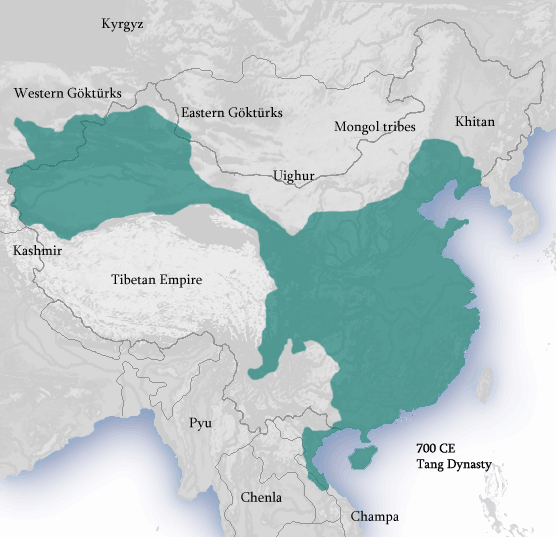


At present, China has entered a new era, and the spirit of Mount Tai has been injected with new vitality and become a new driving force for social development. As President Xi mentioned during his visit to Shandong Province, we should keep an indomitable attitude to struggle, never to be idle in spirit, learning the spirit of those heavers in Mount Tai.This also reflects the continuous enrichment of the cultural connotation of Mount Tai with the times going on.
References
[1] Wei Wei, Fan Hongliang.魏伟; 范宏亮. 山中之山,文化泰山. [The Cultural Mount Tai]. 走向世界 (2020-10-01) 期刊
[2] 中国思想文化术语 Key Concepts in Chinese Thought and Culture学科,文艺 -专辑,第八辑 术语库TERMBASES https://www.chinesethought.cn/shuyu_show.aspx?shuyu_id=4336
[3] Jin Lei.金磊. 关于弘扬泰山文化的思考.Reflections on Carrying Forward the Culture of Mount Tai 传媒论坛 (2021-03-10) 期刊
[4] Hou Xiaolin.侯晓琳. 关于泰山精神文化的研究探讨 北方文学(2020-08-15) 期刊
[5] Zou Boyang.邹博杨. 雄伟泰山——华夏文化繁盛之魂 炎黄地理(2020-02-25) 期刊
[6] Sun Li.孙莉. 浅论泰山精神 东岳论丛(2006-10-28) 期刊
Terms and Expressions
The Most Revered of the Five Sacred Mountains 五岳独尊
the land of Qilu 齐鲁大地
national mountain 国山
sacred mountain 圣山
Sacrificial Ceremony (Fengshan) 封禅
Guanzi 《管子》
First Emperor of Qin 秦始皇
Emperor Wu of the Han Dynasty 汉武帝
Emperor Gaozong of the Tang Dynasty 唐高宗
Empress Wu Zetian 武则天
Emperor Xuanzong of the Tang Dynasty 唐玄宗
Emperor Zhenzong of the Song Dynasty 宋真宗
Emperor Kangxi of the Qing Dynasty 清康熙皇帝
Emperor Qianlong of the Qing Dynasty 清乾隆皇帝
Confucius 孔子
the greatest sage and teacher 至圣先师
The Analects of Confucius 《论语》
Mencius 孟子
The Second Sage 亚圣
Gazing on Mount Tai 《望岳》
Welcome Rain of Mount Tai 《泰山喜雨》
Mount Tai Ode 《泰山咏》
The God of Mount Tai 泰山神
Blue Rosy Cloud Fairy (Bixiayuanjun) 碧霞元君(Mount Tai Grandmother 泰山老奶奶)
The Mount Tai Temple Fair 东岳庙会
Desperate Correspondent (Shigandang) 石敢当
Confucianism, Taoism and Buddhism 儒、道、释
heavers in Mount Tai 泰山挑山工
Questions
1. Which master of Chinese culture once stressed the importance of carrying forward the culture of Mount Tai?
2. How many times did Emperor Wu of the Han Dynasty come to Mount Tai to pay homage?
3. When did The Mount Tai Temple Fair appear?
4. Which three religious cultures merge in the culture of Mount Tai?
5. What is the embodiment of the Mount Tai spirit in the new era?
Answers
1.Ji Xianlin.
2.Eight.
3.In the Northern Song Dynasty.
4.Confucianism, Taoism and Buddhism.
5.The spirit of heavers in Mount Tai.
They seem to have a kind of innate Mount Tai complex that cannot be resolved → removed.
--Tang Hui (talk) 15:08, 15 June 2021 (UTC)