Difference between revisions of "20210601 culture5"
Wang Zihan (talk | contribs) |
|||
| (15 intermediate revisions by 4 users not shown) | |||
| Line 46: | Line 46: | ||
[[File: Sun Lutang.jpg|100px|thumb|right|Sun Lutang(https://gimg2.baidu.com/image_search/src=http%3A%2F%2Fwww.bjcstj.com%2Fuploads%2F170105%2F3-1F1051J252b5.jpg&refer=http%3A%2F%2Fwww.bjcstj.com&app=2002&size=f9999,10000&q=a80&n=0&g=0n&fmt=jpeg?sec=1626419359&t=9fe9262ddf96c8ef37c54dfa1c9c662a)]] | [[File: Sun Lutang.jpg|100px|thumb|right|Sun Lutang(https://gimg2.baidu.com/image_search/src=http%3A%2F%2Fwww.bjcstj.com%2Fuploads%2F170105%2F3-1F1051J252b5.jpg&refer=http%3A%2F%2Fwww.bjcstj.com&app=2002&size=f9999,10000&q=a80&n=0&g=0n&fmt=jpeg?sec=1626419359&t=9fe9262ddf96c8ef37c54dfa1c9c662a)]] | ||
| − | Based on Qigong and martial art techniques from thousands of years ago, Chen Wangting developed the Chen Style Tai Chi around 1670. At present, there are five major styles of Tai Chi. Each of them is named after the corresponding Chinese family from which the styles originate. They are Chen Style by Chen Wangting, Yang Style by Yang Luchan, Wu Style by Wu Yuxiang, Wu Style by Wu Jianquan and Sun Style by Sun Lutang. | + | Based on Controlled Breathing Exercise (Qigong) and martial art techniques from thousands of years ago, Chen Wangting developed the Chen Style Tai Chi around 1670. At present, there are five major styles of Tai Chi. Each of them is named after the corresponding Chinese family from which the styles originate. They are Chen Style by Chen Wangting, Yang Style by Yang Luchan, Wu Style by Wu Yuxiang, Wu Style by Wu Jianquan and Sun Style by Sun Lutang. |
| − | |||
| − | |||
''' (1) Chen Style ''' | ''' (1) Chen Style ''' | ||
| Line 71: | Line 69: | ||
Additionally, there are many other branches, such as Regimen Tai Chi, Wudang Tai Chi, Eight-Diagram Tai Chi, South Area Style, Wuqing Style and others. Wudang Style, combing the martial arts and fitness ideology, is beneficial to improve people’s intelligence and strengthen the physical qualities. South Area Style emphasizes the skills and the elegant shapes, while Wuqing Style focuses on the soft attack style hidden in the strength. | Additionally, there are many other branches, such as Regimen Tai Chi, Wudang Tai Chi, Eight-Diagram Tai Chi, South Area Style, Wuqing Style and others. Wudang Style, combing the martial arts and fitness ideology, is beneficial to improve people’s intelligence and strengthen the physical qualities. South Area Style emphasizes the skills and the elegant shapes, while Wuqing Style focuses on the soft attack style hidden in the strength. | ||
| − | |||
| − | |||
| − | |||
| − | |||
| − | |||
==''' Health Benefits '''== | ==''' Health Benefits '''== | ||
| Line 192: | Line 185: | ||
=Wǔ Sīyí 伍斯仪 Shu Embroidery (Sichuan Embroidery)= | =Wǔ Sīyí 伍斯仪 Shu Embroidery (Sichuan Embroidery)= | ||
| − | |||
==Introduction== | ==Introduction== | ||
[[File:"shu".jpg|300px|right|(https://img.henan.gov.cn/da73c2f49b89def7e36153a1a784f423?p=0)]] | [[File:"shu".jpg|300px|right|(https://img.henan.gov.cn/da73c2f49b89def7e36153a1a784f423?p=0)]] | ||
| − | |||
| − | |||
| − | |||
"Shu" was a beautiful and rich land in Chinese ancient times. In the book Origin of Chinese Characters(Shuo Wen Jie Zi), it explained that the character "Shu" looked like a silkworm crawling on a wide leaf. And in 12 types of oracle bone inscriptions, the character "Shu" also had the image of silkworm, which obviously expressed the relationship between "Shu" and silkworm. What's more, there were many legends that showed that Shu was the birthplace of silkworms and the kingdom of silk. For thousands of years, the silk civilization of ancient Shu bred advanced silk weaving technology, which not only provided raw materials——silk and silk threads for Shu Embroidery, which laid a solid foundation for the development of Shu embroidery; but also created an industrial and cultural environment for the development and prosperity of Shu embroidery.(Zhao Min 2011) | "Shu" was a beautiful and rich land in Chinese ancient times. In the book Origin of Chinese Characters(Shuo Wen Jie Zi), it explained that the character "Shu" looked like a silkworm crawling on a wide leaf. And in 12 types of oracle bone inscriptions, the character "Shu" also had the image of silkworm, which obviously expressed the relationship between "Shu" and silkworm. What's more, there were many legends that showed that Shu was the birthplace of silkworms and the kingdom of silk. For thousands of years, the silk civilization of ancient Shu bred advanced silk weaving technology, which not only provided raw materials——silk and silk threads for Shu Embroidery, which laid a solid foundation for the development of Shu embroidery; but also created an industrial and cultural environment for the development and prosperity of Shu embroidery.(Zhao Min 2011) | ||
| − | |||
| − | |||
| − | |||
| − | |||
| − | |||
| − | |||
| − | |||
==History and Development== | ==History and Development== | ||
Shu embroidery, also called "Sichuan embroidery", mainly refers to embroidery in Chengdu-centered Sichuan Plain. Due to cultural and geographical factors, it also developed to the surrounding areas such as Chongqing. Shu embroidery and Xiang embroidery in Hunan, Yue embroidery in Guangdong, Su embroidery in Suzhou are called "Chinese four famous embroidery". | Shu embroidery, also called "Sichuan embroidery", mainly refers to embroidery in Chengdu-centered Sichuan Plain. Due to cultural and geographical factors, it also developed to the surrounding areas such as Chongqing. Shu embroidery and Xiang embroidery in Hunan, Yue embroidery in Guangdong, Su embroidery in Suzhou are called "Chinese four famous embroidery". | ||
| − | Shu embroidery | + | Shu embroidery originated in the early Shang Dynasty. In the Spring and Autumn Warring States Period, the most developed textile industry was in Qilu area. With Qin gradually decreasing the six countries, the center of textile biased towards the ancient Shu. Besides, people's demand for diversity in clothing had made embroidery and brocade develop side by side, and produced the unique "brocade stitch" of Shu embroidery. In the Three Kingdoms Period, the nobles rushed to buy the splendid fabrics of Shu, so Shu embroidery became a symbol of wealth and status. At that time, Shu Embroidery was even used to exchange carriages and horses to prepare for war. With the trade on the Silk Road, the demand for silk fabrics surged. In Sui and Tang Dynasties, Shu Embroidery developed rapidly and reached its peak, its weaving and embroidering patterns were also greatly enriched. Among them, the pattern invented by Dou Shilun was widely adopted and popular. |
The hedonics of the emperors of the Song Dynasty greatly stimulated the demand for embroidery and promoted its development. And affected by Central Plains Embroidery School, people tended to pay more attention to the decoration and artistry of Shu embroidery rather than its practicality. Therefore, a large number of Shu embroidery were created on the basis of calligraphy and paintings of celebrities in the Song Dynasty. In the Ming Dynasty, in order to restore economy, Zhu Yuanzhang took effective measures to develop industry and commerce. Thanks to this, traditional textile technology had developed by leaps and bounds. Especially cross-stitch work and drawnwork were appreciated by civilians for their durability. In the Qing Dynasty, the industry of Shu embroidery gradually developed from home handmade to market-oriented management. In the late Qing, Shu embroidery formed a production and sales distribution center in Chengdu. With the improvement of the quality and quantity of Shu embroidery, a large number of works were spread overseas, which greatly enhanced the popularity of Shu embroidery in the world. Although various wars in modern times had a huge impact on Shu embroidery, and its skills had once been on the verge of extinction, after the foundation of new China, Chinese government attached great importance to the revival of Shu embroidery. Construction of a large number of technical centers and cultural bases helped to maintain the cultural treasure for generations. (Zhao Min 2011 3-6). | The hedonics of the emperors of the Song Dynasty greatly stimulated the demand for embroidery and promoted its development. And affected by Central Plains Embroidery School, people tended to pay more attention to the decoration and artistry of Shu embroidery rather than its practicality. Therefore, a large number of Shu embroidery were created on the basis of calligraphy and paintings of celebrities in the Song Dynasty. In the Ming Dynasty, in order to restore economy, Zhu Yuanzhang took effective measures to develop industry and commerce. Thanks to this, traditional textile technology had developed by leaps and bounds. Especially cross-stitch work and drawnwork were appreciated by civilians for their durability. In the Qing Dynasty, the industry of Shu embroidery gradually developed from home handmade to market-oriented management. In the late Qing, Shu embroidery formed a production and sales distribution center in Chengdu. With the improvement of the quality and quantity of Shu embroidery, a large number of works were spread overseas, which greatly enhanced the popularity of Shu embroidery in the world. Although various wars in modern times had a huge impact on Shu embroidery, and its skills had once been on the verge of extinction, after the foundation of new China, Chinese government attached great importance to the revival of Shu embroidery. Construction of a large number of technical centers and cultural bases helped to maintain the cultural treasure for generations. (Zhao Min 2011 3-6). | ||
Nowadays,the young generation have also contributed to the development and inheritance of Shu embroidery. What's more, extensive international exchanges and cultural dissemination let Shu embroidery shine home and abroad, making it possible for it to return to glory and prosperity. | Nowadays,the young generation have also contributed to the development and inheritance of Shu embroidery. What's more, extensive international exchanges and cultural dissemination let Shu embroidery shine home and abroad, making it possible for it to return to glory and prosperity. | ||
| − | |||
| − | |||
| − | |||
| − | |||
| − | |||
==Characteristics== | ==Characteristics== | ||
| Line 367: | Line 344: | ||
[[File:wuhuhu.jpg|800px|right|(https://ss3.bdstatic.com/70cFv8Sh_Q1YnxGkpoWK1HF6hhy/it/u=2474219657,1530866572&fm=26&gp=0.jpg)]] | [[File:wuhuhu.jpg|800px|right|(https://ss3.bdstatic.com/70cFv8Sh_Q1YnxGkpoWK1HF6hhy/it/u=2474219657,1530866572&fm=26&gp=0.jpg)]] | ||
| − | Frolics of animals originated in the | + | Frolics of animals originated in the Spring and Autumn Period and the Warring States Period, from Frolics of the Two Animals, Frolics of the Three Animals to Frolics of Multiple Animals. Based on this, Hua Tuo developed the Wuqinxi (Frolics of the Five Animals), a series of exercises based on movements of the tiger, deer, bear, ape, and crane. These easy to do, fun to practice movements are very complete for physical conditioning and internal health and well-being. It now enjoys a high reputation all over the world. (Anhui Tourism Administration) |
| − | |||
| − | |||
| − | |||
| − | |||
== '''Founder''' == | == '''Founder''' == | ||
| Line 393: | Line 366: | ||
'''Deer''' | '''Deer''' | ||
| − | The Deer Play is to imitate the shape and movement of a deer hoping to attain long life and pure soul like a deer. The features of a deer are its gentle disposition, swift movement, love | + | The Deer Play is to imitate the shape and movement of a deer hoping to attain long life and pure soul like a deer. The features of a deer are its gentle disposition, swift movement, love of pushing with horns, and good at running. When it stands it likes to stretch its neck to glance at things afar. The deer also likes looking at left and right and its rear foot. It is also good at moving its tail bones (sacrum). The tail bone is the place where the Jen and Du Meridians meet. Thus, during practice, the practitioner not only needs to imitate the attitude of a deer with swift movement and calm spirit, but also needs to focus attention on the tail bone. This will guide Qi to the whole body, open meridians, circulate blood, relax tendons and bones, and benefit kidney and strengthen waist. It can also enhance blood circulation in the abdomen. This play is suitable for curing dysfunctional nerves in the internal organs, chronicle infections of the internal organs in the abdomen, fatigue in the waist muscles, nerve pain in the pelvis, deteriorated thigh bones, and the lack of sex drives. (Five Animal Frolics) |
| − | |||
| − | |||
[[File:ple.jpg|200px|right|(https://gimg2.baidu.com/image_search/src=http%3A%2F%2Fn.sinaimg.cn%2Fsinacn20%2F292%2Fw640h452%2F20180329%2Fca2e-fyssmmc3957070.jpg&refer=http%3A%2F%2Fn.sinaimg.cn&app=2002&size=f9999,10000&q=a80&n=0&g=0n&fmt=jpeg?sec=1626271004&t=48422f584b1ce63147f40e5808b5b4c2)]] | [[File:ple.jpg|200px|right|(https://gimg2.baidu.com/image_search/src=http%3A%2F%2Fn.sinaimg.cn%2Fsinacn20%2F292%2Fw640h452%2F20180329%2Fca2e-fyssmmc3957070.jpg&refer=http%3A%2F%2Fn.sinaimg.cn&app=2002&size=f9999,10000&q=a80&n=0&g=0n&fmt=jpeg?sec=1626271004&t=48422f584b1ce63147f40e5808b5b4c2)]] | ||
| − | |||
'''Bear''' | '''Bear''' | ||
| Line 493: | Line 463: | ||
4.The ape exercise is externally dynamic and internally static. | 4.The ape exercise is externally dynamic and internally static. | ||
| − | 5.The features of a deer are its gentle disposition, swift movement, | + | 5.The features of a deer are its gentle disposition, swift movement, loving to push with horns, and good at running. |
== '''References''' == | == '''References''' == | ||
| Line 512: | Line 482: | ||
=Yāo Yáng 么阳 Chinese Traditional Cultivation Culture= | =Yāo Yáng 么阳 Chinese Traditional Cultivation Culture= | ||
| − | |||
==Introduction== | ==Introduction== | ||
Chinese culture is established on the basis of cultivation. Different from the western Fishing-Hunting Culture and Nomadic Civilization, Chinese farming civilization flourishes in the fertile land between the Yellow River and the Yangtse River, which enables ancient Chinese to have steadier access to food. Every development of agriculture (mainly about planting) is followed by an increment of population, and more population, more food requirements. Then the circle forms, agricultural instruments and institutions must be improved sequentially. | Chinese culture is established on the basis of cultivation. Different from the western Fishing-Hunting Culture and Nomadic Civilization, Chinese farming civilization flourishes in the fertile land between the Yellow River and the Yangtse River, which enables ancient Chinese to have steadier access to food. Every development of agriculture (mainly about planting) is followed by an increment of population, and more population, more food requirements. Then the circle forms, agricultural instruments and institutions must be improved sequentially. | ||
| Line 533: | Line 502: | ||
In primitive age, Hemudu people and Banpo people began to plant rice and millet. China is the earliest country to plant rice and millet. | In primitive age, Hemudu people and Banpo people began to plant rice and millet. China is the earliest country to plant rice and millet. | ||
In Shang Dynasty and Zhou Dynasty, what we called five cereal grains today had been planted completely and people knew how to select good seeds. | In Shang Dynasty and Zhou Dynasty, what we called five cereal grains today had been planted completely and people knew how to select good seeds. | ||
| − | In Tang Dynasty, after Zhang Qian in Han Dynasty was sent to a diplomatic mission, more and more kinds of Xiyu[11] came into the land of ancient China at that time. | + | In Tang Dynasty, after Zhang Qian in Han Dynasty was sent to a diplomatic mission, more and more kinds of Xiyu[11] came into the land of ancient China at that time. “The Classics on Tea”, written by Lu Yu of the Tang Dynasty (618 A.D.-907 A.D.) was the world's earliest treatise on tea leave production. Drinking Tea was popular in the whole country. |
| − | In Song Dynasty, “Zhan City” rice | + | In Song Dynasty, “Zhan City” rice from ancient Vietnam was brought to China. The output of rice was much more than before. State Su and State Hu around Lake Tai turned into the most important area of grain production. The saying can be heard today: “Harvest in Su and Hu, Food of Nation Enough”. |
In Ming Dynasty, the high-yield crops like corn and sweet potato from America came to China, and were planted widely in Qing Dynasty, which offered enough food to the population explosion at that time. | In Ming Dynasty, the high-yield crops like corn and sweet potato from America came to China, and were planted widely in Qing Dynasty, which offered enough food to the population explosion at that time. | ||
| − | |||
===The Land Ownership System=== | ===The Land Ownership System=== | ||
| Line 555: | Line 523: | ||
游牧文明:Nomadic Civilization | 游牧文明:Nomadic Civilization | ||
| − | + | 两河流域(长江和黄河):Two-River-Drainage Area | |
炎帝(神农): Emperor Fire(Shen Nong) | 炎帝(神农): Emperor Fire(Shen Nong) | ||
| Line 915: | Line 883: | ||
Corrector--[[User:Yuan Jing|Yuan Jing]] ([[User talk:Yuan Jing|talk]]) 15:14, 15 June 2021 (UTC) | Corrector--[[User:Yuan Jing|Yuan Jing]] ([[User talk:Yuan Jing|talk]]) 15:14, 15 June 2021 (UTC) | ||
| − | =Yuán Jìng 袁静 Kingfisher Craft点翠 = | + | =Yuán Jìng 袁静 The Kingfisher Craft点翠 = |
==Introduction== | ==Introduction== | ||
| Line 938: | Line 906: | ||
| − | + | Kingfisher craft is a traditional Chinese handmade craft. Artisans make beautify gold and silver headdresses using Kingfisher feathers, and decorated with gemstones and jewelry. It is a synthesis of many exquisite skills, which coalesces the wisdom and talent of groups of artisans over the generations and reflects the refined elegance of traditional Chinese craftsmanship. It is one of the exemplars of traditional Chinese handicraft. <③ Li Rongsen P4) | |
| − | |||
| − | |||
| − | |||
| − | |||
| − | Kingfisher craft is a traditional Chinese handmade craft. Artisans make beautify gold and silver headdresses using Kingfisher feathers, and decorated with gemstones and jewelry. It is a synthesis of many exquisite skills, which coalesces the wisdom and talent of groups of artisans over the generations and reflects the refined elegance of traditional Chinese craftsmanship. It is one of the exemplars of traditional Chinese handicraft. <③ P4) | ||
==Meaning== | ==Meaning== | ||
[[File:Cuiyu.jpg|200px|thumb|left|kingfisher feathers (http://n.sinaimg.cn/jiangsu/crawl/20170920/nZcY-fykymwm9838004.jpg)]] | [[File:Cuiyu.jpg|200px|thumb|left|kingfisher feathers (http://n.sinaimg.cn/jiangsu/crawl/20170920/nZcY-fykymwm9838004.jpg)]] | ||
| − | + | “Cui,” which refers to a kind of green feather bird, here refers to the lime green feathers of birds. It combines Chinese metalwork and traditional feather artistic handicrafts. Artisans use precious and rare kingfisher feathers to paste on top of gold and silver products in an orderly manner, with coordinated color arrangements and contrasting hues. <① Wang Hefei> | |
| − | “Cui,” which refers to a kind of green feather bird, here refers to the lime green feathers of birds. It combines Chinese metalwork and traditional feather artistic handicrafts. Artisans use precious and rare kingfisher feathers to paste on top of gold and silver products in an orderly manner, with coordinated color arrangements and contrasting hues. <①> | ||
| − | |||
| − | |||
| − | |||
| − | |||
| − | |||
| − | |||
| − | |||
| − | |||
| − | |||
| − | |||
| − | |||
==History== | ==History== | ||
Kingfisher craft is an ancient and long-standing traditional craft in China, with a long history of thousands of years. The earliest record of Kingfisher craft is from Han Feizi, "There was a jewel merchant in the state of Chu who went to Zheng to sell his jewels. He made a box for the jewels out of magnolia wood, perfumed it with spices made of cinnamon and pepper, embellished it with beautiful jade, and attached it with feathers of kingfishers." | Kingfisher craft is an ancient and long-standing traditional craft in China, with a long history of thousands of years. The earliest record of Kingfisher craft is from Han Feizi, "There was a jewel merchant in the state of Chu who went to Zheng to sell his jewels. He made a box for the jewels out of magnolia wood, perfumed it with spices made of cinnamon and pepper, embellished it with beautiful jade, and attached it with feathers of kingfishers." | ||
| − | + | ( 《韩非子·外储说左上》:“楚人有卖其珠于郑者,为木兰之椟,熏以桂椒,缀以珠玉,饰以玫瑰,辑以羽翠。”) The "feathers of kingfishers" first recorded products of kingfisher craft.<③ Li Rongsen 22> | |
| − | It is generally believed that Kingfisher craft began in the Han Dynasty. In the Han Dynasty women's jewelry made greater development. The History of the Later Han Dynasty has recorded the jewelry worn by the Empress Dowager, "with jadeite of feathers, with white beads underneath, hanging gold hairpin." (《后汉书》曾记录过皇太后所佩戴的首饰:“以翡翠为毛羽,下有白珠,垂黄金镊。”)The "jadeite of feathers" is the jewelry decorated with kingfisher feathers. Cao Zhi's Ode the Goddess of the Luo River has written, “wearing gold jewelry and ornaments with kingfisher feathers, decorated with bright pearls." (三国曹植的《洛神赋》有:“戴金翠之首饰,缀明珠以耀躯。”)It recorded the jewelry made of kingfisher feathers and jewel together. <③ | + | It is generally believed that Kingfisher craft began in the Han Dynasty. In the Han Dynasty women's jewelry made greater development. The History of the Later Han Dynasty has recorded the jewelry worn by the Empress Dowager, "with jadeite of feathers, with white beads underneath, hanging gold hairpin." (《后汉书》曾记录过皇太后所佩戴的首饰:“以翡翠为毛羽,下有白珠,垂黄金镊。”)The "jadeite of feathers" is the jewelry decorated with kingfisher feathers. Cao Zhi's Ode the Goddess of the Luo River has written, “wearing gold jewelry and ornaments with kingfisher feathers, decorated with bright pearls." (三国曹植的《洛神赋》有:“戴金翠之首饰,缀明珠以耀躯。”)It recorded the jewelry made of kingfisher feathers and jewel together. <③ Li Rongsen 24> |
| − | In the Tang Dynasty, women dressed elegantly and nobly, so precious pearls and kingfisher feathers were sought after by the noblewomen. (27) Lu Guimeng's Miscellaneous Ploys had a line that, "All the women living in palaces compete with each other to take a look in carriages, and more than three thousand women with Cui pearls admire the emperor." (陆龟蒙的《杂伎》写道:“六宫争近乘舆望,珠翠三千拥赭袍。”)The Cui pearls is the jewelry made of kingfisher feathers and pearls. <③ | + | In the Tang Dynasty, women dressed elegantly and nobly, so precious pearls and kingfisher feathers were sought after by the noblewomen. (27) Lu Guimeng's Miscellaneous Ploys had a line that, "All the women living in palaces compete with each other to take a look in carriages, and more than three thousand women with Cui pearls admire the emperor." (陆龟蒙的《杂伎》写道:“六宫争近乘舆望,珠翠三千拥赭袍。”)The Cui pearls is the jewelry made of kingfisher feathers and pearls. <③ Li Rongsen 28> |
| − | In the Song Dynasty, women's hair ornaments inherited from the Tang Dynasty, but in more various forms. Women wore jewelry made with Kingfisher craft on their hair buns, with the shape of flowers, birds and phoenixes. In one of Li Qingzhao's verses, it is recorded that "Wearing a hat with kingfisher feathers on its head and a snow willow whisked with beautiful gold thread, girls were neatly dressed up and beautiful." (李清照《永遇乐》中有记载:“铺翠冠儿,捻金雪柳,簇带争济楚。”) However, due to the gradual dominance of Neo-Confucianism of Cheng-Zhu, people's concept changed and began to advocate simplicity. The Song dynasty court also issued several edicts forbidding the use of kingfisher feathers in headgear. <③ | + | In the Song Dynasty, women's hair ornaments inherited from the Tang Dynasty, but in more various forms. Women wore jewelry made with Kingfisher craft on their hair buns, with the shape of flowers, birds and phoenixes. In one of Li Qingzhao's verses, it is recorded that "Wearing a hat with kingfisher feathers on its head and a snow willow whisked with beautiful gold thread, girls were neatly dressed up and beautiful." (李清照《永遇乐》中有记载:“铺翠冠儿,捻金雪柳,簇带争济楚。”) However, due to the gradual dominance of Neo-Confucianism of Cheng-Zhu, people's concept changed and began to advocate simplicity. The Song dynasty court also issued several edicts forbidding the use of kingfisher feathers in headgear. <③ Li Rongsen 32> |
| − | The Ming Dynasty and the Qing Dynasty were the heyday of kingfisher craft. During the Ming Dynasty, the commodity economy gradually became more active. The style of women's jewelry became more gorgeous. Kingfisher feathers were colorful and therefore favored. Especially in the production of phoenix crowns, the "Nine Dragons and Nine Phoenixes Crown" of Empress XiaoDuan, unearthed in July 1958, is a classic, with its lively colorful kingfisher feathers and luxurious jewelry. The Ming Dynasty's tin flower headdress also created good conditions for the development of Kingfisher craft. This flower-like ornaments were perfect for the use of the Kingfisher craft. <③ | + | The Ming Dynasty and the Qing Dynasty were the heyday of kingfisher craft. During the Ming Dynasty, the commodity economy gradually became more active. The style of women's jewelry became more gorgeous. Kingfisher feathers were colorful and therefore favored. Especially in the production of phoenix crowns, the "Nine Dragons and Nine Phoenixes Crown" of Empress XiaoDuan, unearthed in July 1958, is a classic, with its lively colorful kingfisher feathers and luxurious jewelry. The Ming Dynasty's tin flower headdress also created good conditions for the development of Kingfisher craft. This flower-like ornaments were perfect for the use of the Kingfisher craft. <③ Li Rongsen 34,35> |
[[File:jiulongjiufengguan.jpg|200px|thumb|left|Nine Dragons and Nine Phoenixes Crown (http://5b0988e595225.cdn.sohucs.com/images/20171206/898057dc1e774546add03c8364853298.jpeg)]] | [[File:jiulongjiufengguan.jpg|200px|thumb|left|Nine Dragons and Nine Phoenixes Crown (http://5b0988e595225.cdn.sohucs.com/images/20171206/898057dc1e774546add03c8364853298.jpeg)]] | ||
| Line 991: | Line 942: | ||
| + | The Qing Dynasty saw the highest level of Kingfisher craft which was never seen before. The noblewomen of the Qing Dynasty paid more attention to the splendor of colors. Thus the glorious and never fading kingfisher feathers became an important decoration. Moreover, the emperor sounded the crown and costume system at that time. The consorts had to wear the imperial crown during the ceremony, and to wear the tin flower headdress on the festive day. Thus the demand for valuable jewelry promoted the use of the Kingfisher craft process on jewelry. <③ Li Rongsen 38>Kingfisher craft gradually became a unique and specialized skill. Not only hairpins, head flowers, even fans and bonsai are also decorated with Kingfisher craft technology. Even the late Qing Dynasty set up a special institution responsible for the management and collection of kingfisher feathers. There were also special "kingfisher artisan" in charge of this craft. <③ Li Rongsen 41> | ||
| − | + | In modern times, Kingfisher craft is in decline. Because women no longer use the traditional headdresses in these days, there was no market for them. With the enactment of various animal protection laws, the state does not allow the use of birds' feathers for decoration. Therefore, kingfisher craft gradually declines. However, in recent years, China has paid more attention to the protection of intangible cultural heritage, and kingfisher craft has attracted some attention again. There are already some designers who have designed modern kingfisher products with other alternative materials, and there are also people who use the craft to restore previous jewelry made of kingfisher feathers . <② Hu Jie> | |
| − | |||
| − | |||
| − | |||
| − | |||
| − | In modern times, Kingfisher craft is in decline. Because women no longer use the traditional headdresses in these days, there was no market for them. With the enactment of various animal protection laws, the state does not allow the use of birds' feathers for decoration. Therefore, kingfisher craft gradually declines. However, in recent years, China has paid more attention to the protection of intangible cultural heritage, and kingfisher craft has attracted some attention again. There are already some designers who have designed modern kingfisher products with other alternative materials, and there are also people who use the craft to restore previous jewelry made of kingfisher feathers . <②> | ||
==Characteristics== | ==Characteristics== | ||
| − | The kingfisher craft is not alone. Instead, the jewelry of kingfisher feathers is usually made with gold and silver wire, pearls, gemstones. In order to show the most brilliant | + | The kingfisher craft is not alone. Instead, the jewelry of kingfisher feathers is usually made with gold and silver wire, pearls, gemstones. In order to show the most brilliant color of the kingfisher's feathers, the artisans who make them must carefully design the shape of the headpiece. Almost every part of the kingfisher process has a different color, depending on the relative position of the observer and the feathers, the light and background color, and other factors. Experiments have shown that when the observer faces the light source, the feathers take on darker colors, such as indigo and blue. However, if the light source is at the back of the observer, the feathers will appear lighter blue-green and green. In order to achieve the brightest effect after wearing, the designer needed to consider the flat pattern of dotted green and design the angle between the models so that they match and illuminate each other. <① Wang Hefei> |
==Classification== | ==Classification== | ||
(1) Hard kingfisher feathers | (1) Hard kingfisher feathers | ||
| − | Hard kingfisher feathers | + | Hard kingfisher feathers refer to the feathers on the wings and tail, which are more commonly used because they are at a larger area on the wings. Lt is also called eight large strips because there are almost eight feathers available on each kingfisher wing. Although there are eight large feathers but the usable part is very little. Hard kingfisher feathers is characterized by obvious texture, strong luster, and coarser texture. Hard kingfisher feathers is mostly cut and pasted because the hardness of the wing part of hard kingfisher feathers is suitable for cutting into the shape of a piece and pointing to the bottom of the tire. Moreover, hard kingfisher feathers is generally very flat and flaky. |
(2) Soft kingfisher feathers | (2) Soft kingfisher feathers | ||
| − | Soft kingfisher feathers refers to the brightest down on the neck and back of the kingfisher. The feather is only a little bit available on the tip, so it will be more expensive, and the production is almost point by point, which is a test of effort. The texture of soft kingfisher feathers is more delicate. However, it does not mean that the grade of jewelry made by soft kingfisher feathers is higher than that by hard kingfisher feathers, but it depends on the overall quality and difficulty of the whole process. The soft kingfisher feathers is made by melting a special glue with warm water and applying it to the back of the kingfisher feathers. This technique is called fixing the glue, and then proceeding with the dots after the glue is all dry. Soft kingfisher feathers are soft and small, so it is mostly used a little by a little. Generally, soft kingfisher feathers is more expensive and has a more delicate texture. <①> | + | Soft kingfisher feathers refers to the brightest down on the neck and back of the kingfisher. The feather is only a little bit available on the tip, so it will be more expensive, and the production is almost point by point, which is a test of effort. The texture of soft kingfisher feathers is more delicate. However, it does not mean that the grade of jewelry made by soft kingfisher feathers is higher than that by hard kingfisher feathers, but it depends on the overall quality and difficulty of the whole process. The soft kingfisher feathers is made by melting a special glue with warm water and applying it to the back of the kingfisher feathers. This technique is called fixing the glue, and then proceeding with the dots after the glue is all dry. Soft kingfisher feathers are soft and small, so it is mostly used a little by a little. Generally, soft kingfisher feathers is more expensive and has a more delicate texture. <① Wang Hefei> |
==Making Process== | ==Making Process== | ||
| − | Generally speaking, the process includes five steps. First, | + | Generally speaking, the process includes five steps. First, drawing the design. The craftsman has to sketch out the piece first, including the colors and many details. Second, making the base. The base has two kinds, including paper and metal ones. The base must be well polished so that kingfisher feathers can be stuck. Third, collecting Kingfisher feathers. It is done by hand, which requires skill that does not damage the color of the feathers themselves. Forth, screening the feathers. It means screening out the required feathers. Fifth, pasinng the feathers. Feathers need to be patiently and meticulously arranged in an orderly manner little by little in the base. It requires artisans not only to take into account the matching of color shades, but also to consider the color of reflected light. <③ Li Rongsen 76-82> |
==References== | ==References== | ||
①Wang Hefei 王翮飞 《中国珠宝首饰工艺最高水平——点翠》[The highest Level of Chinese Jewelry Craftsmanship--Kingfisher Craft] | ①Wang Hefei 王翮飞 《中国珠宝首饰工艺最高水平——点翠》[The highest Level of Chinese Jewelry Craftsmanship--Kingfisher Craft] | ||
| Line 1,228: | Line 1,175: | ||
8.Buddhism. | 8.Buddhism. | ||
| + | |||
| + | Corrector--[[User:Bao Qinwen|Bao Qinwen]] ([[User talk:Bao Qinwen|talk]]) 04:40, 14 July 2021 (UTC) | ||
==References== | ==References== | ||
Latest revision as of 20:38, 14 July 2021
Final Exam Paper Page. Please write now here and improve until grading on 2021 06 15
- Link to return to Course Homepage.
- Link to the other Final Exam paper pages: Final Exams 1 Bào Qìnwén 鲍沁雯 - Dù Xīnyǔ 杜心语; Final Exams 2 Guō Yàbō 郭亚波 - Huáng Zǐlóng 黄梓龙; Final Exams 3 Lǐ Yìhào 李艺浩 - Sū Xiāo 苏潇; Final Exams 4 Tāng Huì 汤惠 - Wáng Qìnyú 王沁瑜; Final Exams 5 Wáng Zǐhán 王子涵 - Zhào Kē 赵轲.
1. Every student should write a new English text on a phenomenon in Chinese culture as a new chapter in the text book. Please also make a comparisons to similar or different cultural phenomenons in Europe and/or the USA.
2. Please find a paper you want to proof read, contact the author, proof read (by copying each paragraph and make corrections/suggestions in the copy) and sign until May 25. The author then finalizes (works in the suggestions) until the final deadline June 1! Please proof read a fellow students' paper by copying each paragraph and make your corrections in the paragraph. In a final step, the original author of the paper has to decide, what of the corrections he/she will accept and work into the paper. The final version submitted on the deadline should not carry any of the fellow student's paragraphs and comments.
- You can use the texts in the coursebook as an example (like Unit 1, Text A). You only need to write Text A (like "Longevity Noodles") or Text B ("Mooncakes"), not a whole Unit. But please try to find fellow students who topics fit under the same Unit title ("Festival Meals") and arrange it accordingly.
- In the topic, please write the category, then the topic - your name and student no.
- For the text, please indicate ALL SOURCES with bibliographical references. That means: At least for every paragraph, sometimes for single sentences, you have to indicate at the end, where you have found this information. E.g. (Liu Miqing 2010, 17). This means you have found it in the book or paper written by Ms Liu on page 17.
- Add a section at the end called "References". There you write the full version of the reference: Liu Miqing 刘宓庆. (2010). 翻译基础 [Translation Basis]. Shanghai: East China Normal University 华东师范大学. Similarly, you do it for papers: Jin Wenlu`靳文璐. (2019). 机器翻译可以取代人工翻译吗? [Can machine translation replace human translation?]. 智库时代 Think Tank Times (40) 282-284.
- Please also add a list "Terms and Expressions".
- Please add a "Questions" section.
- Please add a "Answers" section.
This is the the first page with the final exam papers.
Please write another chapter of the textbook on any cultural phenomenon in China.
=Wáng Zǐhán 王子涵= Tai Chi(taijiquan)
=Wang Zihan 王子涵= Tai Chi(Taijiquan)
Chinese Martial Arts: Tai Chi - Wáng Zǐhán 王子涵 201930096017
Introduction

Tai Chi (also known as T'ai Chi Ch'uan or Taijiquan) is one of the major branches of the traditional Chinese martial arts. Its name is derived from the philosophical term, “Tai Chi,” the first known written reference of which appeared in the Book of Changes over 3000 years ago during the Zhou Dynasty (1100-1221 BC). In this book it says that “in all changes exists Tai Chi, which causes the two opposites in everything.” Tai Chi means the ultimate of ultimate, often used to describe the vastness of the universe. (Dr Paul Lam 2006, 1-10)
The essential principles of Tai Chi are based on the ancient Chinese philosophy of Taoism, which stresses the natural balance in all things and the need for living in spiritual and physical accord with the patterns of nature. According to this philosophy, everything is composed of two opposites, but entirely complementary, elements of yin and yang, working in a relationship which is in perpetual balance. Tai Chi consists of exercises equally balanced between yin and yang, which is why it is so remarkably effective. (Dr Paul Lam 2006, 1-10)
Major Styles


Based on Controlled Breathing Exercise (Qigong) and martial art techniques from thousands of years ago, Chen Wangting developed the Chen Style Tai Chi around 1670. At present, there are five major styles of Tai Chi. Each of them is named after the corresponding Chinese family from which the styles originate. They are Chen Style by Chen Wangting, Yang Style by Yang Luchan, Wu Style by Wu Yuxiang, Wu Style by Wu Jianquan and Sun Style by Sun Lutang.
(1) Chen Style
Generally speaking, this style was created by Chen Wangting (1580 - 1660) who combined the ideology of Chinese traditional Yin and Yang with his ancestral Long Fist (Changquan) to create a new style. Chen Style is characterized by its emphasis on spiral force. Its movements are similar to other martial arts. Slow and soft movements intermix with fast and hard ones. It contains explosive power and low stances. Chen Style is rich with combat techniques that are practical and effective, making it more suitable for younger people.
(2) Yang Style
Yang Style was created by Yang Luchan (1800 - 1873) who loved learning martial arts in his childhood. He learned Tai Chi from Chen Changxing and cultivated his own style which was divided into Small Frame (Xiaojia) and Big Frame (Dajia). As he could flexibly avoid being attacked and attack the opponents, Yang Luchan was well-known for his own styles which were called “Soft Style” and “Melt Style”. These styles are characterized by “natural movements, continuity, and flexibility” as well as the distinctive and beautiful manner combining strength and softness. People of all ages, genders and physical conditions can choose it as a way to keep healthy and strengthen the body. As a result, Yang Style has been the most widespread and the most popular style out of the bunch, which has been learned by nearly 0.3 billion people throughout the world.
(3) Wu Style (by Wu Yuxiang)
Created in the end of the Qing Dynasty (1644 - 1911), it belongs to the traditional Chinese Tai Chi. Different from the Chen and Yang styles, Wu Style stresses the spirit and energy. Its features are to change styles as the opponents change, to attack by the accumulated strength and to also achieve inner strength rather than the merely physical strength. It is suitable for the literates because it lays emphasis on the hands never lifting over the eyebrows, feet never reaching far out and each hand only control one half of the body. Additionally, the steps are overlapped and the feet move as if creating calligraphy
(4) Wu Style (by Wu Jianquan)
Dubbed as the “The 2nd Wu style”, it is the second most popular style practiced today. The defining differences of this style are in its hand form, pushing hands and weapons trainings. It is characterized by softness and emphasis on redirecting incoming force. It is also rich with hand techniques.
(5) Sun Style
This style focuses on smooth, flowing movements that exclude the more rigorous physical movements found in the other four styles, such as crouching and leaping. Due to its extra gentleness, it is most suitable to be used for physical therapy.
Additionally, there are many other branches, such as Regimen Tai Chi, Wudang Tai Chi, Eight-Diagram Tai Chi, South Area Style, Wuqing Style and others. Wudang Style, combing the martial arts and fitness ideology, is beneficial to improve people’s intelligence and strengthen the physical qualities. South Area Style emphasizes the skills and the elegant shapes, while Wuqing Style focuses on the soft attack style hidden in the strength.
Health Benefits
When learned correctly and performed regularly, Tai Chi can be a positive part of an overall approach to improving health. The benefits of Tai Chi may include:
(1) Physical and Mental Health
Several cross-sectional studies indicated that older adults who practiced Tai Chi regularly reported better mental and physical health, (Li 2010, 5) mental well-being, (Zhang 2020, 865-871) flexibility, (Zhu 2007, 355-357) reaction time, walking speed, and mobility compared to people who did not practice Tai Chi. (Wang 2004, 1128)
(2) Balance and Fall Prevention
Most of the research on Tai Chi has been done in older individuals in the area of balance and fall prevention. This area of research is important because fall-related injuries are the leading cause of death from injury and disability among older adults.
Tai Chi movements are steady and slow, shifting from one side to the other with coordinating upper body movements. These movements help the core regain balance and reduces the risk of falling in elderly. (Jin 2005, 44-48)
(3) Strength and Endurance
One study looked at adults in their 60s and 70s who practiced tai chi three times a week for 12 weeks (60-minute classes). These adults were given a battery of physical-fitness tests to measure balance, muscular strength and endurance, and flexibility before and after the 12 weeks. After just six weeks, statistically significant improvements were observed in balance, muscular strength, endurance, and flexibility measures.
The authors of the study concluded that Tai Chi is a potent intervention that improved balance, upper- and lower-body muscular strength and endurance, and upper- and lower-body flexibility in older adults. The research showed that individuals who practiced Tai Chi at least 3 times a week on the regular, had higher strength and performance level. (Hu 2012, 51)
(4) Aerobic Capacity
Aerobic capacity diminishes as we age, but research on traditional forms of aerobic exercise shows that it can improve with regular training. In another meta-analysis study, researchers looked at seven studies focusing on the effects of tai chi on aerobic capacity in adults (average age 55 years). Investigators found that individuals who practiced Tai Chi for one year (classical yang style with 108 postures) had higher aerobic capacity than sedentary individuals around the same age. Therefore, Tai Chi may be a form of aerobic exercise. (Feng 2019, 87-90)
--Wu Siyi (talk) 15:56, 14 June 2021 (UTC)
(5) Chronic Illnesses Prevention and Respiratory System Regulation
Tai Chi helps in the treatment chronic illnesses like heart disease, blood pressure, arthritis, digestive disorders, depression and a few others. (Cui 2004, 1132) Moreover, breathing is one of the three parts of Tai Chi. The deep breathing also helps treat respiratory alignments such as asthma, bronchitis, and emphysema. (Feng 2019, 87-90)
Terms and Expressions
Tai Chi 太极拳
The Book of Changes 《易经》
Chen Style 陈式太极拳(陈王廷)
Yang Style 杨式太极拳(杨露禅)
Wu Style (the 1st) 武式太极拳(武禹襄)
Wu Style (the 2nd) 吴式太极拳(吴鉴泉)
Sun Style 孙式太极拳(孙禄堂)
Chronic illness 慢性疾病
Arthritis 关节炎
Digestive disorders 消化不良;消化疾病;消化系统紊乱
Asthma 哮喘
Bronchitis 支气管炎
Emphysema 肺气肿
Aerobic capacity 有氧能力;有氧运动能力
Questions
1. What ancient Chinese philosophy is Tai Chi based on?
2. What are the 5 main types of Tai Chi?
3. When did Chen Wangting develop the Chen Style Tai Chi?
4. Which Tai Chi style is the most popular?
5. What are the characteristics of Wu Style (the 2nd Wu Style)?
6. How many benefits of Tai Chi are mentioned in this article? What are they?
7. Why is Tai Chi good for balance and fall prevention?
Answers
1. Taoism.
2. They are Chen Style, Yang Style, Wu/Hao Style, Wu Style and Sun Style.
3. Around 1670.
4. Yang Style.
5. It is characterized by softness and emphasis on redirecting incoming force. It is also rich with hand techniques.
6. Five. They are physical and mental health, balance and fall prevention, strength and endurance, aerobic capacity, chronic illness prevention and respiratory system regulation.
7. Because Tai Chi movements are steady and slow, shifting from one side to the other with coordinating upper body movements. These movements help the core regain balance and reduces the risk of falling in elderly.
References
[1] Dr Paul Lam and Nancy Kayne保罗·林博士和南希·凯恩. (2006). Tai Chi for Beginners and the 24 Forms[太极拳初学者与24式太极拳]. Limelight Press[利姆莱特出版社] 1-10.
[2] Dr Paul Lam保罗·林博士. (2006). Teaching Tai Chi Effectively[有效的太极拳教学]. Tai Chi Productions[太极拳制作公司] 1-15.
[3] Wang Gang 王岗. (2001). 太极拳对现代人心理调节的作用[Functions of shadowboxing to psychological adjustment of modern men].武汉体育学院学报[Journal of Wuhan Institute of Physical Education]. (1)107-108.
[4] Li Guoping, Fang Yanchun, Zhang Yingjie, Duan Gongxiang 李国平,方艳春,张颖杰,段功香. (2010).太极拳运动对中老年人身心健康的影响[Effect of Tai Chi intervention on physical and mental health of middle-aged and elderly population]. 护理学杂志[Journal of Nursing Science] (2) 5-7.
[5] Zhang Qi, Song Huimin, Cao Rui, Sun Xue, Jin Yi 张琪,宋慧敏,曹睿,孙雪,金奕. (2020).太极拳对轻度认知障碍老年人认知功能干预效果的Meta分析[Effects of Tai Chi on cognitive function for aged with Mild Cognitive Impairment: a Meta-analysis]. 中国护理管理[Chinese Nursing Management] (6) 865-871.
[6] Zhu Jiaxin 朱家新. (2007). 太极拳对老年人心理健康的影响研究[Research on the Influence of Taijiquan on Senior Citizens′ Mental Health]. 湖北体育科技[Journal of Hubei Sports Science] (3) 355-357.
[7] Wang Li, Wang Sen 王利,王森. (2004). 太极拳锻炼对中老年人心理因素影响分析[Effect of shadowboxing on the psychological factors in middle and aged people]. 中国临床康复Chinese Journal of Clinical Rehabilitation (6)1128-1129.
[8] Jin Changlong, Ban Yusheng 金昌龙,班玉生. (2005). 太极拳练习对中老年人静态平衡能力的影响[Effect of Taijiquan Exercise on Middle and Old-aged Persons' Static Balance Ability]. 上海体育学院学报Journal of Shanghai Physical Education Institute (1)44-48.
[9] Hu Zhendong, Zhao Xianqing 胡振东,赵先卿. (2012). 太极拳运动对健康体适能的影响[Tai Chi for Health Fitness Influence]. 淮北师范大学学报(自然科学版) [Journal of Huaibei Normal University (Natural Science Edition)] (2)51-55.
[10] Cui Dongxue崔冬雪. (2004). 太极拳运动对老年人心血管功能的影响及机制探讨[Effects of shadowboxing on cardiovascular functions in old people and its mechanism]. 华东师范大学Shanghai: East China Normal University. 中国临床康复[Chinese Journal of Clinical Rehabilitation] (6)1132-1133.
[11] Feng Wei冯卫. (2019). 健康中国背景下太极拳健身功效研究[Research on the Fitness Efficiency of Tai Chi under the Background of “Healthy China”]. 广州体育学院学报[Journal of Guangzhou Sport University] (1) 87-90.
Wǔ Sīyí 伍斯仪 Shu Embroidery (Sichuan Embroidery)
Introduction

"Shu" was a beautiful and rich land in Chinese ancient times. In the book Origin of Chinese Characters(Shuo Wen Jie Zi), it explained that the character "Shu" looked like a silkworm crawling on a wide leaf. And in 12 types of oracle bone inscriptions, the character "Shu" also had the image of silkworm, which obviously expressed the relationship between "Shu" and silkworm. What's more, there were many legends that showed that Shu was the birthplace of silkworms and the kingdom of silk. For thousands of years, the silk civilization of ancient Shu bred advanced silk weaving technology, which not only provided raw materials——silk and silk threads for Shu Embroidery, which laid a solid foundation for the development of Shu embroidery; but also created an industrial and cultural environment for the development and prosperity of Shu embroidery.(Zhao Min 2011)
History and Development
Shu embroidery, also called "Sichuan embroidery", mainly refers to embroidery in Chengdu-centered Sichuan Plain. Due to cultural and geographical factors, it also developed to the surrounding areas such as Chongqing. Shu embroidery and Xiang embroidery in Hunan, Yue embroidery in Guangdong, Su embroidery in Suzhou are called "Chinese four famous embroidery".
Shu embroidery originated in the early Shang Dynasty. In the Spring and Autumn Warring States Period, the most developed textile industry was in Qilu area. With Qin gradually decreasing the six countries, the center of textile biased towards the ancient Shu. Besides, people's demand for diversity in clothing had made embroidery and brocade develop side by side, and produced the unique "brocade stitch" of Shu embroidery. In the Three Kingdoms Period, the nobles rushed to buy the splendid fabrics of Shu, so Shu embroidery became a symbol of wealth and status. At that time, Shu Embroidery was even used to exchange carriages and horses to prepare for war. With the trade on the Silk Road, the demand for silk fabrics surged. In Sui and Tang Dynasties, Shu Embroidery developed rapidly and reached its peak, its weaving and embroidering patterns were also greatly enriched. Among them, the pattern invented by Dou Shilun was widely adopted and popular.
The hedonics of the emperors of the Song Dynasty greatly stimulated the demand for embroidery and promoted its development. And affected by Central Plains Embroidery School, people tended to pay more attention to the decoration and artistry of Shu embroidery rather than its practicality. Therefore, a large number of Shu embroidery were created on the basis of calligraphy and paintings of celebrities in the Song Dynasty. In the Ming Dynasty, in order to restore economy, Zhu Yuanzhang took effective measures to develop industry and commerce. Thanks to this, traditional textile technology had developed by leaps and bounds. Especially cross-stitch work and drawnwork were appreciated by civilians for their durability. In the Qing Dynasty, the industry of Shu embroidery gradually developed from home handmade to market-oriented management. In the late Qing, Shu embroidery formed a production and sales distribution center in Chengdu. With the improvement of the quality and quantity of Shu embroidery, a large number of works were spread overseas, which greatly enhanced the popularity of Shu embroidery in the world. Although various wars in modern times had a huge impact on Shu embroidery, and its skills had once been on the verge of extinction, after the foundation of new China, Chinese government attached great importance to the revival of Shu embroidery. Construction of a large number of technical centers and cultural bases helped to maintain the cultural treasure for generations. (Zhao Min 2011 3-6).
Nowadays,the young generation have also contributed to the development and inheritance of Shu embroidery. What's more, extensive international exchanges and cultural dissemination let Shu embroidery shine home and abroad, making it possible for it to return to glory and prosperity.
Characteristics
1. Material Selection
The materials used in Shu embroidery are especially carefully selected, the base material is usually silk soft satin, the embroidery thread is silk thread, and there are two strands in one thread, eight silk threads in one velvet. Generally, Shu embroideries are made of silk, satin, spun silk, yarn and crepe, and the threads and materials used vary according to the needs of the embroideries.(Xia Fangsheng 2020)
The materials used in Shu embroidery are especially carefully selected, the base material is usually silk soft satin, the embroidery thread is silk thread, and there are two strands in one thread, eight silk threads in one velvet.→The materials used in Shu embroidery are especially carefully selected. The base material is usually silk soft satin, the embroidery thread is silk thread, and there are two strands in one thread, eight silk threads in one velvet.--Wu Xinxin (talk) 06:25, 16 June 2021 (UTC)
2. Embroidery Techniques
According to statistics, there are 12 categories of stitches and more than 130 kinds of stitches in Shu embroidery, which is the richest among the four famous embroideries, and the 70 processes of exquisite "Yi Jin Thread" are even unique to Shu embroidery. Commonly used stitches include halo stitch, needle laying, needle rolling, needle cutting, needle blending, needle covering, etc. Halo stitch is one of the basic techniques of Shu embroidery and is often used to express the texture of the work, reflecting its light, color and shape, so that the embroidered work comes to life. There are single-sided embroidery, double-sided embroidery and double-sided triple-variant embroidery, among which double-sided triple-variant embroidery is the highest and most difficult expression of Shu embroidery techniques.(Wu You 2020)
3. Classic Patterns


The themes of Shu embroidery works are mostly beautiful and auspicious objects, such as dragon and phoenix symbolizing nobility, mandarin ducks symbolizing a happy couple, butterflies symbolizing happy love, hibiscus flowers symbolizing prosperity and wealth, and carp symbolizing luck and good fortune.
What's more, Shu embroidery also often features rare animals unique to Sichuan, such as the panda and the golden snub-nosed monkey.(Wu Nan Wang Kangjian Chen Zhang Liu Cairong Zeng Rong Xiu Manling Zhu Lirong 2018))
4. Color Matching

There are four basic color matching methods in Shu embroidery, namely the overlay color matching method, the single-color matching method, the upper five-color matching method and the lower five-color matching method. The first two color schemes are used to produce a simple and generous work with consistency and coherence. The upper color scheme is bright and vivid, while the lower color scheme is quiet, elegant, and not too bright.(Hang Jianqin 2017)
Current Situation and Inheritance
Although Shu embroidery is one of the four famous embroideries, it is much lower than Su embroidery and Xiang embroidery in terms of domestic consumption and foreign export sales. At present, most of the enterprises engaged in the creation of Shu embroidery are small in scale, with insufficient brand influence, backward talent training mechanism, and the problem of talent gap is prominent. Most of the embroideries on the market are mainly handicrafts, but there are few practical items.(Yang Dequan 2020)
For Shu embroidery to have a breakthrough, it should integrate Shu culture with imagination and storytelling on the basis of retaining its own characteristics, rather than purely catering to market tastes. The government should strengthen the market regulation of the cultural sector on Shu embroidery as a cultural heritage, encourage the development of local Shu embroidery enterprises as well as give more preferential policies. By developing Bashu culture, preserving Shu embroidery works and nurturing back-up talents, Shu embroidery is thus consistently protected and inherited.(Xue Xiaoqian Li Qiju 2015.07.15)
References
- Zhao Min赵敏.(2011). 古蜀丝绸文明[Ancient Shu Silk Civilization]. 中国蜀绣Chinese Shu Embroidery,四川科学技术出版社,2011.05, 1-50
- Xia Fangsheng夏方胜(2020). 成都蜀绣[Chengdu Shu Embroidery]. 《地方文化研究》Local Cultural Studies(6),2020
- Wu You吴忧(2020). 蜀绣纹样在文创产品中的创新性应用[Innovative Application of Shu Embroidery Patterns in Cultural and Creative Products]. 《西部皮革》Western Leather(3) 2020
- Wu Nan Wang Kangjian Chen Zhang Liu Cairong Zeng Rong Xiu Manling Zhu Lirong吴楠 王康建 陈政 刘才容 曾蓉 徐曼玲 朱利容(2018) 蜀绣纹样的美好寓意[The Bautiful Symbolism of Shu Embroidery Patterns]. 《纺织科技进展》Advances in Textile Science and Technology(12), 2018
- Hang Jianqin杭建琴(2017) 蜀绣与色彩[Shu Embroidery and Color]. 《天工》The Work of Heaven(2),2017
- Yang Dequan杨德全(2020)《现代艺术》"文艺百家"工程·文艺讲坛Modern Art" "100 Artists of Literature and Art" Project - Literature and Art Forum(7),2020,110-115
- Xue Xiaoqian Li Qiju薛晓倩 李奇菊(2015) 浅谈蜀绣历史发展与保护[A Brief Introduction to the Historical Development and Conservation of Shu Embroidery]. 《民俗民风》Folk customs and folkways,2015.07.15 87-88
Terms and Expressions
Origin of Chinese Characters 说文解字
central Plains Embroidery School 中原绣派
cross-stitch work 挑花
drawnwork 抽纱绣
cottage handmade 家庭手工制作
market-oriented management 市场化经营
subject mater 题材
silk 绸
satin 缎
spun silk 绢
yarn 纱
crepe 绉
Stitch 针法
single-sided embroidery 单面绣
double-sided embroidery 双面绣
double-sided triple-variant embroidery 双面三异绣
the overlay color matching method 套色配色法
the single-color matching method 单色配色法
the upper five-color matching method 上五彩配色法
the lower five-color matching method 下五彩配色法
back-up talents 后备人才
Questions
1. When and where did Shu embroidery came into being?
2. What are the common used stitches of Shu embroidery?
3. What are the classic patterns of Shu embroidery?
4. How should Shu embroidery be inherited?
Answers
1.In the early Shang Dynasty; in Chengdu-centered Sichuan Plain.
2. Halo stitch, needle laying, needle rolling, needle cutting, needle blending, and needle covering.
3. Beautiful and auspicious objects, such as dragon and phoenix, mandarin ducks, butterflies, hibiscus flowers, panda and the golden snub-nosed monkey.
4. It should integrate Shu culture with imagination and storytelling on the basis of retaining its own characteristics, rather than purely catering to market tastes. The government should strengthen the market regulation of the cultural sector on Shu embroidery as a cultural heritage, encourage the development of local Shu embroidery enterprises as well as give more preferential policies
Wuqinxi (Frolics of the Five Animals) - Wú Xīnxīn 吴欣欣 201930096026
Introduction

Frolics of animals originated in the Spring and Autumn Period and the Warring States Period, from Frolics of the Two Animals, Frolics of the Three Animals to Frolics of Multiple Animals. Based on this, Hua Tuo developed the Wuqinxi (Frolics of the Five Animals), a series of exercises based on movements of the tiger, deer, bear, ape, and crane. These easy to do, fun to practice movements are very complete for physical conditioning and internal health and well-being. It now enjoys a high reputation all over the world. (Anhui Tourism Administration)
Founder

Hua Tuo was born in Qiao, present-day Anhui Province (present-day Haoxian County, Anhui Province), which is one of the four major distribution centers of Chinese medicinal materials. In the Chronicles of the Later Han Dynasty, it is said that: "Knowing well the way to keep one in good health, Hua Tuo still appeared in the prime of his life when he was almost 100, and so was regarded as immortal.(Subhuti Dharmananda, Ph.D., Director, Institute for Traditional Medicine, Portland, Oregon.)
Hua Tuo (141-208 CE) was a contemporary of Zhang Zhongjing. He traveled from town to town treating patients and learning from other doctor's practices. He is famous for his skill as a surgeon and his application of anesthesia. The anesthesia was given as a powder called mafeisan that was dissolved in a fermented drink before performing surgery. It has been suggested the powder may have been hemp since its uses were unknown at that time. In addition to surgeries, Hua Tuo also suggested that his patients should use physical exercise. He devised movements that were similar to the movements of five different animals. These were the tiger, deer, bear, monkey and bird. (Traditional Chinese Medicine History - Han Dynasty By Shen-Nong TCM)
Frolics of the Five Animals
Tiger
Tiger Play is to imitate the shape and movement of a tiger. The features of a tiger are its ferocity, strong body, and good at jumping and scratching. The most important element in the Tiger Play is to imitate the awe inspiring attitude of a tiger. Its spirit is shown in its eyes and its awesomeness comes out of its craws. It stared at angry eyes and moved like wind. It twists its waist with force, wags head and swings tail, and vibrates its body. (Five Animal Frolics)
The tiger is an animal that is known for its speed, agility and external strength. Training under this form will develop the bones, joints, and tendons as it requires intricate coordinated movements. The body is trained in the manner where it holds in twisting stances to develop a coil like exertion. This centers the body to the ground and develops the legs to become more graceful yet deadly. This form is perhaps the most physically challenging of all the forms. Mastery of this form will strengthen the forearms, legs, torso and hands. (Tak Wah Eng, The Spirit of the Five Animals, p. 101. )
Deer
The Deer Play is to imitate the shape and movement of a deer hoping to attain long life and pure soul like a deer. The features of a deer are its gentle disposition, swift movement, love of pushing with horns, and good at running. When it stands it likes to stretch its neck to glance at things afar. The deer also likes looking at left and right and its rear foot. It is also good at moving its tail bones (sacrum). The tail bone is the place where the Jen and Du Meridians meet. Thus, during practice, the practitioner not only needs to imitate the attitude of a deer with swift movement and calm spirit, but also needs to focus attention on the tail bone. This will guide Qi to the whole body, open meridians, circulate blood, relax tendons and bones, and benefit kidney and strengthen waist. It can also enhance blood circulation in the abdomen. This play is suitable for curing dysfunctional nerves in the internal organs, chronicle infections of the internal organs in the abdomen, fatigue in the waist muscles, nerve pain in the pelvis, deteriorated thigh bones, and the lack of sex drives. (Five Animal Frolics)

Bear
In general, bear forms emphasize turning, twisting, and bending at the waist; and a focus on the power of the shoulders and upper back when reaching, grabbing, and "clawing." Bear forms usually have the feet separated in a horse stance or lower lunges, which helps exercise (stretch and strengthen) the lower body.
Awkward looking but clear in mind. It walks with lightness inside heavy steps. Gathering Qi at Middle Dantian. It shakes and rampages with force in the shoulders. The bear looks awkward and clumsy, soft as if without bones, its temperament is stable, simple and honest, and it walks with heavy steps. However, flexibility and steadiness are hidden within the heavy steps. Do not mimic the heavy, simple and hones bearing of the bear only, but also try to show the flexibility and steadiness during the exercise. Shaking and rocking are features of the bears' movements, so exert forces with the upper arms (including the shoulders, elbows, hands, hips, knees and feet). Conduct Qi to the Middle Dantian, so as to accelerate deep abdominal respiration and form Dantian Qi. (Jiao Guorui, Qigong Essentials for Health Promotion, 1988, pp. 193-195)
Ape
The Ape Play is to imitate the shape and movements of an ape to show its alertness, agility, and constant movement. The features of an ape are its love to imitate, agile movements, good at picking fruit using upper limbs, and escaping attacks from other animals. You should not only practice the agility of your limbs on the outside, but also practice controlling your thoughts on the inside. The goal of the "Ape Play" is to reach a level of "pure and tranquil in thoughts, light but strong body, and "body is moving but mind is calm". This play will enhance the functions of the heart and lung and strengthen the kidney and waist. This play is suitable for people who are older, weaker or in low spirits. (Five Animal Frolics)
When performing the ape exercise, try to imitate the light and swift movements of the ape, but for the internal exercise you should keep your mind like a bright moon shining in the quiet and still night. So the ape exercise is externally dynamic and internally static. (Wu Qin Xi, Chinese Health Qigong Association, 2007, p. 66)
Crane
The bird exercise involves imitating a crane, traditionally regarded in China as a symbol of calmness, litheness, and longevity. In the practice of this exercise, you should imitate a crane standing upright, with its beak uplifted and displaying a carefree and contented mood, as well as the relaxed manner with which it flaps its wings. Protrude the neck and stiffen the back to drive the flow of Qi upward when raising your arms. Contract the chest and relax the abdomen to drive the flow of Qi downward to Dantaian in the lower abdomen when bringing your arms together downward. The crane exercise can promote circulation of Qi and blood in all the meridians and improve the motility of all the limbs. (Wu Qin Xi, Chinese Health Qigong Association, 2007, p. 79)
Benefits
The "Frolics of the Five Animals" mimics the fierceness of tiger, peacefulness of deer, calmness of bear, agility of ape, and lightness of crane to train the body and mind. It can improve body strength, move blood and Qi, and relax tendons and meridians so people will not get aged quickly. If you can practice it persistently, you will enjoy light spirit, enhanced appetite, improved agility, and firm steps. This has the functions of nurturing spirit, regulating the flow of Qi and blood, helping Jang and Fu, opening meridians, activating sinews and bones, and benefiting joints. The "Frolics of the Five Animals" is also effective in preventing and curing lung diseases, asthma, high blood pressure, heheart-crownisease, weak nerve system, and indigestion, etc. In addition, frequent practice of the "Five Animal-Frolics" can correct abnormal footings and walking postures, prevent wilting of muscles, and improve body balance. It is also beneficial to other symptoms. Practitioners should practice for 15 minutes twice daily, one in the morning and one in the evening. Also, the practitioner should select a field with fresh air and luxuriant vegetation.
Tiger - to develop muscular strength. The Tiger strengthens the waist, sinews and kidneys and builds internal power.
Deer - to develop grace and relaxation. The Deer gives a long stretch to the legs and spine, creating open, expansive movement with very flexible sinew and bones.
Bear - to develop rooted power. The Bear creates greater leg strength, fortifies the bones and develops energy in the kidneys, your fundamental source of vitality.
Ape - to develop suppleness and agility. Become quick witted, alert and nimble.
Crane - to develop balance, lightness and agility. The Crane cools and relaxes your whole body, balances the heart-energy, gently stretches your ligaments and releases your spine.
(Five Animal Frolics)
Terms and Expressions
Frolics of the Five Animals 五禽戏
Hua Tuo 华佗
Chronicles of the Later Han Dynasty 《后汉书》
Chi-kung 气功
the Tiger Frolics 虎戏
the Deer Frolics 鹿戏
the Bear Frolics 熊戏
the Ape Frolics 猿戏
the Crane Frolics 鹤戏
curing lung diseases 肺病
asthma 哮喘
high blood pressure 高血压
indigestion 消化不良
to move blood and Qi 活血益气
to regulate the flow of Qi and blood 理气活血
Questions
1.Who is the founder of Wuqinxi?
2.What animals does Wuqinxi imitate?
3.What does the crane symbolize in traditional Chinese culture?
4.What kind of play is externally dynamic and internally static?
5.What are the characteristics of the deer?
Answers
1.Hua Tuo.
2.Tiger; Deer; Bear; Apt; Crane.
3.The Crane is traditionally regarded in China as a symbol of calmness, litheness, and longevity.
4.The ape exercise is externally dynamic and internally static.
5.The features of a deer are its gentle disposition, swift movement, loving to push with horns, and good at running.
References
[1] Anhui Tourism Administration 安徽省旅游局 http://www.chinadaily.com.cn/m/anhui/travel/2010-06/29/content_10036053.htm
[2]"Hua Tuo" by Subhuti Dharmananda, Ph.D., Director, Institute for Traditional Medicine, Portland, Oregon.
[3] Traditional Chinese Medicine History - Han Dynasty By Shen-Nong TCM. http://www.shen-nong.com/eng/history/qinhan.html
[4] Tak Wah Eng, The Spirit of the Five Animals, p. 101.
[5] Jiao Guorui焦国瑞, Qigong Essentials for Health Promotion, 1988, p. 193-195
[6] Chinese Health Qigong Association国家体育总局健身气功管理中心Wu Qin Xi《五禽戏》2007, p. 66 p. 79
[7] Five Animal Frolics
Yāo Yáng 么阳 Chinese Traditional Cultivation Culture
Introduction
Chinese culture is established on the basis of cultivation. Different from the western Fishing-Hunting Culture and Nomadic Civilization, Chinese farming civilization flourishes in the fertile land between the Yellow River and the Yangtse River, which enables ancient Chinese to have steadier access to food. Every development of agriculture (mainly about planting) is followed by an increment of population, and more population, more food requirements. Then the circle forms, agricultural instruments and institutions must be improved sequentially.
History
About how the ancient Chinese learned to plant crops, there is a mythology: Shen Nong was a great leader of ancient Chinese. It was believed that the leader of Jiang tribe (where people’s last name was Jiang) got his throne for knowing how to use fire. Thus, each leader of this tribe was called “Emperor Fire”. Shen Nong was the first “Emperor Fire”. As a leader, Shen Nong had the responsibility to lead his people a better life. About his contributions, there are two famous events. One is “Shen Nong tastes hundreds of herbal medicine”, another is “Shen Nong plants 5 cereal grains” [1][2]

. Shen Nong whose name in Chinese means “God Farmer” is regarded as the origin of Chinese cultivation. And his story maybe a myth, but at least that proves Chinese people has been working on planting long, long ago. Here are some archaeological evidences:
The earliest discovery of ancient plants in China is the store of rices in the Hemudu Culture remains[3][4]. The cabonized rices weight 150 tons, which is discovered to have existed since 7000 years ago. Almost in the same era of Hemudu People, primitive people in Banpo remains planted earliest millet.
The Development of Cultivation Technology
In primitive age, Chinese use farm tools made of bones.

In Shang Dynasty and Zhou Dynasty, iron farm tools (picture2

)appeared. And cattle helped people to plow(picture3

). So killing a cattle for no reason is against the law.
In Western Han Dynasty, Louche, an animal-drawn seed plough, was invented. In Eastern Han Dynasty, Bi Lan invented Fanche, Turn-Over Water Wheel[9]Media:P1.ssl.qhimg.jpeg.( Fanche can also be called as Loongbone Water Wheel. Through Fanche,the water is lifted from water to irrigate the cultivated land. It consists of long plank channel in which placed are dozens of the matched scraper blades(or wooden dipper)hinging end to end in order of circle. At the top and the bottom both have a toothed wooden shaft. The shaft above moves, and the blades spin. So the water is brought from bottom to top. Its power can get from people, animals or water.) In Tang Dynasty, Quyuanli, crankshaft plough[6], was invented. The plough with incurved shafts was invented by Han people during the Tang Dynasty. It’s referred to as a crankshaft plough and it’s different from a plough that has a straight shaft. It was first popularized in Suzhou and it was known as a “Jiangdong plough.” Compared with the frame of the previous ploughs, the frame of a crankshaft plough is much smaller and lighter. It can easily make turns, making it more flexible to operate. This saves work time. Also, the water wheel is improved and becomes TongcheMedia:Economy.guoxue.jpeg.[9] (Tongche’s function is as same as Fanche, but it mainly uses water as its power and it does more than Fanche. Only in some dry areas, animal power is used. Erect a water wheel in the place where water run fast, the bottom soaked into the water and other parts exposed above. Some bamboo tubes are tied obliquely on the wheel. They are getting water with the spinning of the wheel. When they come to the highest point, the water is poured in the channel automatically, flowing into the field.). Southern rice were planted in the skill called Seedling Transplanting Cultivation. Raise rice seed to sprouts first, then move them to the fields. This increased the survival rate and output. The economic center became transfer from North to South. The growth of crops has to do with water. To water the crops, ancient Chinese not only invented related machines mentioned above, but also built a lot of water conservancy projects. The most famous one is the Dujiang Dam ( also called the Dujiangyan irrigation system) built in 256 B.C. To this day, it still benefits the southwestern people. The growth of crops has to do with the weather, too. The plants grow according to the nature time. The 24 solar terms is one of the conclusions of weather. Accurate time measures allowed ancient people to work and plant. The summary of ancient people’s wisdom of agriculture kept to today has the great four books. They are Si Shengzhi Articles in Western Han Dynasty, Essentials of People’s Happiness in Southern Wei Dynasty, Agricultural Book in Yuan Dynasty and The complete book of agricultural administration in Ming Dynasty.
The Kind of Crops
In primitive age, Hemudu people and Banpo people began to plant rice and millet. China is the earliest country to plant rice and millet. In Shang Dynasty and Zhou Dynasty, what we called five cereal grains today had been planted completely and people knew how to select good seeds. In Tang Dynasty, after Zhang Qian in Han Dynasty was sent to a diplomatic mission, more and more kinds of Xiyu[11] came into the land of ancient China at that time. “The Classics on Tea”, written by Lu Yu of the Tang Dynasty (618 A.D.-907 A.D.) was the world's earliest treatise on tea leave production. Drinking Tea was popular in the whole country. In Song Dynasty, “Zhan City” rice from ancient Vietnam was brought to China. The output of rice was much more than before. State Su and State Hu around Lake Tai turned into the most important area of grain production. The saying can be heard today: “Harvest in Su and Hu, Food of Nation Enough”. In Ming Dynasty, the high-yield crops like corn and sweet potato from America came to China, and were planted widely in Qing Dynasty, which offered enough food to the population explosion at that time.
The Land Ownership System
In agricultural society, the farm land means wealth. The ownership of land is the most important problem. In primitive society, land belonged to the whole tribe and people worked together. In Shan Dynasty and Zhou Dynasty, the "Nine Squares" system with one large square divided into 9 small parts, the 8 outer ones being allocated to serfs who had to cultivate the central one for the serf owner. In fact, it was an aristocratic land ownership in the name of country. It was a period of transition from public ownership to private ownership. In the Spring and Autumn Period and the Warring States Period, the use of cattle ploughing with iron plow made big progress in social productivity. The surplus products redistribution and new-appear market broke the foundation of Nine Squares system. The Land Private-Owning system appeared. The land could belong to farmers, landlords and monarchs. This pervasive land ownership system continued to modern times. Since the Land Reform in The People's Republic of China, it had been abandoned. In Southern Wei Dynasty and Tang Dynasty, Land Equalization Policy was implemented together with the Land Private-Owning System. After war, many land became free land. These lands belonged to the country. And the government assigned them to common people. The land returned to the government after their death. The system finally failed, for the rich took away the nationalized lands by trickery or by force.
Chinese have an indissoluble bond with land and cultivation, which endows them with the good quality of diligence, courage,temperance,patience and kindness.A brilliant culture eats up on the adequate materals made by mature agriculture.However,their deep love of their land used to prevent the change of ancient China from feudalism to capitalism. The businessman would buy a new land as a landlord rather than invest his business with money earned. Even in modern China, people prefer to buy their own house rather than rent one. And modern Chinese regard planting as a good habit and hobby, they love to plant fruits, vegetables and something to eat in their garden or in the big flowerpot on the balcony.
Terms and Expressions
农耕文明:the Cultivation Culture
渔猎文明:the Fishing-Hunting Culture
游牧文明:Nomadic Civilization
两河流域(长江和黄河):Two-River-Drainage Area
炎帝(神农): Emperor Fire(Shen Nong)
五谷:Five Cereal Grains,which contains(稻)rice,(黍)millet([ladin]Panicum miliaceum, yellow millet, that has two kinds, sticky or not sticky.),(稷)millet(colorful),(麦)wheat and (豆)bean. Those are general names of different grains taken as staple food in ancient and modern China.
河姆渡文明:the Hemudu Culture
半坡文明:the Banpo Culture
耧车:Louche, an animal-drawn seed plough
曲辕犁(Quyuanli): Crankshaft
翻车(Fanche):Turn-over Water Wheel
筒车:Tongche(literation, “che” refers to wheeled machine)
育秧移植栽培:Seedling Transplanting Cultivation
都江堰:the Dujiang Dam
《汜胜之书》:Si Shengzhi’s Articles, written by Si shengzhi
《齐民要术》贾思勰:Essentials of People’s Happiness (CH’I MIN YAO SHU[10]),written by Jia Sixie
《农书》王祯:Agricultural Book,written by Wang Zhen
《农政全书》徐光启: The complete book of agricultural administration, written by Xu Guangqi
《茶经》:The Classic on Tea
西域:Xiyu( “xi” in Chinese means “western”, “yu” means area.) usually refers to Xinjiang in Han Dynasty, and with the ancient China communicated more and more with foreign counries, it could refer to many places in Asia and Europe.
占城稻:Zhan City rice
24节气:twenty-four solar terms
井田制:the Nine Squares system
土地私有制:The land private-owning system
均田制:Land Equalization Policy
References
[1]《白虎通义•卷一》:“谓之神农何?古之人民,皆食禽兽肉,至于神农,人民众多,禽兽不足。于是神农因天之时,分地之利,制耒耜,教民农作。神而化之,使民宜之,故谓之神农也。”
[2] 《淮南子•修务训》:“古者,民茹草饮水, 采树木之实,食蠃蠬之肉。时多疾病毒伤之害,于是神农乃始教民播种五谷, 相土地宜,燥湿肥墝高下,尝百草之滋味,水泉之甘苦,令民知所辟就。当此 之时,一日而遇七十毒。”
[3]人教版七年级上册历史教科书第一单元第二课:原始的农耕生活
[4] Huang Jianhua黄剑华. (2016). 中国稻作文化的起源探析[An analysis of the origin of Chinese rice culture][J].地方文化研究Local Cultural Study,2016,(04):40-57.
[5]中国古代农业技术的进步发展
[6] 2018年全国大学英语四级翻译习题:曲辕犁,该文章来源于出国留学网,网址:https://english.liuxue86.com/e/3571825.html
[7] Li Falin李发林. (1986). 翻车和筒车浅谈[A brief discussion over turnover and barrel carriage][J]. 文史哲Literature, History and philosophy, 1986(03):76-78.
[8]Li Genpan李根蟠. (2011). 水车起源和发展丛谈(上辑)[The origin and development of waterwheel series(previous series)][J]. 中国农史History of Chinese Agriculture, 2011, 030(002):3-18. 水车起源和发展丛谈(中辑)[ The origin and development of waterwheel series(medium series)][J]. 中国农史History of Chinese Agriculture, 2011(04):22-49. 水车起源和发展丛谈(下辑)[ The origin and development of waterwheel series(next series)][J]. 中国农史History of Chinese Agriculture, 2012(01):3-21.
[9]古代水利工具 翻车 筒车示意图
[10]石声汉教授曾经出版英文版的《齐民要术概论》,《齐民要术》被音译为此名
[11]王璞 西域英译考辨 2017
Question
1. What is the land ownership system in Tang Dynasty?
2. When did the high-yield crop come to China?
3. Did Bi Lan invent Fanche?
4. What are the last two of the four great agricultural books according to the time?
Answer
1.the Land Private-Owning System and Land Equalization Policy.
2.In Ming Dynasty.
3.Yes.
4. Agricultural Book,written by Wang Zhen and The Complete book of Agricultural Administration, written by Xu Guangqi.
Yì Míngxiá 易明霞 Ancient literature: The Classic of Mountains and Seas
1.Overview
The Ancient Chinese literature "Shan Hai Jing", also known as "The Classic of Mountains and Seas" and "The Classic of Great Wilderness", which was written by various authors in a single time, is a Chinese classic text and a compilation of mythic geography and beasts. It is largely a fabulous geographical and cultural account of pre-Qin China as well as a collection of Chinese mythology. The book is divided into eighteen sections; it describes over 550 mountains and 300 channels.
As for the content, it is not a narrative. The "plot" involves detailed descriptions of locations in the general direction of the "Mountains, Regions Beyond Seas, Regions Within Seas, and Wilderness". These descriptions are usually about medicines, animals, and geological features. Many of the creatures are ordinary and normal, while many are fantasy and strange. Each chapter in the book follows roughly the same formula, and the book is also repetitious in the same way. The different chapters of "The Classic of Mountains and Seas" progress very much like a travelogue, with each section focusing on a specific region, starting from the central lands (China) and working its way outward in each direction to the outlying lands located beyond the four seas which surround the central lands. The text has a vivid description of different races, deities, plants, and minerals unique to their own region, and records interesting information about each, including the histories and activities of many demonic or divine characters. This eclectic book also contains important information on early medicine (including treatments for impotence and infertility), ways of averting catastrophe with omens, and rites of sacrifice, and familiar and unidentified plants and animals. It provides a guided tour of the ancient known world, moving outward from the famous mountains of central China to the lands "beyond the sea". In general, it functions as a guide, through which we can know more about the ancient world. (Michael 2001:679; Srisinthon 2018: 104; Sun Yuzhen 2003: 109,110)
2.Authorship
Who wrote the book and when it was written are controversial. It was originally thought that mythical figures such as Yu the Great or Bo Yi wrote the book. The consensus among modern Sinologists is that the book was not written at a single time by a single author, but rather by numerous people from the period of the Warring States to the beginning of the Han dynasty. Then, based on Yang Xinghui and Luo Dahe’s latest study, the book was initially dedicated by Bo Yi and transmitted orally by his descendants. Then, it was edited by Zhao Gao-lang or Heng the Father and presented to the emperor of the Zhou Dynasty by Zao the Father. Thus, it was passed on to the following generations. (Yang Xinghui / Luo Dahe 2016: 66,73)
3.The Mythical Creatures Within the Book
The mythical creatures portrayed in the book have a romantic quality. They are a combination of ancient ancestors' awe and admiration for morality, power, life and nature, and the result of ancient ancestors' wisdom. Although these creatures are different from each other, they have certain features in common. Firstly, they all embody ancient ancestors' original concept of life. Secondly, they usually have the qualities of a spiritual leader. Lastly, instead of being average people, these mythical creatures are all transcendent deities. (Xue Zhengying 2016: 174,180) The mythical creatures in the book can be classified into four kinds: the orcs, the aliens, the rare and exotic animals, the elves in plants. Some of them are popular and well known in Asian culture, such as Nine-tailed Fox, Phoenix, Nüwa, Houyi. These images are ancient people’s contemplation towards the origin of life and their exploration of nature. This surrealism has a profound impact on the traditional Chinese culture. Some of the images express Chinese ancestors' pursuit of peace. Later, this pursuit of peace has also become a permanent pursuit in China. (Xiang Wei 2021: 25-26)
Here are some images and brief introductions to some typical mythical creatures within the book.

A nine-tailed white fox. As the legend goes, it was the matchmaker of China’s greatest hydraulic engineer The Great Yu and his wife Tushan Shi.

Fish Man, a mermaid, specialized in weaving waterproof silk fabric. According to the Book of Supernatural Beings, Fish Men/Women look like humans but with a fishtail. When they weep, their tears would turn into pearls; and their body oil can keep a lamp burning for a thousand years.

A beast with a dragon head and horse body known as the deity of Mt. Zhongshan.

A five-tail creature called Zheng, specialized in preying on man-eating beasts like tigers and leopards.

A Chinese unicorn called Quanshu.

A monkey-like creature known as Jufu, specialized in long-range stone hurling which terrified other beasts.
4.Changes in the Status
The earliest reference to "the Classic of Mountains and Seas" in history was made by Sima Qian, who expressed strong doubts about its credibility, which had a great impact on the status of "the Classic of Mountains and Seas" in the traditional Chinese civilization. Hence, since Liu Xiu of the Han Dynasty complied "the table of the Classic of Mountains and Seas" and Guo Pu of the Jin Dynasty made the first note about "the Classic", scarcely had there been someone studying the book. Then, in the early twentieth century, the concept of "mythology" from the West and modern academic theories and methods such as anthropology and mythology were introduced to China. These brought a fundamental change in the status of "the Classic". Since then, instead of being criticized by historians, it has become the cornerstone in contemporary study of "Chinese mythology". (Chen Shuai 2013: 209)
5.Influences on Chinese Literature
"The Classic of Mountains and Seas" represents the earliest systematic repository of the myths and deities from ancient and early China, and this work has served as the primary inspiration for later Chinese mythology. The systematic presentation of these myths differs in nature from other textual collections of ancient and early myths identified with other parts of the world, which are structured by some forms of narrative continuity. "The Classic" is bereft of narrative continuity, and its material is structured in accordance with a mythic geography, in which different mythic elements, themes, and characters are located in terms of place and direction. It has no plot, but the mythological creatures and stories in the book lead to diversified imagination. The mythological creatures in the book have been extensively quoted in Chinese literature. In terms of narrative methods, the Classic is simple and concise in its descriptions but rich in imagination, which profoundly influences the narrative style and techniques of the early Chinese novels.(Xiang Wei 2021: 25-26)
References
[1]Xiang Wei项薇. (2021). 浅析《山海经》神话形象对后世小说文学的影响[An analysis of the influence of the mythological images in "the Classic of Mountains and Seas" on the later literature ]. “文学研究”Literary Studies(12),25-26. doi:CNKI:SUN:JGWC.0.2021-12-011.
[2]Srisinthon, P.(2018).《山海经》中山的概念[The Concept of Mountains in "The Classic of Mountains and Seas"]. “瓦莱拉克社会科学杂志”Walailak Journal of Social Science. 11, 1 (Jun. 2018), 101-129.
[3]Xue Zhengying薛正英.(2016). 论《山海经》神话英雄形象及文化精神[An analysis on the images and cultural spirit of the mythical heroes in "the Classic of Mountains and Seas"]. “现代交际” Modern Communication(03),174-177+180. doi:CNKI:SUN:XKJJ.0.2016-03-068.
[4]Yang Xinhui & Luo Dahe杨兴慧 & 罗大和.(2016).《山海经》之作者析考[An analysis of the authors of the Classic of Mountains and Seas]. “西南民族大学学报(人文社科版)”Journal of Southwest Minzu University(Humanities and Social Sciences Edition)(10),66-73. doi:CNKI:SUN:XNZS.0.2016-10-011.
[5]Chen Shuai陈帅. (2013).《山海经》神话研究综述[A review of mythological studies of "the Classic of Mountains and Seas"]. “学理论” Academic Theory(11),209-211. doi:CNKI:SUN:LBYT.0.2013-11-098.
[6]Sun Yuzheng孙玉珍(2003).《山海经》研究综述[A review of "the Classic of Mountains and Seas"][J].“山东理工大学学报(社会科学版)” Journal of Shandong University of Technology(Social Science Edition),2003(01):109-112.
[7]Michael 麦克, T. (2001). “宗教学报”[The Journal of Religion]. Chicago: The University of Chicago Press芝加哥大学出版社, 81(4), 678-680. http://www.jstor.org/stable/1206093
Terms and Expressions
The Classic of Mountains and Seas, The Classic of Great Wilderness 《山海经》
Mountains 《山经》
Regions Beyond Seas 《海外经》
Regions Within Seas 《海内经》
Wilderness 《大荒经》
Yu the Great 大禹
Bo Yi 伯益
modern Sinologist现代汉学家
nine-tailed white fox 九尾白狐
Tushan Shi 涂山氏
Fish Man 鲛人
mermaid 美人鱼
waterproof silk fabric鲛纱
Supernatural Beings 《搜神记》
Mt. Zhongshan 中山神
Zheng 狰
Quanshu 䑏疏
Jufu 举父
Questions
1.How many sections is the classic divided into?
2.What does the book describe?
3.How is the book arranged?
4.How was this book created?
5.What makes a great difference on the change of the status of this book?
Answers
1. 18 sections
2.It describes over 550 mountains and 300 channels.
3.Each chapter follows roughly the same formula, and the whole book is repetitious in this way. Then, the different chapters of The Classic progress much like a travel record, in which each section concentrates on specific region, starting from the central lands (China) and working its way outward in each direction to the outlying lands located beyond the four seas surrounding the central lands.
4. It was initially dedicated by Bo Yi and transmitted orally by his descendants. Then, it was edited by Zhao Gao-lang or Heng the Father and presented to the emperor of the Zhou Dynasty by Zao the Father.
5. In the early twentieth century, the concept of “mythology” from the West and modern academic theories and methods such as anthropology and mythology were introduced to China. These brought a fundamental change in the status of "the Classic".
Corrector--Yuan Jing (talk) 15:14, 15 June 2021 (UTC)
Yuán Jìng 袁静 The Kingfisher Craft点翠
Introduction

Kingfisher craft is a traditional Chinese handmade craft. Artisans make beautify gold and silver headdresses using Kingfisher feathers, and decorated with gemstones and jewelry. It is a synthesis of many exquisite skills, which coalesces the wisdom and talent of groups of artisans over the generations and reflects the refined elegance of traditional Chinese craftsmanship. It is one of the exemplars of traditional Chinese handicraft. <③ Li Rongsen P4)
Meaning

“Cui,” which refers to a kind of green feather bird, here refers to the lime green feathers of birds. It combines Chinese metalwork and traditional feather artistic handicrafts. Artisans use precious and rare kingfisher feathers to paste on top of gold and silver products in an orderly manner, with coordinated color arrangements and contrasting hues. <① Wang Hefei>
History
Kingfisher craft is an ancient and long-standing traditional craft in China, with a long history of thousands of years. The earliest record of Kingfisher craft is from Han Feizi, "There was a jewel merchant in the state of Chu who went to Zheng to sell his jewels. He made a box for the jewels out of magnolia wood, perfumed it with spices made of cinnamon and pepper, embellished it with beautiful jade, and attached it with feathers of kingfishers." ( 《韩非子·外储说左上》:“楚人有卖其珠于郑者,为木兰之椟,熏以桂椒,缀以珠玉,饰以玫瑰,辑以羽翠。”) The "feathers of kingfishers" first recorded products of kingfisher craft.<③ Li Rongsen 22>
It is generally believed that Kingfisher craft began in the Han Dynasty. In the Han Dynasty women's jewelry made greater development. The History of the Later Han Dynasty has recorded the jewelry worn by the Empress Dowager, "with jadeite of feathers, with white beads underneath, hanging gold hairpin." (《后汉书》曾记录过皇太后所佩戴的首饰:“以翡翠为毛羽,下有白珠,垂黄金镊。”)The "jadeite of feathers" is the jewelry decorated with kingfisher feathers. Cao Zhi's Ode the Goddess of the Luo River has written, “wearing gold jewelry and ornaments with kingfisher feathers, decorated with bright pearls." (三国曹植的《洛神赋》有:“戴金翠之首饰,缀明珠以耀躯。”)It recorded the jewelry made of kingfisher feathers and jewel together. <③ Li Rongsen 24>
In the Tang Dynasty, women dressed elegantly and nobly, so precious pearls and kingfisher feathers were sought after by the noblewomen. (27) Lu Guimeng's Miscellaneous Ploys had a line that, "All the women living in palaces compete with each other to take a look in carriages, and more than three thousand women with Cui pearls admire the emperor." (陆龟蒙的《杂伎》写道:“六宫争近乘舆望,珠翠三千拥赭袍。”)The Cui pearls is the jewelry made of kingfisher feathers and pearls. <③ Li Rongsen 28>
In the Song Dynasty, women's hair ornaments inherited from the Tang Dynasty, but in more various forms. Women wore jewelry made with Kingfisher craft on their hair buns, with the shape of flowers, birds and phoenixes. In one of Li Qingzhao's verses, it is recorded that "Wearing a hat with kingfisher feathers on its head and a snow willow whisked with beautiful gold thread, girls were neatly dressed up and beautiful." (李清照《永遇乐》中有记载:“铺翠冠儿,捻金雪柳,簇带争济楚。”) However, due to the gradual dominance of Neo-Confucianism of Cheng-Zhu, people's concept changed and began to advocate simplicity. The Song dynasty court also issued several edicts forbidding the use of kingfisher feathers in headgear. <③ Li Rongsen 32>
The Ming Dynasty and the Qing Dynasty were the heyday of kingfisher craft. During the Ming Dynasty, the commodity economy gradually became more active. The style of women's jewelry became more gorgeous. Kingfisher feathers were colorful and therefore favored. Especially in the production of phoenix crowns, the "Nine Dragons and Nine Phoenixes Crown" of Empress XiaoDuan, unearthed in July 1958, is a classic, with its lively colorful kingfisher feathers and luxurious jewelry. The Ming Dynasty's tin flower headdress also created good conditions for the development of Kingfisher craft. This flower-like ornaments were perfect for the use of the Kingfisher craft. <③ Li Rongsen 34,35>

The Qing Dynasty saw the highest level of Kingfisher craft which was never seen before. The noblewomen of the Qing Dynasty paid more attention to the splendor of colors. Thus the glorious and never fading kingfisher feathers became an important decoration. Moreover, the emperor sounded the crown and costume system at that time. The consorts had to wear the imperial crown during the ceremony, and to wear the tin flower headdress on the festive day. Thus the demand for valuable jewelry promoted the use of the Kingfisher craft process on jewelry. <③ Li Rongsen 38>Kingfisher craft gradually became a unique and specialized skill. Not only hairpins, head flowers, even fans and bonsai are also decorated with Kingfisher craft technology. Even the late Qing Dynasty set up a special institution responsible for the management and collection of kingfisher feathers. There were also special "kingfisher artisan" in charge of this craft. <③ Li Rongsen 41>
In modern times, Kingfisher craft is in decline. Because women no longer use the traditional headdresses in these days, there was no market for them. With the enactment of various animal protection laws, the state does not allow the use of birds' feathers for decoration. Therefore, kingfisher craft gradually declines. However, in recent years, China has paid more attention to the protection of intangible cultural heritage, and kingfisher craft has attracted some attention again. There are already some designers who have designed modern kingfisher products with other alternative materials, and there are also people who use the craft to restore previous jewelry made of kingfisher feathers . <② Hu Jie>
Characteristics
The kingfisher craft is not alone. Instead, the jewelry of kingfisher feathers is usually made with gold and silver wire, pearls, gemstones. In order to show the most brilliant color of the kingfisher's feathers, the artisans who make them must carefully design the shape of the headpiece. Almost every part of the kingfisher process has a different color, depending on the relative position of the observer and the feathers, the light and background color, and other factors. Experiments have shown that when the observer faces the light source, the feathers take on darker colors, such as indigo and blue. However, if the light source is at the back of the observer, the feathers will appear lighter blue-green and green. In order to achieve the brightest effect after wearing, the designer needed to consider the flat pattern of dotted green and design the angle between the models so that they match and illuminate each other. <① Wang Hefei>
Classification
(1) Hard kingfisher feathers Hard kingfisher feathers refer to the feathers on the wings and tail, which are more commonly used because they are at a larger area on the wings. Lt is also called eight large strips because there are almost eight feathers available on each kingfisher wing. Although there are eight large feathers but the usable part is very little. Hard kingfisher feathers is characterized by obvious texture, strong luster, and coarser texture. Hard kingfisher feathers is mostly cut and pasted because the hardness of the wing part of hard kingfisher feathers is suitable for cutting into the shape of a piece and pointing to the bottom of the tire. Moreover, hard kingfisher feathers is generally very flat and flaky.
(2) Soft kingfisher feathers Soft kingfisher feathers refers to the brightest down on the neck and back of the kingfisher. The feather is only a little bit available on the tip, so it will be more expensive, and the production is almost point by point, which is a test of effort. The texture of soft kingfisher feathers is more delicate. However, it does not mean that the grade of jewelry made by soft kingfisher feathers is higher than that by hard kingfisher feathers, but it depends on the overall quality and difficulty of the whole process. The soft kingfisher feathers is made by melting a special glue with warm water and applying it to the back of the kingfisher feathers. This technique is called fixing the glue, and then proceeding with the dots after the glue is all dry. Soft kingfisher feathers are soft and small, so it is mostly used a little by a little. Generally, soft kingfisher feathers is more expensive and has a more delicate texture. <① Wang Hefei>
Making Process
Generally speaking, the process includes five steps. First, drawing the design. The craftsman has to sketch out the piece first, including the colors and many details. Second, making the base. The base has two kinds, including paper and metal ones. The base must be well polished so that kingfisher feathers can be stuck. Third, collecting Kingfisher feathers. It is done by hand, which requires skill that does not damage the color of the feathers themselves. Forth, screening the feathers. It means screening out the required feathers. Fifth, pasinng the feathers. Feathers need to be patiently and meticulously arranged in an orderly manner little by little in the base. It requires artisans not only to take into account the matching of color shades, but also to consider the color of reflected light. <③ Li Rongsen 76-82>
References
①Wang Hefei 王翮飞 《中国珠宝首饰工艺最高水平——点翠》[The highest Level of Chinese Jewelry Craftsmanship--Kingfisher Craft] https://wap.cnki.net/touch/web/Journal/Article/TGTG201909004.html
②Hu Jie 胡洁 《民间工艺——点翠的前世今生》 [Folk Craft -- Kingfisher Craft's History] https://wap.cnki.net/touch/web/Journal/Article/FJCA202002081.html
③Li Rongsen 李荣森 《传统戏曲头饰点翠技艺的传承与发展》 [Inheritance and Development of Traditional Opera Headdress Embellishment Techniques--Kingfisher Craft]
④Han Feizi 韩非子 《韩非子》
⑤Fan Ye 范晔 《后汉书》
⑥Cao Zhi 曹植 《洛神赋》
⑦Lu Guimeng 陆龟蒙 《杂伎》
⑧Li Qingzhao 李清照 《永遇乐》
Expressions
Kingfisher craft 点翠工艺
Empress XiaoDuan 孝端皇后
Han Feizi 韩非子
The History of the Late Han Dynasty 《后汉书》
Ode to the Goddess of the Luo River《洛神赋》
Miscellaneous Ploys 《杂伎》
Information《永遇乐》
hard kingfisher feathers 硬翠
soft kingfisher feathers 软翠
base 首饰胎底
tin flower headdress 钿花
Neo-Confucianism of Cheng-Zhu 程朱理学
Nine Dragons and Nine Phoenixes Crown 九龙九凤冠
Questions
1.What is the earliest known reference to kingfisher craft?
2.When did kingfisher craft origin?
3.In what dynasty did the governor issue edicts forbidding the use of kingfisher feather in headgear?
4.When did kingfisher craft reach its peak?
5.What are the two kinds of kingfisher feathers?
6.Is the grade of jewery made by soft kingfisher feathers higher than that by hard kingfisher feathers?
7.How many steps are involved in making process?
Answers
1.Han Feizi
2.in the Tang Dynasty
3.the Song Dynasty
4.in the Qing Dynasty
5.They are hard and soft kingfisher feathers.
6.No, It depends on the overall quality and difficulty of the whole process.
7.five
Corrector--Zhao Ke (talk) 09:14, 15 June 2021 (UTC)
Zhào Kē 赵轲 Traditional Chinese Funeral Culture
A. Origin and Development


It is generally believed that the idea of immortality of the soul came into being before the middle Paleolithic Age, which is the essential basis of funeral rites. The earliest funeral rites in China originated in the late Paleolithic Age. Unearthed in 1933 Beijing Zhoukoudian Cavemen Sites found a burial chamber under the ruins, which pointed out that eighteen thousand years ago paleolithic cavemen followed funeral procedures, in which the bones of death bodies were surrounded with hematite powders, animal teeth used as tools, and flint stone and so on (Chen/Fan 2013:1).
After entering the feudal society, Chinese funeral rites developed to be complicated, institutionalized and hierarchical, and finally became a set of mature funeral systems. In the Zhou Dynasty, China's funeral rites had already been complete. The Rites of Zhou, The Book of Rites and other books made detailed stipulations on funeral rites. At this stage, the funeral rites were mainly influenced by the patriarchy and the Confucian concept of filial piety (Chen/Fan 2013:2).
This situation continued until the founding of New China. After this, the funeral culture gradually simplified. The reasons are complex. To name a few, that referred to three aspects especially: First, the original feudal class order was broken; Second, funeral procedures were greatly simplified; Third, the concept of immortality of the soul gradually disappeared, and the ritual of worshipping ghosts and gods was also greatly simplified (Chen/Fan 2013:2).
B. Traditional Process
In traditional Chinese funerals, one can leave at ease only after a complete funeral process, which includes several steps (Chen, etc. 2008:43).

(1) A public announcement of the death with weeping and other sad expressions.
This is also called Baosang in Chinese, which is especially done by the female relatives, who announce the death to their neighbors with a loud voice and a predetermined form of crying. Sometimes this is not their voluntary action, but may be required by the will of the death. The official announcement of the death also includes hanging white curtains or lanterns outside the home. In some areas, this is optional, but crying is a necessary act (Hua, 2003:10).
(2) Changing clothes.

Relatives of the dead wear white clothes, shoes and headscarves. Different relatives have different styles of clothing (different colors, etc.), which indicates the relationship between the deceased and the wearers. Of course, there are differences in color symbols and costume combinations, but white is a very clear symbol of mourning clothing, which is a basic feature of Chinese funeral ceremonies (Hua, 2003:10).
(3) Bathing the dead.
After the bath, the final dressing of the deceased is also performed, which is considered to be an important part of the final death (Shouzhongzhengqin\Die in one’s bed). The water used is also particular, often being "water obtained by praying to the gods" (actually bought back with a symbolic amount of money), called “Maishui” (Watson, 1982:1-2).

(4) Delivering food, money, etc. to the world of the dead.
By burning paper objects (houses, furniture, etc.), people bring essential goods to the dead. Food, usually pork, rice, etc., is served in the form of offering (Hua, 2003:11).
(5) Setting the tablet.

It is generally believed that dead people need a written tablet to settle their souls. These tablets are often placed in ancestral temples. Some unmarried women are not considered family members, so their tablets are usually placed in temples (Hua, 2003:11)
(6) Ritual use of money and hiring of professional staff.
Those personnel are employed to perform ceremonial performances that are not possible for the general public to perform due to the complexity of these performances. Money exchange permeates funeral rites in China in different forms (Hua, 2003:12).

(7) With music to accompany the dead, soothe the soul.
The sharp sound of flutes and suona horns (or trumpets), gongs and drums plays an important role, especially when the dead body needs to be moved (Hua, 2003:12).
(8) Going into the coffin.
This is an important feature of traditional Chinese funeral ceremonies, and wooden coffins have been common in China since the Neolithic Age. Ritual hammering of nails is central to the process, often carried out by the head of the deceased's surviving family (Wang, 2019:2; Hua, 2003:12-13).


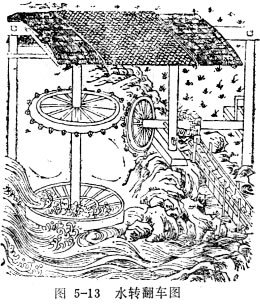
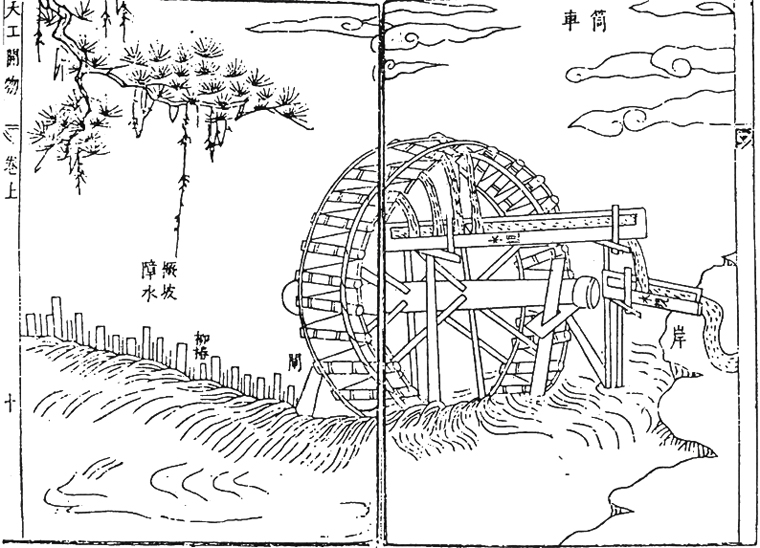
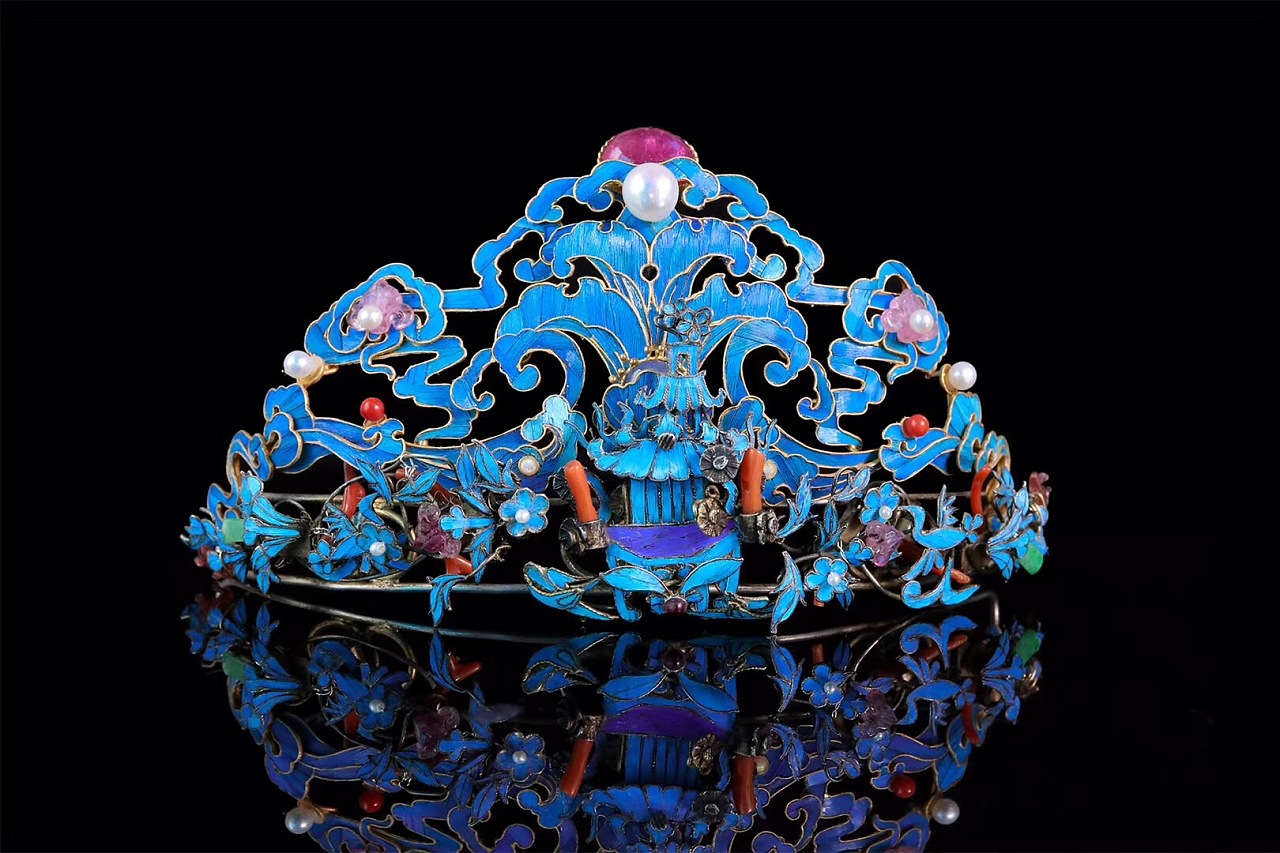
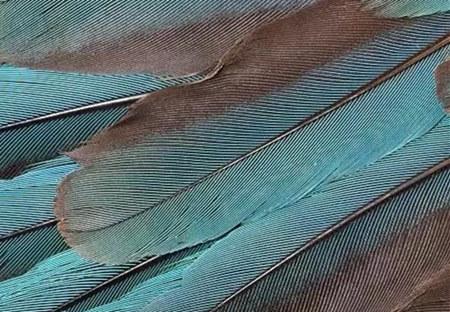
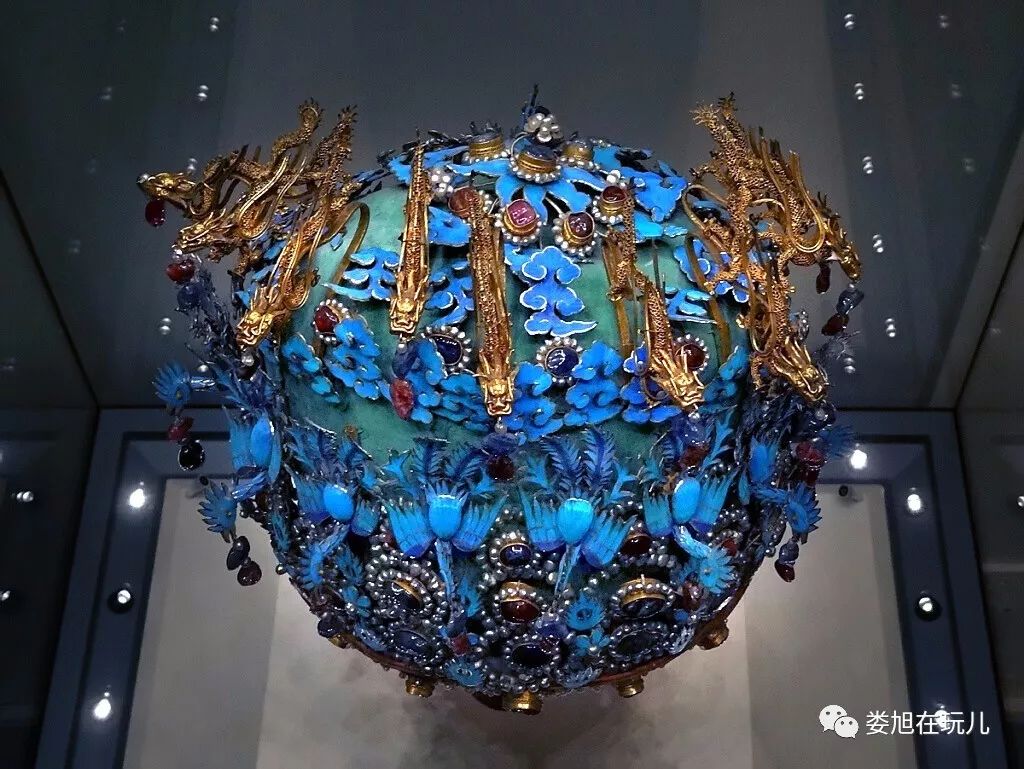

(9) Buried.
After the coffin is sealed, it can be sent away for burial. It is not an act to be done right away. Well-established families sometimes keep coffins in their homes as a sign of respect for the deceased. But eventually the coffins have to be buried (Hua, 2003:13).
There are all kinds of traditional rites for funeral in China, which means that different nations and people living in different areas may have various funeral rites. But after all, the nine points mentioned above may be the most important part in the process of Chinese funeral (Meng, 2020:4-5; Zhao, 2020:2-4; Ding/Zhao, 1989:505).
C. Some Main Forms
1.Burial in Earth
Land was an extremely important condition for people's survival, production and life, as well as the growth of all things, so it was easy to form the worship of land. In the past, people believed that acts such as farming offended the god, so they would sacrifice themselves in blood to beg for forgiveness. Namely, it was burying dead bodies into earth. Under the influence of this thought, the Chinese people gradually formed the idea of "being buried to rest", and the burial in earth became the most common burial style of the Han people (Jin 1996:2).
2. Cremation
Cremation referred to the phenomenon of burning dead bodies to bones, and then burying those bones in tombs in the past. Some burned the dead outside the tomb and then buried the bones or ashes inside the tomb, while others burned the dead and even burial utensils and burial goods inside the tomb chamber. Nowadays, such a form has been used in a more sanitary way in funeral parlors (Gao\Song 2018:1-2).

3. Sky Burial
In Tibetan residential areas, sky burial is the mainstream funeral custom. It is believed that people have afterlife and the soul is immortal, and that the human shell left behind after death means that it is only a skin and worthless. It is better to "give" this shell to hungry vultures to save other lives of other creatures that will be eaten by the vultures (Yang 2015:4). In the Tibetan language, celestial burial is called "Bird-giving"(Shiniao). It is a burial custom full of magical colors and allure, and it is also a unique burial custom on the Qinghai-Tibet Plateau. It is mainly influenced by the doctrines of Tibetan Buddhism such as "the six ways of reincarnation" and "karma", and especially directly influenced by the concepts of "mercy", "alms" and "reincarnation" in Tibetan Buddhism, such as giving up the life to feed tigers, cutting flesh to feed eagles and so on (Zhang 2017:1).

4. Water Burial
The water burial ceremony of the Tibetan nationality can be divided into two categories: the water burial of whole bodies and the water burial of separated bodies. And the containers carrying dead bodies can be roughly divided into bamboo rafts, wooden coffins, wooden boxes, bamboo baskets and sink stones. The ritual process of the whole body burial is basically that the relatives of the deceased wrap the body in cloth and then put the wrapped body into a container. Bamboo baskets are more commonly used as the container. People wrap ropes or wooden strips around the basket or insert them into the basket and then carry the container to a fixed place for water burial. At the riverside, monks would chant sutras for the dead. When the sutras were finished, families will begin to dispose of the dead body. During the process, they will remove the white cloth that they have wrapped before, and then remove the ropes or wooden strips along with it, and tie large stones to the body so that it can sink under the water and never floats up (Li 2015:1).
Terms
Paleolithic Age 旧石器时代
Neolithic Age 新石器时代
Beijing Zhoukoudian cavemen sites 周口店北京人遗址
Die in one’s bed 寿终正寝
The Rites of Zhou 周礼
The Book of Rites 礼记
Immortality of the soul 灵魂不灭
Maishui 买水
Being buried to rest 入土为安
Burial in Earth 土葬
Cremation 火葬
Sky Burial \ Celestial burial 天葬
Water Burial 水葬
Bird-giving 施鸟
Water burial of whole bodies 整尸水葬
Water burial of separated bodies 分尸水葬
Questions
1.When did the earliest funeral rites originate?
2.What made detailed stipulations on funeral rites?
3.What are the reasons that funeral culture gradually simplified after the founding of New China?
4.What is the first step of traditional funeral process?
5.What is the last step of traditional funeral process?
6.Could you list some typical styles of traditional Chinese funeral?
7.In Tibetan language, what is celestial burial called as?
8.Which religions influences Chinese funeral most profoundly?
Answers
1.The earliest funeral rites in China originated in the late Paleolithic Age.
2.The Rites of Zhou, The Book of Rites and other books.
3.First, the original class order was broken; Second, funeral procedures were greatly simplified; Third, the concept of immortality of the soul gradually disappeared, and the ritual of worshipping ghosts and gods was also greatly simplified.
4.A public announcement of death with weeping and other sad expressions.
5.Buried.
6.Burial in Earth, Cremation, Sky Burial and Water Burial.
7."Bird-giving"(Shiniao).
8.Buddhism.
Corrector--Bao Qinwen (talk) 04:40, 14 July 2021 (UTC)
References
[1] Chen Peng, Fan Shaoxing. 陈鹏,范劭兴. (2013). 中国传统丧葬礼仪的功能变迁 [Function Changes of Chinese Traditional Funeral Rites]. 劳动保障世界 (理论版). [World of Labor Security (Theory Edition)]. (07) 171-172;
[2] Chen Shujun, Chen Huawen 陈淑君, 陈华文. (2008) 民间丧葬习俗 [Folk Funeral Customs];
[3] Ding Shiliang, Zhao Fang 丁世良,赵放. (1989). 中国地方志民俗资料汇编·东北卷 [Compilation of Chinese Local Chorography and Folklore Data. Northeast Volume];
[4] Deng Zhuoming, Deng Li 邓卓明, 邓力. (1992). 中国葬俗 [The Chinese Funeral Customs];
[5] Gao Xiangping, Song Xueming 郜向平, 宋雪明. (2018). 商文化中的火葬与焚烧墓室现象 [Cremation and Burning of Grave Chamber in Shang Culture]. 江汉考古[Jianghan Archaeology]. (05):113-117;
[6] Hua Chen 华琛. (2003). 中国丧葬仪式的结构——基本形态、仪式次序、动作的首要性. [The Structure of Chinese Funeral Ritual--Basic Form, Ceremonial Order and Primacy of Action]. 历史人类学学刊 [Journal of Historical Anthropology] (02) 98-114;
[7] Jin Fenglin 靳凤林. (1996). 死亡与中国的丧葬文化 [Death and Funeral Culture in China]. 北方论坛 [The Northern Forum] 05 (139) 22-27 ;
[8] Meng Xuehua 孟学华. (2020). 贵州毛南族丧葬仪式及其文化内涵 [Funeral Ritual and Cultural Connotation of Maonan Ethnic Group in Guizhou]. 黔南民族师范学院学报. [Journal of Qiannan Normal College for Nationalities]. (06) 29-35;
[9] Li Maojia 李毛加. (2015). 浅谈藏族水葬仪式 [On Water Burial Ceremony of Tibetan Nationality]. 商 [Shang]. (52) 119.
[10] Watson, J. L. (1982). Of Flesh and Bones: The Management of Death Pollution in Cantonese Society. Journal of Guangxi University for Nationalities(Philosoph). (06) 161-162;
[11] Wang Zhijun 王治军. (2019). 中国特色的悲伤抚慰——传统丧葬礼俗视角[Sorrow Comfort with Chinese Characteristics--Perspective of Traditional Funeral Ritual]. 中国医学人文[Chinese Medical Humanities]. 5(11) 13-17;
[12] Yang Kuan 杨宽. (1985). 中国古代陵寝制度历史研究 [Study on the History of Chinese Ancient Mausoleum System];
[13] Yang Qun 杨群. (2015). 藏族丧葬习俗的文化地域特征探究[Study on the Cultural Regional Characteristics of Tibetan Funeral Customs].边疆经济与文化[Frontier Economy and Culture]. (12) 69-71;
[14] Zhao Shijian, Liao Liming 赵士见, 廖利明. (2020). 近代鄂伦春族丧葬习俗变迁研究 [The Changes of Funeral Customs of the Oroqen People in Modern Times]. 地域文化研究 [Research on Regional Culture]. (06) 97-104+149;
[15] Zhang Keji 张可吉. (2017). 略论甘南藏区天葬习俗[On the Custom of Sky Burial in Gannan Tibetan Area]. 中国民族博览[Chinese Nationalities Expo]. (07) 7-8;
[16] Zheng Xiaojiang 郑小江. (1995). 中国死亡文化大观 [The Grand View of Chinese Death Culture];
[17] Zhou Suping 周苏平. (2004). 中国古代丧葬习俗 [Funeral Customs in Ancient China].
Li Xinyue李欣玥 Marriage accompanying songs in Hunan(17级翻译 学号201730092013)
A.Introduction
Hunan folk songs are accumulated in the long-term social labor and life of Hunan people. Custom songs are a type of folk songs that are sung in specific custom activities and directly reflect the basic content and characteristics of the custom activities. Folklore needs folk songs to complete its content, and folklore needs folklore as a carrier to pass on. Weddings and funerals are several very important events in a person's life, and are an important part of folklore. Custom songs about weddings and funerals account for a very large proportion of the total number of folk songs in Hunan.(Wen Qiaofeng,2018,1) The folk custom of crying for marriage is popular in many areas of our country, and the custom of crying for marriage is unique in Hunan. It is called "marriage accompanying" in many places in Hunan, and the marriage lament is an important part of Hunan folk songs. The marriage accompanying songs of Chenzhou and Yongzhou in southern Hunan Province have long been famous for their rich and unique singing. Among them, the marriage accompanying songs of Chenzhou are the most representative. In different regions, there are many different names for this accompanying marriage activity, such as "crying in the singing hall", "crying in the garden", etc. The songs sung in this custom activity are called,"Zuotang Song", "Garden Song" and so on. (Wen Qiaofeng,2018,chapter1,5)
B.Legend about marriage accompanying songs in Hunan
There is also a very interesting legend about its origin. According to legend, the king of the Chu Kingdom was named Chu Yidi, and he had a daughter named Chu Yu. One day when Chu yu was traveling, she met Chen Xianyun, a fugitive woman from a county in southern Hunan. After learning about her unfortunate coming marriage, she provided her with many things , gave a lot of help, and then led a group of fairies to Chen Xianyun's home on the eve of her marriage to cheer her up. The two girls sang and sang hundreds of narrative songs in succession. The fairies also sang and danced to the beat. From time to time, they sang a few words in antithesis with the princess and Chen Xianyun. The princess and the fairies didn’t return until dawn was about to show up. (Wen Qiaofeng,2018,chapter1,6)
C.Significance of marriage accompanying songs
Marriage accompanying songsis a kind of farewell activity that female companions do with the girl’s expressions of singing. The most prominent feature is around the bride’s marriage, confiding their feelings of parting, and it also expresses their resentment towards the feudal marriage system and the old ethics. Anger and resistance are dominant. According to incomplete statistics, there are still more than 1,200 songs about the marriage accompanying in southern Hunan.
In 1993, the Jiahe county in southern Hunan was named the "Hometown of Folk Songs" by the Provincial Department of Culture. After the founding of the People's Republic of China, the southern Hunan wedding lament was protected as an artistic wonder in the national characteristic culture. In 1978, the Provincial Department of Culture held a provincial folk song concert in Chenzhou,Hunan and named Chengguan Town as the "Hometown of Folk Songs" in the province.
The Central Conservatory of Music, Shanghai Conservatory of Music and other professional colleges also use the county folk songs (namely wedding lament songs) as teaching materials. The original wedding folk songs are used in films such as " Hibiscus Town ", " The Tortuous Mountain Path ", " Gongs and Drums in towns". On May 24, 2021, the marriage lament declared by Jiahe County, Chenzhou City, Hunan Province, was approved by the State Council to be included in the fifth batch of national intangible cultural heritage representative projects.(Chinese government website,2021,06)
D.Types of marriage accompanying songs
Marriage accompanying songs are not limited to the inherent types. There are long songs, marriage joking songs, and crying songs, as well as teasing bridegroom songs.But accompaniment dances are always performed during singing process.
First of all, for long songs, they mainly tell sad stories, express unwilling emotions and sad emotions. Existing long songs mostly focus on marital tragedies. Taking into account the weak rhythm and complex thinking of the songs, they are generally sung by high-level artists and singers.
Secondly, in terms of marriage jokes, this type of songs have a large number, distinctive features, and flexible structure. It is a kind of songs that women prefer. The song has a simple sentence pattern, mostly four sentences, and the artistic expression is rich and diverse. This kind of joking songs can be expressed with the help of multi-section style expressions and single style expressions, which are rich in content and involve not only interesting children's songs but also sad songs. Regarding the crying marriage song, it focuses on expressing emotions in the form of crying. The theme of the song focuses on nostalgia and complaining. Both the crying and the song are played casually, and the artistic characteristics are different from other types of songs.
Fourthly, as far as the teasing bridegroom songs are concerned, this type of song is an important manifestation of folklore and occupies a certain position in the wedding song. It mainly tells the plot of the groom being teased. The structure and sentence pattern are relatively simple. Finally, as for the accompaniment dance, the dance is closely related to marriage joking songs and is a free dance that is not restricted by props. Any daily necessities can be used as dance props, which is the main embodiment of humorous thoughts.(Liao Xinglin,2020,08)
E.Process of marriage accompanying
Traditional marrying accompanying is divided into two steps. Two nights before the wedding, the bride and her female friends sits in the singing hall to accompany the marriage, mainly singing "marriage joking songs". This is called "short marriage accompanying ".It starts after dinner and ends in the middle of the night. Sitting in the singing hall on the eve of marriage is called "long marriage accompanying ". It also starts after dinner, but it doesn't stop all night, and it will continue to sing until dawn the next day.
Girls singing marriage joking songs in the middle of the night, singing a long song in the second half of the night, and performing the accompaniment dances at dawn the next day, then the bride will come out to cry for marriage.
The word for crying for marriage is to see people crying, improvised, mainly to express the feelings of farewell. The content of the accompaniment songs is very rich, there are those who spread history and production knowledge, some who sing about women's labor life, customs, and astronomy and geography, some who laugh and play, there are guessing songs, love songs, and everything.
But the most sung songs are the songs that tell parting and reflect the pain of women. When dancing, everything you encounter can be used as a dance tool, which is very lively and free, and has a strong breath of life. The bride cried and sang farewell to relatives and friends at home and then boarded the sedan chair. The sisters were sent to the pavilion on the way and then returned. The whole marriage process was completed. The bride’s brothers, uncles and cousins (all men) will send the family and guests to the husband’s house.(kekeshici,2019,05)
Terms and expressions
Marriage accompanying songs 伴嫁歌
marriage accompanying 伴嫁
crying in the singing hall 坐歌堂
crying in the garden 坐花园
Zuotang Song 坐堂歌
Wedding lament songs/crying songs 哭嫁歌
long songs 长歌
marriage joking songs耍歌
teasing bridegroom songs 徒歌
accompaniment dances 伴嫁舞
Hibiscus Town 《芙蓉镇》
The Tortuous Mountain Path 《山路弯弯》
Gongs and Drums in towns 《乡镇锣鼓》
Questions
1.What kind of song does the marriage accompanying song in southern Hunan belong to?
2.Who will sing the marriage accompanying song?
3.List at least 3 themes that marriage accompanying songs would cover.
4.What types of marriage accompanying songs are there?
5.During the singing activity process, would singers sing for the whole night in the "short marriage accompanying"?
Answers
1.folk song
2.the bride and her female friends
3.history and production knowledge, women's labor life, customs, astronomy and geography, parting and reflect the pain of women,nostalgia and complaining.(and so on)
4.long songs, marriage joking songs, crying songs, as well as teasing bridegroom songs.
5.No,it would only last until the midnight.
References
[1]廖星麟.嘉禾伴嫁歌的音乐特征与演唱特征研究[J].戏剧之家,2020(08):56-57.
[2]文巧风. 论湖南风俗民歌[D].湖南师范大学,2018.
[3]可可诗词网,湘南嘉禾伴嫁歌,https://www.kekeshici.com,2019
[4] 李琴,李跃忠.嘉禾“伴嫁歌”研究综述[J].文教资料,2019(31):87-89.
[5] 中国政府网,国务院关于公布第五批国家级非物质文化遗产代表性项目名录的通知,http://www.gov.cn/zhengce/content/2021-06/10/content_5616457,2021,05