Difference between revisions of "User:Cai Yichun"
Zheng Kaiwu (talk | contribs) |
Shao Keyuan (talk | contribs) |
||
| (7 intermediate revisions by the same user not shown) | |||
| Line 1: | Line 1: | ||
| − | = ''' | + | ='''汤显祖'''= |
| − | |||
| − | + | 蔡逸淳202470081592 | |
| − | + | ==摘要== | |
| − | + | 汤显祖作为明代杰出的剧作家与文学家,在文学创作、政治生涯及文化传播等方面皆留下了浓墨重彩的印记。本文涵盖其从科举之路到为官作为,再到辞官后的创作岁月,梳理其戏曲、诗文等多方面成就,探讨他在当时社会环境下的思想理念与价值追求,全面展现汤显祖丰富多彩且极具影响力的一生。 | |
| − | + | [[File:txz.jpg|300px|center|link=]] | |
| − | + | ==引言== | |
| − | == Terms and | + | 汤显祖,字义仍,号若士、海若、清远道人等,1550 年出生于江西临川的一个书香世家,1616 年逝世。在明代文学史上,汤显祖占据着举足轻重的地位,其作品不仅在国内广为流传,更在世界文学之林绽放光彩,被誉为 “东方的莎士比亚”。深入探究汤显祖的主要事迹,对于理解明代文学发展脉络、社会文化风貌以及文人的精神世界有着极为重要的意义。 |
| + | |||
| + | =生平经历= | ||
| + | |||
| + | == 科举之路的坎坷== | ||
| + | |||
| + | 汤显祖自幼天资聪慧,深受家庭浓厚学术氛围的熏陶。5 岁入家塾读书,展现出非凡的学习能力,12 岁便能作诗,13 岁师从徐良傅学习古文词,14 岁补县诸生,21 岁考中举人 。然而,在科举的进阶之路上,他却遭遇诸多波折。当时的科举制度已走向腐败,成为权贵营私舞弊的工具。直到万历十一年(1583 年),张居正去世后,汤显祖才考中进士,此时他已 34 岁,终于开启了自己的仕途生涯 。 | ||
| + | |||
| + | ===为官期间的作为与挫折=== | ||
| + | |||
| + | 汤显祖为官之路跌宕起伏。任职南京时,虽为闲职,却坚守文学独立,与复古派抗争,潜心创作交流。因仗义执言上《论辅臣科臣疏》弹劾权贵,触怒皇帝,被贬徐闻典史。任遂昌知县时,他展现卓越才能,组织打虎除患,秉持 “至情” 纵囚,关心农事,让僻瘠之地焕发生机。然而,其善政触动权贵利益,遭非议反对,最终不堪官场黑暗,主动辞官,三年后被正式罢职,结束了充满波折的仕途生涯 。 | ||
| + | |||
| + | ==文学成就== | ||
| + | |||
| + | === 戏曲创作的辉煌=== | ||
| + | |||
| + | ====“临川四梦” 的创作与影响==== | ||
| + | |||
| + | 汤显祖是江西临川人,“临川四梦”是他最具代表性和为人称道的四部经典作品,分别为《牡丹亭》《紫钗记》《邯郸记》和《南柯记》。这四部作品都具有梦境元素,通过对梦境的描绘和解 读,展现了汤显祖对人生、爱情、社会以及人性的深刻思考和独特见解。在“临川四梦”中,汤 显祖运用丰富的想象和独特的艺术手法,将梦境与现实相互交织,构建出奇幻而富有哲理的世界。 他通过对梦境的细致描绘,展现了人物的内心世界和情感变化,使读者和观众能够深刻感受人物的喜怒哀乐和悲欢离合。 | ||
| + | |||
| + | ==== 戏曲创作理论与实践==== | ||
| + | |||
| + | 汤显祖不仅致力于戏曲创作,还在实践中不断探索、总结戏曲创作理论。他主张 “以意趣神色为主”,反对拟古、拘泥声律和追求形式主义。他认为戏曲创作应注重作品的思想内涵和情感表达,而非仅仅追求形式上的华丽与声律的工整 。在创作过程中,他经常亲自指导宜黄戏的排练和演出,“亲掐檀板教小伶”,“自踏新词教歌舞”,通过实践不断检验和完善自己的创作理论,使作品达到 “令听者泪,读者颦,无情者心动,有情者肠裂” 的艺术效果 。 | ||
| + | |||
| + | ==文化传播与影响== | ||
| + | |||
| + | === 对戏曲文化传承的贡献=== | ||
| + | |||
| + | 汤显祖通过创作大量优秀的戏曲作品,为戏曲文化的传承与发展奠定了坚实基础。他的作品丰富了戏曲的题材和表现形式,将深刻的思想内涵与精湛的艺术技巧相结合,提升了戏曲的艺术价值 。他对宜黄戏的指导与推动,促进了地方戏曲的发展与繁荣,培养了一批优秀的戏曲人才,为宜黄戏日后的传承与传播创造了条件 。同时,“临川四梦” 等作品在国内外的广泛传播,使更多人了解和认识了中国戏曲文化,增强了中国戏曲在世界文化舞台上的影响力 。 | ||
| + | ==结论== | ||
| + | |||
| + | 汤显祖的一生充满了传奇色彩。在科举与仕途上,他历经坎坷,却始终坚守自我,不向权贵低头;在文学创作领域,他凭借 “临川四梦” 等作品,成为中国戏曲史上的一座丰碑,其文学成就不仅丰富了中国古代文学宝库,更在世界文学史上留下了璀璨的印记,他的主要事迹将永远被后人铭记与传颂 。 | ||
| + | |||
| + | |||
| + | ==术语== | ||
| + | 汤显祖 Tang Xianzu | ||
| + | 临川四梦 Four Dreams of Linchuan | ||
| + | 科举制度 Imperial Examination System | ||
| + | 至情 Profound Love | ||
| + | 宜黄戏 Yihuang Opera | ||
| + | 复古派 Archaist School | ||
| + | 典史 Dian Shi | ||
| + | 万历十一年 the 11th Year of Wanli Reign。 | ||
| + | 东方的莎士比亚 the Shakespeare of the East | ||
| + | 辅臣科臣 Auxiliary Ministers and Censor Officials | ||
| + | |||
| + | ==问题== | ||
| + | 1. 汤显祖是中国哪个朝代的文学家? | ||
| + | |||
| + | 2. 汤显祖的 “临川四梦” 包括哪四部作品? | ||
| + | |||
| + | 3. 汤显祖被国际誉为 “东方的______”? | ||
| + | |||
| + | ==回答== | ||
| + | 1.明代 | ||
| + | |||
| + | 2.《牡丹亭》《紫钗记》《邯郸记》和《南柯记》 | ||
| + | |||
| + | 3.莎士比亚 | ||
| + | |||
| + | |||
| + | ==参考文献== | ||
| + | |||
| + | 【1】汤显祖. 《汤显祖集》(全四册).上海:上海人民出版社,1973. | ||
| + | |||
| + | 【2】徐朔方. 《汤显祖评传》.南京:南京大学出版社,1993. | ||
| + | |||
| + | 【3】赵山林. 《中国戏曲传播接受史》.上海:上海人民出版社,2008. | ||
| + | |||
| + | 【4】钱穆. 《国史大纲》.北京:商务印书馆,2013. | ||
| + | |||
| + | 【5】《中国大百科全书·戏曲曲艺卷》.北京:中国大百科全书出版社,1983. | ||
| + | |||
| + | ==AI声明== | ||
| + | 在撰写论文之前我使用了deepseek进行论文的框架构建,指令为“请以汤显祖为主题,构建一篇论文框架”。在撰写初稿的过程中大部分内容是通过百度查找以及翻阅论文来完成的。最后我用AI将中文翻译成了英文,并进行校对,指令为“请帮我翻译成英文并检查是否有语法错误以及有无错译、漏译。”最后根据AI给的建议完成了论文的撰写。总之AI工具只起到了辅助作用。 | ||
| + | |||
| + | |||
| + | |||
| + | |||
| + | |||
| + | = '''Tang Xianzu'''= | ||
| + | |||
| + | ==Abstract== | ||
| + | Tang Xianzu, an outstanding playwright and litterateur of the Ming Dynasty, left a profound mark in literary creation, political career, and cultural dissemination. This article covers his journey from the imperial examination path to official career, and then to the creative years after resigning, combing through his achievements in opera, poetry, and other aspects, exploring his ideological concepts and value pursuits in the social environment of the time, and comprehensively presenting Tang Xianzu's rich and influential life. | ||
| + | |||
| + | [[File:txz.jpg|300px|center|link=]] | ||
| + | |||
| + | ==Introduction== | ||
| + | |||
| + | Tang Xianzu, styled Yireng, with pseudonyms Ruoshi, Hairuo, Qingyuan Daoren, etc., was born in 1550 into a scholarly family in Linchuan, Jiangxi, and died in 1616. In the literary history of the Ming Dynasty, Tang Xianzu held a pivotal position. His works not only spread widely in China but also shone in the world literary forest, earning him the reputation of the "Shakespeare of the East." In-depth exploration of Tang Xianzu's main deeds is of great significance for understanding the development context of Ming Dynasty literature, social and cultural features, and the spiritual world of literati. | ||
| + | |||
| + | == Life Experience== | ||
| + | |||
| + | ===The Bumps of the Imperial Examination Path=== | ||
| + | |||
| + | Tang Xianzu was gifted from an early age and deeply influenced by his family's strong academic atmosphere. He entered a family school at the age of 5, showed extraordinary learning ability, could compose poems at 12, studied ancient prose under Xu Liangfu at 13, became a county student at 14, and passed the provincial examination to become a Juren at 21. However, on the path of advancing in the imperial examinations, he encountered many twists and turns. At that time, the imperial examination system had become corrupt, serving as a tool for powerful officials to seek private interests. It was not until the 11th year of the Wanli reign (1583), after the death of Zhang Juzheng, that Tang Xianzu passed the imperial examination and became a Jinshi at the age of 34, finally starting his official career. | ||
| + | |||
| + | === Achievements and Setbacks During Official Career=== | ||
| + | |||
| + | Tang Xianzu's official path was full of ups and downs. When serving in Nanjing, although holding an idle post, he stuck to literary independence, fought against the archaist school, and devoted himself to creation and communication. Because he righteously submitted the Memorial on Auxiliary Ministers and Censor Officials to impeach powerful officials, he offended the emperor and was demoted to Dian Shi (assistant magistrate) of Xuwen. When serving as the magistrate of Suichang, he showed remarkable talent: organizing tiger hunting to eliminate disasters, pardoning prisoners based on "profound love," caring about farming, and making the barren land thrive. However, his benevolent governance touched the interests of the powerful, causing opposition and criticism. Finally, unable to bear the darkness of officialdom, he took the initiative to resign and was officially dismissed three years later, ending his stormy official career. | ||
| + | |||
| + | == Literary Achievements== | ||
| + | |||
| + | ===The Splendor of Opera Creation=== | ||
| + | |||
| + | ==== The Creation and Influence of the "Four Dreams of Linchuan"==== | ||
| + | |||
| + | As a native of Linchuan, Jiangxi, Tang Xianzu's most representative and renowned four classic works are the "Four Dreams of Linchuan": The Peony Pavilion, The Purple Hairpin, The Handan Dream, and The Nanke Dream. These four works all contain dream elements, through which Tang Xianzu showed his profound thinking and unique insights on life, love, society, and human nature. In the "Four Dreams of Linchuan," Tang Xianzu used rich imagination and unique artistic techniques to interweave dreams and reality, constructing a fantastical and philosophical world. Through detailed depictions of dreams, he showed the inner worlds and emotional changes of characters, enabling readers and audiences to deeply feel the joys, sorrows, and ups and downs of the characters. | ||
| + | |||
| + | ==== Opera Creation Theories and Practices==== | ||
| + | |||
| + | Tang Xianzu not only dedicated himself to opera creation but also continuously explored and summarized opera creation theories in practice. He advocated that "ideological interest, spirit, and manner should be the main focus," opposing archaism, rigid adherence to prosody, and pursuit of formalism. He believed that opera creation should focus on the ideological connotations and emotional expressions of works rather than merely pursuing formal grandeur and metrical precision. In the creative process, he often personally guided the rehearsal and performance of Yihuang Opera. "Personally tapping sandalwood clappers to teach young performers" and "composing new lyrics to teach singing and dancing," he continuously tested and improved his creative theories through practice, making his works achieve the artistic effect of "making listeners shed tears, readers frown, the heartless moved, and the affectionate heartbroken." | ||
| + | |||
| + | ==Cultural Dissemination and Influence== | ||
| + | |||
| + | ===Contributions to the Inheritance of Opera Culture=== | ||
| + | |||
| + | Through creating a large number of excellent opera works, Tang Xianzu laid a solid foundation for the inheritance and development of opera culture. His works enriched the themes and expressive forms of opera, combining profound ideological connotations with exquisite artistic techniques to enhance the artistic value of opera. His guidance and promotion of Yihuang Opera promoted the development and prosperity of local opera, cultivated a group of excellent opera talents, and created conditions for the future inheritance and dissemination of Yihuang Opera. At the same time, the widespread dissemination of works such as the "Four Dreams of Linchuan" at home and abroad has enabled more people to understand and recognize Chinese opera culture, enhancing the influence of Chinese opera on the world cultural stage. | ||
| + | |||
| + | == Conclusion== | ||
| + | |||
| + | Tang Xianzu's life was full of legendary colors. In the imperial examinations and official career, he experienced many hardships but always stuck to himself and did not bow to the powerful. In the field of literary creation, with works such as the "Four Dreams of Linchuan," he became a monument in the history of Chinese opera. His literary achievements have not only enriched the treasure house of ancient Chinese literature but also left a brilliant mark in the history of world literature. His main deeds will forever be remembered and praised by later generations. | ||
| + | |||
| + | ==References== | ||
| + | |||
| + | 【1】Tang Xianzu. Collected Works of Tang Xianzu (4 volumes). Shanghai: Shanghai People's Publishing House, 1973. | ||
| + | |||
| + | 【2】Xu Shuo fang. A Critical Biography of Tang Xianzu. Nanjing: Nanjing University Press, 1993. | ||
| + | |||
| + | 【3】Zhao Shanlin. A History of the Dissemination and Reception of Chinese Opera. Shanghai: Shanghai People's Publishing House, 2008. | ||
| + | |||
| + | 【4】Qian Mu. An Outline of Chinese History. Beijing: The Commercial Press, 2013. | ||
| + | |||
| + | 【5】Encyclopedia of China: Volume of Opera and Qu Beijing: Encyclopedia of China Publishing House, 1983. | ||
| + | |||
| + | ==Terms and expressions== | ||
汤显祖 Tang Xianzu | 汤显祖 Tang Xianzu | ||
临川四梦 Four Dreams of Linchuan | 临川四梦 Four Dreams of Linchuan | ||
| − | + | 科举制度 Imperial Examination System | |
| − | + | 至情 Profound Love | |
| − | + | 宜黄戏 Yihuang Opera | |
| − | + | 复古派 Archaist School | |
| − | + | 典史 Dian Shi | |
| − | + | 万历十一年 the 11th Year of Wanli Reign。 | |
| − | + | 东方的莎士比亚 the Shakespeare of the East | |
| − | + | 辅臣科臣 Auxiliary Ministers and Censor Officials | |
| − | == | + | |
| − | 1. | + | ==Questions== |
| − | 2. | + | |
| − | + | 1.Which dynasty did Tang Xianzu belong to in Chinese history? | |
| − | + | ||
| − | + | 2.Which four works are included in Tang Xianzu's "Four Dreams of Linchuan"? | |
| − | = | + | |
| − | + | 3.Tang Xianzu is internationally known as the of the East". | |
| − | + | ||
| − | + | ==Answers== | |
| − | + | ||
| − | + | 1.Tang dynasty | |
| − | + | ||
| + | 2. The Peony Pavilion, The Purple Hairpin, The Handan Dream, and The Nanke Dream | ||
| + | 3.Shakespeare | ||
| − | == | + | ==AI statement== |
| − | + | Before writing the paper, I used DeepSeek to construct the framework with the instruction: "Please take Tang Xianzu as the theme to build a paper framework." During the first draft, most content was completed by searching on Baidu and reviewing papers. Finally, I used AI to translate the Chinese into English and proofread it, with the instruction: "Please help translate this into English and check for grammatical errors, mistranslations, or omissions." The paper was finalized based on AI's suggestions. In short, AI tools only served as auxiliary aids. | |
| − | |||
| − | |||
| − | |||
| − | |||
| − | |||
| − | |||
| − | |||
| − | |||
| − | |||
| − | |||
| − | |||
| − | |||
Latest revision as of 18:32, 19 June 2025
汤显祖
蔡逸淳202470081592
摘要
汤显祖作为明代杰出的剧作家与文学家,在文学创作、政治生涯及文化传播等方面皆留下了浓墨重彩的印记。本文涵盖其从科举之路到为官作为,再到辞官后的创作岁月,梳理其戏曲、诗文等多方面成就,探讨他在当时社会环境下的思想理念与价值追求,全面展现汤显祖丰富多彩且极具影响力的一生。
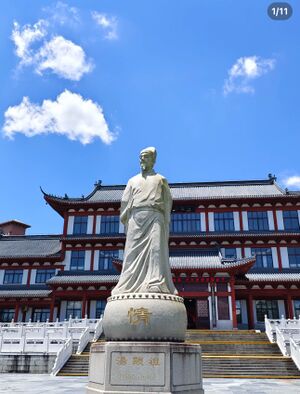
引言
汤显祖,字义仍,号若士、海若、清远道人等,1550 年出生于江西临川的一个书香世家,1616 年逝世。在明代文学史上,汤显祖占据着举足轻重的地位,其作品不仅在国内广为流传,更在世界文学之林绽放光彩,被誉为 “东方的莎士比亚”。深入探究汤显祖的主要事迹,对于理解明代文学发展脉络、社会文化风貌以及文人的精神世界有着极为重要的意义。
生平经历
科举之路的坎坷
汤显祖自幼天资聪慧,深受家庭浓厚学术氛围的熏陶。5 岁入家塾读书,展现出非凡的学习能力,12 岁便能作诗,13 岁师从徐良傅学习古文词,14 岁补县诸生,21 岁考中举人 。然而,在科举的进阶之路上,他却遭遇诸多波折。当时的科举制度已走向腐败,成为权贵营私舞弊的工具。直到万历十一年(1583 年),张居正去世后,汤显祖才考中进士,此时他已 34 岁,终于开启了自己的仕途生涯 。
为官期间的作为与挫折
汤显祖为官之路跌宕起伏。任职南京时,虽为闲职,却坚守文学独立,与复古派抗争,潜心创作交流。因仗义执言上《论辅臣科臣疏》弹劾权贵,触怒皇帝,被贬徐闻典史。任遂昌知县时,他展现卓越才能,组织打虎除患,秉持 “至情” 纵囚,关心农事,让僻瘠之地焕发生机。然而,其善政触动权贵利益,遭非议反对,最终不堪官场黑暗,主动辞官,三年后被正式罢职,结束了充满波折的仕途生涯 。
文学成就
戏曲创作的辉煌
“临川四梦” 的创作与影响
汤显祖是江西临川人,“临川四梦”是他最具代表性和为人称道的四部经典作品,分别为《牡丹亭》《紫钗记》《邯郸记》和《南柯记》。这四部作品都具有梦境元素,通过对梦境的描绘和解 读,展现了汤显祖对人生、爱情、社会以及人性的深刻思考和独特见解。在“临川四梦”中,汤 显祖运用丰富的想象和独特的艺术手法,将梦境与现实相互交织,构建出奇幻而富有哲理的世界。 他通过对梦境的细致描绘,展现了人物的内心世界和情感变化,使读者和观众能够深刻感受人物的喜怒哀乐和悲欢离合。
戏曲创作理论与实践
汤显祖不仅致力于戏曲创作,还在实践中不断探索、总结戏曲创作理论。他主张 “以意趣神色为主”,反对拟古、拘泥声律和追求形式主义。他认为戏曲创作应注重作品的思想内涵和情感表达,而非仅仅追求形式上的华丽与声律的工整 。在创作过程中,他经常亲自指导宜黄戏的排练和演出,“亲掐檀板教小伶”,“自踏新词教歌舞”,通过实践不断检验和完善自己的创作理论,使作品达到 “令听者泪,读者颦,无情者心动,有情者肠裂” 的艺术效果 。
文化传播与影响
对戏曲文化传承的贡献
汤显祖通过创作大量优秀的戏曲作品,为戏曲文化的传承与发展奠定了坚实基础。他的作品丰富了戏曲的题材和表现形式,将深刻的思想内涵与精湛的艺术技巧相结合,提升了戏曲的艺术价值 。他对宜黄戏的指导与推动,促进了地方戏曲的发展与繁荣,培养了一批优秀的戏曲人才,为宜黄戏日后的传承与传播创造了条件 。同时,“临川四梦” 等作品在国内外的广泛传播,使更多人了解和认识了中国戏曲文化,增强了中国戏曲在世界文化舞台上的影响力 。
结论
汤显祖的一生充满了传奇色彩。在科举与仕途上,他历经坎坷,却始终坚守自我,不向权贵低头;在文学创作领域,他凭借 “临川四梦” 等作品,成为中国戏曲史上的一座丰碑,其文学成就不仅丰富了中国古代文学宝库,更在世界文学史上留下了璀璨的印记,他的主要事迹将永远被后人铭记与传颂 。
术语
汤显祖 Tang Xianzu 临川四梦 Four Dreams of Linchuan 科举制度 Imperial Examination System 至情 Profound Love 宜黄戏 Yihuang Opera 复古派 Archaist School 典史 Dian Shi 万历十一年 the 11th Year of Wanli Reign。 东方的莎士比亚 the Shakespeare of the East 辅臣科臣 Auxiliary Ministers and Censor Officials
问题
1. 汤显祖是中国哪个朝代的文学家?
2. 汤显祖的 “临川四梦” 包括哪四部作品?
3. 汤显祖被国际誉为 “东方的______”?
回答
1.明代
2.《牡丹亭》《紫钗记》《邯郸记》和《南柯记》
3.莎士比亚
参考文献
【1】汤显祖. 《汤显祖集》(全四册).上海:上海人民出版社,1973.
【2】徐朔方. 《汤显祖评传》.南京:南京大学出版社,1993.
【3】赵山林. 《中国戏曲传播接受史》.上海:上海人民出版社,2008.
【4】钱穆. 《国史大纲》.北京:商务印书馆,2013.
【5】《中国大百科全书·戏曲曲艺卷》.北京:中国大百科全书出版社,1983.
AI声明
在撰写论文之前我使用了deepseek进行论文的框架构建,指令为“请以汤显祖为主题,构建一篇论文框架”。在撰写初稿的过程中大部分内容是通过百度查找以及翻阅论文来完成的。最后我用AI将中文翻译成了英文,并进行校对,指令为“请帮我翻译成英文并检查是否有语法错误以及有无错译、漏译。”最后根据AI给的建议完成了论文的撰写。总之AI工具只起到了辅助作用。
Tang Xianzu
Abstract
Tang Xianzu, an outstanding playwright and litterateur of the Ming Dynasty, left a profound mark in literary creation, political career, and cultural dissemination. This article covers his journey from the imperial examination path to official career, and then to the creative years after resigning, combing through his achievements in opera, poetry, and other aspects, exploring his ideological concepts and value pursuits in the social environment of the time, and comprehensively presenting Tang Xianzu's rich and influential life.
Introduction
Tang Xianzu, styled Yireng, with pseudonyms Ruoshi, Hairuo, Qingyuan Daoren, etc., was born in 1550 into a scholarly family in Linchuan, Jiangxi, and died in 1616. In the literary history of the Ming Dynasty, Tang Xianzu held a pivotal position. His works not only spread widely in China but also shone in the world literary forest, earning him the reputation of the "Shakespeare of the East." In-depth exploration of Tang Xianzu's main deeds is of great significance for understanding the development context of Ming Dynasty literature, social and cultural features, and the spiritual world of literati.
Life Experience
The Bumps of the Imperial Examination Path
Tang Xianzu was gifted from an early age and deeply influenced by his family's strong academic atmosphere. He entered a family school at the age of 5, showed extraordinary learning ability, could compose poems at 12, studied ancient prose under Xu Liangfu at 13, became a county student at 14, and passed the provincial examination to become a Juren at 21. However, on the path of advancing in the imperial examinations, he encountered many twists and turns. At that time, the imperial examination system had become corrupt, serving as a tool for powerful officials to seek private interests. It was not until the 11th year of the Wanli reign (1583), after the death of Zhang Juzheng, that Tang Xianzu passed the imperial examination and became a Jinshi at the age of 34, finally starting his official career.
Achievements and Setbacks During Official Career
Tang Xianzu's official path was full of ups and downs. When serving in Nanjing, although holding an idle post, he stuck to literary independence, fought against the archaist school, and devoted himself to creation and communication. Because he righteously submitted the Memorial on Auxiliary Ministers and Censor Officials to impeach powerful officials, he offended the emperor and was demoted to Dian Shi (assistant magistrate) of Xuwen. When serving as the magistrate of Suichang, he showed remarkable talent: organizing tiger hunting to eliminate disasters, pardoning prisoners based on "profound love," caring about farming, and making the barren land thrive. However, his benevolent governance touched the interests of the powerful, causing opposition and criticism. Finally, unable to bear the darkness of officialdom, he took the initiative to resign and was officially dismissed three years later, ending his stormy official career.
Literary Achievements
The Splendor of Opera Creation
The Creation and Influence of the "Four Dreams of Linchuan"
As a native of Linchuan, Jiangxi, Tang Xianzu's most representative and renowned four classic works are the "Four Dreams of Linchuan": The Peony Pavilion, The Purple Hairpin, The Handan Dream, and The Nanke Dream. These four works all contain dream elements, through which Tang Xianzu showed his profound thinking and unique insights on life, love, society, and human nature. In the "Four Dreams of Linchuan," Tang Xianzu used rich imagination and unique artistic techniques to interweave dreams and reality, constructing a fantastical and philosophical world. Through detailed depictions of dreams, he showed the inner worlds and emotional changes of characters, enabling readers and audiences to deeply feel the joys, sorrows, and ups and downs of the characters.
Opera Creation Theories and Practices
Tang Xianzu not only dedicated himself to opera creation but also continuously explored and summarized opera creation theories in practice. He advocated that "ideological interest, spirit, and manner should be the main focus," opposing archaism, rigid adherence to prosody, and pursuit of formalism. He believed that opera creation should focus on the ideological connotations and emotional expressions of works rather than merely pursuing formal grandeur and metrical precision. In the creative process, he often personally guided the rehearsal and performance of Yihuang Opera. "Personally tapping sandalwood clappers to teach young performers" and "composing new lyrics to teach singing and dancing," he continuously tested and improved his creative theories through practice, making his works achieve the artistic effect of "making listeners shed tears, readers frown, the heartless moved, and the affectionate heartbroken."
Cultural Dissemination and Influence
Contributions to the Inheritance of Opera Culture
Through creating a large number of excellent opera works, Tang Xianzu laid a solid foundation for the inheritance and development of opera culture. His works enriched the themes and expressive forms of opera, combining profound ideological connotations with exquisite artistic techniques to enhance the artistic value of opera. His guidance and promotion of Yihuang Opera promoted the development and prosperity of local opera, cultivated a group of excellent opera talents, and created conditions for the future inheritance and dissemination of Yihuang Opera. At the same time, the widespread dissemination of works such as the "Four Dreams of Linchuan" at home and abroad has enabled more people to understand and recognize Chinese opera culture, enhancing the influence of Chinese opera on the world cultural stage.
Conclusion
Tang Xianzu's life was full of legendary colors. In the imperial examinations and official career, he experienced many hardships but always stuck to himself and did not bow to the powerful. In the field of literary creation, with works such as the "Four Dreams of Linchuan," he became a monument in the history of Chinese opera. His literary achievements have not only enriched the treasure house of ancient Chinese literature but also left a brilliant mark in the history of world literature. His main deeds will forever be remembered and praised by later generations.
References
【1】Tang Xianzu. Collected Works of Tang Xianzu (4 volumes). Shanghai: Shanghai People's Publishing House, 1973.
【2】Xu Shuo fang. A Critical Biography of Tang Xianzu. Nanjing: Nanjing University Press, 1993.
【3】Zhao Shanlin. A History of the Dissemination and Reception of Chinese Opera. Shanghai: Shanghai People's Publishing House, 2008.
【4】Qian Mu. An Outline of Chinese History. Beijing: The Commercial Press, 2013.
【5】Encyclopedia of China: Volume of Opera and Qu Beijing: Encyclopedia of China Publishing House, 1983.
Terms and expressions
汤显祖 Tang Xianzu 临川四梦 Four Dreams of Linchuan 科举制度 Imperial Examination System 至情 Profound Love 宜黄戏 Yihuang Opera 复古派 Archaist School 典史 Dian Shi 万历十一年 the 11th Year of Wanli Reign。 东方的莎士比亚 the Shakespeare of the East 辅臣科臣 Auxiliary Ministers and Censor Officials
Questions
1.Which dynasty did Tang Xianzu belong to in Chinese history?
2.Which four works are included in Tang Xianzu's "Four Dreams of Linchuan"?
3.Tang Xianzu is internationally known as the of the East".
Answers
1.Tang dynasty
2. The Peony Pavilion, The Purple Hairpin, The Handan Dream, and The Nanke Dream
3.Shakespeare
AI statement
Before writing the paper, I used DeepSeek to construct the framework with the instruction: "Please take Tang Xianzu as the theme to build a paper framework." During the first draft, most content was completed by searching on Baidu and reviewing papers. Finally, I used AI to translate the Chinese into English and proofread it, with the instruction: "Please help translate this into English and check for grammatical errors, mistranslations, or omissions." The paper was finalized based on AI's suggestions. In short, AI tools only served as auxiliary aids.