Difference between revisions of "20210601 culture"
| Line 452: | Line 452: | ||
In Shang Dynasty and Zhou Dynasty, iron farm tools (picture2[[File:IMG_20210615_152815.jpg|200px|thumb|left|alt 2]])appeared. And cattle helped people to plow(picture3[[File:IMG_20210615_152805.jpg|200px|thumb|left|alt 3]]). So killing a cattle for no reason is against the law. | In Shang Dynasty and Zhou Dynasty, iron farm tools (picture2[[File:IMG_20210615_152815.jpg|200px|thumb|left|alt 2]])appeared. And cattle helped people to plow(picture3[[File:IMG_20210615_152805.jpg|200px|thumb|left|alt 3]]). So killing a cattle for no reason is against the law. | ||
In Western Han Dynasty, Louche, an animal-drawn seed plough, was invented. | In Western Han Dynasty, Louche, an animal-drawn seed plough, was invented. | ||
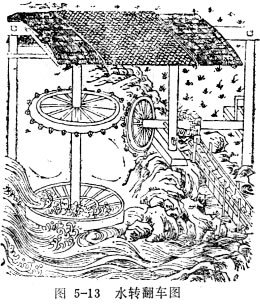
| − | In Eastern Han Dynasty, Bi Lan invented Fanche, Turn-Over Water Wheel[9][[Media:P1.ssl.qhimg.jpeg | + | In Eastern Han Dynasty, Bi Lan invented Fanche, Turn-Over Water Wheel[9][[Media:P1.ssl.qhimg.jpeg]].( Fanche can also be called as Loongbone Water Wheel. Through Fanche,the water is lifted from water to irrigate the cultivated land. It consists of long plank channel in which placed are dozens of the matched scraper blades(or wooden dipper)hinging end to end in order of circle. At the top and the bottom both have a toothed wooden shaft. The shaft above moves, and the blades spin. So the water is brought from bottom to top. Its power can get from people, animals or water.) |
In Tang Dynasty, Quyuanli, crankshaft plough[6], was invented. The plough with incurved shafts was invented by Han people during the Tang Dynasty. It’s referred to as a crankshaft plough and it’s different from a plough that has a straight shaft. It was first popularized in Suzhou and it was known as a “Jiangdong plough.” Compared with the frame of the previous ploughs, the frame of a crankshaft plough is much smaller and lighter. It can easily make turns, making it more flexible to operate. This saves work time. Also, the water wheel is improved and becomes Tongche.[9] (Tongche’s function is as same as Fanche, but it mainly uses water as its power and it does more than Fanche. Only in some dry areas, animal power is used. Erect a water wheel in the place where water run fast, the bottom soaked into the water and other parts exposed above. Some bamboo tubes are tied obliquely on the wheel. They are getting water with the spinning of the wheel. When they come to the highest point, the water is poured in the channel automatically, flowing into the field.). Southern rice were planted in the skill called Seedling Transplanting Cultivation. Raise rice seed to sprouts first, then move them to the fields. This increased the survival rate and output. The economic center became transfer from North to South. | In Tang Dynasty, Quyuanli, crankshaft plough[6], was invented. The plough with incurved shafts was invented by Han people during the Tang Dynasty. It’s referred to as a crankshaft plough and it’s different from a plough that has a straight shaft. It was first popularized in Suzhou and it was known as a “Jiangdong plough.” Compared with the frame of the previous ploughs, the frame of a crankshaft plough is much smaller and lighter. It can easily make turns, making it more flexible to operate. This saves work time. Also, the water wheel is improved and becomes Tongche.[9] (Tongche’s function is as same as Fanche, but it mainly uses water as its power and it does more than Fanche. Only in some dry areas, animal power is used. Erect a water wheel in the place where water run fast, the bottom soaked into the water and other parts exposed above. Some bamboo tubes are tied obliquely on the wheel. They are getting water with the spinning of the wheel. When they come to the highest point, the water is poured in the channel automatically, flowing into the field.). Southern rice were planted in the skill called Seedling Transplanting Cultivation. Raise rice seed to sprouts first, then move them to the fields. This increased the survival rate and output. The economic center became transfer from North to South. | ||
The growth of crops has to do with water. To water the crops, ancient Chinese not only invented related machines mentioned above, but also built a lot of water conservancy projects. The most famous one is the Dujiang Dam ( also called the Dujiangyan irrigation system) built in 256 B.C. To this day, it still benefits the southwestern people. | The growth of crops has to do with water. To water the crops, ancient Chinese not only invented related machines mentioned above, but also built a lot of water conservancy projects. The most famous one is the Dujiang Dam ( also called the Dujiangyan irrigation system) built in 256 B.C. To this day, it still benefits the southwestern people. | ||
Revision as of 09:58, 15 June 2021
Final Exam Paper Page. Please write now here and improve until grading on 2021 06 15
- Link to return to Course Homepage.
- Link to the other Final Exam paper pages: Final Exams 1 Bào Qìnwén 鲍沁雯 - Dù Xīnyǔ 杜心语; Final Exams 2 Guō Yàbō 郭亚波 - Huáng Zǐlóng 黄梓龙; Final Exams 3 Lǐ Yìhào 李艺浩 - Sū Xiāo 苏潇; Final Exams 4 Tāng Huì 汤惠 - Wáng Qìnyú 王沁瑜; Final Exams 5 Wáng Zǐhán 王子涵 - Zhào Kē 赵轲.
1. Every student should write a new English text on a phenomenon in Chinese culture as a new chapter in the text book. Please also make a comparisons to similar or different cultural phenomenons in Europe and/or the USA.
2. Please find a paper you want to proof read, contact the author, proof read (by copying each paragraph and make corrections/suggestions in the copy) and sign until May 25. The author then finalizes (works in the suggestions) until the final deadline June 1! Please proof read a fellow students' paper by copying each paragraph and make your corrections in the paragraph. In a final step, the original author of the paper has to decide, what of the corrections he/she will accept and work into the paper. The final version submitted on the deadline should not carry any of the fellow student's paragraphs and comments.
- You can use the texts in the coursebook as an example (like Unit 1, Text A). You only need to write Text A (like "Longevity Noodles") or Text B ("Mooncakes"), not a whole Unit. But please try to find fellow students who topics fit under the same Unit title ("Festival Meals") and arrange it accordingly.
- In the topic, please write the category, then the topic - your name and student no.
- For the text, please indicate ALL SOURCES with bibliographical references. That means: At least for every paragraph, sometimes for single sentences, you have to indicate at the end, where you have found this information. E.g. (Liu Miqing 2010, 17). This means you have found it in the book or paper written by Ms Liu on page 17.
- Add a section at the end called "References". There you write the full version of the reference: Liu Miqing 刘宓庆. (2010). 翻译基础 [Translation Basis]. Shanghai: East China Normal University 华东师范大学. Similarly, you do it for papers: Jin Wenlu`靳文璐. (2019). 机器翻译可以取代人工翻译吗? [Can machine translation replace human translation?]. 智库时代 Think Tank Times (40) 282-284.
- Please also add a list "Terms and Expressions".
- Please add a "Questions" section.
- Please add a "Answers" section.
This is the the first page with the final exam papers.
Please write another chapter of the textbook on any cultural phenomenon in China.
Bào Qìnwén 鲍沁雯:Chinese Jade Culture
1.1 A survey
2.1 the origin of Chinese jade civilization
2.2 the evolution of jade's functions in China
2.3 some common cultural implications of jade in China
2.4 Four famous jade categories in China
3.1 References
4.1 Terms and expressions
5.1 Questions
Chén Kērǔ 陈柯汝 Riverside Scene at Tomb Sweeping Day
Introduction
introduction of the painting.
Riverside Scene at Tomb Sweeping Day is a painting attributed to Song Dynasty artist Zhang Zeduan(张择端). It witnesses the daily life of people and prosperity of the capital city Bianjing(汴京), today’s Kaifeng(开封), from the Northern Song Dynasty. In the scroll, there are businesses of all kinds, selling wine, grain, cookware, bows and arrows, lanterns, musical instruments, gold and silver, ornaments, as well as many restaurants. Vendors extend all along the great bridge, called the Rainbow Bridge. In addition to the shops and diners, there are inns, temples, private residences, and official buildings varying in grandeur and styles. Over the centuries, the scroll was collected and kept among numerous private owners. It was re-purchased in 1945 and kept at the Beijing Palace Museum. It is regarded as a national treasure and is exhibited only for brief periods every few years.(Nico)
introduction of the author
Zhang Zeduan(张择端), courtesy name Zheng Dao(正道), was of the Han nationality, born in East Valiant(东武) (present-day All City诸城, Shandong Province), and a master of painting in the Northern Song Dynasty. Xuanhe years as a academician, he was good at painting floor view, buildings, trees, figures.
After Zhang Zeduan failed in the imperial examination, he began to learn Ruler Painting. Ruler Painting is a kind of drawing with the help of ruler to show the architecture. In painting, a small piece of wood is attached to the pen. With this piece of wood, the pen moves against the ruler and makes straight lines of different lengths according to the painter's intention. Ruler Painting is easier to draw effectively, as long as the use of skilled tools; it is also easier to paint fine and accurate, which will obtain the recognition of the viewer, so the painter is easier to make a living.
Three main parts of the painting
Zhang Zeduan shows a strong artistic generality in the picture. Taking the daily living conditions of the citizens of the Northern Song Dynasty Bianjing as the trail, the lively scene of shops strewn at random, citizens jostling with each other, and the bustling city life of heavy traffic are condensed into a long scroll of more than five meters.(Yang Bing 161-1)
Enter the city
From the beginning of "Enter the city", a group of "horse gang" appears first, carrying goods into the city for trade; then came a procession of bearers, carrying bridal chairs on their shoulders, followed by the attendants, each holding a bridal gift in his hand, hurrying on in the morning light. With the extension of the picture, the number of characters gradually increases, and the store also begins to open its doors to welcome visitors. There was a scene of unloading trades on the docks. At this time, the boats gathered the tow, the sail, the accounts, the cargo, and the cooking, which is the vivid representation of the real situation of Bianjing shipping.(Yang Bing 161-1)
Cross the river
When it refers to “cross the river”, there is a "Rainbow Bridge" across the Bianhe River. There were so many people on the bridge. Those who carry sedan chairs, sell farm tools or produce, ride donkeys or shout at others. In particular, there was a row of people on one side of the bridge, pointing fingers at the cargo ships carrying grain below. On the ship, the boatmen at the helm, support, throw the cable, put the mast, and shout command, in order to avoid collision between the ship and the bridge, each scrambling, which is a busy scene. This formed a sharp contrast to the quiet suburb atmosphere in “Enter the city”.(Yang Bing162-1)

Out of the city
When the chapter of "Out of the City" is unfolded, row upon row of restaurants, cars, tea-houses, restaurants, inns, medicine shops, cloth shops, houses, incense shops, temples and so on crisscross the street. There are carriers, coachmen, ox-drivers, donkeys, drinkers, storytellers, cart-repairers, drivers, fortune-tellers, chatters, gamblers, bake-sellers, camel caravans, and so on. There are a variety of situations in the market. Mules, horses, cattle, sheep, pigs, dogs, donkeys and other animals are all in shape and spirit.(Yang Bing,162-1)
Main idea of the painting

Looking further ahead, we come to the Rainbow Bridge. This is the climax of the social conflict in the painting. There was a great passenger ship full of passengers, when suddenly there was a great danger that the mast of the ship would strike the bridge. According to common sense, at a certain distance from the the Rainbow Bridge, there should be a person on duty to remind the trackers to stop towing and lower the mast, so as not to hit the bridge mast.(Yu Hui余辉、Xu Bei徐蓓,3-3)
But these jobs were all gone, so the tow-men were busy pulling the boat up to the bridge until the men on board found that disaster was imminent.(Yu Hui余辉、Xu Bei徐蓓,3-3)
There is a wave as the water rises, so the bridge is dangerous. The crowds on the bridge, caused entirely by the occupation on both sides, have compressed the width of the deck. At either end of the bridge came a group of civil officials and military generals, and their guards were quarreling with each other and making a mess of each other.(Yu Hui余辉、Xu Bei徐蓓,3-4)
The artist weaved various social contradictions in the bridge and under the bridge, reflecting the acute social problems caused by the inaction of officials in the late Northern Song Dynasty.(Yu Hui余辉、Xu Bei徐蓓,3-5)
References
Yang Bing 杨兵. (2021-04-10). 杨兵艺谈(十) 市井大观 时空集成——张择端《清明上河图》鉴赏.艺术品鉴
Yu Hui余辉、Xu Bei徐蓓.繁华背后,《清明上河图》揭示了什么.2019-10-25.解放日报.
Travel English.2017-12-19.https://www.sohu.com/a/211555543_652593
Nico的外语课.20-05-19 https://baijiahao.baidu.com/s?id=1667096267305218444&wfr=spider&for=pc
Questions
1.What are the three main parts of the painting?
2.When was the painting made?
3.What is the main idea of the painting?
4.What kind of painting did Zhang learn?
Answers
1.“Enter the city”“Cross the river”“Out of the city”.
2. At Song Dynasty.
3.It is to reflect the acute social problems caused by the inaction of officials in the late Northern Song.
4.Ruler Painting
Terms and expressions
Ruler painting 界画
Riverside Scene at Tomb Sweeping Day 清明上河图
Bianjing 汴京
Kaifeng 开封
Rainbow Bridge 虹桥
East Valiant 东武
All City 诸城
Xuanhe years 宣和年间
the imperial examination 科举考试
horse gang 马帮
Dài Mùyǔ 戴沐雨
I suggest to write my final paper about “mahjong”. ok
Dèng Dān 邓丹 Round Table Culture
A. Introduction
The most distinctive feature of a round table is its roundness. "Round " is an omnipresent, universal symbol with extensive meanings. Without beginning or end, without sides or corners, this geometric shape represents perfection, unity, wholeness and spirituality. "Round", a typical totem of Chinese traditional culture, mainly represents perfection and wholeness and has always been advocated by Chinese people. (Chen Yongjun 2018,106)
B. Round Table Culture in China
Having known about Chinese people's recognition of "round", it is not that difficult for us to understand the wide use of round tables in China.

The round table is a symbol of harmony. According to Chinese traditional geomatic omen theory, a circle is more capable of gathering human beings than a square. It also dissolves a disharmonious magnetic field and make things harmonious. With no sides or corners, a round table avoids bumps. Chinese devote particular care to "harmony" and has pursued relentlessly peaceful and harmonious family environment. As a result, round tables enjoy great popularity among Chinese families. (Chen Yongjun 2018,106)
The round table is a symbol of equality and tolerance. When we are sitting at a round table, the distance between each of us will be technically equal. Our status will be equal and we are able to hear everyone. But if we are sitting at a square table, two of us will probably be too distant to hear what we are talking about. Moreover, a round table actually presents to us the common ground that we share. When we are sitting at a round table, we start to look for things that we have in common instead of things that separates us. For example, when we are having dinner together in harmony, we can always talk about our fundamental needs that are similar. That's why we can solve so many global issues or the conflicts between nations on a round table in a peaceful way instead of quarreling with each other, arising division and finally causing conflicts. (He Zheng 2003,47)
The round table is a symbol of reunion. On almost every Chinese traditional festival, families will reunite to have dinner at round tables. While the grown-ups are discussing something, kids will be scuttling around or even crouching under the table to play hide and seek. The whole family are united by a round table and become closer with laughter and cheers. Besides, round tables are widely used at banquets, which shows the hosts' wishes for happy and successful banquets. When having round table banquets in China, there are some strict sitting rules to follow. The one facing the door is the host and guest. The one on the left side is the second, fourth, sixth, etc., and the one on the right side is the third, fifth, seventh. This seat order is also an indispensable part of Chinese round table culture. (Wu Meifeng 2015,154)
C. Conclusion
We all have a table like this in our homes. It is a symbol of a reunion of our families representing our sentiment, an attachment to our families. It is a symbol of harmony, representing our sincere hope for peace and security. It is also a symbol of equality, providing us with equal opportunities and balanced status. But as a matter of fact, in China, almost everything can be solved over a round table. The marriage bells between a loving couple, the mourning of the deceased, the negotiations between business partners and a state banquet to a president from other country can all happen on a same round table. (Wang Yan 2020,50)
The round table, in essence, has long become a representation of Chinese culture. The food on the table may change with time. The people sitting beside it may come and go. The reasons why we come together may be various, but the sensation behind it remains year after year the same and that is our tolerance of different people or willingness to embrace different cultures and artistic forms or care and love, and respect for not only our family, but also for a community, our nation and even the whole world. (Wang Yan 2020,50)
D. Round Table Culture in Western Countries

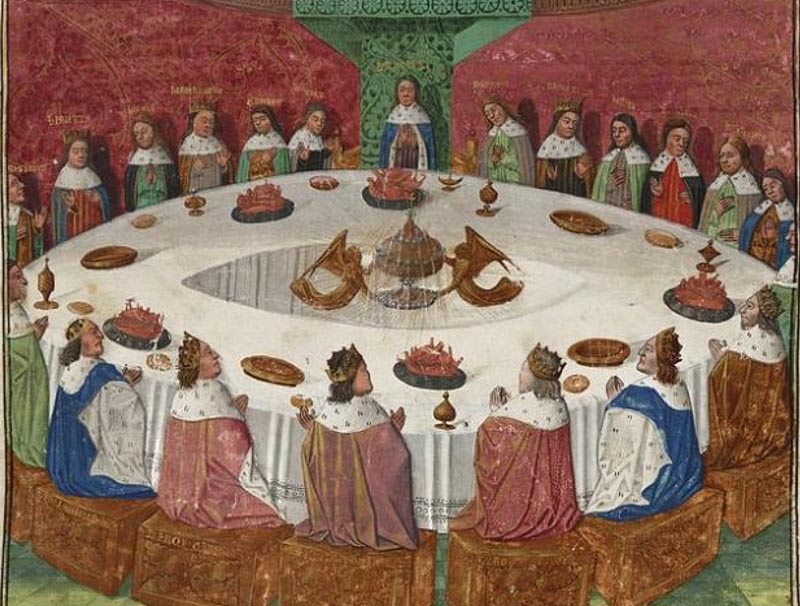
In western restaurants and families, long tables are more commonly used. The round table has little to do with catering. When it comes to the Western round table culture, it mainly refers to the "round-table conference", and there is a story. Legend has it that King Arthur held a conference in the sixth century BC. He wanted the knights in his court to be considered equal; he did not want them fighting over status or rank. Therefore, they congregated around a round table to have their conference. As its name suggests, a round table has no edges or corners, implying that everyone who sits around it has equal status. (Chen Yongjun 2018,106)
Round-table conference, which has no upper or lower seats and indicates an equal and friendly consultation of all participants, has been accepted and applied by people in western countries in a short time and nowadays by people all over the world. (Sun Lingbin 2006,64)
As for the raw materials of the round table , most of them in western countries were made from marble in the very beginning, just like their artistic style---- cold and solemn. Although it shows equality, it still lacks softness. Later, most of the round tables were made of wood, which embodied the characteristics of affinity. Complex patterns are easy to attract people's attention and disperse people's energy. The abandonment of decorations let people maintain a high level of concentration and avoids unnecessary disturbance. Therefore, wooden round tables are more commonly used nowadays. (Chen Yongjun 2018,106)
The round table has no edges or corners, which rounds off the distinctions between people of high status and low status (This is why the round table is still used in international conferences);The round table is unable to speak, but it expresses all people's aspiration to equality; the round table has no arms and no hands, but it embraces the supreme justice of the world. The Western round table culture, just like the politic system they are proud of, expresses the ideas and thoughts of westerners. To some extent, it contributes to the settlement of many international disputes and resolved contradictions. (Chen Yongjun 2018,106)
References
- Chen Yongjun 陈永军.(2018).浅谈圆桌文化. 天工(06),106-107.
- Sun lingbin 孔令兵.(2006).浅论圆的人文意义. 西北成人教育学报(02),62+71.
- He Zheng 何征.(2003).中国的“圆”文化. 浙江工艺美术(03),47.
- Wu Meifeng 吴美凤.(2015).大圆桌的由来. 紫禁城(11),138-154.
- Wang Yan 王嫣.(2021).中国的象征:我记忆中的圆桌(英文). 疯狂英语(新读写)(04),50.
Terms and Expressions
totem 图腾
geometric 几何图形的
omnipresent 无处不在的;遍及各处的
harmony 和谐;和气
geomatic omen 风水
round-table conference 圆桌会议
King Arthur 亚瑟王
affinity 亲和
Questions
1. What is the most distinctive feature of a round table?
2. What does the round table symbolize in Chinese culture?
3. Why is round-table conference widely accepted?
Answers
1. roundness
2. harmony, equality, tolerance, and reunion
3. Because it has no upper or lower seats and indicates an equal and friendly consultation of all participant.
Huánɡ Zǐlónɡ 黄梓龙
I suggest to write my final paper about "Breakfast Culture of Wuhan" ok
Terms
Questions
Media:Example.ogg==References==
Dīng Zhòngxià 丁仲夏 Shengjing Imperial Palace
Introduction

Shengjing Imperial Palace, commonly referred to as Shenyang Imperial Palace, is not only the jewel in the crown of Shenyang’s cultural heritage, but also the jade in China. Thanks to its pre-Qing Dynasty origins, the palace has strong Manchu and Mongol architectural influences. It has a lot of special arts, from intricate brick gables and carvings to buildings whose form has been inspired by the shapes of nomadic tents. Although the complex has been standing for a little under 400 years, it’s in remarkable condition right down to the golden dragons that flank the imperial throne. (Candice Song 2021, 1-3)
History
Shenyang Imperial Palace is famous because Qing Dynasty's founder, Nuerhachi(1559-1626) and his son Huangtaiji(1592-1643) had lived here. And with the expansion of the Qing Dynasty, they moved to Beijing and lived in the Forbidden City. Construction of Shenyang Imperial Palace began in 1625 and accomplished in 1636 during the reign of Nuerhachi and Huangtaiji, so it has over 360 years history. After them, four emperors of Qing Dynasty had come back from Beijing to this palace for 10 times and enlarged this area and added a lot of buildings. They were Emperor Kangxi, Qianlong, Jiaqing and Daoguang (People probably heard of Kangxi and Qianlong because they lead to one of the most affluent periods of China.).Therefore, until 1783, the palace was finally finished. (News/Nation 2019 1-3)
It was renamed Co-capital Palace and Emperor Eastward Inspection Palace after the foundation of the Qing Dynasty. With large-scale reparation time after time, the imperial palace now serves as a tourist attraction called Shenyang Imperial Palace Museum. Shenyang Imperial Palace was entitled "Historic Culture Relics Preserved Buildings" in 1961. The Imperial Palace in Beijing and Shenyang are the only two most well-preserved imperial architectural complexes existing in China today. When talking about the palace of China, many people probably just know about the Forbidden City of Beijing, it is the most popular one for foreigners. However, to some extent, many antiques and famous places of the Forbidden City are influenced by Shenyang Imperial Palace. (Candice Song 2021, 1-3)
Divisions
Its construction style of Shenyang Imperial Palace belongs to Ming and Qing Dynasty. It covers an area of 60,000 squaremeters, comprising over 20 courtyards, 300 houses and 70 buildings. There are 114 buildings and around 20 courtyards, and though this might seem rather small when compared to the only other surviving imperial palace in China—the Forbidden City, there is a lot to be said for Shengjing Imperial Palace’s diminutive size and famous elites. According to the build time and layout, the whole construction can be divided into three sections: the east, middle and west:
East part: The buildings around were built in the period of Nuerhachi including Great Administrative Hall and Ten Kings Pavilion;
Middle part: Buildings here were continued and completed in the period of Huangtaiji including Grand Qing Gate, Chong Zheng Hall, Phoenix Tower, Qingning Palace, Yanqing Palace, Qifu Palace etc;
West part: The buildings there were expanded and renovated by Emperor Qian Long (1736-1795) including Wen Su Pavilion. The whole palace, standing in great numbers, is lofty, magnificent and richly ornamented. (Candice Song 2021, 1-3)
A Story about the Antler Chair
This palace is an emperor museum combining the architectural styles of the minorities of Man, Han and Mongolia. In addition to the magnificent palace buildings, the Shenyang Imperial Palace is also famous for its rich and precious collections at home and abroad. It has a large number of treasures in its exquisite works, such as Nuerhachi's Sword, Huang Taiji's Waist sword and the Antler Chair. (Candice Song 2021, 1-3)
There is also a legend about the origin of the chair. It is recorded that in 1631, Huang Taiji led his troops to attack the city of Daling River in western Liaoning Province and built the cities of Huang Dizhi and Huang Bu on the opposite hill. Then, he bombarded the city with red-coated cannon, which scared the wild animals in the mountain. At this time, a panic-stricken deer rushed into Huang Taiji tent, was captured by Huang Taiji, and then made into an antler chair with its antlers. After the Antler Chair was produced, all people regarded it as a model. When Emperor Qianlong and Emperor Jiaqing toured Shengjing in the east, they composed poems and chanted on the occasion of appreciating Emperor Huangtaiji's antler chair. Emperor Qianlong also ordered craftsmen to carve poems and articles on the back of the Antler Chair.
Conclusion
After the Shenyang Palace Museum was successfully listed as a World Heritage Site, Shenyang Palace Museum has been established as a center for academic exchange, research and information. In the academic research of Shenyang Palace Museum, all efforts are mobilized to expand the content of academic research and to integrate the resources of academic research by cooperation. By studying Shenyang Imperial Palace from the viewpoint of academic, we can further understand the value of Shenyang Imperial Palace as a world heritage. (Deng Qing 2009,148)Its most significantly historical value is the record of the rising of Qing Dynasty, its most significantly artistic value is the cultural spirit of Manchu, and its most significantly scientific value is the outstanding representative of national architecture.(Li Xiaoli 2014 1-2)
Terms and Expressions
Manchu 满族
Mongol 蒙古
Nomadic游牧民族的
Nuerhachi(1559-1626) 努尔哈赤
Huangtaiji(1592-1643) 皇太极
Kangxi 康熙
Jiaqing 嘉庆
Daoguang 道光
Red-coated cannon 红衣袍
Ten Kings Pavilion 十王亭
Grand Qing Gate 大清门
Chong Zheng Hall 崇政堂
Phoenix Tower 凤凰楼(翔凤楼)
Qingning Palace 清宁宫
Yanqing Palace 衍庆宫
Qifu Palace 启福宫
Wen Su Pavilion 文溯阁
Chant 吟唱
the Antler Chair 鹿角椅
--Ding Zhongxia (talk) 14:15, 14 June 2021 (UTC)==References==
Deng Qing 邓庆(2009)研究型博物馆的理论与实践-以沈阳故宫为例[The Theory and Practice of Research Museums -- A Case Study of Shenyang Palace Museum] Liaoning辽宁:Shenyang Palace Museum 沈阳故宫博物院
Li Xiaoli 李晓丽(2014)沈阳故宫的价值学研究[Study on the value of Shenyang Imperial Palace] Liaoning辽宁:Shenyang Palace Museum 沈阳故宫博物院
News/Nation(2019)沈阳故宫博物院的古建筑重新向公众开放[Ancient building of Shenyang Palace Museum reopens to public] China中国:Xinhua新华网
Candice Song(2021)沈阳故宫[Shenyang Imperial Palace] Liaoning辽宁 :Shenyang沈阳 Chinese Highlights中国亮点
Questions
1. How long has the complex been standing?
2. Why is Shenyang Imperial Palace famous?
3. When was the palace entitled "Historic Culture Relics Preserved Buildings"?
4. At what period were Shengjing Imperial Palace continued and completed?
5. What are features of the west part?
6. What is the legend about the origin of the chair?
Answers
1. A little under 400 years
2. Because Qing Dynasty's founder, Nuerhachi(1559-1626) and his son Huangtaiji(1592-1643) had lived here.
3. 1961
4. In the period of Huangtaiji
5. Lofty, magnificent and richly ornamented.
6. It is recorded that in 1631, Huang Taiji led his troops to attack the city of Daling River in western Liaoning Province and built the cities of Huang Dizhi and Huang Bu on the opposite hill.
Then, he bombarded the city with red-coated cannon, which scared the wild animals in the mountain.
At this time, a panic-stricken deer rushed into Huang Taiji tent, was captured by Huang Taiji, and then made into antler chair with its antlers.
After the Antler Chair was produced, all people regarded it as a model. When Emperor Qianlong and Emperor Jiaqing toured Shengjing in the east, they composed poems and chanted on the occasion of appreciating Emperor Huangtaiji's antler chair. Emperor Qianlong also ordered craftsmen to carve poems and articles on the back of the Antler Chair.
Dù Xīnyǔ 杜心语 Chinese folk argot
In the feudal society of China, argot was created by various groups or groups in the civil society, especially the secret society, out of various cultural customs and communication needs. It was characterized by evasion and metaphor. At present, due to the development of the network, some network terms are also known as "network argot".(Sogou Encyclopedia 2017)
Ancient Local Argots
The language used by ancient Chinese people to sacrifice or perform witchcraft.Its shape is pattern, not character. Its pronunciation depends on the pronunciation of local dialects.(Guo Zhengyi,2012)
However, its vowels, consonants, initials and finals are very strict and complete, which are all formed according to the dialect and Putonghua mastered by the local people.(Zhao Pingan,2012)
Wild Cards/Argots
The argots in the wild is also called incision, spring point, inch point and lip point. Many gangs have created a complex system of incisions, some in dialects.Some of them are spread and extended from the ancient local argots.(Sogou Encyclopedia 2017;Qu Yanbin.2012)
The first is the argots formed by taboos , such as speaking on board, taboo saying "live" and "turn" and so on, and substituting other words.(Sogou Encyclopedia 2017)
The other is the jargon formed for the purpose of avoiding being known by outsiders. For example, in the old days, Xiangma in Northeast China was called "Yang" as "rhinoceros horn lingman", called "he" as "Jiujiang Baman", and called "Leng" as "Northwest Fengman"; In Contemporary Hong Kong underworld, "489" is called "marshal of the main road", and "438" is called "marshal of the second road", that is, "deputy hall leader".(Sogou Encyclopedia 2017)
The third is language game.What is more, Na Zheng is an important step when the boy sends betrothal presents to the girl and for courtesy the girl will send back part of the presents such as food and some clothes.(Sogou Encyclopedia 2017)
Normal Argots
The argots used in normal or daily life.More equivalent to a spoken language.(Sogou Encyclopedia 2017;Qu Yanbin.2012)
Such as:
Xiahai, originally means going to be a dancer prostitute, but now it means going into business.
Hao, shift room, prison detention center and so on.
Chicken, means prostitute. (Sogou Encyclopedia 2017)
Rock And Roll Argots
These argot began to spread in the rock circle, and then spread to the society, which had an impact on the evolution of language.
Rock and roll argot is an important social derivative of Chinese rock music. It began in the rock circle, and later spread to the society. Some rock and roll argot can even become the folk language samples of Chinese Society for a certain period of time(Jian Cui ,2006)
Such as:
"Head shaking point"
This is the term for metal party, which means the rhythm in metal music that can make the audience shake their hair, which is, of course, the stressed beat. However, the "head shaking point" is not the key to evaluate a music band's quality. Some core grinding style bands will have 100 remakes per minute, and your neck will not be able to stand it.(Jian Cui ,2006)
"Open a piece"
It's also called unpacking. There is an unwritten rule in the circle of buying rap records in Beijing, that is "open a piece". First of all, "piece" is a quantifier, each piece is made up of nine words; Each one can hold 25 standard size records. Since about 2001, there have been a large number of circles in Beijing to buy knock on records, and there has been a situation of "more monks than porridge", so the boss of knock on records has updated his products by opening a piece. In other words, at a fixed time, release a few records, and then let the customers rush to buy them in a half fight way.(Jian Cui ,2006)
"Missing"
Bad words. In the rock circle, the musicians who don't look up to each other or the audience will laugh at the "lack" of other people's favorite music style. It can also be used for minor personal attacks.(Jian Cui ,2006)
Modern Argots
The Modern Argots is not limited to the region, popular in all walks of life across the country.
“Real estate Argots”
When a poor person comes to see a house, the security guard at the door asks the manager, "can this pair of customers be received?", Hearing the word "reception", the manager knows that the poor who can't afford to buy a house will refuse on the ground that they have no house supply;
When a rich man visits a house, the security guard at the door asks the manager, "can you introduce this to the customer?", After hearing the Word introduction, the manager knows that he is a rich man who can afford to buy a house, so he will be treated as having a house supply.
“Club Argots”
Kuo Lie,which means expand the friend list.
Tian Cai,which means you are his/her tape,he/she wants to date with you.
Would you like to go out for a snack?,which means he/she wants to have a one night stand with you.
“Blind date Argots”
I want to have a staid home,which means ‘Do you have your own house?”
I haven’t find a suitable job,which means ‘I need you to support me.’
I don’t like kids,which means ‘I won’t give a birth with you after marrige.”
Terms and Expressions
1.Ancient Local Argots:古代地方黑话
2.Wild Cards/Argots:江湖黑话
3.Normal Argots:普通黑化
4.Xiahai:下海
5.Hao:号
6.Rock And Roll Argots:摇滚黑话
7.Head shaking point:甩头点
8.Open a piece:开件儿
9.Missing:缺的
10.Modern Argots:现代黑话
11.Real estate Argots:地产黑话
12.Club Argots:酒吧黑话
13.Kuo Lie:扩列
14.Tian Cai:天菜
15.Would you like to go out for a snack?:想一起去吃宵夜吗?
16.Blind date Argots:相亲黑话
Questions
1.How many kinds of Argots?
2.Did the ancient local argots depends on the local language?
3.What is the Modern Argots?
References
Qu Yanbin.曲彦斌.(2012) 《中国民间密语》
Jian Cui 健崔(2006)《健崔:中国摇滚黑话2.0版》
Sogou Encyclopedia 搜狗百科(2010——2017)中国黑话
Guo Zhengyi 郭正义(2012) 《解密张香玉‘宇宙语’访谈》
Zhao Pingan 赵平安(2012)《解密张香玉‘宇宙语’访谈》
Yāo Yáng 么阳 Chinese Traditional Cultivation Culture
ok
Introduction
Chinese culture is established on the basis of cultivation. Different from the western Fishing-Hunting Culture and Nomadic Civilization, Chinese farming civilization flourishes in the fertile land between the Yellow River and the Yangtse River, which enables ancient Chinese to have steadier access to food. Every development of agriculture (mainly about planting) is followed by an increment of population, and more population, more food requirements. Then the circle forms, agricultural instruments and institutions must be improved sequentially.
History
About how the ancient Chinese learned to plant crops, there is a mythology: Shen Nong, was a great leader of ancient Chinese. It was believed that the leader of Jiang tribe (where people’s last name was Jiang) got his throne for knowing how to use fire. Thus, each leader of this tribe can be called “Emperor Fire”. Shen Nong was the first “Emperor Fire”. As a leader, Shen Nong had the responsibility to lead his people a better life. About his contributions, it has two famous events. One is “Shen Nong tastes hundreds of herbal medicine”, another is “Shen Nong plants 5 cereal grains” [1][2]

. Shen Nong whose name in Chinese means “God Farmer” is regarded as the origin of Chinese cultivation. And his story maybe a myth, but at least that proves Chinese people has been working on planting long, long ago. Here are some archaeological evidences:
The earliest discovery of ancient plants in China is the store of rices in the Hemudu Culture remains[3][4]. The cabonized rices weight 150 tons, detected existing in about 7000 years ago. Almost in the same era of Hemudu People, primitive people in Banpo remains planted earliest millet.
The Development of Cultivation Technology
In primitive age, Chinese use farm tools made of bones.

In Shang Dynasty and Zhou Dynasty, iron farm tools (picture2

)appeared. And cattle helped people to plow(picture3


). So killing a cattle for no reason is against the law.
In Western Han Dynasty, Louche, an animal-drawn seed plough, was invented. In Eastern Han Dynasty, Bi Lan invented Fanche, Turn-Over Water Wheel[9]Media:P1.ssl.qhimg.jpeg.( Fanche can also be called as Loongbone Water Wheel. Through Fanche,the water is lifted from water to irrigate the cultivated land. It consists of long plank channel in which placed are dozens of the matched scraper blades(or wooden dipper)hinging end to end in order of circle. At the top and the bottom both have a toothed wooden shaft. The shaft above moves, and the blades spin. So the water is brought from bottom to top. Its power can get from people, animals or water.) In Tang Dynasty, Quyuanli, crankshaft plough[6], was invented. The plough with incurved shafts was invented by Han people during the Tang Dynasty. It’s referred to as a crankshaft plough and it’s different from a plough that has a straight shaft. It was first popularized in Suzhou and it was known as a “Jiangdong plough.” Compared with the frame of the previous ploughs, the frame of a crankshaft plough is much smaller and lighter. It can easily make turns, making it more flexible to operate. This saves work time. Also, the water wheel is improved and becomes Tongche.[9] (Tongche’s function is as same as Fanche, but it mainly uses water as its power and it does more than Fanche. Only in some dry areas, animal power is used. Erect a water wheel in the place where water run fast, the bottom soaked into the water and other parts exposed above. Some bamboo tubes are tied obliquely on the wheel. They are getting water with the spinning of the wheel. When they come to the highest point, the water is poured in the channel automatically, flowing into the field.). Southern rice were planted in the skill called Seedling Transplanting Cultivation. Raise rice seed to sprouts first, then move them to the fields. This increased the survival rate and output. The economic center became transfer from North to South. The growth of crops has to do with water. To water the crops, ancient Chinese not only invented related machines mentioned above, but also built a lot of water conservancy projects. The most famous one is the Dujiang Dam ( also called the Dujiangyan irrigation system) built in 256 B.C. To this day, it still benefits the southwestern people. The growth of crops has to do with the weather, too. The plants grow according to the nature time. The 24 solar terms is one of the conclusions of weather. Accurate time measures allowed ancient people to work and plant. The summary of ancient people’s wisdom of agriculture kept to today has the great four books. They are Si Shengzhi Articles in Western Han Dynasty, Essentials of People’s Happiness in Southern Wei Dynasty, Agricultural Book in Yuan Dynasty and The complete book of agricultural administration in Ming Dynasty.
The Kind of Crops
In primitive age, Hemudu people and Banpo people began to plant rice and millet. China is the earliest country to plant rice and millet. In Shang Dynasty and Zhou Dynasty, what we called five cereal grains today had been planted completely and people knew how to select good seeds. In Tang Dynasty, after Zhang Qian in Han Dynasty was sent to a diplomatic mission, more and more kinds of Xiyu[11] came into the land of ancient China at that time. “ The Classics on Tea ”, written by Lu Yu of the Tang Dynasty ( 618 A.D.-907 A.D.) was the world's earliest treatise on tea leave production. Dring Tea is popular in the whole counry.” In Song Dynasty, “Zhan City” rice in ancient Viet Nam brought to China. The output of rice was much more than before. State Su and State Hu around Lake Tai turned into the most important area of grain production. The saying can be heard today: “Harvest in Su and Hu, Food of Nation Enough”. In Ming Dynasty, the high-yield crops like corn and sweet potato from America came to China, and were planted widely in Qing Dynasty, which offered enough food to the population explosion at that time.
The Land Ownership System
In agricultural society, the farm land means wealth. The ownership of land is the most important problem. In primitive society, land belonged to the whole tribe and people worked together. In Shan Dynasty and Zhou Dynasty, the "Nine Squares" system with one large square divided into 9 small parts, the 8 outer ones being allocated to serfs who had to cultivate the central one for the serf owner. In fact, it was an aristocratic land ownership in the name of country. It was a period of transition from public ownership to private ownership. In the Spring and Autumn Period and the Warring States Period, the use of cattle ploughing with iron plow made big progress in social productivity. The surplus products redistribution and new-appear market broke the foundation of Nine Squares system. The Land Private-Owning system appeared. The land could belong to farmers, landlords and monarchs. This pervasive land ownership system continued to modern times. Since the Land Reform in The People's Republic of China, it had been abandoned. In Southern Wei Dynasty and Tang Dynasty, Land Equalization Policy was implemented together with the Land Private-Owning System. After war, many land became free land. These lands belonged to the country. And the government assigned them to common people. The land returned to the government after their death. The system finally failed, for the rich took away the nationalized lands by trickery or by force.
Chinese have an indissoluble bond with land and cultivation, which endows them with the good quality of diligence, courage,temperance,patience and kindness.A brilliant culture aet up on the adequate materals made by mature agriculture.However,their deep love of their land used to prevent the change of ancient China from feudalism to capitalism. The businessman would buy a new land as a landlord rather than invest his business with money earned. Even in modern China, people prefer to buy their own house rather than rent one. And modern Chinese regard planting as a good habit and hobby, they love to plant fruits, vegetables and something to eat in their garden or in the big flowerpot on the balcony.
Terms and Expressions
农耕文明:the Cultivation Culture
渔猎文明:the Fishing-Hunting Culture
游牧文明:Nomadic Civilization
两河流域(长江和黄河):Two-River-Drainage Area
炎帝(神农): Emperor Fire(Shen Nong)
五谷:Five Cereal Grains,which contains(稻)rice,(黍)millet([ladin]Panicum miliaceum, yellow millet, that has two kinds, sticky or not sticky.),(稷)millet(colorful),(麦)wheat and (豆)bean. Those are general names of different grains taken as staple food in ancient and modern China.
河姆渡文明:the Hemudu Culture
半坡文明:the Banpo Culture
耧车:Louche, an animal-drawn seed plough
曲辕犁(Quyuanli): Crankshaft
翻车(Fanche):Turn-over Water Wheel
筒车:Tongche(literation, “che” refers to wheeled machine)
育秧移植栽培:Seedling Transplanting Cultivation
都江堰:the Dujiang Dam
《汜胜之书》:Si Shengzhi’s Articles, written by Si shengzhi
《齐民要术》贾思勰:Essentials of People’s Happiness (CH’I MIN YAO SHU[10]),written by Jia Sixie
《农书》王祯:Agricultural Book,written by Wang Zhen
《农政全书》徐光启: The complete book of agricultural administration, written by Xu Guangqi
《茶经》:The Classic on Tea
西域:Xiyu( “xi” in Chinese means “western”, “yu” means area.) usually refers to Xinjiang in Han Dynasty, and with the ancient China communicated more and more with foreign counries, it could refer to many places in Asia and Europe.
占城稻:Zhan City rice
24节气:twenty-four solar terms
井田制:the Nine Squares system
土地私有制:The land private-owning system
均田制:Land Equalization Policy
References
[1]《白虎通义•卷一》:“谓之神农何?古之人民,皆食禽兽肉,至于神农,人民众多,禽兽不足。于是神农因天之时,分地之利,制耒耜,教民农作。神而化之,使民宜之,故谓之神农也。”
[2] 《淮南子•修务训》:“古者,民茹草饮水, 采树木之实,食蠃蠬之肉。时多疾病毒伤之害,于是神农乃始教民播种五谷, 相土地宜,燥湿肥墝高下,尝百草之滋味,水泉之甘苦,令民知所辟就。当此 之时,一日而遇七十毒。”
[3]人教版七年级上册历史教科书第一单元第二课:原始的农耕生活
[4] 黄剑华.中国稻作文化的起源探析[J].地方文化研究,2016,(04):40-57. 关键词:农业考古,稻作起源,百越族群
[5]中国古代农业技术的进步发展
[6] 2018年全国大学英语四级翻译习题:曲辕犁,该文章来源于出国留学网,网址:https://english.liuxue86.com/e/3571825.html
[7] 李发林. 翻车和筒车浅谈[J]. 文史哲, 1986(03):76-78.
[8]李根蟠. 水车起源和发展丛谈(上辑)[J]. 中国农史, 2011, 030(002):3-18. 水车起源和发展丛谈(中辑)[J]. 中国农史, 2011(04):22-49. 水车起源和发展丛谈(下辑)[J]. 中国农史, 2012(01):3-21.
[9]古代水利工具 翻车 筒车示意图
[10]石声汉教授曾经出版英文版的《齐民要术概论》,《齐民要术》被音译为此名
[11]王璞 西域英译考辨 2017
Question
1. What is the land ownership system in Tang Dynasty?
2. When did the high-yield crop come to China?
3. Did Bi Lan invent Fanche?
4. What are the last two of the four great agricultural books according to the time?
Answer
1.the Land Private-Owning System and Land Equalization Policy.
2.In Ming Dynasty.
3.Yes.
4. Agricultural Book,written by Wang Zhen and The complete book of agricultural administration, written by Xu Guangqi.