Difference between revisions of "20220630 Culture 2"
| Line 13: | Line 13: | ||
*[[20220630_Culture_8]] papers 71-80: 71 日语笔译 胡梦琪 Hu Mengqi 202170081633, 72 日语笔译 张白鹭 Zhang Bailu 202170081634, 73 朝鲜语笔译 刘安莉 Liu Anli 202170081635, 74 朝鲜语笔译 王思佳 Wang Sijia 202170081636, 75 朝朝鲜语笔译 徐盖 Xu Gai 202170081638, 76 朝鲜语笔译 徐文慧 Xu Wenhui 202170081639, 77 外国语言文学 Akira Jantarat 202121080009, 78 比较文学与跨文化研究 Mahzad 202021080004, 79 英语语言文学 Mimi 2020GBJ002301 | *[[20220630_Culture_8]] papers 71-80: 71 日语笔译 胡梦琪 Hu Mengqi 202170081633, 72 日语笔译 张白鹭 Zhang Bailu 202170081634, 73 朝鲜语笔译 刘安莉 Liu Anli 202170081635, 74 朝鲜语笔译 王思佳 Wang Sijia 202170081636, 75 朝朝鲜语笔译 徐盖 Xu Gai 202170081638, 76 朝鲜语笔译 徐文慧 Xu Wenhui 202170081639, 77 外国语言文学 Akira Jantarat 202121080009, 78 比较文学与跨文化研究 Mahzad 202021080004, 79 英语语言文学 Mimi 2020GBJ002301 | ||
| + | ==英语笔译 高智慧 Gao Zhihui 202170081568== | ||
| + | <center>'''The History of Chinese Noodles'''</center> | ||
| − | + | <center>高智慧 Gao Zhihui </center> | |
| − | <center> | ||
| − | |||
| − | |||
| − | |||
| − | |||
===Introduction=== | ===Introduction=== | ||
| − | + | The earliest known noodles found in China can be dated back to 4 thousand years ago. They were found in archeological findings near the Yellow River in China. However, first concrete written records of noodles come from the time when Eastern Han Dynasty reigned between 25 and 200 AD. There are many stories about the origin of noodles. To a certain extent, noodles also reflect the cultural traditions and customs of China, which essentially means "human nature" and "worldly common sense". There are thousands of varieties of noodles in China, according to the classification of the shape of noodles, seasoning gravy, cooking craft, and so on. Many noodles have local characteristics. Noodles are accepted by people from all over the world. The industrial revolution and the development of the food industry have successfully transitioned the way we produce noodles, from a traditional handicraft industry to mass production using machinery. In addition, the invention of instant noodles and their mass production also greatly changed the noodle industry. In essence, noodles are a kind of cereal food, which is the main body of the traditional Chinese diet. It is the main source of energy for Chinese people and the most economical energy food. Adhering to the principle of making cereal food the main food, is to maintain our Chinese good diet tradition, which can avoid the disadvantages of a high energy, high fat, and low carbohydrate diet, and promote health. The importance of the status of noodles in the dietary structure of residents China and the health impact should not be ignored. | |
| + | |||
| + | ===The Origin of Noodles=== | ||
| + | Mix water and flour and knead into a dough, you now have a plethora of prospects in the palm of your hands. Noodles are the epitome of versatility and flexibility, and it's this adaptable nature that has contributed to its rise as a world renowned food. Noodles are eaten as pho in Vietnam, chow-chow in Nepal, seviyan in India and many other permutations and combinations throughout the globe. While the popularity of noodles is a widely accepted consensus, its origin is still a prominently debated subject. There are numerous contenders who have claimed to be the creators of the Noodle. Italians profess that they are the pioneers of this plant based food, whereas the Chinese argue that they invented this culinary sensation. In this paper I will endeavor to trace the geneses of this cereal food and subsequently attempt to end the age old dispute surrounding it. | ||
| − | + | We begin our historical research in the East Asian country, China. Noodles are believed to have originated here, as "Bing" or cake in English, during the early rule of the Han Dynasty. They were then diversified by experimentation and the evolution of additional shapes and cooking methods. Noodles further gained cultural prominence via folklore related to "health, religion, economy" and with the emergence of Chinese superstitions. (Zhang Na and Ma Guansheng, 2016) However, due to recent archeological discoveries it's likely that noodles were around much prior to the rise of the Han Rule. Excavation sites have revealed that wheat grains and early production apparatuses existed from the early to late Neolithic period – an astounding ten thousand years before now. More tangible evidence, which testifies to the existence of Noodles well into the past, was unearthed in 1999. "Noodles discovered among relics at the Lajia archeological site in Minhe(民和) County, Qinghai Province". After scientists analysed the noodles and bowl of noodles found at the site through radioactive dating, it was disclosed that noodles were crafted and cooked four thousand years ago during the early Xia Dynasty. These archaeological findings thus provide us with physical evidence which date back to periods long before the present day. They reveal that the noodle has been closely interwoven into the Chinese society and their culinary practices for eons. | |
| − | + | ||
| − | + | China has the most promising data to support its claim of being the inventors of this simple wheat and water based dough. The discovery of the noodle remains and bowl occurred two thousand years prior to Horace's mentions of Lagane, which means pasta. With its physical, archeological evidence predating even the written records of Italian, Arabic and Mediterranean pasta, it truly does make China victorious in the contention. However, even though China may be the site of the first instances of noodles and they may have introduced some countries like Japan and India to them, this doesn’t necessarily mean that they were the ones who introduced the rest of the world to it. Italians were enjoying pasta long before Marco Polo brought back the secrets of the Chinese noodle trade. As there is very little documented data and only a few preserved artifacts related to Italian pasta, it’s not right to make any broad claims about its beginning. It is also plausible that pasta developed spontaneously in China and Italy at different time periods. New evidence is bound to be unearthed at some point in the future, which will give more concrete and reliable sources with information about who introduced the Italians to the noodle. | |
| − | + | ||
| − | + | ===Ancient Records of Chinese Noodles=== | |
| − | + | There were various kinds of shapes for noodles, such as sheets and strips. Sheets of noodles are cooked by pulling the dough into sheets and cooking in a pot with boiling water. In the Wei, Jin, and Northern and Southern Dynasties, the shapes of the noodles gradually increased. Two special kinds of noodles, called shui yin (水引) and bo tuo (馎饦), were included in the book Qi Min Yao Shu or Essential Techniques for the Welfare of the People (《齐民要术》)in the middle ancient era. Shui yin is cooked by pulling the dough into strips as thick as chopsticks, cutting these into segments 30cm long, soaking in a dish of water, then pressing them into flat noodles shaped as a leek leaf and cooking in a pot with boiling water. Bo tuo is especially smooth and delicious. In the Sui, Tang, and Five dynasty periods, there were more varieties of noodles. With the increase of noodle varieties, the methods and techniques of cooking have been continuously improved. There was a kind of cold noodle with a unique flavor, called Leng tao (冷淘), which was appreciated by the great poet Du Fu, describing it “as cold as snow when gliding through the teeth (经齿冷于雪)”. There was another kind of noodle with full tenacity, referred to as “one of the seven wonderful health foods”, which has a saying “wet noodles can be used to tie the shoe”. In the Song and Yuan dynasty period, fine dried noodles appeared, such as pig and sheep raw noodles and vegetable raw noodles sold in Linan (临安) city during the Southern Song period. Until the Ming and Qing Dynasty, there were more varieties of noodles. In the Qing dynasty, five spicy noodles and eight treasures noodles were included in Xian Qing Ou Ji 《闲情偶寄》 by dramatist Li Yu (李渔). These two kinds of noodles were made of five and eight kinds of animal and plant raw material powder, respectively, and mixed into flour, which were considered as top grade noodles. | |
| − | === | + | |
| − | + | [[File:Qi shan minced noodles.jpg]] | |
| − | + | ||
| − | + | ===Stories of Noodles=== | |
| − | + | Food is not only a source of human nutrition, it also plays many roles in the aspects of religion and economy, etc. People use special food to celebrate important events and festivals, for instance, we eat sweet dumplings in the Lantern Festival, we eat traditional Chinese rice-puddings in the Dragon Boat Festival, we eat moon cakes in the Mid-Autumn Festival, and we eat dumplings in Spring Festival. | |
| − | + | ||
| − | + | In the aspect of noodles, Chinese people have lots of customs, which essentially mean “human nature” and “worldly common sense” materialized in the noodles. At birthdays, people eat longevity noodles; at the time of marriage and moving into a new house people eat noodles with gravy (打卤面), which means flavored life; on the day of lunar February 2 “dragon head (龙抬头)”, people eat dragon whiskers noodles (龙须面) to look forward to good weather. We eat different noodles in different seasons and different festivals. | |
| − | + | ||
| − | + | Famous noodles in China have a unique value of traditional culture. Seafood noodles (三鲜伊面) are also called dutiful son’s noodle (孝子面). According to historical records, Yi Yin’s (伊尹) mother was perennially sick and bedridden. So he made noodles with eggs and flour, and then steamed and fried these noodles. Even if he was not at home it was convenient for his mother to eat these nonperishable noodles. The noodles were added to a soup made with chicken, pig bones, and seafood. Under the tender care of Yi Yin, his mother soon recovered. This was the reason why seafood noodles are also called dutiful son’s noodles. The processing method of seafood noodles in ancient time was very similar to industrialized manufacturing methods of instant noodles in modern times. | |
| + | |||
| + | Sichuan (四川) dandan noodles (担担面)are known to every family. In the old days, hawkers sold noodles on the street with a shoulder pole, giving the name dandan noodles. There was a pot and stove on the shoulder pole, which made it convenient to cook noodles with full seasoning at any time. The business philosophy of wholehearted customer service is the essence for dandan noodles to stay prosperous. | ||
| + | |||
| + | Qishan (岐山) minced noodles (臊子面) with special flavor, also called ashamed son noodles, also has a story in Shaanxi (陕西). Qishan minced noodles were originally called sister-in-law noodles (嫂子面). Previously, there was a poor scholar, whose parents died when he was young. He was raised by his elder brother and sister-in-law. In order to let him read books for fame, his sister-in-law made noodles for him. His sister-in-law was not only good at cooking noodles, but also good at making gravy with meat and vegetables. Oil sprinkled over chili was also mixed in noodles to increase appetite. Under the care of his sister-in-law, he passed the provincial civil service examination as expected under the old Chinese examination system. Therefore, it was also called sister in law noodles. Later, many people followed the example of cooking noodles to seek fame for their children, but repeatedly failed. Feeling shame for their son, the noodles were also called ashamed son noodles, which was pronounced as sào zi in Chinese. | ||
| + | |||
| + | Guangxi (广西) vinegar-pepper old friend noodles (老友面) has a story about friendship. Once upon a time, there was a Zhou teahouse where a customer drank tea almost every day. For a few days, the teahouse owner Zhou found the regular customer did not come to tea. Out of concern for an old friend, he went to visit him. He discovered that the old friend was sick. The shopkeeper quickly made a bowl of vinegar-pepper noodle soup with sautéed garlic and fermented black beans and sent the noodles to his friend. The old friend ate the noodles in a sweat and then recovered. So vinegar-pepper noodles have another name old friend noodles. | ||
| + | |||
| + | Another famous type of Chinese noodles is the Crossing-the-Bridge noodles(过桥米线), which is a rice noodle soup from the Yunnan Province. Crossing-the-Bridge noodles also has an interesting story associated with it. The story described a boy who was ordered by his father to study for the Imperial Exams in the cottage of an island, and the boy was not allowed to leave the island until his studies were completed. Since the island was far away from his house, and the story took place in the coldest months of the year, all the meals that the family cook had cooked for the boy would become cold and unpalatable when the meals reach the boy. After being troubled by this problem for a long time, the cook finally came up with an idea and invented a new type of noodle dish, Crossing-the-Bridge noodles, by adding an extra layer of hot chicken broth and chicken fat to the noodle soup. According to the story, the noodle was invented to have the capability of keeping warm for a long time under cold winds and temperatures, so that when the cook brings the noodle soup across the bridge to the boy who was studying for the imperial examinations, the noodle soup would still be hot and warm enough to eat. “ ‘It is too hot!’ he said, and began laughing. ‘I know,’ said the cook, nodding happily. ‘It is the fat that keeps out the wind, the cold, and the bad spirits. Now that you have the nourishment you need, learning will come naturally and gracefully.’ The boy ate the delicious soup with a hunger that he did not know he had as he watched the chef skipping like a child across the bridge back to his kitchen.” Therefore, Crossing-the-Bridge noodles reflected the cleverness and mastery of the cook in cooking, as well as the love and care he had for the boy, and the passion he had for pleasing people with his food. | ||
| − | + | ===The Classification of Noodles=== | |
| − | + | There are thousands of varieties of noodles in China, according to the classification of the composition of noodles, the shapes of noodles, and the different gravy seasoning. The main compositions of noodles are wheat and rice. Most kinds of noodles are made of flour (the powder made from wheat). There is also another special composition of noodles: rice noodles (米线). Rice noodles are frequently seen in Southern style cooking, such as Yunnan province: over-the-bridge rice noodles. In addition, noodles can be classified according to the thickness: they can be as thick as chopsticks or as thin as hair, such as the dragon beard noodles. Some can be classified according to the how they are made, such as hand-pulled noodles (拉面), shaved noodles (刀削面), and so on. They can also be classified according to the seasoning, such as Beijing fried bean sauce noodles (北京炸酱面) and Shandong noodles with gravy (山东打卤面). Others are classified according to cooking crafts, such as noodles mixed with scallion, oil, and soy sauce (葱油拌面), noodles with quick-fried eel shreds and shelled shrimps (虾爆鳝面), and so on. | |
| − | |||
| − | + | China has a vast territory and abundant resources and mainly can be divided into the following areas: East China, Southern China, Central China, North China, Northwest China, Southwest China, Northeast China, Hong Kong, Macao, and Taiwan areas. There are also some local characteristic noodles. In East China, there are Shanghai noodles in superior soup (上海阳春面), Nanjing small boiled noodles (南京小煮面), Hangzhou Pian Er Chuan noodles (noodles with preserved vegetable, sliced Pork, and bamboo shoots in soup) (杭州片儿川面), Wenzhou vegetable raw noodles (温州素面), Zhenjiang pot noodles (镇江锅盖面), Shandong Fushan hand-pulled noodles (山东福山拉面), Suzhou Su style soup noodles (苏州苏式汤面), Fuzhou line noodles (福州线面), and Anhui flat noodles (安徽板面). In Southern China, there are Guangzhou wonton noodles (广州馄饨面). In Central China, there are Wuhan hot noodles with sesame paste (武汉热干面). In North China, there are Beijing fried bean sauce noodles, Shanxi shaved noodles (山西刀削面) and noodles with braised string bean (豆角焖面), Hebei dragon whiskers noodles (河北龙须面) (saute fine noodles with shredded chicken), fine dried noodles, sesame paste noodles (麻酱面), and Neimenggu braised noodles with string bean (内蒙古焖面). In Northwest China, there are Xinjiang pulled noodles (新疆拉条子), Shanxi oil-splashing noodles (陕西油泼面), Biángbiáng noodles (Biángbiáng 面), a type of noodle popular in the cuisine of China's Shaanxi Province, and serofluid noodles (浆水面), Henan stewed noodles (河南烩面), steamed noodles (蒸面), and Lanzhou hand-pulled noodles (兰州拉面). In Southwest China, there are Guizhou noodles with pig’s blood and internal organs (贵州肠旺面), Sichuan dandan noodles (四川担担面), bean curd pudding noodles (豆花面), zhazha noodles with chili oil hot pepper and pork-bone soup (渣渣面), burning noodles from Yibin (宜宾燃面), longevity noodles and bedding noodles (铺盖面). In Northeast China, there are Jilin cold noodles (吉林冷面). In Taiwan, Hong Kong, and Macao, there are Hong Kong strained noodles (捞面), rickshaw noodles (车仔面) and shrimp roe noodles (虾子面), southern Taiwanese-style noodles (担仔面), and clam noodles (花蛤仔面). Noodles are usually eaten as a staple food in or to the north of the Yellow River Valley, but eaten as breakfast in the southern region. | |
| − | + | There are also some kinds of representative noodles. Beijing fried bean sauce noodles are a traditional Chinese food, popular in Beijing, Hebei, Tianjin, and other places. Beijing fried bean sauce noodles are cooked in the following way: first prepare the fresh-cut vegetables, blanch and set aside; next, put minced meat stir-fried with scallion, ginger, garlic, and soybean paste in hot oil; then boil the noodles and scoop them up, pour sauce on them; lastly, mix with the vegetables. | |
| − | |||
| − | |||
| − | |||
| − | |||
| − | |||
| − | |||
| − | |||
| − | |||
| − | |||
| − | |||
| − | |||
| − | |||
| − | |||
| − | |||
| − | |||
| − | |||
| − | |||
| − | |||
| − | |||
| − | |||
| − | |||
| − | + | Lanzhou hand-pulled noodles, also known as one of the top ten Chinese noodles, are Islamic-style snacks in the Gansu Province. The noodles have special characteristics: “soup clear like mirror, the strong scent of cooked meat, thin noodles”. The noodles also have a set of standards: “clear (clear soup), white (white radish), red (red pepper oil), green (green coriander and garlic bolt), and yellow (yellow noodles)”. Locally, people named them “beef noodles”. | |
| − | |||
| − | + | ===The Industrialization of Noodle Production=== | |
| − | + | Since the advent of noodles, although the culture and heritage of the craft are different in various areas, noodles were always processed in a manual way. With the development of the industrial revolution, it realized the transition from a traditional handicraft industry to machine mass production. In the 1850s, machine-made noodles appeared in the market for the first time, and are still in use. At present, China is the world's largest consumer of noodles; the annual consumption and production value are amazing. Data showed that from 2007 to 2012, China's sales value of noodles increased from 8.6 billion yuan to 20.26 billion yuan. In recent decades, it can be said that the advent and development of instant noodles brought the greatest impact. | |
| − | |||
| − | |||
| − | |||
| − | + | As early as before the invention of instant noodles, in the ancient East and West, there have been similar processing methods: noodles were boiled first, then fried with hot oil, and finally served with soup. In ancient China, there were similar noodles called Yi noodles (伊面). According to legend in the Qing Dynasty, Yi bingshou (伊秉绶) gave a banquet to celebrate his mother's birthday at home. There were so many guests that the rushed chef mistakenly put the cooked egg noodles into the boiling pan. Without an alternative solution, the chef scooped up these noodles, then fried them in hot oil, and finally served with soup. Guests unexpectedly praised the noodles, so the cooking craft has been handed down. In the early days, Yi noodles was written on the packaging of instant noodles. | |
| − | + | In 1958, Taiwanese–Japanese Momofuku Ando (安藤百福) invented the instant noodles as fast food, and created a revolution in the world's eating habits(Zhao,2015,24). At that time one had to wait in line for a long time to eat a bowl of noodles, so he invented the convenient instant noodles. After the invention, Momofuku Ando also founded Nissin food company (日清公司) to sell chicken soup hand-pulled noodles (鸡汤拉面). The initial price was 35 yen. Imitation products immediately appeared which resulted in price competition. Ando soon realized that it was necessary to regulate the market, in order to maintain the reputation of the new products. In 1960, he won the lawsuit about the copyright of instant noodles, and registered the chicken soup hand-pulled noodles trademark in the 2nd year. In 1964, Ando founded Japan Hand-Pulled Noodle Industry Association and transferred the patent to the industry. Ando said that the purpose of this move was to expand the industry, so as to provide cheap instant noodles to the residents. | |
| − | The | ||
| − | + | The Nissin food company started looking more actively for opportunities abroad after the invention of instant noodles. In 1963, it first cooperated with South Korea Miyaki food company (三养食品). In 1968, it once again cooperated with the international food company in Taiwan to launch the chicken soup taste instant ramen. At the beginning, the market of instant ramen with Japanese formula was not good. After adjusting the sauce and the noodles, it became the best-selling product in Taiwan. Most customers buy it as snack food. | |
| − | |||
| − | + | According to official data of the World Association of instant noodles, since 2009 China's total consumption of instant noodles has been ranked first in the world. In 2013 the total consumption of instant noodles in the world reached a total of about 105.59 billion bags, while China ranked first for the total consumption of 46.22 billion bags, the per capita consumption reached 34 packets. | |
| − | + | ===The Nutritional Composition and Health of Noodles=== | |
| + | The basic raw material for making noodles is flour. Therefore, its main nutrients are basically the same as flour, including protein, carbohydrates, minerals, and low fat. Taking the ordinary fine dried noodles found in the market for example, 100 g fine dried noodles contain 10.3 g protein, 75.6 g carbohydrates, just 0.6 g fat, 129 mg potassium, 18.45 mg sodium, 11.8μg selenium, and so on. | ||
| − | + | Noodles are classified as cereal foods. Cereal food is the main body of the traditional Chinese diet, the main source of energy for the human body, and also the most economical energy food. With the development of the economy and the improvement of life, Chinese people tend to eat more animal food and oil. An authoritative survey found that in some of the more affluent families, the consumption of animal food has exceeded the consumption of cereal food. Animal food contains more energy and fat, but less dietary fiber, which is not conducive to the prevention and treatment of some chronic diseases. A report on the status of nutrition and chronic diseases of Chinese residents showed that the daily fat intake of Chinese residents was too much, providing more than 30% of the total dietary energy, while a deficiency of calcium, iron, vitamins A and D, and some other nutrients still existed(2015). Adhering to the principle of “making cereal food the main food”, the purpose is to maintain our Chinese good diet tradition, which can avoid the disadvantages of a high energy, high fat, and low carbohydrate diet. Therefore, the importance of the status of noodles in the dietary structure of the residents in our country and their health impact should not be ignored. | |
| − | + | In the process of making noodles, eggs are added. Therefore, noodles contain the nutritional content of eggs, with the amount of nutritional content depending on the amount of added eggs. Protein amino acid composition of eggs is the closest to the needs of the human body with very high nutritional value. Eggs contain between 10% and ∼15% fat with 98% of the fat found in egg yolk; egg white contains very little fat. The fat in egg yolk is easily digested and absorbed and also contains a high content and full range of vitamins, including all the B vitamins, vitamin A, vitamin D, vitamin E, vitamin K, and trace amounts of vitamin C. Therefore, adding eggs can improve the nutritional value of noodles. | |
| − | + | Salts are added in the process of making noodles. Excessive salt intake will increase the risk of high blood pressure. A report on the status of nutrition and chronic diseases of Chinese residents showed that the daily intake of salt was 10.5 g /d in 2012; however, the daily recommended intake of salt is 6 g/d according to Dietary guidelines for Chinese Residents and 5 g according to the World Health Organization. It is worth noting that the prevalent rate of high blood pressure for adults aged ≥18 years was 25.2% in 2012. This is an increase when compared with 2002 (rate was 18.8%). Therefore, food companies should try to reduce the addition of salt as much as possible. | |
| − | + | In addition to the health impact of the original nutritional composition of noodles, we should also pay attention to the health impact of the cooking craft and other related factors. | |
| − | + | Gravy: in order to improve the taste, people often eat noodles with gravy. Some kinds of gravy contain fat and salt. For example, fried bean sauce noodles contain more fat and salt. In order to avoid an increase in the risk of chronic diseases, we should add less gravy when eating noodles. | |
| − | |||
| − | + | Ingredients: when cooking noodles, we can add eggs, vegetables, and other ingredients, so as to make noodles achieve the principle of “food diversification”, and promote health for people. | |
| − | |||
| − | |||
| − | |||
| − | |||
| − | + | Instant noodles: the seasoning packet in instant noodles contains more salt, so we should add half a packet of seasoning when eating instant noodles, in order to reduce salt intake. | |
| − | + | ===Terms and Expressions=== | |
| − | + | soup cake 汤饼 | |
| − | |||
| − | |||
| − | |||
| − | |||
| − | |||
| − | |||
| − | |||
| − | |||
| − | |||
| − | |||
| − | |||
| − | |||
| − | |||
| − | |||
| − | |||
| − | |||
| − | |||
| − | |||
| − | |||
| − | |||
| − | + | Wei, Jin, and Northern and Southern Dynasties 魏晋南北朝 | |
| − | |||
| − | |||
| − | |||
| − | + | Qi Min Yao Shu or Essential Techniques for the Welfare of the People 《齐民要术》 | |
| − | |||
| − | + | fine dried noodles 挂面 | |
| − | + | pig and sheep raw noodles 猪羊庵生面 | |
| − | |||
| − | + | vegetable raw noodles 素面 | |
| − | |||
| − | + | five spicy noodles 五香面 | |
| − | + | eight treasures noodles 八珍面 | |
| − | + | longevity noodles 长寿面 | |
| − | + | noodles with gravy 打卤面 | |
| − | + | dragon whiskers noodles 龙须面 | |
| − | + | dutiful son’s noodle 孝子面 | |
| − | + | dandan noodles 担担面 | |
| − | + | minced noodles/ ashamed son noodles 臊子面 | |
| − | + | sister-in-law noodles 嫂子面 | |
| − | + | vinegar-pepper old friend noodles 老友面 | |
| − | + | Crossing-the-Bridge noodles 过桥米线 | |
| − | + | rice noodles 米线 | |
| − | + | hand-pulled noodles 拉面 | |
| − | + | shaved noodles 刀削面 | |
| − | + | Beijing fried bean sauce noodles 北京炸酱面 | |
| − | + | noodles mixed with scallion, oil, and soy sauce 葱油拌面 | |
| − | + | noodles with quick-fried eel shreds and shelled shrimps 虾爆鳝面 | |
| − | + | Shanghai noodles in superior soup 上海阳春面 | |
| − | + | Nanjing small boiled noodles 南京小煮面 | |
| − | + | Hangzhou Pian Er Chuan noodles (noodles with preserved vegetable, sliced Pork, and bamboo shoots in soup) 杭州片儿川面 | |
| − | + | Wenzhou vegetable raw noodles 温州素面 | |
| − | + | Zhenjiang pot noodles 镇江锅盖面 | |
| − | + | Shandong Fushan hand-pulled noodles 山东福山拉面 | |
| − | + | Suzhou Su style soup noodles 苏州苏式汤面 | |
| − | + | Fuzhou line noodles 福州线面 | |
| − | + | Anhui flat noodles 安徽板面 | |
| − | + | Guangzhou wonton noodles 广州馄饨面 | |
| − | + | Wuhan hot noodles with sesame paste 武汉热干面 | |
| − | + | Shanxi shaved noodles 山西刀削面 | |
| − | + | noodles with braised string bean 豆角焖面 | |
| − | + | Hebei dragon whiskers noodles (saute fine noodles with shredded chicken) 河北龙须面 | |
| − | + | sesame paste noodles 麻酱面 | |
| − | + | Neimenggu braised noodles with string bean 内蒙古焖面 | |
| − | + | Xinjiang pulled noodles 新疆拉条子 | |
| − | + | Shanxi oil-splashing noodles 陕西油泼面 | |
| − | + | serofluid noodles 浆水面 | |
| − | + | Henan stewed noodles 河南烩面 | |
| − | + | Guizhou noodles with pig’s blood and internal organs 贵州肠旺面 | |
| − | + | Sichuan dandan noodles 四川担担面 | |
| − | + | bean curd pudding noodles 豆花面 | |
| − | + | zhazha noodles with chili oil hot pepper and pork-bone soup 渣渣面 | |
| − | + | bedding noodles 铺盖面 | |
| − | + | Jilin cold noodles 吉林冷面 | |
| − | + | Hong Kong strained noodles 捞面 | |
| − | |||
| − | + | rickshaw noodles 车仔面 | |
| − | + | shrimp roe noodles 虾子面 | |
| − | + | southern Taiwanese-style noodles 担仔面 | |
| − | + | clam noodles 花蛤仔面 | |
| − | + | ===References=== | |
| + | *Zhang Na,Ma Guansheng 张娜,马冠生.(2016).Journal of Ethnic Foods. | ||
| − | + | *Zhao Guanghui 赵光辉(2015).“被饥饿催生”的方便面的故事 [The story of instant noodles created by hunger].中国农资J China Agric,(28),24. | |
| − | + | *National Health and Family Planning Commission Disease Prevention and Control Bureau 国家卫生健康委员会.(2015).《中国居民营养与慢性病状况报告(2015年)》Report on the Status of Nutrition and Chronic Diseases of Chinese Residents. | |
| − | + | ===Questions=== | |
| + | 1.Which country is considered to be the inventor of noodles? | ||
| − | The | + | 2.The first concrete written records of noodles can be dated back to which dynasty? |
| − | + | 3.What are the representative noodles in the Gansu Province? | |
| − | + | 4.What is the basic raw material for making noodles? | |
| − | |||
| − | |||
| − | + | ===Answers=== | |
| + | 1.China. | ||
| − | + | 2.Eastern Han Dynasty. | |
| − | + | 3.Lanzhou hand-pulled noodles. | |
| − | + | 4.Flour. | |
| − | |||
| − | === | + | ==英语笔译 何丽娜 He Lina 202170081569== |
| − | |||
| − | + | <center>'''Ancient Chinese Civilization--the Archaeological Ruins of Liangzhu City'''</center> | |
| − | + | <center>He Lina</center> | |
| − | + | ===Introduction=== | |
| + | The Archaeological Ruins of Liangzhu City(良渚古城遗址)(ca. 3300-2300 BC),is located in the middle and lower reaches of the Yangtze River in China, and belongs to the late Neolithic archaeological culture. According to archaeological findings, the Liangzhu site is characterized by its exquisite jade, stone and black pottery craftsmanship which embody its social etiquette system, early urban planning and large-scale engineering construction as well as its social organization system, and the world's earliest large-scale plowed rice farming and early specialization of handicraft industry. (Zhou Yin,Wu Jin,2004:2) In addition, as a representative site of large prehistoric settlements in East Asia in the history of human civilization, the Liangzhu Site in China was approved for inclusion in the World Heritage List on July 6, 2019. This article will make a brief introduction and the summary in some aspects from geography, archaeological discovery, heritage elements of the Liangzhu ancient city ruins, the value of the heritage and the protection and inheritance of Liangzhu cultural sites, to further explore the extensive and profound influence of Liangzhu culture on Chinese civilization. | ||
| − | + | ===Geographical Position=== | |
| + | [[File:0bf13104dc8815737bfc080cc8e01e5.png]] | ||
| + | Liangzhu Culture is located in the middle and lower reaches of the Yangtze River around Taihu Lake (太湖)which are in the southeast of China, and its distribution area is very broad. Its central settlements are clustered in Liangzhu Site, Liangzhu town(良渚镇) and Pingyao Town(瓶窑镇), Yuhang District(余杭区), Hangzhou city(杭州市), Zhejiang Province(浙江省). Its geographical coordinates are 119°56 '40 "~120°03' 228" EAST longitude, 30°22 '36 "~30°26' 17" north latitude, with a subtropical monsoon climate.(Liangzhu Archaaeological Site) | ||
| − | + | In terms of topography, Hangzhou is located in the junction zone between low hills which are stretching branches of Tianmu Mountain(天目山) and Hangzhou-Jiaxing-Huzhou Plain(杭嘉湖平原), the biggest accumulation plain in Zhejiang Province. And the whole plain is covered with river channels ,which is very suitable for rice cultivation and has convenient water conservancy and transportation. | |
| − | + | [[File:R-C_.jpg]] | |
| − | + | The site distribution area is just situated in the northwest of Hangzhou, enjoying the advantages of its natural geographical location. It is located in the alluvial plain in the transition zone between hills and plains, surrounded by mountains in the west, north and south, with some isolated hills scattered inside. | |
| − | === | + | ===Archaeological Findings=== |
| − | + | In 1935, He Tianxing(何天行), a native of Hangzhou, made an investigation in the area where Liangzhu Site is seated and discovered a black pottery plate inscribed with ceramic inscriptions. Later, more than 100 cultural relics were discovered successively, and he wrote one of the earliest archaeological reports in China: Stone Tools and Black Pottery in Liangzhu Town, Hangzhou County. His discovery was the prelude to the archaeological culture of Liangzhu Culture. On this basis, after a year of arduous investigation, Shi Xingeng(施昕更) from The West Lake Museum in Zhejiang Province carried out several archaeological excavations near Liangzhu Town in 1936, and collected a number of prehistoric remains characterized by black pottery. In 1938, he published the book: Liangzhu: Preliminary Report on the Site of Black Pottery in the Second District of Hangzhou County. Their discovery caused a stir in Chinese academic circles, which greatly promoted the study of Yangtze Civilization and the development of fledgling Chinese archaeology. In 1959, Xia Nai(夏鼐), a researcher of the Institute of Archaeology, Chinese Academy of Social Sciences, officially named these findings Liangzhu Culture. (Zhou Yin,Wu Jin,2004:11-14) | |
| + | |||
| + | After that, until the 1980s, a large number of sites were successively discovered in the Taihu Basin(太湖流域) around the middle and lower reaches of the Yangtze River. However, these sites were very scattered, and archaeologists' understanding of these sites was still in the initial stage on which the archaeologists only focused on single sites and failed to form an overall understanding. | ||
| − | + | From 1986 to 2006, with the excavations of Fanshan Royal Tomb (反山王陵)(1986) and Yaoshan Tomb(瑶山墓葬) (1987), many exquisite jade articles representing high status were unearthed, which made a major breakthrough in archaeology of Liangzhu site and gradually formed the concept of "Liangzhu Site Group". In 2007, the ruins of the ancient city were discovered. Later, the outer city of Liangzhu ancient City was preliminarily confirmed in 2010. After 5 years, Zhejiang Provincial Institute of Cultural Relics and Archaeology discovered and confirmed a large water conservancy system outside the ancient city. (Wang Ningyuan 2016:106) | |
| − | + | With the efforts of the archaeological staff over the years, the ancient city of Liangzhu has been clearly shown to the world bit by bit, and the value of Liangzhu culture in the academic world has also been rising, exerting a world-class influence. | |
| − | + | ===Heritage Elements of Liangzhu Ancient City Site=== | |
| + | The results of archaeological excavation and research show that the Liangzhu ancient city site is large in scale, complex in type and rich in connotation, and the overall value of its heritage is jointly carried by the city site, peripheral water conservancy system, hierarchical cemetery (including altar) and unearthed artifacts represented by Liangzhu jade ware.(Liangzhu Archaeological Site) | ||
| − | + | 1. The Ancient City Site (古城遗址) | |
| − | + | [[File:He.jpg]] | |
| − | + | The ancient city site is the core area of the Liangzhu site. The spatial layout of the city site is a centriped-type triple structure, which is composed of three groups of man-made remains including palace area, inner city and outer city, from inside to outside. | |
| − | + | The palace area, located in the center of the inner city, consists of three major elevated ruins: Mojiaoshan(莫角山), Chizhongsi(池中寺) and Huangfenshan(皇坟山). According to investigation, it should be the area where the ruling class of Liangzhu Kingdom lived. Mojiaoshan palace area is the largest area of the three platforms. Seated in the center of the ancient city, it is a man-made rectangular earth platform, about 670 meters long from east to west, 450 meters wide from north to south, with an area of nearly 300,000 spare meters, occupying 1/10 of the area of the ancient city. The investigation shows that the height of the artificial platform in the east of Mojiao Mountain is about 10~12 meters, and that in the west is about 2~6 meters. Mojiao Mountain platform can be divided into three smaller ones: Big Mojiaoshan(大莫角山), Little Mojiao shan(小莫角山) and Wuguishan(乌龟山), which are the main base of the palace. As can be seen from the picture, Big Mojiaoshan is located in the northeast of the Mojiaoshan Palace area, while Little Mojiaoshan is located in the northwest and Wuguishan is in the southwest. There is also a wide area between the three platforms serving as the sand and soil square, presumably the site for some important ceremonial activities.To the south of the Wuguishan platform is the Chizhongsi platform where nearly 100,000 kg of carbonized rice and a reservoir have been excavated, which can be inferred to be the main storage area. To the east of the area is Huangfenshan platform which is also a palace base site according to investigation.(Liang Wei,2020:3) | |
| − | + | The inner city is surrounded by four walls, east, west, north and south. It is an irregular rectangle with rounded corners, about 1,910 meters long from north to south and 1,770 meters wide from east to west, with a total area of about 300 hectares. The total length of the wall is about 6km, with a width ranging from 20 to 150 meters and a proximate height of 4 meters. Alongside the ancient city wall on the east, west and north sides run rivers outside of the city. What's more, close to the inside of the wall many man-made channels are found in the inner city, forming a very complex river network system. After archaeological exploration of these walls, a total of 9 gates were found, among which only one land gate was located in the southern wall, and the rest were water gates. There are two water gates on each side of the city wall, which are connected with all water systems. These water gates connect the city river inside and outside the ancient city, forming a convenient water conservancy and transportation pattern.(Liang Wei,2020:3) | |
| − | + | The inner city was found with many platforms in addition to the central palace area. After archaeological excavation, some platforms are the royal burial site while others are speculated to be the areas for the residents in the ancient city to live and work for a large number of remains of manufacturing materials related to jade production such as jade,jade drilling and black quartz piece, wood ware as well as paint bone artifacts were unearthed. Through such scraps, it can be inferred that except for the farmers, there were also a large number of artisans who worked in the handicrafts workshops manufacturing jade and stone productions.(Liangzhu Archaeological Site) | |
| − | + | 2. Water Conservancy System on the Outskirts(古城外围水利系统) | |
| − | + | During the period from 1995 to 2015, a huge water conservancy system composed of multiple dams was gradually found outside the ancient city of Liangzhu. Located in Pingyao town, the water system is distributed in the north and west of Liangzhu Ancient City, and is currently found to be composed of 11 dams. This large-scale water conservancy system is connected with the internal and external waterways of the ancient city. It is speculated that it should be an organic part of the unified planning and design at the beginning of the construction of Liangzhu Ancient City with the help of natural geographical advantages.(Liangzhu Museum) | |
| − | + | These dams can be divided into three categories according to their different forms and locations: Embankments in front of the Mountains(山前长堤), High Dams at the Mouth of the Valley(谷口高坝) and Low Dams on the Plain(平原低坝).(Liangzhu Museum) | |
| − | + | High Dams at the Mouth of the Valley: a total of 6 dam sites have been found in the mouth of the valley about 11 kilometers northwest to Liangzhu Ancient City site, which can be divided into two groups: east and west. Each group blocks one valley mouth as a flood barrier. The eastern group includes sites of Zhoujiafan(周家畈), Laohuling(老虎岭) and Ganggongling(岗公岭); The western group includes Qiuwu(秋坞), Shiwu(石坞) and Mifenglong(蜜蜂垄) sites. The distance between the east and west is not far, about 2.3 kilometers, and the earthwork volume of the whole high dam area is about 60 cubic meters. According to the survey, High Dams at the Mouth of the Valley were built in about 3100-3000 BC, through which it can be inferred that the rulers of the ancient city of Liangzhu had taken the water conservancy construction into consideration at the beginning of the construction of the ancient city, reflecting the ruler's strong ability to organize the society and to play the layout of a city and demonstrating a highly developed degree of civilization.(Wang Ningyuan,2019:31) | |
| − | + | Low Dams on the Plain: this dam area is located in the southwest side of the ancient city site, composed of four sites including Wutonglong(梧桐弄), Guanshan(官山), Liyushan(鲤鱼山), Shizishan(狮子山), with different lengths ranging from 140 to 400 meters and a total earthwork volume of 30 cubic meters. Built between separate hills, these four dikes are connected with these hills, forming a closed barrier which cut off the otherwise wide body of water to form a huge reservoir.(Wang Ningyuan,2019:31) | |
| − | + | Embankments in front of the Mountains: the Embankments in front of the Mountains, also known as Tangshan Site(塘山遗址), is located in front of the mountain about 2km north to Liangzhu Ancient City, with a total length of about 5km from east to west. It is the largest single site of the water conservancy system outside liangzhu Ancient City site, and its earthwork volume is about 198 cubic meters. Tangshan dam is different from the other two dam areas for it has a north-south double dam structure. The compound dam has a high ridge of soil at the east and west ends as well as in the middle, forming two closed reservoirs. The Embankments in front of the Mountains has a great protective effect on the ancient city. Once torrents of water rush down the mountain to the north of the ancient city, it can serve as a buffer against the flood.(Wang Ningyuan,2019:31) | |
| − | + | Archeologically, these dams may have served as a combination of flood control, transportation and water use. These dams were connected with the river in the ancient city and had a great impact on the work and lives of the residents in their times. It can be said that Liangzhu water conservancy system is the earliest large-scale water conservancy project in China with a highly degree of integrity. This system fully shows the development degree of Chinese prehistoric civilization and is an important embodiment of Chinese ancient civilization. | |
| − | + | 3. Graded Cemeteries(分等级墓地) | |
| − | + | There are also large and small cemeteries in and around liangzhu ancient city, among which five well-preserved and representative cemeteries are Fanshan Cemetery(反山墓地), Yaoshan Cemetery(瑶山墓地), Jiangjiashan Cemetery(姜家山墓地), Wenjiashan cemetery(文家山墓地) and Bianjiashan cemetery(卞家山墓地). Except that Yaoshan cemetery was discovered outside the ancient city ruins, the other four were excavated in the ancient city.(Liangzhu Archaeological Site) | |
| − | + | Fanshan Cemetery:it is located on a high ground in the northwest of the ancient city, east to the Mojiaoshan Palace area. A total of 11 noble tombs were cleared through archaeological excavations, roughly in two rows, one in the north and another in the south, with the two highest ranking tombs in the middle. Along with the excavation of cemeteries, a large number of funerary goods were unearthed, including jade, stone tools and pottery, among which jade wares were the most abundant. At the same time, the number of jade articles unearthed in the Fanshan Cemetery is also the largest among several cemeteries, and the production techniques are the most exquisite. It can be identified that the Fanshan Cemetery is the highest grade cemetery in Liangzhu culture so far, which is slightly later than the Yaoshan Cemetery.(Liangzhu Archaeological Site) | |
| − | + | Yaoshan Cemetery: located about 5000 meters northeast to the ancient city site, it is divided into two parts: an altar and a cemetery. Archaeological excavations cleared 13 large tombs of nobles, which were divided into two rows on the south side of the altar. Yaoshan cemetery and Fanshan cemetery belong to high grade cemetery.(Liangzhu Archaeological Site) | |
| − | + | Jiangjiashan Cemetery: this cemetery is also located to the west side of Mojiaoshan in the central area of Liangzhu city, and is in the south of the Fanshan Cemetery. After the archaeological excavation, the cemetery was cleared out of 17 tombs, including the large tombs of nobles and the tombs of civilians and children with fewer burial goods, so it is archaeologically speculated that it should be the family cemetery of nobles.(Liangzhu Archaeological Site) | |
| − | + | Wenjiashan Cemetery: it is located in a small mound slope on the west side of the outer city. The cemetery was cleared out of 18 tombs, and tombs of different grades coexist. so it is archaeologically speculated that it should be a lower grade noble family cemetery.(Liangzhu Archaeological Site) | |
| − | |||
| − | + | Bianjiashan Cemetery: located on the artificial terrace of the settlement area in the south of the outer city, 66 tombs have been excavated. There is no obvious sequence of these tombs, and they are all low-ranking civilian tombs. It is speculated that they should belong to public tombs.(Liangzhu Archaeological Site) | |
| − | |||
| − | + | The excavations of these tombs are of breakthrough significance in the archaeological activities of Liangzhu culture. Archaeological researchers divided these tombs into four grades: high grade, the higher level, the intermediate and low level on the basis of the locations of the five cemeteries, the distribution and the arrangement of the tombs, and unearthed artifacts with the shape, number, etc., revealing there have been a more clear and complex social hierarchy in the Liangzhu period, for early tangible evidence of the existence of regional countries.(Liangzhu Archaeological Site) | |
| − | + | 4. The Unearthed Objects Represented by Liangzhu Jade Ware | |
| − | + | Along with the excavations of cemeteries and the discovery of ancient city sites, a large number of movable relics of Liangzhu ancient city site have been unearthed. These relics are not only large in number, but also rich in variety. They are mainly jade wares, pottery, lacquer wares, stone tools, bamboo wares, bone and horn wares and so on which were found in graded graveyards, river channels and handicraft workshops, reflecting the social life of Liangzhu residents from the ruling class down to the common people and providing solid material evidence for archeologists to restore the civilization of prehistoric times. Among these relics, the number of jade articles unearthed far outweighs other remains. At the same time, these jade craftsmanship is exquisite, which not only reflects the superb skills of craftsmen in the ancient city of Liangzhu, but also testifies to the degree of civilization at that time. Jade has been an integral part of traditional Chinese culture since ancient times and is regarded as a symbol of royal power and divine power. Judging from a large number of jade articles unearthed in Liangzhu Ancient City site, the idea of divine right of kings and theocracy had already appeared in Liangzhu ancient City period, and the ritual system of the early state also began to take shape.(Liangzhu Archaeological Site) | |
| − | + | These jades were mainly unearthed in hierarchical cemeteries with an amount not less than 7000 and a great variety of models, mainly including jade cong(玉琮), jade yue(玉钺), jade bi(玉璧), y-shaped jade wares(三叉型玉器),jade bracelet(玉镯), jade weaving wares(玉织具), etc. In addition, some jades were found carved into birds, turtles, fish, cicadas and other animal.(Liangzhu Archaeological Site) | |
| − | + | Jade cong is the most important and representative jade ware in Liangzhu culture. This kind of jade is cylindrical, round and hollow inside and square outside with four symmetrical triangular shaped convex surface, implying Liangzhu ancestors' primitive world view that heaven is round and earth is square. The four convex surfaces are engraved with special symbols, the upper part of which is the image of a crested god, the middle is the face of a beast with round eyes and fangs, and the lower part is the claw of a bird, expressing the worship and yearning for the god behind it (generally believed to be the god of sun). Cong is also the most influential jade with the widest distribution.(Liangzhu Archaeological Site) | |
| − | |||
| − | + | Jade bi is the largest jade ware of Liangzhu culture in unit area, and it is also one of the typical representatives of Liangzhu culture jade ware and even Chinese jade ware. The aperture of this kind of perforated oblate jade ware is usually no more than half of its diameter. Most of them are plain jade, but some of them are engraved with the bird and the sun. It is mentioned in "Rites of Zhou" 《周礼》that jade bi is a special sacrificial vessel made of jade for offering sacrifices to heaven, and the large jade bi found in the site of Yaoshan cemetery as an altar seems to prove this point.(Zhou Yin,Wu Jin,2004:25-26) | |
| − | + | Jade yue, shaped like an axe, is also an important part of Liangzhu jade ware.The earliest yue(钺) may have been a stone axe. The jade yue of Liangzhu culture generally has two types: long trapezoidal jade yue (长方梯行钺)and narrow trapezoidal jade yue(扁方梯形钺). Generally, there is only one jade yue in a tomb, which is far less in number than jade cong and jade bi. It is mainly unearthed in high-level male tombs, considered to be a symbol of royal power or military commander's power. (Zhou Yin,Wu Jin,2004:26) | |
| − | + | ===The Heritage Value of Liangzhu Ancient City Site=== | |
| + | Due to the limited scale of archaeological excavation, many connotations and details of Liangzhu ancient city site have not been completely and clearly revealed and presented, all of which are still waiting for further archaeological research. But there are indications that early regional states have emerged in the Circum-Taihu region around the middle and lower reaches of the Yangtze River in China between 3300 and 2300 BC. This is much earlier than the Xia(夏), Shang(商) and Zhou(周) dynasties, which are widely known, and is a strong testament to the long and profound history of Chinese civilization.(Zhou Yin,Wu Jin,2004:166) | ||
| − | + | The layout of the ancient city of Liangzhu from the inside to the outside of the three layers of space and the grading of the cemetery size indicate that in the Liangzhu period, there had been a multi-level social stratification and the combination of theocratic and royal political rule. A large number of funerary jade articles and special tatoo of gods, humans and beasts were the spiritual and cultural representation of that time, thus establishing the early social etiquette system. The carbonized rice and handicraft remains found in archaeological sites also indicate that the Liangzhu society not only developed rice-farming and plough agriculture, but also developed handicraft industry to a certain extent, reflecting the social division of labor at that time. The construction of large-scale water conservancy project has unique planning features and construction technology of "water city", which is an outstanding example of combining artificial technologies and nature for survival and development of Liangzhu ancestors, and represents their ability to use land and river network in plain area in the early stage of East Asia.(Zhou Yin,Wu Jin,2004:166) | |
| − | + | On July 6, 2019, the Ruins of Liangzhu Ancient City was inscribed on the World Heritage List at the 43rd World Heritage Conference held in Baku, capital of Azerbaijan, showing the great river civilization in the Yangtze River basin of China to the world. | |
| − | + | ===Protection and Inheritance=== | |
| + | 1. Protection Comes First | ||
| − | + | Before the 1980s, the development of the town where the site is located was slow, and the contradiction between the protection of the site and urbanization development were not prominent. Local people also attached great importance to the protection of the site. In 1961, the Ruins of Liangzhu Ancient City was announced as a key cultural relic protection unit of Zhejiang Province. Later, with the development of the times, the local economy developed rapidly and the progress of urbanization accelerated, which undoubtedly caused some difficulties for the archaeological exploration and protection of the site. However, the local government has been supporting the archaeological undertaking, and established a special protection agency: Yuhang Liangzhu Cultural Site Management Institute(余杭县良渚文化遗址管理所) in 1987. Later, the national road near the site was diverted and a printing plant was relocated for archaeological excavation work. In addition, the government of Hangzhou and Yuhang District also formulated many policies and regulations for site protection, and established and improved an effective management mechanism. The government strengthens the training of professional knowledge, protection management techniques, strengthen heritage protection management monitoring and other means to implement conservation management, so that heritage can be effectively protected. (c.f:Zhou Su,2020) | |
| − | + | In addition, the ancient city site is not isolated, but organically integrated with its surrounding natural geographical environment. Therefore, the protection of the site is not limited to its body, but should also pay attention to the protection of the natural environment around the site, protecting the mountainous vegetation and wetlands around the site, and closing the ore factories around the site, and etc.(Zhou Su,2020:) | |
| − | |||
| − | + | 2. Cultural Display and Dissemination | |
| + | The ruins of Liangzhu ancient City is of great academic value and should also let more people appreciate this prehistoric civilization. On-site displays and pavilion displays are great to help people learn about this excellent culture. The Liangzhu Museum was first constructed and opened in 1994, and then rebuilt with the further development of Liangzhu archaeological work. It was redeveloped in 2018. The Liangzhu Site National Park can display the Liangzhu culture in an all-round way to visitors. By giving full play to the main function of the national archaeological site park, the site can be better "alive", so that the most basic cultural gene of the Chinese nation can adapt to the contemporary culture and coordinate with the modern society.(Zhou Su,2020:) | ||
| − | |||
| − | + | 3.Promoting Integrated Development | |
| − | + | On the premise of ensuring the safety of cultural relics and the priority of archaeology, overall consideration should be given to the land use, such as population distribution, industrial layout, public facilities and infrastructure allocation around the sites, so as to realize the integrated development of historical sites and urban and rural areas. With the development of economy, the level of education can also be improved, so as to further enhance the public's awareness of the preservation of the site.(c.f:Zhou Su,2020) | |
| − | + | ===References=== | |
| + | Liang Wei梁伟.(2020).良渚古城的规划及其深远影响研究[The Urban Planning and Prehistorical Liangzhu City]. 现代城市研究 Modern Urban Research(01):2-8. | ||
| − | + | Wang Ningyuan王宁远(2016).良渚古城及外围水利系统的遗址调查与发掘[Survey and Excavation of the Water Conservancy System in Liangzhu City and Surroundings].遗产与保护研究 Research on Heritages and Preservation(05):102-110. | |
| − | + | Wang Ningyuan王宁远(2019).比三个西湖还大的史前巨作——良渚古城外围水利系统发现纪实[A prehistoric masterpiece larger than three West Lakes: a documentary of the discovery of the water conservancy system outside the ancient city of Liangzhu]. 杭州(周刊) Hangzhou Weekly(26),26-31. | |
| − | + | Zhou Yin,Wu Jin周膺、吴晶(2004).''中国5000年文明第一证:良渚文化与良渚古国''[The First Evidence of The 5000-Year Civilization of China: Liangzhu Culture and Early State of Liangzhu].Hangzhou: Zhejiang University Press浙江大学出版社. | |
| − | + | Zhou Su周苏(2020).良渚古城遗址保护管理实践概述[Overview of Conservation and Management Practice of the Archaeological Ruins of Liangzhu City].自然与文化遗产研究Study on Natural and Cultural Heritage(03):36-46. | |
| − | + | 服务-良渚博物院 [lzmuseum.cn]https://www.lzmuseum.cn/FuWuZhiNan/index.html | |
| − | + | 良渚遗址官网[Liangzhu Archaeologial site].https://www.lzsite.cn/classinfo.aspx?classid=1 | |
| − | + | ===Terms and expressions=== | |
| + | The Archaeological Ruins of Liangzhu City良渚古城遗址 | ||
| − | + | late Neolithic archaeological culture 新石器时代晚期的考古文化 | |
| − | + | social etiquette system 社会礼仪制度 | |
| − | + | World Heritage List 世界自然遗产名录 | |
| − | + | the Circum-Taihu Lake Area太湖流域 | |
| − | + | geographical coordinates 地理坐标 | |
| − | + | accumulation plain 堆积平原 | |
| − | + | alluvial plain 冲积平原,沉积平原 | |
| − | + | Zhejiang Provincial Institute of Cultural Relics and Archaeology浙江省文物考古研究所 | |
| − | + | the Ancient City Site 古城遗址 | |
| − | + | a centriped-type triple structure 一个中心型三层结构 | |
| − | + | carbonized rice 碳化水稻 | |
| − | + | Water Conservancy System on the Outskirts古城外围水利系统 | |
| − | + | Embankments in front of the Mountains山前长堤 | |
| − | + | High Dams at the Mouth of the Valley谷口高坝 | |
| − | + | Low Dams on the Plain平原低坝 | |
| − | + | earthwork volume 土方量 | |
| − | + | Graded Cemeteries分等级墓地 | |
| − | + | "Rites of Zhou" 《周礼》 | |
| − | + | jade cong玉琮 | |
| − | + | jade yue玉钺 | |
| − | + | jade bi玉璧 | |
| − | + | y-shaped jade wares三叉型玉器 | |
| − | + | jade bracelet玉镯 | |
| − | + | jade weaving wares玉织具 | |
| − | + | long trapezoidal jade yue 长方梯行钺 | |
| − | + | narrow trapezoidal jade yue扁方梯形钺 | |
| − | + | multi-level social stratification 多层次社会分层 | |
===Questions=== | ===Questions=== | ||
| − | 1. | + | 1.When was the Archaeological Ruins of Ancient Liangzhu City approved for inclusion in the World Heritage List? |
| + | |||
| + | 2. Where is the Liangzhu Culture located? | ||
| + | |||
| + | 3. Which cemetery does also serve as a altar? | ||
| − | + | 4.Were there only farmers in the ancient Liangzhu city? Why? | |
| − | + | 5.What is the symbol of jade yue? And where is it often discovered? | |
===Answers=== | ===Answers=== | ||
| − | 1. | + | 1. It was approved on July 6, 2019. |
| + | |||
| + | 2.Liangzhu Culture is located in the Circum-Taihu Lake Area in the middle and lower reaches of the Yangtze River which are in the southeast of China. | ||
| − | + | 3. Yaoshan Cemetery. | |
| − | + | 4. No, there existed artisans in the ancient Liangzhu city. Because many handicraft remains found in archaeological sites. | |
| − | + | 5.It is mainly unearthed in high-level male tombs, considered to be a symbol of royal power or military commander's power. | |
| − | |||
| − | <center> | + | ==英语笔译 胡良明 Hu Liangming 202170081570== |
| + | <center>'''A Study of the English Translation of Chu Ci by Xu | ||
| + | Yuanchong Under Three Beauties Principle'''</center> | ||
| + | |||
| + | <center>Hu Liangming</center> | ||
===Abstract=== | ===Abstract=== | ||
| − | + | Qu Yuan’s ''Chu Ci'' is the first collection of romantic poetry in China, which has a very important position in the history of Chinese literature. In the middle and late 19th century, with the constant contacts and communication between China and foreign countries, domestic and foreign translators began to study and translate the ''Chu Ci'' and produced many indepth works. This thesis takes the English translation of ''Chu Ci'' by Xu Yuanchong as the research object, takes the Three Beauties Principle as theoretical basis, uses contrastive method, literature research and text analysis method, and analyses the English translation of ''Chu Ci'' by Xu Yuanchong from three aspects: beauty in sound, beauty in form and beauty in sense. It is found that Xu Yuanchong used rhetorical devices such as onomatopoeia, repetition, simile, personification and so on to reflect Three Beauties Principle in the process of translating ''Chu Ci'' into Chinese. The study can promote[?] the translation of Chinese classical literature by translators at home and abroad, thus promoting[?] the cultural exchange between China and foreign countries, and embody the advantages of Chinese literary theory in ancient Chinese ancient translation, which has an important[?] guiding role for future literary translation. | |
===Key words=== | ===Key words=== | ||
| − | + | Chu Ci, Xu Yuanchong, Three Beauties Principle | |
===Introduction=== | ===Introduction=== | ||
| − | The relationship between | + | The Original meaning of Chu Ci is the words of Chu, which gradually evolved into two meanings: one is the genre of poetry, and the other is the name of the collection of poems. In the beginning, Chu Ci is a new poetry genre founded by Qu Yuan. The works use the literary style of Chu (now around Hu Nan province and Hu Bei province), describing the mountains and rivers and historical customs of Chu, with strong local characteristics. In the Han Dynasty, Liu Xiang edited Qu Yuan’s works and Song Yu’s works into a collection called Chu Ci. It is a very important collection of romantic poems and songs in the history of Chinese literature, with its unrestrained feelings, strange imagination, rich local characteristics of Chu and myth. |
| + | Since Qu Yuan’s works came into being, people began the research of them and the history of research has lasted more than 2000 years. However, the study on English translation of Chi Ci was short. Until the 19th century, people began to pay more and more attention to the translation of Chu Ci. There are many people who have translated Chu Ci at home and abroad. For example, Yang Xianyi and his wife, Sun Dayu, Zhuo Zhenying, Xu Yuanchong and so on. And there are many foreign translators, such as Edward Harper Parker, Herbert Giles, James Legge, Arthur Waley and many other people. Among so many English translated versions of Chu Ci, the English translation of Chu Ci by Xu Yuanchong is the most classic. He translated Chu Ci with his Three Beauties Principle and combined the translation with Chinese culture. At present, few scholars have studied the relationship between Xu Yuanchong’s English translation of Chu Ci and the Three Beauties Principle theory. Therefore, it is of a great significance to explore the mutual confirmation between Three Beauties Principle and the English translation of Chu Ci by Xu Yuanchong. | ||
| + | |||
| + | ===Literature Review=== | ||
| + | Chu Ci is a new poetry genre founded by Qu Yuan in the Warring States Period. The works use the literary style of Chu (now around Hu Nan province and Hu Bei province), describing the mountains and rivers and historical customs of Chu, which has unique characteristics. In the Han Dynasty, Liu Xiang edited Qu Yuan’ s works and Song Yu’s works into a collection, which was called Chu Ci. It has become a collection of poems with far reaching-reaching influence on Chinese literature after The Book of Songs. | ||
| + | The original meaning of Chu Ci was the words of Chu, and it gradually evolved into two meanings: one is the genre of poetry, and the other is the name of poetry collection(in a certain extent, it also represents the literature of Chu). As far as poetry genre is concerned, it is a new poetic style founded by Qu Yuan as a representative poet in the late Warring States Period on the basis of Chu folk songs. As far as the name of the collection in the style of Chu Ci edited by Liu Xiang in the Han Dynasty on the basis of predecessors, it included 16 works written by Qu Yuan and Song Yu of Chu people in the Warring States Period and by Jia Yi, Zhuang Ji, Dong Fangshuo and Liu Xiang in the Han Dynasty. | ||
| + | The main author of Chu Ci is Qu Yuan, he created immortal works such as Li Sao, Nine Chapters, Nine Songs and so on. The form of poetry is processed and formed on the basis of Chu folk songs, and a large number of local customs and dialects of Chu are quoted in the poems. The historical legends, mythological stories, customs and habits involved in the works, as well as the artistic means and the rich lyrical style are all marked with Chu culture. These are the basic characteristics of Chu Ci, and they are an important part of Chu culture that complements the Central Plains culture. | ||
| + | Chu Ci occupies an important position in the history of Chinese poetry. Its appearance broke two or three centuries’ silence after the Book of Songs, and shined brilliantly in poetry circles. Chu Ci not only opened up the following Fu style, but also influenced the prose creation of the following dynasties. It is the source of active romantic poetry creation. Tao Yuanming and Li Bai of later generations are all affected by it. | ||
| + | Since Qu Yuan’s works came into being, people began the research of them and the history of research has lasted more than 2000 years. However, the study of English translation of Chi Ci was short. Until the 19th century, people began to pay more and more attention to the translation of Chu Ci. There are many people who have translated Chu Ci at home and abroad. At home, such as Yang Xianyi and his wife, Sun Dayu and Xu Yuanchong all have translated Chu Ci. There are many foreign translators, such as Arthur Waley, David Hawkes and some other people. | ||
| + | At home, Yang Xianyi and his wife published the English translation of Li Sao and some other poems of Chu Ci by Foreign Languages Press in 1955, Xu Yuanchong published the English Translation of the complete works of Chu Ci by Hunan People’s Publishing House and China Translation and Publishing Corporation in 1994 and 2005 respectively, Zhuo Zhenying published Chinese Classic· Chu Region in Chinese and English by Hunan People’s Publishing House in 2006, and Sun Dayu published Selected poems of Qu Yuan by Shanghai Foreign Language Education Press in 2007. | ||
| + | In the western countries, Edward Harper Parker’s The Sadness of Separation, or Li Sao was regarded as the earliest English version related to the anthology and it was published in The China Review: or Notes and Queries on the Far East in 1879. In 1884 Gems of Chinese Literature was published by Herbert Giles in Shanghai, he selectively translated Bu Ju, Yu Fu, Shan Gui and so on in his bo. In 1895, for the purpose of preaching, Li Sao, Guo Shang and Li Hun was translated by James Legge as Confucian classics and published in the Journal of the Royal Asiatic Society. In 1919, Arthur Waley selectively translated Guo Shang and Da Zhao in his anthologies A Hundred and Seventy Chinese Poems and More Translations from Chinese. He also translated Jiu Ge into English in 1955. In 1959, David Hawkes’s The Songs of the South was published by the Oxford University Press, which is the most authoritative English translation of Chu Ci in the West. | ||
| + | |||
| + | ===Methods and Theories=== | ||
| + | Three Beauties Principle is originated from Lun Xun’s opinion. He put forward the theory of Three Beauties in Chinese literary creation in his article From Words to Articles. The original text is: Beauty in sense is to feel from the heart, this is the first step; beauty in sound is to feel from the ears, this is the second step; and beauty in form is to feel from the eyes, this is the third step. | ||
| + | Xu Yuanchong of Peking University transplanted this theory into translation theory and formed his own Three Beauties Principle for poetry translation. According to Xu, “I applied Lu Xun’s ‘three beauties’ to translation and it is ‘three beauties’ principle on poetry translation. That is to say, the rendition should move the readers as the original, this is beauty in meaning; it should have rhyme pleasant to ear as the original, this is beauty in sound; the translators should try to keep the original form (such as the length of poetic lines and antithesis), this is beauty in form.” | ||
| + | In 1979, Xu Yuanchong raised the poetry translation theory of beauty in meaning, beauty in sound and beauty in form in the preface of the version of Mao Zedong’s Poetry. Which marks the birth of Xu Yuanchong’s Three Beauties Principle. Xu Yuanchong raised this theory on the basis of sixty years’ experience in poetry translation. When this principle came into being, it is received wide attention. Xu Yuanchong has also grasped and got inspiration from other translators’ opinions or theories. Such as Yan Fu’s theory of “faithful, expressiveness and elegance” and Qian Zhongshu’s translation theory of “The Translation Art of Hua”. | ||
| + | However, it is not easy to do this, which is why Xu Yuanchong was praised by his teacher, Qian Zhongshu, who is a master of Chinese and western learning: “ You dance with the shackles of rhyme and cadence, which is flexible and amazing.” | ||
| + | |||
| + | ===Beauty in Sound=== | ||
| + | Beauty in Sound refers to the rhyme and smoothness of poetry. It means the translated poems should keep the same melodious rhythm as the original poems. | ||
| + | The beauty of sound is composed of rhymes, rhythms and tones. Generally speaking, poetry emphasizes the beauty of sound. Xu Yuanchong pays attention to sound because it is very important in poetry. Xu thinks that it is reasonable to use rhyme in hundred years because there are few Chinese poems with more than 200 lines. As we all know, poetry is written in a language with harmonious rhythm. Harmonious rhythm and rhyme play an important role in poetry. According to Xu, poetry should have rhythm, be written fluently and sound pleasing to the ear, which is the beauty of Sound. Generally speaking, the translation of phonetic features is the most difficult to achieve, because different languages, especially English and Chinese, have different sound systems. In poetry translation, Professor Xu believes that the English version of Chinese classical poetry should and must have unique characteristics. Although Chinese and English poems have their own metrical systems and rhyming schemes to form the musicality of poetry, equivalence can be achieved by translating Chinese poems into English iambic, inflection, fingering or anaphora. In a word, we only use the weak beat and strong beat in English translation instead of the flat beat in Chinese. As long as the adoption of rhythm does not sacrifice consciousness, the translator should transplant the rhythm of the original work; This is especially true in the translation of Chinese classical poetry, because rhyme is an important feature of poetry. In this case, the beauty of sound will not be lost, so that readers can experience the same artistic feelings as local readers. | ||
| + | The word homeoteleuton means “similarity in endings,” and in this device words, phrases or clauses in close succession end with the same ending suffix or syllable. In the English translation of Chu Ci by Xu Yuanchong, he used the rhetorical device of homeoteleuton to reflect Beauty in sound. However, the rhyme scheme of the translation is not equivalent with the original poem. | ||
| + | e.g.1 | ||
| + | 君不行兮夷犹,蹇谁留兮中洲?美要眇兮宜修,沛吾乘兮桂舟。 | ||
| + | Why don’t you come, oh! Still hesitating? For whom on midway isle, oh! Are you waiting? Duly adorned, Oh! And fair, I float. On rapid stream, oh! My cassia boat. | ||
| + | In the original text, the first sentence rhymes with third sentence and the second sentence rhymes with the fourth sentence. It is the rhyme style of abab. However, in the translation, “hesitating” rhymes with “waiting”, “float” rhymes with “boat”, it is the rhyme style of aabb. These words show Mrs Xiang’s anxiety while waiting for Xiang Jun. Also, after using this rhetorical device, poetry is more catchy to read. | ||
| + | e.g.2 | ||
| + | 荪壁兮紫坛,播芳椒兮成堂。桂栋兮兰橑,辛夷楣兮药房。 | ||
| + | In purple court, oh! thyme decks the wall; With fragrant pepper, oh! is spread the hall. Pillars of cassia, oh! stand upright, And rooms smeel sweet, oh! with clover white. | ||
| + | In the original text, the second sentence rhymes with the fourth sentence, and it is the rhyme style of abcb. However, in the translation, “wall” rhymes with “hall”, “upright” rhymes with “white”, it is the rhyme style of abab. These words describe the good environment where Mrs Xiang lives, thus praising the hero’s noble character. | ||
| + | |||
| + | ===Beauty in Form=== | ||
| + | Beauty in Form refers to neat rows and lengths and neat confrontation. It means that the translated poems should keep the same form (length, antithesis) as the original poems. | ||
| + | Form is unique to poetry, and it is a remarkable feature between poetry and other literary genres. Only the lines of poetry are arranged according to a certain set of rules, especially Chinese classical poetry. As for beauty in form, it is mainly about length and symmetry. Chinese poetry emphasizes balance, symmetry and harmony. For example, in an eight-line poem, the middle four lines should form two couplets, in which each character in the first line should be compared with the corresponding character in the next line in meaning, part of speech and tone. On the relationship between formal beauty and the other two kinds of beauty, Xu Yuanchong explained that among the three beauties, the beauty of meaning is the most important, the beauty of sound is the second, and the beauty of form is the third. However,'beauty in form' is essential; Beauty in sense and beauty in form constitute the unity of contradiction. On one hand, a good form should serve good content. Without good content, no matter how good the form is, it is useless. On the other hand, the content should be expressed in a good form; Otherwise, the inner beauty of the original poem will be destroyed. On the premise of "beauty in meaning" and "beauty in sound", we should try our best to convey "beauty in form", so that these three beauties in the version can be realized. However, if these three can't be realized at the same time, we should give up the beauty in sound and form, but realize the beauty in sense. Therefore, Xu put forward a request to himself, that is, to try his best to convey the beauty of form and harmony on the premise of conveying the beauty of meaning. | ||
| + | Antithesis is the deliberate arrangement of contrasting words or ideas in balanced structural forms to achieve force and emphasis. The form of the expression is very important for effect, for the force of the emphasis, whether for profundity of judgement, for humor or for satire, depends chiefly on the juxtaposition of direct opposites, of glaring contrasts. | ||
| + | e.g.1 | ||
| + | 朝搴阰之木兰兮,夕揽洲之宿莽。 | ||
| + | At dawn I gather mountain grass, oh! At dusk I pick secluded one. | ||
| + | In the original text, 朝 corresponds to 暮,搴corresponds to 揽,阰之木兰corresponds to 洲之宿莽. Similarly, in the translation, “at dawn” corresponds to “at dusk”, “gather” corresponds to “pick”, and “mountain grass corresponds to “secluded one”. The structure between every two poems is very neat, subject corresponds to subject, adverbial corresponds to adverbial, and noun corresponds to noun. The author uses this rhetorical device, the beauty in rhyme in the poem is reflected. Also, the poem becomes more concise, symmetrical and elegant. | ||
| + | e.g.2 | ||
| + | 朝骋鹜兮江皋,夕弭节兮北渚。鸟次兮屋上,水周兮堂下。 | ||
| + | At dawn I drive my cab, oh!By riverside; At dusk on northern isle, oh! I stop my ride. Under the eaves, oh! the birds reposed; Around the house, oh! the river flows. | ||
| + | In the original text, 朝 corresponds to 夕,屋上corresponds to 堂下. Similarly, in the translation, “at dawn” corresponds to “at dusk”, “under the eaves” corresponds to “around the house”. The structure between every two poems is very neat, subject corresponds to subject, adverbial corresponds to adverbial, and noun corresponds to noun. In addition, the translator mentions “on northern isle” in the first half of the sentence, which provides convenience for the rhyme of aabb of the whole poem. | ||
| + | |||
| + | ===Beauty in Sense=== | ||
| + | Beauty in Sense refers to the beauty of content. It means the translated poems should keep the same meaning as the original poems and move people with meaning. | ||
| + | Xu (1984) thinks that the foundation of the three beauties is three similarities, namely, similarity in meaning, similarity in sound and similarity in form. In order to seek similarity in meaning, translators should convey the meaning of the original text without misinterpreting or increasing readers' thoughts. Generally speaking, the similarity in meaning can be equated with the beauty in meaning of the original text. However, sometimes the similarity in meaning and beauty in meaning are contradictory, and the similarity in meaning cannot convey the beauty in meaning of the original text. This is because the sense of beauty is caused by association or some historical reasons; Therefore, the target readers will not have the same connection with the authors, because they do not have the same historical background. Often, in that case, beauty in meaning is difficult to translate. As for some beautiful words in Chinese, it is difficult to find equivalent words in English. This is because the beauty in meaning is sometimes combined by the beauty in sound and the beauty in form, not just the similarity in meaning. Although the beauty in meaning is based on the similarity in meaning, the beauty in meaning lies in the deep layer, while the similarity in meaning lies in the surface structure. For example, when Xu Yuanchong (2004) translated Li Shangyin's famous poem Untitled Poem, he translated "春蚕到死丝方尽" into “silkworm till its death spin silk from love-sick heart”. Because of Three Beauties Principle is put forward for Tang poetry and Song lyrics, Xu created a beautiful picture full of images with his simple language. | ||
| + | |||
| + | ===Conclusion=== | ||
| + | This paper proves that Three Beauties Principle has guiding significance for the translation of Chu Ci and other Chinese classical literature; Therefore, the communication between China and other countries is better conducted. | ||
| + | In this thesis, the author uses a whole chapter to illustrate how the translator conveys the beauty in meaning, sound and form in the translation by various methods. In order to translate beauty in meaning, translators should properly handle and translate images, rhetoric and characters. All these require translators to have a good understanding of Chinese traditional literature and Chinese culture. And translators should be very careful when dealing with these things. In order to translate the beauty in sound, translators should have a good understanding of the rhythm and rhymes of both Chinese and English. Rhyme is a bit complicated, including ending rhyme, alliteration and onomatopoeia. Translators can properly translate the rhythm and prosody of one language into that of another. Xu believes that beauty in form includes line length, confrontation, duplication and so on. Therefore, in order to convey the beauty in form, translators should pay attention to the length and balance of sections and lines. | ||
| + | As the most important thing in the world, Three Beauty Principle also has its shortcomings. However, from the examples given in this paper, the narration and explanation of this theory, and the nature of translation theory and poetic language, the Three Beauties Principle is a good principle. It has certain guiding significance for future poetry translation. | ||
| + | |||
| + | ===References=== | ||
| + | *[1]Feng Lilian 冯立茜. 浅议许渊冲“三美原则”在其诗歌翻译中的体现[D]. 成都:成都理工大学,2018. | ||
| + | *[2]Liu Miqing刘宓庆. 文学翻译论纲[M].武汉:湖北教育出版社,1999. | ||
| + | *[3]Liu Yuanyuan刘园园. 《楚辞》西方翻译与研究的现状、问题及对策研究[D]. 荆州: 长江大学, 2020. | ||
| + | |||
| + | ==英语笔译 黄琼 Huang Qiong 202170081571== | ||
| + | <center>'''Bamboo Weaving in Yiyang Hunan'''</center> | ||
| + | |||
| + | <center>Huang Qiong</center> | ||
| + | |||
| + | ===Abstract=== | ||
| + | Yiyang has a subtropical monsoon climate with high temperatures, cold winters and hot summers, and abundant precipitation. Bamboo mostly likes warm and humid climates, and Yiyang has abundant rainfall and heat, which is an ideal ecological environment for bamboo to grow, thus it is also known as the “Bamboo Capital of China”. Bamboo has always been a representative cultural image in China, which not only contains rich cultural values but also its artistic and economic values. Yiyang has a history of bamboo weaving for hundreds of years, and its bamboo products have long been famous, among which “Xiaoyu Bamboo Weaving Art” is a representative list of national intangible cultural heritage projects, and local bamboo products cover all aspects of production and life. This article not only introduces the art of bamboo weaving but also focuses on the process of weaving bamboo mats as an example to show the charm of Bamboo weaving. | ||
| + | |||
| + | ===Key words=== | ||
| + | Yiyang, bamboo weaving, Xiaoyu Bamboo Weaving Art, bamboo mat | ||
===Literature Review=== | ===Literature Review=== | ||
| − | + | Yiyang bamboo weaving art is a relative minority topic. More than 60 journals and papers can be found by searching "Yiyang Bamboo" on CNKI, but there are only a few articles, and the general research is not very in-depth. With "Yiyang Bamboo Weaving" as the keyword search, a total of 9 journals, and 13 papers are found. Zhang Jiang Shiqin's Research on the Development of Bamboo Culture Industry in Yiyang describes the development context, environment, current situation, and strategies for promoting the bamboo culture industry. Luo Fen's Research and Development of Yiyang Bamboo Weaving Art mainly introduces Yiyang bamboo weaving art, comprehensively uses various research methods, through sorting out Yiyang traditional bamboo weaving art, tries to put forward good solutions to the existing problems and follow-up development of Yiyang bamboo weaving. Jiang Xiangdong's Inheritance and Development of Hunan Traditional Bamboo Weaving, based on the actual situation of the development of Hunan traditional bamboo weaving, put forward several countermeasures such as "government support", "intensive management" and "talent training", which has practical guiding significance for the inheritance and development of Hunan traditional bamboo weaving art. Domestic research on Yiyang bamboo weaving art is very limited, there is no foreign paper on Yiyang bamboo weaving. Use "China Bamboo weaving" as the keyword to find literature on Google Scholar. The literature writers are all Chinese with few foreigners studying Bamboo weaving art, let alone Yiyang Bamboo weaving art. In addition, it is difficult to find any further theoretical works on Yiyang bamboo weaving. Moreover, the research on the bamboo weaving art in Yiyang is not comprehensive enough, and there is no in-depth discussion on the characteristics and causes of the bamboo weaving art in Yiyang. | |
| − | + | ||
| + | ===The Introduction to Bamboo weaving and its History=== | ||
| + | Bamboo is always an important part of Chinese culture, and literati have often used it as imagery to express their high-minded sentiments. Bai Juyi said in ''The Annals of Bamboo Cultivation'': "The root of bamboo is firm, which is to establish the nature of bamboo. When a gentleman sees this nature of bamboo, he thinks of being upright and selfless, and not to be attached to the influential. When a gentleman sees the heart of bamboo, he thinks of accepting all useful things with an open mind. When a gentleman sees its knot, he thinks of refining his character and being consistent, no matter when things are going well or when he encounters danger."(竹性直,直以立身;君子见其性,则思中立不倚者。竹心空,空以体道;君子见其心,则思应虚受者。竹节贞,贞以立志;君子见其节,则思砥砺名行,夷险一致者。) In China, bamboo is both upright and steadfast in character, and also has a verdant and attractive posture, and has been loved by the literati since ancient times, along with plum blossoms and pine trees are known as the "Three Friends of Winter"(岁寒三友). The pine symbolizes evergreen; the bamboo symbolizes the way of a gentleman and the plum symbolizes pure. In addition to bamboo as cultural imagery, bamboo itself has great value. Bamboo has a long history of being used in architectural art. Bamboo buildings are houses of ordinary people. Southwest minorities such as the Dai nationality(傣族) still live in bamboo buildings. The Dai bamboo building is mainly made of bamboo, and the walls are also woven from bamboo, which has high air permeability, so the ventilation of the house is good. Bamboo can also be used as musical instruments. Traditional Chinese musical instruments such as flute(笛子), xiao(箫 a vertical bamboo flute), sheng(笙 thirteen bamboo tubes of different lengths), zheng(筝 the ancient Chinese traditional plucking instrument), erhu(二胡 a two-stringed bowed instrument with a lower register than jinghu) are inseparable from bamboo. Word-formation of these instruments shows that they are related to bamboo(⺮,汉字的偏旁部首,读作“竹字头”). A famous calligrapher of the Jin Dynasty, Wang Xizhi, wrote in the ''Preface to the Orchid Pavilion'': "Seated by the bank of brook, people will still regale themselves right by poetizing their mixed feelings and emotions with wine and songs, never mind the absence of melody from string and wind instruments."(It is the translation of Lin Yutang 林语堂:虽无丝竹管弦之盛,一觞一咏,亦足以畅叙幽情) Thus, since ancient China, bamboo has been used to refer to music. | ||
| − | + | The art of bamboo weaving in China is also popular, and Hunan Yiyang is also a city with a cultural heritage of bamboo art. Bamboo weaving art reflects the wisdom and value of the working people. With the development over hundreds of years, the craft is more and more advanced, not only embodies the essence of Chinese traditional handicraft but is also an important carrier of Hunan culture. In ancient times, restricted by economic conditions and transportation, ancient people could only use local materials to make tools needed for daily life. The origin of bamboo weaving can be traced back to the Neolithic Age. The Neolithic Age refers to the last phase of the Stone Age in archaeology, beginning about 10,000 years ago and ending from 5,000 to 2,000 years ago. During the Gaomiao culture of Hunan province, which dates back to more than 7,000 years ago, a bamboo mat was placed under the skeleton of a female body. There is no visual difference between this bamboo mat and today's bamboo mat products, but it has been charred (Jiang Xiangdong 2019, 146) More than 6,000 years ago, traces of bamboo weaving were found on cultural relics unearthed from Tujiatai site in Nanxian county (a county in Yiyang)during the Daxi Culture period(Pan & Tan 1994, 34)The Daxi culture dates from about 4400 to 3300 BC. The discovery of Daxi culture reveals a regional cultural heritage in the middle reaches of the Yangtze River, which is dominated by red pottery and contains colored pottery. Bamboo handles for spears were unearthed from the tomb sites of the Warring States Period. Yiyang bamboo weaving became a trade in the Ming Dynasty and was exported in the Qing Dynasty. The Yiyang Museum also displays bamboo products from the Qing Dynasty, including bird cages, baskets, and so on. In the old days, farmers used to make baskets of bamboo to carry things, make hats to hide from the sun and wind and rain, make backpacks to carry farming things, and bamboo fans made of bamboo became a tool for farmers to avoid the summer heat and keep cool. In summer, after a hard day’s work, farmers lie on top of the deck chair made of bamboo, shaking the fan, chasing away mosquitoes, listening to the cicadas, looking at the moon overhead, and chatting with neighbors. These show that Yiyang bamboo weaving has a long history. | |
| − | |||
| − | + | [[File:Ancient Bamboo pruducts.jpg]] [[File:Room made of bamboo.jpg]] | |
| − | |||
| − | + | ===Yiyang' s Natural Environment and Bamboo=== | |
| + | Yiyang, a prefectural city under the jurisdiction of Hunan Province, is located in the central and northern part of Hunan province, on the south bank of Dongting Lake(洞庭湖). It has been a fertile "land of fish and rice"(鱼米之乡) in the south of the Yangtze River since ancient times. Yiyang has a humid subtropical continental monsoon climate with generally high temperatures, cold winters and hot summers, and abundant precipitation year after year. It rains a lot in July and generally has low sunshine throughout the year. The average annual temperature is 16.1℃-16.9℃, sunshine 1348 hours to 1772 hours and rainfall is 1230mm to 1700mm, which is suitable for growing crops. Yiyang's climate and ecological environment are very suitable for the growth of bamboo. Yiyang is rich in Phyllostachys heteroclada(水竹)and phyllostachys pubescens (楠竹). Phyllostachys heteroclada has excellent elasticity and toughness, fine texture, and enjoys a cool and humid environment with excellent water absorption performance and a cool bamboo body. It is an excellent material for weaving various living and production appliances. Phyllostachys pubescens can be used to weave all kinds of utensils and crafts, branches as brooms, and young bamboo as raw materials for paper. | ||
| − | + | Yiyang has abundant bamboo resources. Taojiang County(桃江) is under the jurisdiction of Yiyang City of Hunan Province, known as the township of Bamboo. According to reports from Hunan province in recent years, Yiyang's bamboo forest covers an area of 2.36 million mu(about 177333 hectares)(Mu is a unit of land area under the municipal system in China. One mu is about 666.667 square meters. Fifteen mu equals one hectare), and its rich bamboo resources support the development of the local bamboo industry. In 2020, the output value of the bamboo and bamboo industry in Taojiang County reached 12 billion yuan, and 200,000 farmers engaged in local bamboo production and processing(Wen, Xiong & Hu 2022, 44), which shows how important bamboo is in the production and life of Yiyang people. | |
| − | + | [[File: Bamboo Sea of Taojiang.jpg]] | |
| − | + | There are different types of bamboo weaving art developed in Yiyang. According to the form, bamboo weaving can be divided into three-dimensional weaving, plane weaving, and mixed bamboo weaving(Guo Jie 2011, 90). For example, the bamboo mats and fans commonly used by workers are plane weaving. Some bamboo baskets, bamboo boxes, and bamboo hats are woven in three dimensions. Whether it is flat or three-dimensional weaving, it requires a high level of skill and patience to complete beautiful bamboo weaving work. | |
| − | |||
| − | + | Xiaoyu Bamboo Art(小郁竹艺) is an excellent traditional handicraft in Yiyang and is a representation of the development of Yiyang's bamboo industry. Xiaoyu Bamboo Art ware is beautiful in shape and fine in workmanship. In 2006, Xiaoyu Bamboo Art was listed in Hunan Province’s first batch of intangible cultural heritage protection lists. It was selected into the third batch of the National Intangible Cultural Heritage protection list in 2012. According to UNESCO, Intangible cultural heritage is traditional, contemporary, and living at the same time. It does not only represent inherited traditions from the past but also contemporary rural and urban practices in which diverse cultural groups take part. Intangible cultural heritage is not merely valued as a cultural good, on a comparative basis, for its exclusivity or its exceptional value. It thrives on its basis in communities and depends on those whose knowledge of traditions, skills, and customs are passed on to the rest of the community, from generation to generation, or to other communities. Intangible cultural heritage includes oral traditions and forms of expression; performing arts; social practice, ceremony, and festival activities; traditional crafts, and so on. Xiaoyu Bamboo Art belongs to the traditional handicraft so it is a kind of intangible cultural heritage. As one of Yiyang’s three national intangible cultural heritages, it can be seen that Yiyang has devoted a lot of effort to build the bamboo brand. | |
| − | In | ||
| − | + | However, with the development of science and technology and the progress of people's living standards, more and more traditional handicrafts have gradually disappeared, and there are fewer and fewer craftsmen. Even Xiaoyu Bamboo art is facing development difficulties. How to inherit and develop bamboo weaving art is worth thinking about. | |
| − | + | [[File: Xiaoyu Bamboo Art.jpg]] | |
| − | |||
| − | + | ===The Procedure of Bamboo Weaving--Bamboo Mat as an example=== | |
| + | Because Yiyang bamboo weaving products are numerous, due to the limitation of space, the following is a brief introduction to the weaving process of the bamboo mat. Yiyang is hot and humid in summer, and the bamboo mat woven with bamboo strips has always been a traditional antidote to the heat. As early as during the reign of Emperor Yuanshun (元顺帝 1333-1370), the people of Yiyang began to weave bamboo mats with Phyllostachys heteroclada(水竹)as raw materials, with a history of more than 600 years(Liu & Liu 2014, 98). A handmade mat in Yiyang can be sold for around 800 to 1,500 yuan. This kind of bamboo mat is placed on top of the sheets in summer and is very cool. Every night before going to bed, it needed to wipe with hot water to absorb heat as the water evaporates. When people lie down on the bamboo mat, sweat is absorbed by the bamboo, then body temperature will drop and the bamboo becomes more warm and cool. The longer the bamboo mat is used, the better the heat dissipation performance is. With the use of time getting longer and longer, the surface of the bamboo mat is getting smoother and darker. The bamboo mat that has not been used at the beginning is yellow, and gradually becomes red, and finally becomes dark brown. A good mat will last 20 or 30 years without deterioration. Such durable bamboo mats cannot be made without excellent bamboo materials and meticulous workmanship by craftsmen. Although bamboo mat is a kind of flat weaving, it also requires a lot of skills. A series of steps are required to process the raw material before the product can be woven. | ||
| − | + | [[File:instruments.jpg]] | |
| − | + | The first is choosing which bamboo to use as raw material. As mentioned above, there are many Phyllostachys heteroclada and phyllostachys pubescens in Yiyang, so these two kinds of bamboo are generally used. One reason is that this kind of bamboo is abundant, widely distributed, easily transported, and grows relatively quickly compared with other kinds of bamboo, making it easy to use materials. Second, this kind of bamboo is tough, not easy to break, and has high compressive strength, which is very suitable for use as bamboo weaving material. The bamboo mat in Yiyang is usually bamboo that has grown for 3-5 years, and the fiber of such bamboo has been finalized. The growing environment of water bamboo also affects the quality of bamboo. Phyllostachys heteroclada growing on the hillside has a dense texture, while Phyllostachys heteroclada growing near the lakes and fields has a loose texture. Although bamboo prefers wet and damp conditions, it cannot be processed if it grows with little or no sunlight. Selecting raw materials is also an art. | |
| − | + | Secondly, after selecting the raw material, the bamboo should be fully soaked to make it shrink, and after soaking, the bamboo should be dried, and only after fully drying can the bamboo be treated. Generally, it takes a few days of exposure to dry the bamboo, but since it rains a lot in the summer in Yiyang, it usually takes a little longer. If want to shorten the work period, workers should look at the weather forecast in advance. | |
| − | |||
| − | |||
| − | + | After the bamboo is dried, the knotted part of the bamboo needs to be scraped off, which is a step called Juan Jie(卷节). It means that after selecting the right bamboo, the bamboo is initially treated with a gimlet knife(蔑刀). First, the craftsman scrape off the protruding parts of the bamboo joints so that they are as flat as possible against the bamboo wall. | |
| − | + | The middle of the bamboo is not unobstructed; there are bamboo joints inside the bamboo that also need to be removed. This step is called Qu Jie(去结)。The next step is to scrape the green surface of bamboo(刮青). Bamboo woven products are usually yellow or dark red in color, not the green color of the bamboo surface. The layer of greenish skin on the outside of the bamboo is called bamboo green(竹青). The yellow part on the inside of bamboo is called bamboo yellow(竹黄). The craftsman uses a knife to scrape the green off the outer layer of the bamboo. It is important to scrape the green from the top down so that the bamboo skin is not damaged. Scraping the green is a technical task; if the scraping is deep, it will affect the beauty and durability of the bamboo, while if the scraping is shallow, the residual green will also affect the beauty. In addition to this reason, there is another reason for scraping the green. The surface of the bamboo may leave spots, and removing the bamboo green can also remove the spots. There are also differences in the hue of the bamboo surface due to the age and growing environment of the bamboo, and most craftsmen choose to remove the bamboo green in order to unify the hue, although this step is very hard and time-consuming. | |
| − | + | [[File:Gua Qing.jpg]] [[File:Bamboo sticks.jpg]] | |
| − | + | The next step is called Qi Jian(起间). The craftsman uses a cleaver to split the bamboo in half, and on top of that, he keeps splitting it in half until it reaches the desired width. This ideal width depends on the bamboo sticks(竹篾 Zhu Mie). Bamboo sticks, called Mi Pian Zi in the Yiyang dialect, are thin strips of bamboo, which are the basic material for bamboo weaving, and with which the artisan can begin to weave. There are two types of bamboo sticks: thin sticks and thick sticks. The difference between thin and thick sticks is mainly in width, followed by thin sticks that are softer and more delicate, with better smoothness and comfort. After that, it is necessary to split the sticks(分蔑). Specifically, each section of bamboo is split into three parts: a surface layer, a middle layer, and an inner layer. The craftsman has to divide the bamboo into three layers, which are only about one millimeter thick, which tests the craftsman's experience and skill. | |
| − | The | + | The next step is San Fang(三防). This is to prevent mold, moths, and cracking. By doing San Fang, bamboo mats can be preserved and used for decades. Bamboo is prone to mold and attracts pests at the right temperature and moderation, resulting in poor quality bamboo. Mildew and insect infestation can also hinder the beauty of bamboo weaving. There are also many ways to prevent insects in bamboo. Physical methods include a high-temperature method, chemical methods include steaming, soaking, and smoking. In addition to preventing mold and insects, it is also necessary to prevent the bamboo sticks from cracking, for example, there is the pressurization method. The bamboo material is subjected to external forces that can eliminate internal forces and prevent cracking. Generally, the artisan puts the divided bamboo sticks into a pot and steams them in boiling water for about an hour. After the high temperature steaming, it can prevent insects and mildew, and also increase the softness of the bamboo for the next weaving step. |
| − | + | Then the artisan should dye the bamboo sticks. The dyeing of bamboo sticks is an extremely important process in the manufacturing process of bamboo weaving. Heat is used to increase the dyeing speed. The addition of surfactants to the dyeing solution(染液) is an effective means of improving the dyeing effect by giving it higher adsorption and surface activity. Dyeing solution composition, dyeing time, room temperature, and moisture content of the bamboo sticks all affect the dyeing effect of the sticks(Ref. Sun Delin, Liu Wenjin & Yao Wenliang 2012, 9).In addition to dyeing with solution, workers can also dye the main material with hot oil. The dried bamboo material is placed inside the hot oil at 200 degrees Celsius. The bamboo material taken out appears purplish red. Bamboo dyeing is a very complicated procedure, and the color is unpredictable every time. Since each layer of fiber is different, this can lead to uneven absorption of the solution and differences in the resulting dyeing effect. The consistency of the color is the basis for the artistic effect of bamboo weaving. Inconsistencies in the color of the sticks affect the presentation of the bamboo weaving. | |
| − | + | All the steps before weaving have been completed and the bamboo sticks are ready. Bamboo mats have nearly 20 working procedures, and each square meter weighs 470 grams above. Generally, bamboo mats are arranged with 14 or 16 sticks per 3.3 centimeters, and the high-quality products are 18 ~ 24 sticks. Bamboo mats can be woven into patterns such as phoenix tails, plum blossom scenes, interlocking locks, flowers and birds, insects and fish, figures, landscapes, paintings, and other patterns(Su Wei 2010, 7). The pattern of ordinary household bamboo mats looks like the Chinese character "ren"(人). This highly regular weaving technique is relatively simple. The next bamboo stick can be hidden under the previous bamboo stick so that the surface of the bamboo mat is smooth and flat. In addition, this style is also convenient for bamboo mat maintenance. | |
| − | + | Weaving techniques are also very rich. There are two main weaving methods of the bamboo mat in Yiyang:Tiao 2 Ya 2 (挑2压2) and Tiao 3 Ya 3(挑3压3). Tiao 2 Ya 2 (挑2压2) means that the two sticks are on top and the two stricks are on the bottom, which is the most commonly used and delicate method of bamboo mat weaving. Tiao 3 Ya 3(挑3压3) means 3 bamboo sticks on top and 3 bamboo sticks on the bottom. Few people use this method at present(Liu & Liu 2014, 100). A good craftsman weaves a bamboo mat that is durable. Everything must be measured as if it had been. | |
| − | + | Now let's introduce t bamboo mat with a “人” pattern, which is woven in the way of Tiao 2 Ya 2 (挑2压2). Start from the middle part of the right triangle on one side of the mat. The starting part is about five cun wide(寸, a unit of length, five cun about 16 centimeters), and the length is about one meter in the right direction. When weaving the main part, the craftsman uses a bamboo board to press the whole starting part and sits cross-legged on the mat, picks up the sticks from both sides to the middle at the same time with both hands, then picks up the sticks with his index finger and put them into his palm. After all of them are picked up, pick up the bamboo board with the right hand and put it under the picked sticks, then put in the sticks to be woven, and knock them hard and evenly. Repeat this step. When most of the bamboo mat is finished, the artisan twists and closes the edges of the mat(扭边和收边). The four sides of the mat are dipped in water to prevent the bamboo sticks from breaking, and then the reverse side of the sticks is twisted to 360 degrees to cover the sticks below. The craftsman squats barefoot on top of the mat, cuts the twisted sticks, leaving only one cun long, and sets the front sticks at a 30-degree angle into the back sticks, finishing one by one by pressing two. After closing the edge, insert the closed sticks into the seam of the mat, and arrange them in order, without overlapping and without breaking. | |
| − | + | [[File:Bamboo mat.jpg]] [[File:Weaving.jpg]] | |
| − | + | This technique is actually very complicated, and it usually takes 4 or 5 days for an old craftsman to finish weaving a cool mat. If a new man learns to weave bamboo mats, many mistakes will be made, such as wrong patterns, and he may even get injured. Nowadays, there are fewer and fewer men who know how to weave bamboo mats because there are technical requirements, not everyone can weave well, and fewer and fewer people are willing to spend time learning how to weave. The development and inheritance of the Yiyang bamboo mat are the results of thousands of years of polishing and perfecting. | |
| − | |||
| − | |||
===Conclusion=== | ===Conclusion=== | ||
| − | + | Chinese bamboo weaving products have a long history, the production skills are very exquisite, and gradually to the direction of elegant art. Traditional bamboo weaving is the precious wealth of Chinese culture, but under the strong impact of industrial civilization, the status of handicrafts has been greatly inferior. At present, the Yiyang bamboo products processing level is still in the primary stage, and there is no high technology content. Most of them are made by hand, and a low production rate has always been a problem. Even though machine production is now vigorously developed, the quality of products is difficult to match that of hand weaving. The shape and color of bamboo products in Yiyang are slightly inadequate. The price of bamboo crafts is relatively low. There is a lack of good brands and few high-grade artworks that combine the advantages of product decoration effect, practical efficiency, innovation ability, and art appreciation in one. The art of bamboo weaving in Yiyang has survived thousands of years of weathering and it has been quite difficult to survive(Luo Fen 2013, 42). We need to research and develop new techniques, develop new ideas, pioneer and innovate on the basis of inheriting traditional handicrafts and do a good job of modernizing and transforming the art of bamboo weaving. First of all, set up a bamboo art industry association, organize and plan bamboo art expositions, and regularly host bamboo culture seminars, which can promote exchanges between bamboo weaving artists, bamboo weaving enthusiasts, and bamboo weaving researchers, and can also play a propaganda role. Second, increase the training of talents. We can introduce advanced technology from domestic and foreign places where the art of bamboo weaving is better developed, send Yiyang’s bamboo weaving artists and processing and production personnel to other regions to learn modern science and technology, or give appropriate financial subsidies to bamboo weaving inheritors. Yiyang bamboo weaving is an extremely representative traditional craft of Yiyang. It is also an indispensable part of our Chinese cultural treasures. The preservation and protection of Chinese traditional crafts is the top priority. | |
| − | + | ||
| + | ===References=== | ||
| + | * Guo Jie 郭杰.(2011). 浅谈益阳竹编工艺[A Brief Discussion on Yiyang Bamboo Weaving Technology].''现代交际'' Modern communication,(06):90. | ||
| + | * Jiang Xiangdong 姜向东.(2019).湖南传统竹编的传承和发展[Inheritance and Development of Hunan Traditional Bamboo Weaving].''艺海'' The Sea of Art(01),146-149. | ||
| + | * Liu Yingwu & Liu Lang 刘英武 & 刘浪.(2014).茅竹湖水竹凉席装饰特征与制篾工艺探析[The Analysis of Decorative Features and Bamboo Sheet Technology of Maozhu Lake Bamboo Mat]. ''装饰'' Decoration (07),98-100. | ||
| + | * Luo Fen 罗芬.(2013).益阳竹编艺术的研究与开发[Research and development of Bamboo weaving art in Yiyang]湖南师范大学 Hunan Normal University | ||
| + | * Pan Yuehui & Tan Guoming 潘茂辉,谈国鸣.(1994).南县涂家台早期新石器时代遗址调查报告[Investigation report on the Early Neolithic site of Tujiatai, Nanxian County]. ''湖南考古辑刊'' Journal of Hunan Archaeology (00),34-43. | ||
| + | * Su Wie 苏伟.(2010). 益阳水竹凉席[Yiyang's Bamboo Mat]. ''湖南农业'' Hunan Agriculture (02),7. | ||
| + | * Sun Delin, Liu Wenjin & Yao Wenliang 孙德林,刘文金 & 姚文亮.(2012).竹篾染色工艺的优化研究[Optimization of Bamboo Sticks Dyeing Research].''包装工程'' Packaging engineering (05),9-12. | ||
| + | * Wen Aihua, Xiong Yanhui & Hu Dehe 文爱华,熊艳辉 & 胡德合.(2022).把乡里笋竹做成“世界宝宝”[Make Bamboo Shoots into "World Babies"]. ''湖南农业'' Hunan Agriculture(01),44-45. | ||
| + | * Xu Wei 徐薇.(2012).益阳小郁竹艺工艺与文化研究[Study on the Craft and culture of Yiyang Xiaoyu Bamboo Art] 湖南师范大学 Hunan Normal University. | ||
| + | |||
| + | ===Terms and Expressions=== | ||
| + | 1. 竹编 bamboo weaving | ||
| + | 2. 竹篾 bamboo split | ||
| + | 3. 水竹 Phyllostachys heteroclada Oliver | ||
| + | 4. 毛竹 Phyllostachys edulis | ||
| + | 5. 亚热带季风气候 subtropical monsoon climate | ||
| + | |||
| + | ===Questions=== | ||
| + | 1. What is the climate type of Yiyang? | ||
| + | 2. What is the National Intangible Cultural Heritage of Yiyang? | ||
| + | |||
| + | ===Answers=== | ||
| + | 1. subtropical monsoon climate | ||
| + | 2. Xiaoyu Bamboo Weaving art | ||
| + | |||
| + | ==英语笔译 邝雨琪 Kuang Yuqi 202170081572== | ||
| + | <center>'''Chinese Mooncake Culture'''</center> | ||
| + | |||
| + | <center>邝雨琪Kuang Yuqi</center> | ||
| + | |||
| + | ===Introduction=== | ||
| + | Chinese moon cake is the representative food of the Mooncake Festival, or more commonly known as Mid-Autumn Festival. The festival is held on the 15th day of the 8th month of the Chinese lunar calendar and is celebrated with family gatherings, feasts, and an abundance of lights, lanterns, and candles. Mooncake is a kind of round cookie with various fillings and different artistic patterns on the surface, depicting the legends of the festival and conveying auspicious meanings. During the festival, people sacrifice these cookies to the moon as offerings'''*''', eat them for celebration and present them to relatives and friends for good wishes. (Gu Xijia 2010) | ||
| + | |||
| + | '''*Worship the Moon''' | ||
| + | |||
| + | The moon worship is an ancient royal ritual and an important Chinese Mid-Autumn Festival activity, to pray for the moon to bless the people. At the night of Mid-Autumn Fetisval, people place a table that faces the moon, put mooncakes and other sacrifices on the table, make wishes and offer incense to the moon. At the end of the worship, people burn the special papers to the moon. Then they share the sacrifices. The wishes they usually made are family reunion, happiness, success and beauty. The worship ceremony is to show respect to the moon god. | ||
| + | |||
| + | ===Mooncake Mythology === | ||
| + | According to legend, in ancient times the earth orbited ten suns, with a single sun appearing each day. However, on one particularly sweltering day, all ten rose in the sky at once, scorching the earth and its inhabitants. The emperor called upon Hou Yi(后羿), a famed archer, to shoot down the nine extras. Upon his success and the subsequent salvation of all of the poor sunburned souls below, Hou Yi, in essence, became a celebrity. People from far and wide flocked to him aggressively. The people of ancient China gifted Hou Yi with considerably valuable items---the Elixir of Life from the Goddess of Heaven. | ||
| + | |||
| + | Upon receiving this particular gift, Hou Yi recognized its value and gave it to his beautiful and beloved wife, Chang Er(嫦娥), for safekeeping. However, Peng Meng(逄蒙), an evil follower of Hou Yi, witnessed the exchange and sought to steal the elixir for himself. Soon thereafter, he cornered Chang Er with a sword and attempted to force her into handing it over. Chang Er, knowing there was no other escape, quickly swallowed the elixir herself. However, the dose was too strong, and she immediately began floating far into the sky, where she finally came to rest on the moon. After Hou Yi learned all this, he went insane with attempts to reach her. But he could not, and had to satisfy his love for her by setting her offerings of fruit and sweets and nightly worship of that white orb in the sky. As a result, the moon cakes have become metaphorical items for lonely Chang Er and her husband Hou Yi, who miss each other, dreaming of reunion and expressing their feelings. | ||
| + | |||
| + | For a more specific look at mooncakes, we can also fast forward a few thousand years to the Yuan dynasty. Around 1368, tired of being oppressively ruled by the Mongols, the Han Chinese decided to organize a rebellion. Wary of being found out, they communicated the idea of the revolution to their fellow Han by baking slips of paper with the date of the uprising in to mooncakes. They knew that the Mongols would never eat this Han style treat. The cakes were distributed far and wide across the city. So, when the Han bit into their afternoon snacks and pulled paper out of their mouths, they were all in on the secret. Due to their ingenuity, the revolution was a success and a new dynasty began. Nowadays, mooncakes are eaten on the exact day, as a reminder of the triumph of the Han during the Mid-Autumn Festival many years ago. | ||
| + | |||
| + | ===The History of Mooncake=== | ||
| + | Mooncake history is as long as 3,000 years in China. The predecessor of mooncake is the Taishi cake(太师饼)in the Shang Dynasty (17th century BC-1046 BC) and Zhou Dynasty (17th century BC-256 BC). For a long time in history, mooncakes were used as a sacrifice on the Mid-Autumn Festival. It is said that the custom of eating mooncakes in the Mid-Autumn Festival began in the Tang Dynasty (618-907 AD); in Northern Song Dynasty (960-1127 AD), it became popular in the royal palace; in late Yuan Dynasty (1271-1368 AD), it has been spread widely to the folks; in Ming (1368-1644 AD) and Qing Dynasties (1644-1911AD), it has become a common dietary habit of Chinese people. (Ou Shinan 2015) | ||
| + | |||
| + | '''Origin of Mooncake - Taishi Cake(太师饼)''' | ||
| + | |||
| + | According to historical records, in Shang and Zhou Dynasties (17th century BC-256 BC) in China, there were Taishi cakes in Jiangsu and Zhejiang provinces. At that time, Taishi cakes were made to commemorate Wenzhong, who invented the cake, which was thin in edge and thick in the middle. It is the predecessor of mooncake in China. (Yang Binhu 2015) | ||
| + | |||
| + | '''Wulnuts Cake(胡饼)in Han Dynasty (202 BC-220 AD)''' | ||
| + | |||
| + | In Han Dynasty, Zhangqian(张骞), who was sent on a diplomatic mission to the western of China, introduced sesame seeds and walnuts from the west. Then the sesame seeds and walnuts were used as the fillings of mooncakes. People called it Hu cake at that time. (Yang Binhu 2015) | ||
| + | |||
| + | '''Round Cakes Eaten on Mid-autumn Festival since Tang Dynasty (618-907 AD)''' | ||
| + | |||
| + | In Tang Dynasty, the Emperor Li Shimin(李世民)ordered a general called Lijing(李靖)to lead the troops to conquer Turk, a nationality in the north. On the 15th day the 8th lunar month, Li Jing returned triumphantly. Li Shimin celebrated the triumph of Li Jing and the troops. There was a trader from Tibet offered some round cakes to Li Shimin to congratulate victory. Li Shimin was very happy to receive this gift and introduced the round cakes to his faithful subjects. After that, the round cakes became popular both in palace and among the folks. People ate the round cakes on the 15th day of the 8th lunar month. In mooncake history, we cannot avoid mentioning Concubine Yang Yuhuan(杨玉环)of a later Tang emperor Li Longji(李隆基). It is said it is Yang who named the round cake “mooncake”. (Yang Binhu 2015) | ||
| + | |||
| + | '''Court Cakes(宫饼)Prevailed in Song Dynasty (960-1279 AD)''' | ||
| + | |||
| + | In Northern Song Dynasty (960-1127 AD), mooncake was called “Court Cake” and was not only popular in the palace but also the folklore. Later, people gave it meaning of reunion, reflecting the good wishes for family reunion, and also deep miss of friends. The written record of the characters “moon cake” were first seen in a book of Southern Song Dynasty (1127-1279 AD), which is an important textual evidence in mooncake history. (Yang Binhu 2015) | ||
| + | |||
| + | '''Mooncake Uprising in Late Yuan Dynasty (1271-1368 AD)''' | ||
| + | |||
| + | In late Yuan Dynasty, people could not bear the cruel rule of the court. Zhu Yuanzhang(朱元璋), the founder of Ming, united various resistance forces to prepare for the uprising. But it was hard to deliver military message secretly. Liu Bowen(刘伯温), a subject of Zhu Yuanzhang, came up with an idea that put the note writing “Uprising on the 15th night of 8th lunar month” into the mooncakes, and then sent them to other resistance forces. On the day of the uprising, the uprising troops from different places got together and fight against the Yuan troop. Soon the uprising succeeded and Zhu Yuanzhang presented mooncakes to the ministers as gifts. It is said that since then the custom of eating mooncakes in the Mid-Autumn Festival was formed. This is an essential event in mooncake history. | ||
| + | |||
| + | '''Eating mooncakes got popular in Ming Dynasty (1368-1644 AD)''' | ||
| + | |||
| + | There is a detailed record of the mooncake from the Ming Dynasty: “Mid-Autumn Festival is on the 15th day of 8th lunar month, and people celebrate family reunion by eating mooncakes.” From the record, we can see eating mooncake in Mid-Autumn Festival has got popular in the folk. (Yang Binhu 2015) | ||
| + | |||
| + | '''Homemade mooncakes are essential for Mid-autumn Festival in Qing Dynasty (1644-1911AD)''' | ||
| + | |||
| + | According to mooncake history, eating mooncakes in the Mid-Autumn Festival has become a wide spread custom in the Qing Dynasty, and there are more historical records about mooncakes. At that time, mooncakes were mostly homemade. Many books recorded the making process of mooncake with flour, nuts, sugar and lard, etc. | ||
| + | |||
| + | '''Famous brands of mooncakes rose since 20th century''' | ||
| + | |||
| + | Since 1900s, Dao Xiang Cun(稻香村), Lian Xiang Lou(莲香楼), Guan Sheng Yuan(冠生园) and other mooncake brands have shown up. So far, some mooncake brands have already been over 100 years old. Nowadays, Chinese people eat mooncakes in the Mid-Autumn Festival, and present mooncakes to each other. | ||
| + | |||
| + | In recent years, the mooncakes have become more and more elaborate, and there are extremely high-priced mooncakes. As gifts, some moon cakes are luxuriously packaged, and a box of moon cakes can reach several thousand or even tens of thousands RMB. | ||
| + | ===Mooncakes Symbolize Family Reunion=== | ||
| + | Shaped like the full moon, the moon cake is made round. The round moon cake looks exactly like the full moon in the night sky. In ancient times, mooncakes were a kind of offering to the moon. Over the centuries, these special cakes have become the most popular food of the Mid-Autumn Festival. They are named after the moon goddess (Chang'e), who is said to make this kind of cake. | ||
| + | |||
| + | In Chinese culture, roundness symbolizes completeness and togetherness. A full moon symbolizes prosperity and reunion for the whole family. Round mooncakes complement the harvest moon in the night sky at the Mid-Autumn Festival. Mid-Autumn Festival is a time for family reunion and “round” has a similar pronunciation with “reunion” in Chinese. | ||
| + | |||
| + | The mooncake is not just a food, but more of a cultural element deeply penetrated into Chinese people’s hearts, symbolizing family reunion and embodying spiritual feelings. At Mid-Autumn Festival people eat mooncakes together with family, or present mooncakes to relatives or friends, to express love and best wishes. It is a celebration of the fullest and brightest moon of the year. The moon cake is undoubtedly a key element in the Chinese culture. | ||
| + | |||
| + | Even today, while eating moon cakes on Mid-autumn Festival, overseas Chinese miss their relatives and beloved ones in China even more, eagerly hoping to reunite with them. Mooncakes are the most iconic food of the Mid-Autumn Festival. Under China’s influence, southeast Asian countries like Singapore, Malaysia and Thailand also make it a custom to eat moon cakes on the Mid-autumn Festival. | ||
| + | |||
| + | ===The Top 10 Mooncake Flavors=== | ||
| + | Mooncake, a kind of pastry, is a popular festival food in China for Mid-Autumn Festival. Because of the different materials, especially the fillings, mooncakes come in many flavors, basically sweet or salty. Here are ten of the most popular mooncake flavors. (Qiao Fengqi 2014) | ||
| + | |||
| + | [[File:Mooncake 1.jpg]] | ||
| + | |||
| + | 1.Wuren Mooncake(五仁月饼)– Mixed Nuts Mooncake | ||
| + | |||
| + | Wuren literally means five kinds of nuts or kernels such as walnut kernels, almonds, sesame seeds, melon seeds, hawthorn, red beans and so on. You will get a different taste with each bite. Wuren Mooncake is a typical and popular mooncake flavor in China. Though Chinese young people don’t like it very much, Wuren mooncake is much welcomed by the old. | ||
| + | |||
| + | 2.Red Bean Mooncake(豆沙月饼) | ||
| + | |||
| + | Sweet red bean mooncake has always been a classic type that many people prefer. Through careful production, the combination of sweet bean paste and the outer skin makes the mooncake smooth and have a richer flavor. Some people don't like such a sweet taste, but a cup of tea is a good choice to go with them. | ||
| + | |||
| + | 3.White Lotus Mooncake(莲蓉月饼) | ||
| + | |||
| + | The lotus mooncake is the representative of Cantonese-style mooncake. The filling is white lotus paste, which is made of the fresh lotus seeds of the year with a natural fragrance. Since the sugar is added and calories are high in lotus paste mooncake, the elderly and diabetics should not eat too much. | ||
| + | |||
| + | 4.Salted Egg Yolk Mooncake(蛋黄月饼) | ||
| + | |||
| + | As it implied in the name, the filling of this kind of mooncake is the solid salted egg yolk. The unique taste makes this mooncake popular. The fresh lotus seeds paste or red bean paste are the most common combinations for mooncake fillings with egg yolks. | ||
| + | |||
| + | 5.Snow Skin Mooncake(冰皮月饼) | ||
| + | |||
| + | Snow skin mooncake is a new mooncake flavor in recent years. It is small and cute, and the cake skin is crystal clear made of glutinous rice flour. It is very suitable for young people who are pursuing fashion trends. Different from other mooncakes, it needs to be stored in the refrigerator. | ||
| + | |||
| + | [[File:Mooncake 2.jpg]] | ||
| + | |||
| + | 6.Minced Pork Mooncake(鲜肉月饼) | ||
| + | |||
| + | Minced pork mooncake is a traditional snack in Jiangsu, Zhejiang and Shanghai regions. The filling is fresh minced pork. The wrapper is permeated by meat juice and baked, which makes it crisp and a special taste. Meat lovers can also have a try of another meat mooncake flavor, Cantonese style ham mooncake. | ||
| + | |||
| + | 7.Green Tea Mooncake(茶叶月饼) | ||
| + | |||
| + | The biggest feature of green tea mooncake is the fresh natural taste. With the taste of fresh tea leaves, the usually greasy taste of mooncake is well balanced. Green tea powder is added into the skin or the fillings. Different from other types of mooncakes, it is not overly sweet and has a certain health effect! | ||
| + | |||
| + | 8.Fruits Mooncake(水果月饼) | ||
| + | |||
| + | Fruit mooncake blends the taste of fruit. The sweet but not greasy taste is loved by many people. The fillings is usually added with the freshest fruits like strawberry, orange, peach, and pineapple. The durian mooncake is the popular fruit mooncake flavor in recent years. | ||
| + | |||
| + | 9.Flower Cake(鲜花饼) | ||
| + | |||
| + | Flower mooncakes have been well received in the market in recent years. The fillings are added with flowers, bringing a fragrant taste. The variety is quite rich and the most popular ones are rose and sweet-scented osmanthus. | ||
| + | |||
| + | 10.Yam Mooncake(芋泥月饼) | ||
| + | |||
| + | Yam mooncake is also a new mooncake flavor. The filling is sweet yam paste. The mucus protein contained in the yam can improve the body’s resistance. So the yam mooncake is popular among those who want to keep healthy. Also, it has a great taste. | ||
| + | |||
| + | ===12 Types of Regional Mooncakes in China=== | ||
| + | In China, traditional mooncakes are classified into 4 types depending on the origin, sales volume and features: Cantonese-style, Beijing-style, Suzhou-style, and Chaoshan-style. As time passed by, more types appeared: Hong Kong-style, Shanghai-style, Yunnan style, Shaanxi style… (Qiao Fengqi 2014) | ||
| + | |||
| + | 1.Cantonese-style Mooncake(广式月饼) | ||
| + | |||
| + | [[File:Guang.jpg]] | ||
| + | |||
| + | Flavor: sweet or salty with thin crust | ||
| + | |||
| + | The characteristics of Cantonese-style mooncake are thin crust and large fillings. The stuffing is mainly of lotus seed paste, coconut paste, yolks, bean paste, jujube paste or various meat. Cantonese-style moon cakes taste soft, and it is better to eat them together with tea. | ||
| + | |||
| + | 2.Chaoshan-style Mooncake(潮汕月饼) | ||
| + | |||
| + | [[File:Chaoshan.jpg]] | ||
| + | |||
| + | Flavor: soft with crispy crust, oily but not fatty, sweet or salty but not greasy | ||
| + | |||
| + | The Chaoshan-style mooncake, or the teochew mooncake, is a famous traditional flaky mooncake in the Chaoshan area of Guangdong Province. According to the different types of stuffing, it can be divided into mung bean mooncake, black bean mooncake, seafood mooncake, yolks mooncake, etc. The kernel inside stuffing is commonly yolks or seafood. | ||
| + | |||
| + | 3.Beijing-style Mooncake(京式月饼) | ||
| + | |||
| + | [[File:jing.jpg]] | ||
| + | |||
| + | Flavor: sweet | ||
| + | |||
| + | The most distinctive feature of the Beijing-style mooncake is the cooking method handed down from ancient royal palace; the process of selecting materials and making is quite complicated. The fillings are usually made from nuts, sweet-scented osmanthus, and rock sugar, etc. It is exquisite in appearance, and the crust is thin and crispy, attracting a lot of foodies. | ||
| + | |||
| + | 4.Shanghai-style Mooncake(上海月饼) | ||
| + | |||
| + | [[File:shanghai.jpg]] | ||
| + | |||
| + | Flavor: salty | ||
| + | |||
| + | It is a kind of baked flaky mooncake, and it tastes the best soon after it is cooked. The stuffing of it is entirely fresh pork, which tastes smooth. The crust is crispy, and the rich gravy penetrates into it, making it extremely delicious. | ||
| + | |||
| + | 5.Hong Kong-style Mooncake(港式月饼) | ||
| + | |||
| + | [[File:gang.jpg]] | ||
| + | |||
| + | Flavor: salty sweet | ||
| + | |||
| + | The traditional mooncake representative in Hong Kong is stuffed of white lotus seed paste with double yolks. It is exquisite of the materials and making process. The crust is thin, the thickness is even, and the two salted golden yellow yolks are neatly centered with silky red oil. The mooncake tastes smooth and delicious. There are also other popular Hong Kong-style mooncakes, such as five nuts, salty meat and ham mooncake. | ||
| + | |||
| + | 6.Suzhou-style Mooncake(苏式月饼) | ||
| + | |||
| + | [[File:su.jpg]] | ||
| + | |||
| + | Flavor: sweet or salty, heavily oily but not greasy | ||
| + | |||
| + | Suzhou-style mooncake is featured with crispy taste. As for the sweet ones, the stuffing are mainly rose petals, five nuts and bean paste, which is tightly pressed. And it is sweeter than mooncakes of other regions. For the salty ones, Suzhou-style mooncakes can be divided into spiced salt mooncakes, ham mooncakes, shallot mooncakes, shrimp mooncakes, etc. | ||
| + | |||
| + | 7.Yunnan-style Mooncake(滇式月饼) | ||
| + | |||
| + | [[File:dian.jpg]] | ||
| + | |||
| + | Flavor: sweet and a little salty, oily but not greasy | ||
| + | |||
| + | Yunnan-style mooncake is also called ham mooncake because the stuffing is made from Xuanwei ham, a specialty in Yunnan, with honey, lard and white sugar. Made of purple wheat flour from Chenggong in Kunming, the crust is a little hard. After baking, its surface is golden yellow or brownish red, oily and gorgeous. This traditional mooncake has a fragrant flavor of ham. | ||
| + | |||
| + | 8.Anhui-style Mooncake(徽式月饼) | ||
| + | |||
| + | [[File:hui.jpg]] | ||
| + | |||
| + | Flavor: sweet or salty | ||
| + | |||
| + | Auhui-style mooncake is featured with its thin crust and full stuffing. It is a smaller than other types of mooncake, which makes it delicate. The crust is made by mixing of fine flour and vegetable oil. The stuffing is made of various vegetables which are marinated and mixed with fresh pork oil and white sugar. The representative one is the prune mooncake. | ||
| + | |||
| + | 9.Quzhou-style Mooncake(衢式月饼) | ||
| + | |||
| + | [[File:qu.jpg]] | ||
| + | |||
| + | Flavor: sweet and crispy with a flavor of sesame | ||
| + | |||
| + | Sesames is the most important material of Quzhou-style mooncake. People use sesames as the stuffing or decorate the skin with sesames. On the larger-sized ones, people would paint auspicious images with colored sesames. | ||
| + | |||
| + | 10.Shaanxi-style Mooncake(秦式月饼) | ||
| + | |||
| + | [[File:qin.jpg]] | ||
| + | |||
| + | Flavor: sweet but not greasy | ||
| + | |||
| + | Shaanxi-style mooncakes are mainly vegetal, locally called Crystal Cakes. The stuffing is the mixture of sugar, nuts, animal oil or vegetable oil, preserved fruits, roses and orange peels. It is more desiccated and the crust is thicker than other types of mooncake. | ||
| + | |||
| + | 11.Shanxi-style Mooncake(晋式月饼) | ||
| + | |||
| + | [[File:jin.jpg]] | ||
| + | |||
| + | Flavor: crispy, mainly sweet | ||
| + | |||
| + | For traditional mooncakes in Shanxi-style, the ingredients of crust are mainly oil, sugar and eggs, and the stuffing can be jujube paste, five nuts, red sugar, osmanthus, etc. Shanxi-style mooncake is featured with its sweet taste. The most common and most popular is the sugar mixed mooncake; different sugars are added into both crust and stuffing. | ||
| + | |||
| + | 12.Fengzhen Mooncake(内蒙古丰镇月饼) | ||
| + | |||
| + | [[File:fengzhen.jpg]] | ||
| + | |||
| + | Flavor: sweet | ||
| + | |||
| + | There is no stuffing in Fengzhen Mooncake of Inner Mongolia. People mix the fried linseed oil, syrup of red sugar and flour into a dough, and grow it. Then it is divided into smaller doughs, pressed and baked with sesames and linseed oil on the surface. The Fengzhen mooncake tastes better two or three days later after baking, when the color becomes darker. | ||
| + | |||
| + | ===Mooncake recipe–(Quick and easy)=== | ||
| + | Mooncake is the indispensable Chinese dessert served during the mid-autumn festival which falls on the 15th of August of the Chinese lunar calendar. The style and purpose of this festive dessert have evolved considerably in the modern day. Various cake shops and restaurants produce mooncakes with different varieties and designs, packed in deluxe boxes with elegant decoration. It has also become a fad to purchase mooncake as a gift among relatives, friends, and business associates to celebrate the Mid-Autumn Festival. As a result, a large number of overpriced moon cakes have appeared in the market every year due to high demand. The selling price is many folds compared to the cost of the ingredients. Therefore, homemade mooncakes would be a good choice which is low cost and can also show your sincerity, hard work, and effort. Below is an easy mooncake recipe for beginners to make red bean paste mooncake with yolk, one of the most popular flavors. | ||
| + | |||
| + | '''Preparation''' | ||
| + | |||
| + | 1. Make Crust: Mix invert syrup or honey, alkaline water and peanut oil well, add flour and mix well again, then knead the mixture into a dough, and let the dough grow for about 3 hours. If there is no alkaline water, you can make 2g of baking soda dissolve in a little water and use it. | ||
| + | 2. Make Egg Yolk: Crack the eggs, take out the egg yolks and bake them for 5 minutes at 150℃ (300℉) in an oven. | ||
| + | 3. You can also make red bean paste by yourself: soak about 100g red beans a day in advance, boil them in a pressure cooker, then add 50g brown sugar to the cooked red beans and crush them with a spoon. If you want it to be drier, fry it. | ||
| + | |||
| + | '''Directions''' | ||
| + | |||
| + | Step 1. Divide the dough into smaller pieces each 25g and divide bean paste each 30g. | ||
| + | Step 2. Flat the bean paste, put in an egg yolk and wrap it into a ball. A filling ball is fine. Make the rest fillings like this. | ||
| + | Step 3. Flat the flour dough, put in a filling ball, wrap it and shape the whole into an oval. | ||
| + | Step 4. Sprinkle some flour into the moon cake mold evenly, then put the oval dough into the mold and shape the dough. Follow step 3 and step 4 of this mooncake recipe to make the rest. | ||
| + | Step 5. Put a piece of oil-absorbing paper on the baking tray, then put the shaped mooncakes on it. | ||
| + | Step 6. Preheat the oven for 5 minutes, bake them for 5 minutes at 170℃ (340℉). | ||
| + | Step 7. Brush egg liquid on the mooncakes and then bake them again in the oven for 15 minutes. | ||
| + | |||
| + | '''Ready''' | ||
| + | |||
| + | Take them out of the oven and serve them on a fine plate. The red bean paste mooncake with yolks are ready to be enjoyed. It tastes better after being stored in sealed fresh-keeping bags for 2 days. | ||
| + | |||
| + | '''Tips on How to Make Mooncakes''' | ||
| + | |||
| + | 1.The ratio of pastry to filling is critical. A good mooncake should have a thin layer of pastry with plenty of fillings. The ratio should be one part of pastry to two parts of fillings. A skillful chef can use even less pastry to encase the filling. | ||
| + | |||
| + | 2.Marinate egg yolks in cooking wine for a few minutes to remove the unwanted smell before baking them. | ||
| + | |||
| + | 3.The red bean mooncake recipe provide a common cooking method. Instead of red bean paste, the sweet dough can be stuffed with other nuts or seed paste. | ||
| + | |||
| + | '''How to Store Mooncakes''' | ||
| + | |||
| + | 1. Generally, five nuts mooncakes can be kept for about 15 days at a temperature below 25℃ (77 F) and those filled with sweet bean paste, lotus seed paste and jujube paste less than 10 days; if the temperature is higher than 30℃ (86 F), the storage period should be no longer than 7 days; for fillings of fresh meat, chicken shreds and ham, one should buy them just before eating. | ||
| + | |||
| + | 2. Keep in a cool, dry, ventilated place and avoid storage in direct sunlight or near sources of heat. Chinese moon cakes contain rich oil and sugar, so both heat and humidity can cause them to go bad. | ||
| + | |||
| + | 3. Store them in a separate place so they don't pick up odors from other foods. | ||
| + | |||
| + | 4.Handle gently. Some types of the cookies, such as Yunnan-style, have soft, loose crusts. Any mishandling may break them. | ||
| + | |||
| + | '''Note:''' | ||
| + | |||
| + | Most mooncakes contain high sugar and oil, so are not healthy. People suffering from diabetes, high blood pressure, hyperlipoidemia, stomach disease, hepatobiliary disease, and the overweight, old and little kids should not eat too much or stay away from them. | ||
| + | |||
| + | To decrease the harmfulness the high fat and calorie bringing to our body, some foods are recommended to eat together with mooncakes, including tea, sour fruit like grapefruit, hawthorn and kiwifruit and wine. They help digest, take away fat in our body, so to avoid retention of food in the stomach and obesity. Also, do not eat too much at one time. (Luo Yiran 2010) | ||
| + | ===Mooncake culture in Other Asian Countries=== | ||
| + | Influenced by Chinese culture, Mid-Autumn Festival is also a traditional festival in some neighboring Asian countries. However, the customs are not quite the same in different countries. (Shen Haibin 2007) | ||
| + | |||
| + | '''Singapore''' | ||
| + | |||
| + | To Singaporeans, Mid-Autumn Festival is a good time to make friendly contacts, express thanks, and give greetings and best wishes to relatives, friends, and business partners by the way of sending moon cakes. As the country is a famous tourist destination, local people never miss the chance to attract tourists. They decorate Orchard Road, river banks, Chinatown, Chinese Garden and other places to welcome tourists worldwide. | ||
| + | |||
| + | '''Malaysia''' | ||
| + | |||
| + | Eating moon cakes, appreciating the moon and parading with lanterns have been the Mid-Autumn Festival custom of Malaysian Chinese for generations. During the festival, old-brands promote moon cakes; special counters are set up in shopping malls to sell moon cakes; newspapers, TV programmers are thick with moon cake advertisements. Besides the parade, there may be lion and dragon dances, fancy car parades and other celebrations. | ||
| + | |||
| + | '''Japan''' | ||
| + | |||
| + | The Japanese also celebrate the festival on the 15th day of the 8th lunar month. When the festival was introduced into Japan from China about 1,000 years ago, the custom of appreciating the moon while holding a party formed, named appropriately “Moon Appreciation Party”. Although the Chinese lunar calendar is not used in Japan any more, the custom of moon appreciation is kept in many places of the country. The festival food in Japan is not moon cake, but glutinous rice cake. | ||
| + | |||
| + | '''Thailand''' | ||
| + | |||
| + | According to Thai legend, on the night of Mid-Autumn Festival, the Eight Immortals go to the Moon Palace to send peach-shaped cakes and birthday greetings to Guanyin (a Bodhisattva). So their offerings usually include some peach-shaped cakes. All family members, men and women, the young and old, then sit around the table with offerings to worship the moon, pray and exchange greetings. | ||
| + | |||
| + | '''Philippines''' | ||
| + | |||
| + | During the festival, Chinese towns and Chinese colonies all over the country are decorated with lanterns and colorful banners, especially the China town in Manila. Various home-made and imported moon cakes are sold in lots of shops. Activities like dragon dance parade, traditional Chinese clothing parade, lantern parade, and fancy car parade are held. | ||
| + | |||
| + | '''Vietnam''' | ||
| + | |||
| + | The leading roles of Mid-Autumn Festival in Vietnam are children. As the day approaches, markets are full of lanterns and toys in spite of moon cakes. When adults eat moon cakes and appreciate the moon on that night, children usually play around with their beautiful lanterns. During the days, people there also hold Mid-Autumn Festival competitions to see who can make the most beautiful lantern. Lion dance performances are held in some places to enhance the celebration. | ||
===References=== | ===References=== | ||
| − | * | + | *Gu Xijia 顾希佳.(2010).月亮节与人间情怀[Moon Festival and Human Feelings]. 文化艺术研究Studies in Literature and Art (04),91-95. |
| − | * | + | |
| − | * | + | *Luo Yiran 骆怡然.(2010).月饼种类多 食用有讲究[Diversified Mooncakes, Dainty Eating]. 广西质量监督导报Guangxi Quality Supervision Guide Periodical (08),14. |
| − | * | + | |
| − | * | + | *Ou Shinan 欧石楠.(2015).月饼的传说[The Legend of Mooncake]. 农家参谋The Farmers Consultant (09),56. |
| − | + | ||
| − | + | *Qiao Fengqi 乔凤岐.(2014).中秋月饼的由来及其制作工艺[The Origin of Mid-Autumn Moon Cake and Its Making Process]. 焦作师范高等专科学校学报Journal of Jiaozuo Teachers College (01),32-35+49. | |
| − | + | ||
| − | + | *Shen Haibin 沈海滨.(2007).亚洲各国的中秋节[Mid-Autumn Festival in Asian Countries]. 世界文化World Culture (10),51. | |
| + | |||
| + | *Yang Binhu 杨斌鹄.(2015).月饼名称演变史[The History of Mooncake Names]. 人才资源开发Human Resource Development (19),34. | ||
| + | ===Terms and Expressions=== | ||
| + | the 15th day of the 8th month of the Chinese lunar calendar 农历八月十五 | ||
| + | |||
| + | the Elixir of Life 长生不老药 | ||
| + | |||
| + | Mongols 蒙古人 | ||
| + | |||
| + | Taishi Cake 太师饼 | ||
| + | |||
| + | Wulnuts Cake胡饼 | ||
| + | |||
| + | Court Cake 宫饼 | ||
| + | |||
| + | Wuren Mooncake 五仁月饼---Mixed Nuts Mooncake | ||
| + | |||
| + | Yam Mooncake 芋泥月饼 | ||
| + | |||
| + | Shaanxi-style Mooncake 秦式月饼 | ||
| + | |||
| + | Shanxi-style Mooncake 晋式月饼 | ||
| + | |||
| + | hyperlipoidemia 高血脂 | ||
| + | |||
| + | hawthorn 山楂 | ||
| + | ===Questions=== | ||
| + | 1.When is Mid-Autumn Festival? | ||
| + | |||
| + | 2.What is mooncake? | ||
| + | |||
| + | 3.Why are mooncakes round? | ||
| + | |||
| + | 4.Why do we eat mooncakes on Mooncake Festival? | ||
| + | |||
| + | 5.What are the 10 most popular mooncake flavors? | ||
| + | ===Answers=== | ||
| + | 1.Mid-Autumn Festival is on the 15th day of the 8th month of the Chinese lunar month. | ||
| + | |||
| + | 2.Mooncake is the representative food of the Mid-Autumn Festival. It is a kind of round cookie with various fillings and different artistic patterns on the surface, depicting the legends of the festival and conveying auspicious meanings. | ||
| + | |||
| + | 3.In Chinese culture, roundness symbolizes completeness and togetherness. Mooncakes are generally made round to symbolize prosperity and reunion for the whole family. | ||
| + | |||
| + | 4.On the festival day, all families eat mooncakes to celebrate the family reunion. The mooncake is not just a food, but more of a cultural element deeply penetrated into Chinese people’s hearts, symbolizing family reunion and embodying spiritual feelings. | ||
| + | |||
| + | 5.Wuren mooncake; Red bean mooncake; White lotus mooncake; Salted egg yolk mooncake; Snow skin mooncake; Minced pork mooncake; Green tea mooncake; Fruits mooncake; Flower mooncake; Yam mooncake. | ||
Revision as of 08:45, 5 July 2022
Back to course homepage: Chinese_Language_and_Culture_2022, back to final exam paper overview: 20220630_Culture
This is the final exam paper website no. 2
Because this website got too large, we have split it into smaller websites. Please look for your name beneath to get to your smaller website. If you look for the old version of this website, please find a copy here: 20220630_Culture_save
- 20220630_Culture_1 papers 1-10: 1: 英语笔译 卞王倩 Bian Wangqian 202170081563 Europeanized Chinese and Cultural Factors Behind it, 2: 英语笔译 曹姣 Cao Jiao 202170081564 Research on court culture in the Tang Dynasty from the perspective of poem -- take Changhenge for example, 3 英语笔译 陈路瑶 Chen Luyao 202170081565, 4 英语笔译 崔晓凡 Cui Xiaofan 202170081566, 5 英语笔译 邓阳林 Deng Yanglin 202170081567, 6 英语笔译 高智慧 Gao Zhihui 202170081568, 7 英语笔译 何丽娜 He Lina 202170081569, 8 英语笔译 胡良明 Hu Liangming 202170081570, 9 英语笔译 黄琼 Huang Qiong 202170081571, 10 英语笔译 邝雨琪 Kuang Yuqi 202170081572
- 20220630_Culture_2 papers 11-20: 11 英语笔译 黎溢佳 Li Yijia 202170081573, 12 英语笔译 李思敏 Li Simin 202170081574, 13 英语笔译 李思源 Li Siyuan 202170081575, 14 英语笔译 李婷 Li Ting 202170081576, 15 英语笔译 李欣 Li Xin 202170081577, 16 英语笔译 李颖 Li Ying 202170081578, 17 英语笔译 李媛 Li Yuan 202170081579, 18 英语笔译 李梓婕 Li Zijie 202170081580, 19 英语笔译 梁思婷 Liang Siting 202170081581, 20 英语笔译 廖诗韵 Liao Shiyun 202170081582
- 20220630_Culture_3 papers 21-30: 21 英语笔译 刘唱 Liu Chang 202170081583, 22 英语笔译 刘乐乐 Liu Lele 202170081584, 23 英语笔译 刘双英 Liu Shuangying 202170081585, 24 英语笔译 刘婷 Liu Ting 202170081586, 25 英语笔译 刘瑶 Liu Yao 202170081587, 26 英语笔译 刘珍 Liu Zhen 202170081588, 27 英语笔译 龙翰良 Long Hanliang 202170081589, 28 英语笔译 罗姚林 Luo Yaolin 202170081590, 29 英语笔译 马艳焕 Ma Yanhuan 202170081591, 30 英语笔译 聂薇 Nie Wei 202170081592
- 20220630_Culture_4 papers 31-40: 31 英语笔译 孙丽君 Sun Lijun 202170081593, 32 英语笔译 仝雨梦 Tong Yumeng 202170081594, 33 英语笔译 童略雅 Tong Lueya 202170081595, 34 英语笔译 庹树梅 Tuo Shumei 202170081596, 35 英语笔译 王思琪 Wang Siqi 202170081597, 36 英语笔译 王亚娟 Wang Yajuan 202170081598, 37 英语笔译 肖冬晴 Xiao Dongqing 202170081599, 38 英语笔译 肖佳莉 Xiao Jiali 202170081600, 39 英语笔译 谢晓莹 Xie Xiaoying 202170081601, 40 英语笔译 熊嘉玲 Xiong Jialing 202170081602
- 20220630_Culture_5 papers 41-50: 41 英语笔译 颜媛 Yan Yuan 202170081603, 42 英语笔译 杨心怡 Yang Xinyi 202170081604, 43 英语笔译 杨紫微 Yang Ziwei 202170081605, 44 英语笔译 张国浩 Zhang Guohao 202170081606, 45 英语笔译 张姣玲 Zhang Jiaoling 202170081607, 46 英语笔译 张瑞 Zhang Rui 202170081608, 47 英语笔译 赵宇翔 Zhao Yuxiang 202170081609, 48 英语笔译 郑冬琴 Zheng Dongqin 202170081610, 49 英语笔译 钟青 Zhong Qing 202170081611, 50 英语笔译 周皓熙 Zhou Haoxi 202170081612
- 20220630_Culture_6 papers 51-60: 51 英语笔译 周哲 Zhou Zhe 202170081613, 52 英语笔译 朱丽娟 Zhu Lijuan 202170081614, 53 英语口译 段小蝶 Duan Xiaodie 202170081615, 54 英语口译 方楚晗 Fang Chuhan 202170081616, 55 英语口译 胡雯雯 Hu Wenwen 202170081617, 56 英语口译 黄天琪 Huang Tianqi 202170081618, 57 英语口译 兰绮 Lan Qi 202170081619, 58 英语口译 李丹 Li Dan 202170081620, 59 英语口译 李立飞 Li Lifei 202170081621, 60 英语口译 莫雨婷 Mo Yuting 202170081622
- 20220630_Culture_7 papers 61-70: 61 英语口译 彭慧璇 Peng Huixuan 202170081623, 62 英语口译 时友洁 Shi Youjie 202170081624, 63 英语口译 伍佳惠 Wu Jiahui 202170081625, 64 英语口译 夏晶 Xia Jing 202170081626, 65 英语口译 向师琦 Xiang Shiqi 202170081627, 66 英语口译 向望 Xiang Wang 202170081628, 67 英语口译 徐舞 Xu Wu 202170081629, 68 英语口译 张静芝 Zhang Jingzhi 202170081630, 69 英语口译 张旻丰 Zhang Minfeng 202170081631, 70 日语笔译 曹梦然 Cao Mengran 202170081632
- 20220630_Culture_8 papers 71-80: 71 日语笔译 胡梦琪 Hu Mengqi 202170081633, 72 日语笔译 张白鹭 Zhang Bailu 202170081634, 73 朝鲜语笔译 刘安莉 Liu Anli 202170081635, 74 朝鲜语笔译 王思佳 Wang Sijia 202170081636, 75 朝朝鲜语笔译 徐盖 Xu Gai 202170081638, 76 朝鲜语笔译 徐文慧 Xu Wenhui 202170081639, 77 外国语言文学 Akira Jantarat 202121080009, 78 比较文学与跨文化研究 Mahzad 202021080004, 79 英语语言文学 Mimi 2020GBJ002301
英语笔译 高智慧 Gao Zhihui 202170081568
Introduction
The earliest known noodles found in China can be dated back to 4 thousand years ago. They were found in archeological findings near the Yellow River in China. However, first concrete written records of noodles come from the time when Eastern Han Dynasty reigned between 25 and 200 AD. There are many stories about the origin of noodles. To a certain extent, noodles also reflect the cultural traditions and customs of China, which essentially means "human nature" and "worldly common sense". There are thousands of varieties of noodles in China, according to the classification of the shape of noodles, seasoning gravy, cooking craft, and so on. Many noodles have local characteristics. Noodles are accepted by people from all over the world. The industrial revolution and the development of the food industry have successfully transitioned the way we produce noodles, from a traditional handicraft industry to mass production using machinery. In addition, the invention of instant noodles and their mass production also greatly changed the noodle industry. In essence, noodles are a kind of cereal food, which is the main body of the traditional Chinese diet. It is the main source of energy for Chinese people and the most economical energy food. Adhering to the principle of making cereal food the main food, is to maintain our Chinese good diet tradition, which can avoid the disadvantages of a high energy, high fat, and low carbohydrate diet, and promote health. The importance of the status of noodles in the dietary structure of residents China and the health impact should not be ignored.
The Origin of Noodles
Mix water and flour and knead into a dough, you now have a plethora of prospects in the palm of your hands. Noodles are the epitome of versatility and flexibility, and it's this adaptable nature that has contributed to its rise as a world renowned food. Noodles are eaten as pho in Vietnam, chow-chow in Nepal, seviyan in India and many other permutations and combinations throughout the globe. While the popularity of noodles is a widely accepted consensus, its origin is still a prominently debated subject. There are numerous contenders who have claimed to be the creators of the Noodle. Italians profess that they are the pioneers of this plant based food, whereas the Chinese argue that they invented this culinary sensation. In this paper I will endeavor to trace the geneses of this cereal food and subsequently attempt to end the age old dispute surrounding it.
We begin our historical research in the East Asian country, China. Noodles are believed to have originated here, as "Bing" or cake in English, during the early rule of the Han Dynasty. They were then diversified by experimentation and the evolution of additional shapes and cooking methods. Noodles further gained cultural prominence via folklore related to "health, religion, economy" and with the emergence of Chinese superstitions. (Zhang Na and Ma Guansheng, 2016) However, due to recent archeological discoveries it's likely that noodles were around much prior to the rise of the Han Rule. Excavation sites have revealed that wheat grains and early production apparatuses existed from the early to late Neolithic period – an astounding ten thousand years before now. More tangible evidence, which testifies to the existence of Noodles well into the past, was unearthed in 1999. "Noodles discovered among relics at the Lajia archeological site in Minhe(民和) County, Qinghai Province". After scientists analysed the noodles and bowl of noodles found at the site through radioactive dating, it was disclosed that noodles were crafted and cooked four thousand years ago during the early Xia Dynasty. These archaeological findings thus provide us with physical evidence which date back to periods long before the present day. They reveal that the noodle has been closely interwoven into the Chinese society and their culinary practices for eons.
China has the most promising data to support its claim of being the inventors of this simple wheat and water based dough. The discovery of the noodle remains and bowl occurred two thousand years prior to Horace's mentions of Lagane, which means pasta. With its physical, archeological evidence predating even the written records of Italian, Arabic and Mediterranean pasta, it truly does make China victorious in the contention. However, even though China may be the site of the first instances of noodles and they may have introduced some countries like Japan and India to them, this doesn’t necessarily mean that they were the ones who introduced the rest of the world to it. Italians were enjoying pasta long before Marco Polo brought back the secrets of the Chinese noodle trade. As there is very little documented data and only a few preserved artifacts related to Italian pasta, it’s not right to make any broad claims about its beginning. It is also plausible that pasta developed spontaneously in China and Italy at different time periods. New evidence is bound to be unearthed at some point in the future, which will give more concrete and reliable sources with information about who introduced the Italians to the noodle.
Ancient Records of Chinese Noodles
There were various kinds of shapes for noodles, such as sheets and strips. Sheets of noodles are cooked by pulling the dough into sheets and cooking in a pot with boiling water. In the Wei, Jin, and Northern and Southern Dynasties, the shapes of the noodles gradually increased. Two special kinds of noodles, called shui yin (水引) and bo tuo (馎饦), were included in the book Qi Min Yao Shu or Essential Techniques for the Welfare of the People (《齐民要术》)in the middle ancient era. Shui yin is cooked by pulling the dough into strips as thick as chopsticks, cutting these into segments 30cm long, soaking in a dish of water, then pressing them into flat noodles shaped as a leek leaf and cooking in a pot with boiling water. Bo tuo is especially smooth and delicious. In the Sui, Tang, and Five dynasty periods, there were more varieties of noodles. With the increase of noodle varieties, the methods and techniques of cooking have been continuously improved. There was a kind of cold noodle with a unique flavor, called Leng tao (冷淘), which was appreciated by the great poet Du Fu, describing it “as cold as snow when gliding through the teeth (经齿冷于雪)”. There was another kind of noodle with full tenacity, referred to as “one of the seven wonderful health foods”, which has a saying “wet noodles can be used to tie the shoe”. In the Song and Yuan dynasty period, fine dried noodles appeared, such as pig and sheep raw noodles and vegetable raw noodles sold in Linan (临安) city during the Southern Song period. Until the Ming and Qing Dynasty, there were more varieties of noodles. In the Qing dynasty, five spicy noodles and eight treasures noodles were included in Xian Qing Ou Ji 《闲情偶寄》 by dramatist Li Yu (李渔). These two kinds of noodles were made of five and eight kinds of animal and plant raw material powder, respectively, and mixed into flour, which were considered as top grade noodles.

Stories of Noodles
Food is not only a source of human nutrition, it also plays many roles in the aspects of religion and economy, etc. People use special food to celebrate important events and festivals, for instance, we eat sweet dumplings in the Lantern Festival, we eat traditional Chinese rice-puddings in the Dragon Boat Festival, we eat moon cakes in the Mid-Autumn Festival, and we eat dumplings in Spring Festival.
In the aspect of noodles, Chinese people have lots of customs, which essentially mean “human nature” and “worldly common sense” materialized in the noodles. At birthdays, people eat longevity noodles; at the time of marriage and moving into a new house people eat noodles with gravy (打卤面), which means flavored life; on the day of lunar February 2 “dragon head (龙抬头)”, people eat dragon whiskers noodles (龙须面) to look forward to good weather. We eat different noodles in different seasons and different festivals.
Famous noodles in China have a unique value of traditional culture. Seafood noodles (三鲜伊面) are also called dutiful son’s noodle (孝子面). According to historical records, Yi Yin’s (伊尹) mother was perennially sick and bedridden. So he made noodles with eggs and flour, and then steamed and fried these noodles. Even if he was not at home it was convenient for his mother to eat these nonperishable noodles. The noodles were added to a soup made with chicken, pig bones, and seafood. Under the tender care of Yi Yin, his mother soon recovered. This was the reason why seafood noodles are also called dutiful son’s noodles. The processing method of seafood noodles in ancient time was very similar to industrialized manufacturing methods of instant noodles in modern times.
Sichuan (四川) dandan noodles (担担面)are known to every family. In the old days, hawkers sold noodles on the street with a shoulder pole, giving the name dandan noodles. There was a pot and stove on the shoulder pole, which made it convenient to cook noodles with full seasoning at any time. The business philosophy of wholehearted customer service is the essence for dandan noodles to stay prosperous.
Qishan (岐山) minced noodles (臊子面) with special flavor, also called ashamed son noodles, also has a story in Shaanxi (陕西). Qishan minced noodles were originally called sister-in-law noodles (嫂子面). Previously, there was a poor scholar, whose parents died when he was young. He was raised by his elder brother and sister-in-law. In order to let him read books for fame, his sister-in-law made noodles for him. His sister-in-law was not only good at cooking noodles, but also good at making gravy with meat and vegetables. Oil sprinkled over chili was also mixed in noodles to increase appetite. Under the care of his sister-in-law, he passed the provincial civil service examination as expected under the old Chinese examination system. Therefore, it was also called sister in law noodles. Later, many people followed the example of cooking noodles to seek fame for their children, but repeatedly failed. Feeling shame for their son, the noodles were also called ashamed son noodles, which was pronounced as sào zi in Chinese.
Guangxi (广西) vinegar-pepper old friend noodles (老友面) has a story about friendship. Once upon a time, there was a Zhou teahouse where a customer drank tea almost every day. For a few days, the teahouse owner Zhou found the regular customer did not come to tea. Out of concern for an old friend, he went to visit him. He discovered that the old friend was sick. The shopkeeper quickly made a bowl of vinegar-pepper noodle soup with sautéed garlic and fermented black beans and sent the noodles to his friend. The old friend ate the noodles in a sweat and then recovered. So vinegar-pepper noodles have another name old friend noodles.
Another famous type of Chinese noodles is the Crossing-the-Bridge noodles(过桥米线), which is a rice noodle soup from the Yunnan Province. Crossing-the-Bridge noodles also has an interesting story associated with it. The story described a boy who was ordered by his father to study for the Imperial Exams in the cottage of an island, and the boy was not allowed to leave the island until his studies were completed. Since the island was far away from his house, and the story took place in the coldest months of the year, all the meals that the family cook had cooked for the boy would become cold and unpalatable when the meals reach the boy. After being troubled by this problem for a long time, the cook finally came up with an idea and invented a new type of noodle dish, Crossing-the-Bridge noodles, by adding an extra layer of hot chicken broth and chicken fat to the noodle soup. According to the story, the noodle was invented to have the capability of keeping warm for a long time under cold winds and temperatures, so that when the cook brings the noodle soup across the bridge to the boy who was studying for the imperial examinations, the noodle soup would still be hot and warm enough to eat. “ ‘It is too hot!’ he said, and began laughing. ‘I know,’ said the cook, nodding happily. ‘It is the fat that keeps out the wind, the cold, and the bad spirits. Now that you have the nourishment you need, learning will come naturally and gracefully.’ The boy ate the delicious soup with a hunger that he did not know he had as he watched the chef skipping like a child across the bridge back to his kitchen.” Therefore, Crossing-the-Bridge noodles reflected the cleverness and mastery of the cook in cooking, as well as the love and care he had for the boy, and the passion he had for pleasing people with his food.
The Classification of Noodles
There are thousands of varieties of noodles in China, according to the classification of the composition of noodles, the shapes of noodles, and the different gravy seasoning. The main compositions of noodles are wheat and rice. Most kinds of noodles are made of flour (the powder made from wheat). There is also another special composition of noodles: rice noodles (米线). Rice noodles are frequently seen in Southern style cooking, such as Yunnan province: over-the-bridge rice noodles. In addition, noodles can be classified according to the thickness: they can be as thick as chopsticks or as thin as hair, such as the dragon beard noodles. Some can be classified according to the how they are made, such as hand-pulled noodles (拉面), shaved noodles (刀削面), and so on. They can also be classified according to the seasoning, such as Beijing fried bean sauce noodles (北京炸酱面) and Shandong noodles with gravy (山东打卤面). Others are classified according to cooking crafts, such as noodles mixed with scallion, oil, and soy sauce (葱油拌面), noodles with quick-fried eel shreds and shelled shrimps (虾爆鳝面), and so on.
China has a vast territory and abundant resources and mainly can be divided into the following areas: East China, Southern China, Central China, North China, Northwest China, Southwest China, Northeast China, Hong Kong, Macao, and Taiwan areas. There are also some local characteristic noodles. In East China, there are Shanghai noodles in superior soup (上海阳春面), Nanjing small boiled noodles (南京小煮面), Hangzhou Pian Er Chuan noodles (noodles with preserved vegetable, sliced Pork, and bamboo shoots in soup) (杭州片儿川面), Wenzhou vegetable raw noodles (温州素面), Zhenjiang pot noodles (镇江锅盖面), Shandong Fushan hand-pulled noodles (山东福山拉面), Suzhou Su style soup noodles (苏州苏式汤面), Fuzhou line noodles (福州线面), and Anhui flat noodles (安徽板面). In Southern China, there are Guangzhou wonton noodles (广州馄饨面). In Central China, there are Wuhan hot noodles with sesame paste (武汉热干面). In North China, there are Beijing fried bean sauce noodles, Shanxi shaved noodles (山西刀削面) and noodles with braised string bean (豆角焖面), Hebei dragon whiskers noodles (河北龙须面) (saute fine noodles with shredded chicken), fine dried noodles, sesame paste noodles (麻酱面), and Neimenggu braised noodles with string bean (内蒙古焖面). In Northwest China, there are Xinjiang pulled noodles (新疆拉条子), Shanxi oil-splashing noodles (陕西油泼面), Biángbiáng noodles (Biángbiáng 面), a type of noodle popular in the cuisine of China's Shaanxi Province, and serofluid noodles (浆水面), Henan stewed noodles (河南烩面), steamed noodles (蒸面), and Lanzhou hand-pulled noodles (兰州拉面). In Southwest China, there are Guizhou noodles with pig’s blood and internal organs (贵州肠旺面), Sichuan dandan noodles (四川担担面), bean curd pudding noodles (豆花面), zhazha noodles with chili oil hot pepper and pork-bone soup (渣渣面), burning noodles from Yibin (宜宾燃面), longevity noodles and bedding noodles (铺盖面). In Northeast China, there are Jilin cold noodles (吉林冷面). In Taiwan, Hong Kong, and Macao, there are Hong Kong strained noodles (捞面), rickshaw noodles (车仔面) and shrimp roe noodles (虾子面), southern Taiwanese-style noodles (担仔面), and clam noodles (花蛤仔面). Noodles are usually eaten as a staple food in or to the north of the Yellow River Valley, but eaten as breakfast in the southern region.
There are also some kinds of representative noodles. Beijing fried bean sauce noodles are a traditional Chinese food, popular in Beijing, Hebei, Tianjin, and other places. Beijing fried bean sauce noodles are cooked in the following way: first prepare the fresh-cut vegetables, blanch and set aside; next, put minced meat stir-fried with scallion, ginger, garlic, and soybean paste in hot oil; then boil the noodles and scoop them up, pour sauce on them; lastly, mix with the vegetables.
Lanzhou hand-pulled noodles, also known as one of the top ten Chinese noodles, are Islamic-style snacks in the Gansu Province. The noodles have special characteristics: “soup clear like mirror, the strong scent of cooked meat, thin noodles”. The noodles also have a set of standards: “clear (clear soup), white (white radish), red (red pepper oil), green (green coriander and garlic bolt), and yellow (yellow noodles)”. Locally, people named them “beef noodles”.
The Industrialization of Noodle Production
Since the advent of noodles, although the culture and heritage of the craft are different in various areas, noodles were always processed in a manual way. With the development of the industrial revolution, it realized the transition from a traditional handicraft industry to machine mass production. In the 1850s, machine-made noodles appeared in the market for the first time, and are still in use. At present, China is the world's largest consumer of noodles; the annual consumption and production value are amazing. Data showed that from 2007 to 2012, China's sales value of noodles increased from 8.6 billion yuan to 20.26 billion yuan. In recent decades, it can be said that the advent and development of instant noodles brought the greatest impact.
As early as before the invention of instant noodles, in the ancient East and West, there have been similar processing methods: noodles were boiled first, then fried with hot oil, and finally served with soup. In ancient China, there were similar noodles called Yi noodles (伊面). According to legend in the Qing Dynasty, Yi bingshou (伊秉绶) gave a banquet to celebrate his mother's birthday at home. There were so many guests that the rushed chef mistakenly put the cooked egg noodles into the boiling pan. Without an alternative solution, the chef scooped up these noodles, then fried them in hot oil, and finally served with soup. Guests unexpectedly praised the noodles, so the cooking craft has been handed down. In the early days, Yi noodles was written on the packaging of instant noodles.
In 1958, Taiwanese–Japanese Momofuku Ando (安藤百福) invented the instant noodles as fast food, and created a revolution in the world's eating habits(Zhao,2015,24). At that time one had to wait in line for a long time to eat a bowl of noodles, so he invented the convenient instant noodles. After the invention, Momofuku Ando also founded Nissin food company (日清公司) to sell chicken soup hand-pulled noodles (鸡汤拉面). The initial price was 35 yen. Imitation products immediately appeared which resulted in price competition. Ando soon realized that it was necessary to regulate the market, in order to maintain the reputation of the new products. In 1960, he won the lawsuit about the copyright of instant noodles, and registered the chicken soup hand-pulled noodles trademark in the 2nd year. In 1964, Ando founded Japan Hand-Pulled Noodle Industry Association and transferred the patent to the industry. Ando said that the purpose of this move was to expand the industry, so as to provide cheap instant noodles to the residents.
The Nissin food company started looking more actively for opportunities abroad after the invention of instant noodles. In 1963, it first cooperated with South Korea Miyaki food company (三养食品). In 1968, it once again cooperated with the international food company in Taiwan to launch the chicken soup taste instant ramen. At the beginning, the market of instant ramen with Japanese formula was not good. After adjusting the sauce and the noodles, it became the best-selling product in Taiwan. Most customers buy it as snack food.
According to official data of the World Association of instant noodles, since 2009 China's total consumption of instant noodles has been ranked first in the world. In 2013 the total consumption of instant noodles in the world reached a total of about 105.59 billion bags, while China ranked first for the total consumption of 46.22 billion bags, the per capita consumption reached 34 packets.
The Nutritional Composition and Health of Noodles
The basic raw material for making noodles is flour. Therefore, its main nutrients are basically the same as flour, including protein, carbohydrates, minerals, and low fat. Taking the ordinary fine dried noodles found in the market for example, 100 g fine dried noodles contain 10.3 g protein, 75.6 g carbohydrates, just 0.6 g fat, 129 mg potassium, 18.45 mg sodium, 11.8μg selenium, and so on.
Noodles are classified as cereal foods. Cereal food is the main body of the traditional Chinese diet, the main source of energy for the human body, and also the most economical energy food. With the development of the economy and the improvement of life, Chinese people tend to eat more animal food and oil. An authoritative survey found that in some of the more affluent families, the consumption of animal food has exceeded the consumption of cereal food. Animal food contains more energy and fat, but less dietary fiber, which is not conducive to the prevention and treatment of some chronic diseases. A report on the status of nutrition and chronic diseases of Chinese residents showed that the daily fat intake of Chinese residents was too much, providing more than 30% of the total dietary energy, while a deficiency of calcium, iron, vitamins A and D, and some other nutrients still existed(2015). Adhering to the principle of “making cereal food the main food”, the purpose is to maintain our Chinese good diet tradition, which can avoid the disadvantages of a high energy, high fat, and low carbohydrate diet. Therefore, the importance of the status of noodles in the dietary structure of the residents in our country and their health impact should not be ignored.
In the process of making noodles, eggs are added. Therefore, noodles contain the nutritional content of eggs, with the amount of nutritional content depending on the amount of added eggs. Protein amino acid composition of eggs is the closest to the needs of the human body with very high nutritional value. Eggs contain between 10% and ∼15% fat with 98% of the fat found in egg yolk; egg white contains very little fat. The fat in egg yolk is easily digested and absorbed and also contains a high content and full range of vitamins, including all the B vitamins, vitamin A, vitamin D, vitamin E, vitamin K, and trace amounts of vitamin C. Therefore, adding eggs can improve the nutritional value of noodles.
Salts are added in the process of making noodles. Excessive salt intake will increase the risk of high blood pressure. A report on the status of nutrition and chronic diseases of Chinese residents showed that the daily intake of salt was 10.5 g /d in 2012; however, the daily recommended intake of salt is 6 g/d according to Dietary guidelines for Chinese Residents and 5 g according to the World Health Organization. It is worth noting that the prevalent rate of high blood pressure for adults aged ≥18 years was 25.2% in 2012. This is an increase when compared with 2002 (rate was 18.8%). Therefore, food companies should try to reduce the addition of salt as much as possible.
In addition to the health impact of the original nutritional composition of noodles, we should also pay attention to the health impact of the cooking craft and other related factors.
Gravy: in order to improve the taste, people often eat noodles with gravy. Some kinds of gravy contain fat and salt. For example, fried bean sauce noodles contain more fat and salt. In order to avoid an increase in the risk of chronic diseases, we should add less gravy when eating noodles.
Ingredients: when cooking noodles, we can add eggs, vegetables, and other ingredients, so as to make noodles achieve the principle of “food diversification”, and promote health for people.
Instant noodles: the seasoning packet in instant noodles contains more salt, so we should add half a packet of seasoning when eating instant noodles, in order to reduce salt intake.
Terms and Expressions
soup cake 汤饼
Wei, Jin, and Northern and Southern Dynasties 魏晋南北朝
Qi Min Yao Shu or Essential Techniques for the Welfare of the People 《齐民要术》
fine dried noodles 挂面
pig and sheep raw noodles 猪羊庵生面
vegetable raw noodles 素面
five spicy noodles 五香面
eight treasures noodles 八珍面
longevity noodles 长寿面
noodles with gravy 打卤面
dragon whiskers noodles 龙须面
dutiful son’s noodle 孝子面
dandan noodles 担担面
minced noodles/ ashamed son noodles 臊子面
sister-in-law noodles 嫂子面
vinegar-pepper old friend noodles 老友面
Crossing-the-Bridge noodles 过桥米线
rice noodles 米线
hand-pulled noodles 拉面
shaved noodles 刀削面
Beijing fried bean sauce noodles 北京炸酱面
noodles mixed with scallion, oil, and soy sauce 葱油拌面
noodles with quick-fried eel shreds and shelled shrimps 虾爆鳝面
Shanghai noodles in superior soup 上海阳春面
Nanjing small boiled noodles 南京小煮面
Hangzhou Pian Er Chuan noodles (noodles with preserved vegetable, sliced Pork, and bamboo shoots in soup) 杭州片儿川面
Wenzhou vegetable raw noodles 温州素面
Zhenjiang pot noodles 镇江锅盖面
Shandong Fushan hand-pulled noodles 山东福山拉面
Suzhou Su style soup noodles 苏州苏式汤面
Fuzhou line noodles 福州线面
Anhui flat noodles 安徽板面
Guangzhou wonton noodles 广州馄饨面
Wuhan hot noodles with sesame paste 武汉热干面
Shanxi shaved noodles 山西刀削面
noodles with braised string bean 豆角焖面
Hebei dragon whiskers noodles (saute fine noodles with shredded chicken) 河北龙须面
sesame paste noodles 麻酱面
Neimenggu braised noodles with string bean 内蒙古焖面
Xinjiang pulled noodles 新疆拉条子
Shanxi oil-splashing noodles 陕西油泼面
serofluid noodles 浆水面
Henan stewed noodles 河南烩面
Guizhou noodles with pig’s blood and internal organs 贵州肠旺面
Sichuan dandan noodles 四川担担面
bean curd pudding noodles 豆花面
zhazha noodles with chili oil hot pepper and pork-bone soup 渣渣面
bedding noodles 铺盖面
Jilin cold noodles 吉林冷面
Hong Kong strained noodles 捞面
rickshaw noodles 车仔面
shrimp roe noodles 虾子面
southern Taiwanese-style noodles 担仔面
clam noodles 花蛤仔面
References
- Zhang Na,Ma Guansheng 张娜,马冠生.(2016).Journal of Ethnic Foods.
- Zhao Guanghui 赵光辉(2015).“被饥饿催生”的方便面的故事 [The story of instant noodles created by hunger].中国农资J China Agric,(28),24.
- National Health and Family Planning Commission Disease Prevention and Control Bureau 国家卫生健康委员会.(2015).《中国居民营养与慢性病状况报告(2015年)》Report on the Status of Nutrition and Chronic Diseases of Chinese Residents.
Questions
1.Which country is considered to be the inventor of noodles?
2.The first concrete written records of noodles can be dated back to which dynasty?
3.What are the representative noodles in the Gansu Province?
4.What is the basic raw material for making noodles?
Answers
1.China.
2.Eastern Han Dynasty.
3.Lanzhou hand-pulled noodles.
4.Flour.
英语笔译 何丽娜 He Lina 202170081569
Introduction
The Archaeological Ruins of Liangzhu City(良渚古城遗址)(ca. 3300-2300 BC),is located in the middle and lower reaches of the Yangtze River in China, and belongs to the late Neolithic archaeological culture. According to archaeological findings, the Liangzhu site is characterized by its exquisite jade, stone and black pottery craftsmanship which embody its social etiquette system, early urban planning and large-scale engineering construction as well as its social organization system, and the world's earliest large-scale plowed rice farming and early specialization of handicraft industry. (Zhou Yin,Wu Jin,2004:2) In addition, as a representative site of large prehistoric settlements in East Asia in the history of human civilization, the Liangzhu Site in China was approved for inclusion in the World Heritage List on July 6, 2019. This article will make a brief introduction and the summary in some aspects from geography, archaeological discovery, heritage elements of the Liangzhu ancient city ruins, the value of the heritage and the protection and inheritance of Liangzhu cultural sites, to further explore the extensive and profound influence of Liangzhu culture on Chinese civilization.
Geographical Position
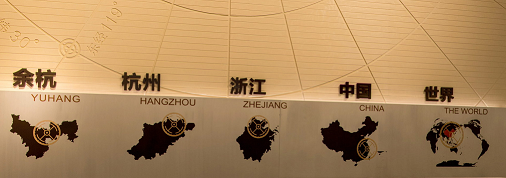

Liangzhu Culture is located in the middle and lower reaches of the Yangtze River around Taihu Lake (太湖)which are in the southeast of China, and its distribution area is very broad. Its central settlements are clustered in Liangzhu Site, Liangzhu town(良渚镇) and Pingyao Town(瓶窑镇), Yuhang District(余杭区), Hangzhou city(杭州市), Zhejiang Province(浙江省). Its geographical coordinates are 119°56 '40 "~120°03' 228" EAST longitude, 30°22 '36 "~30°26' 17" north latitude, with a subtropical monsoon climate.(Liangzhu Archaaeological Site)
In terms of topography, Hangzhou is located in the junction zone between low hills which are stretching branches of Tianmu Mountain(天目山) and Hangzhou-Jiaxing-Huzhou Plain(杭嘉湖平原), the biggest accumulation plain in Zhejiang Province. And the whole plain is covered with river channels ,which is very suitable for rice cultivation and has convenient water conservancy and transportation.

The site distribution area is just situated in the northwest of Hangzhou, enjoying the advantages of its natural geographical location. It is located in the alluvial plain in the transition zone between hills and plains, surrounded by mountains in the west, north and south, with some isolated hills scattered inside.
Archaeological Findings
In 1935, He Tianxing(何天行), a native of Hangzhou, made an investigation in the area where Liangzhu Site is seated and discovered a black pottery plate inscribed with ceramic inscriptions. Later, more than 100 cultural relics were discovered successively, and he wrote one of the earliest archaeological reports in China: Stone Tools and Black Pottery in Liangzhu Town, Hangzhou County. His discovery was the prelude to the archaeological culture of Liangzhu Culture. On this basis, after a year of arduous investigation, Shi Xingeng(施昕更) from The West Lake Museum in Zhejiang Province carried out several archaeological excavations near Liangzhu Town in 1936, and collected a number of prehistoric remains characterized by black pottery. In 1938, he published the book: Liangzhu: Preliminary Report on the Site of Black Pottery in the Second District of Hangzhou County. Their discovery caused a stir in Chinese academic circles, which greatly promoted the study of Yangtze Civilization and the development of fledgling Chinese archaeology. In 1959, Xia Nai(夏鼐), a researcher of the Institute of Archaeology, Chinese Academy of Social Sciences, officially named these findings Liangzhu Culture. (Zhou Yin,Wu Jin,2004:11-14)
After that, until the 1980s, a large number of sites were successively discovered in the Taihu Basin(太湖流域) around the middle and lower reaches of the Yangtze River. However, these sites were very scattered, and archaeologists' understanding of these sites was still in the initial stage on which the archaeologists only focused on single sites and failed to form an overall understanding.
From 1986 to 2006, with the excavations of Fanshan Royal Tomb (反山王陵)(1986) and Yaoshan Tomb(瑶山墓葬) (1987), many exquisite jade articles representing high status were unearthed, which made a major breakthrough in archaeology of Liangzhu site and gradually formed the concept of "Liangzhu Site Group". In 2007, the ruins of the ancient city were discovered. Later, the outer city of Liangzhu ancient City was preliminarily confirmed in 2010. After 5 years, Zhejiang Provincial Institute of Cultural Relics and Archaeology discovered and confirmed a large water conservancy system outside the ancient city. (Wang Ningyuan 2016:106)
With the efforts of the archaeological staff over the years, the ancient city of Liangzhu has been clearly shown to the world bit by bit, and the value of Liangzhu culture in the academic world has also been rising, exerting a world-class influence.
Heritage Elements of Liangzhu Ancient City Site
The results of archaeological excavation and research show that the Liangzhu ancient city site is large in scale, complex in type and rich in connotation, and the overall value of its heritage is jointly carried by the city site, peripheral water conservancy system, hierarchical cemetery (including altar) and unearthed artifacts represented by Liangzhu jade ware.(Liangzhu Archaeological Site)
1. The Ancient City Site (古城遗址)

The ancient city site is the core area of the Liangzhu site. The spatial layout of the city site is a centriped-type triple structure, which is composed of three groups of man-made remains including palace area, inner city and outer city, from inside to outside.
The palace area, located in the center of the inner city, consists of three major elevated ruins: Mojiaoshan(莫角山), Chizhongsi(池中寺) and Huangfenshan(皇坟山). According to investigation, it should be the area where the ruling class of Liangzhu Kingdom lived. Mojiaoshan palace area is the largest area of the three platforms. Seated in the center of the ancient city, it is a man-made rectangular earth platform, about 670 meters long from east to west, 450 meters wide from north to south, with an area of nearly 300,000 spare meters, occupying 1/10 of the area of the ancient city. The investigation shows that the height of the artificial platform in the east of Mojiao Mountain is about 10~12 meters, and that in the west is about 2~6 meters. Mojiao Mountain platform can be divided into three smaller ones: Big Mojiaoshan(大莫角山), Little Mojiao shan(小莫角山) and Wuguishan(乌龟山), which are the main base of the palace. As can be seen from the picture, Big Mojiaoshan is located in the northeast of the Mojiaoshan Palace area, while Little Mojiaoshan is located in the northwest and Wuguishan is in the southwest. There is also a wide area between the three platforms serving as the sand and soil square, presumably the site for some important ceremonial activities.To the south of the Wuguishan platform is the Chizhongsi platform where nearly 100,000 kg of carbonized rice and a reservoir have been excavated, which can be inferred to be the main storage area. To the east of the area is Huangfenshan platform which is also a palace base site according to investigation.(Liang Wei,2020:3)
The inner city is surrounded by four walls, east, west, north and south. It is an irregular rectangle with rounded corners, about 1,910 meters long from north to south and 1,770 meters wide from east to west, with a total area of about 300 hectares. The total length of the wall is about 6km, with a width ranging from 20 to 150 meters and a proximate height of 4 meters. Alongside the ancient city wall on the east, west and north sides run rivers outside of the city. What's more, close to the inside of the wall many man-made channels are found in the inner city, forming a very complex river network system. After archaeological exploration of these walls, a total of 9 gates were found, among which only one land gate was located in the southern wall, and the rest were water gates. There are two water gates on each side of the city wall, which are connected with all water systems. These water gates connect the city river inside and outside the ancient city, forming a convenient water conservancy and transportation pattern.(Liang Wei,2020:3)
The inner city was found with many platforms in addition to the central palace area. After archaeological excavation, some platforms are the royal burial site while others are speculated to be the areas for the residents in the ancient city to live and work for a large number of remains of manufacturing materials related to jade production such as jade,jade drilling and black quartz piece, wood ware as well as paint bone artifacts were unearthed. Through such scraps, it can be inferred that except for the farmers, there were also a large number of artisans who worked in the handicrafts workshops manufacturing jade and stone productions.(Liangzhu Archaeological Site)
2. Water Conservancy System on the Outskirts(古城外围水利系统)
During the period from 1995 to 2015, a huge water conservancy system composed of multiple dams was gradually found outside the ancient city of Liangzhu. Located in Pingyao town, the water system is distributed in the north and west of Liangzhu Ancient City, and is currently found to be composed of 11 dams. This large-scale water conservancy system is connected with the internal and external waterways of the ancient city. It is speculated that it should be an organic part of the unified planning and design at the beginning of the construction of Liangzhu Ancient City with the help of natural geographical advantages.(Liangzhu Museum)
These dams can be divided into three categories according to their different forms and locations: Embankments in front of the Mountains(山前长堤), High Dams at the Mouth of the Valley(谷口高坝) and Low Dams on the Plain(平原低坝).(Liangzhu Museum)
High Dams at the Mouth of the Valley: a total of 6 dam sites have been found in the mouth of the valley about 11 kilometers northwest to Liangzhu Ancient City site, which can be divided into two groups: east and west. Each group blocks one valley mouth as a flood barrier. The eastern group includes sites of Zhoujiafan(周家畈), Laohuling(老虎岭) and Ganggongling(岗公岭); The western group includes Qiuwu(秋坞), Shiwu(石坞) and Mifenglong(蜜蜂垄) sites. The distance between the east and west is not far, about 2.3 kilometers, and the earthwork volume of the whole high dam area is about 60 cubic meters. According to the survey, High Dams at the Mouth of the Valley were built in about 3100-3000 BC, through which it can be inferred that the rulers of the ancient city of Liangzhu had taken the water conservancy construction into consideration at the beginning of the construction of the ancient city, reflecting the ruler's strong ability to organize the society and to play the layout of a city and demonstrating a highly developed degree of civilization.(Wang Ningyuan,2019:31)
Low Dams on the Plain: this dam area is located in the southwest side of the ancient city site, composed of four sites including Wutonglong(梧桐弄), Guanshan(官山), Liyushan(鲤鱼山), Shizishan(狮子山), with different lengths ranging from 140 to 400 meters and a total earthwork volume of 30 cubic meters. Built between separate hills, these four dikes are connected with these hills, forming a closed barrier which cut off the otherwise wide body of water to form a huge reservoir.(Wang Ningyuan,2019:31)
Embankments in front of the Mountains: the Embankments in front of the Mountains, also known as Tangshan Site(塘山遗址), is located in front of the mountain about 2km north to Liangzhu Ancient City, with a total length of about 5km from east to west. It is the largest single site of the water conservancy system outside liangzhu Ancient City site, and its earthwork volume is about 198 cubic meters. Tangshan dam is different from the other two dam areas for it has a north-south double dam structure. The compound dam has a high ridge of soil at the east and west ends as well as in the middle, forming two closed reservoirs. The Embankments in front of the Mountains has a great protective effect on the ancient city. Once torrents of water rush down the mountain to the north of the ancient city, it can serve as a buffer against the flood.(Wang Ningyuan,2019:31)
Archeologically, these dams may have served as a combination of flood control, transportation and water use. These dams were connected with the river in the ancient city and had a great impact on the work and lives of the residents in their times. It can be said that Liangzhu water conservancy system is the earliest large-scale water conservancy project in China with a highly degree of integrity. This system fully shows the development degree of Chinese prehistoric civilization and is an important embodiment of Chinese ancient civilization.
3. Graded Cemeteries(分等级墓地)
There are also large and small cemeteries in and around liangzhu ancient city, among which five well-preserved and representative cemeteries are Fanshan Cemetery(反山墓地), Yaoshan Cemetery(瑶山墓地), Jiangjiashan Cemetery(姜家山墓地), Wenjiashan cemetery(文家山墓地) and Bianjiashan cemetery(卞家山墓地). Except that Yaoshan cemetery was discovered outside the ancient city ruins, the other four were excavated in the ancient city.(Liangzhu Archaeological Site)
Fanshan Cemetery:it is located on a high ground in the northwest of the ancient city, east to the Mojiaoshan Palace area. A total of 11 noble tombs were cleared through archaeological excavations, roughly in two rows, one in the north and another in the south, with the two highest ranking tombs in the middle. Along with the excavation of cemeteries, a large number of funerary goods were unearthed, including jade, stone tools and pottery, among which jade wares were the most abundant. At the same time, the number of jade articles unearthed in the Fanshan Cemetery is also the largest among several cemeteries, and the production techniques are the most exquisite. It can be identified that the Fanshan Cemetery is the highest grade cemetery in Liangzhu culture so far, which is slightly later than the Yaoshan Cemetery.(Liangzhu Archaeological Site)
Yaoshan Cemetery: located about 5000 meters northeast to the ancient city site, it is divided into two parts: an altar and a cemetery. Archaeological excavations cleared 13 large tombs of nobles, which were divided into two rows on the south side of the altar. Yaoshan cemetery and Fanshan cemetery belong to high grade cemetery.(Liangzhu Archaeological Site)
Jiangjiashan Cemetery: this cemetery is also located to the west side of Mojiaoshan in the central area of Liangzhu city, and is in the south of the Fanshan Cemetery. After the archaeological excavation, the cemetery was cleared out of 17 tombs, including the large tombs of nobles and the tombs of civilians and children with fewer burial goods, so it is archaeologically speculated that it should be the family cemetery of nobles.(Liangzhu Archaeological Site)
Wenjiashan Cemetery: it is located in a small mound slope on the west side of the outer city. The cemetery was cleared out of 18 tombs, and tombs of different grades coexist. so it is archaeologically speculated that it should be a lower grade noble family cemetery.(Liangzhu Archaeological Site)
Bianjiashan Cemetery: located on the artificial terrace of the settlement area in the south of the outer city, 66 tombs have been excavated. There is no obvious sequence of these tombs, and they are all low-ranking civilian tombs. It is speculated that they should belong to public tombs.(Liangzhu Archaeological Site)
The excavations of these tombs are of breakthrough significance in the archaeological activities of Liangzhu culture. Archaeological researchers divided these tombs into four grades: high grade, the higher level, the intermediate and low level on the basis of the locations of the five cemeteries, the distribution and the arrangement of the tombs, and unearthed artifacts with the shape, number, etc., revealing there have been a more clear and complex social hierarchy in the Liangzhu period, for early tangible evidence of the existence of regional countries.(Liangzhu Archaeological Site)
4. The Unearthed Objects Represented by Liangzhu Jade Ware
Along with the excavations of cemeteries and the discovery of ancient city sites, a large number of movable relics of Liangzhu ancient city site have been unearthed. These relics are not only large in number, but also rich in variety. They are mainly jade wares, pottery, lacquer wares, stone tools, bamboo wares, bone and horn wares and so on which were found in graded graveyards, river channels and handicraft workshops, reflecting the social life of Liangzhu residents from the ruling class down to the common people and providing solid material evidence for archeologists to restore the civilization of prehistoric times. Among these relics, the number of jade articles unearthed far outweighs other remains. At the same time, these jade craftsmanship is exquisite, which not only reflects the superb skills of craftsmen in the ancient city of Liangzhu, but also testifies to the degree of civilization at that time. Jade has been an integral part of traditional Chinese culture since ancient times and is regarded as a symbol of royal power and divine power. Judging from a large number of jade articles unearthed in Liangzhu Ancient City site, the idea of divine right of kings and theocracy had already appeared in Liangzhu ancient City period, and the ritual system of the early state also began to take shape.(Liangzhu Archaeological Site)
These jades were mainly unearthed in hierarchical cemeteries with an amount not less than 7000 and a great variety of models, mainly including jade cong(玉琮), jade yue(玉钺), jade bi(玉璧), y-shaped jade wares(三叉型玉器),jade bracelet(玉镯), jade weaving wares(玉织具), etc. In addition, some jades were found carved into birds, turtles, fish, cicadas and other animal.(Liangzhu Archaeological Site)
Jade cong is the most important and representative jade ware in Liangzhu culture. This kind of jade is cylindrical, round and hollow inside and square outside with four symmetrical triangular shaped convex surface, implying Liangzhu ancestors' primitive world view that heaven is round and earth is square. The four convex surfaces are engraved with special symbols, the upper part of which is the image of a crested god, the middle is the face of a beast with round eyes and fangs, and the lower part is the claw of a bird, expressing the worship and yearning for the god behind it (generally believed to be the god of sun). Cong is also the most influential jade with the widest distribution.(Liangzhu Archaeological Site)
Jade bi is the largest jade ware of Liangzhu culture in unit area, and it is also one of the typical representatives of Liangzhu culture jade ware and even Chinese jade ware. The aperture of this kind of perforated oblate jade ware is usually no more than half of its diameter. Most of them are plain jade, but some of them are engraved with the bird and the sun. It is mentioned in "Rites of Zhou" 《周礼》that jade bi is a special sacrificial vessel made of jade for offering sacrifices to heaven, and the large jade bi found in the site of Yaoshan cemetery as an altar seems to prove this point.(Zhou Yin,Wu Jin,2004:25-26)
Jade yue, shaped like an axe, is also an important part of Liangzhu jade ware.The earliest yue(钺) may have been a stone axe. The jade yue of Liangzhu culture generally has two types: long trapezoidal jade yue (长方梯行钺)and narrow trapezoidal jade yue(扁方梯形钺). Generally, there is only one jade yue in a tomb, which is far less in number than jade cong and jade bi. It is mainly unearthed in high-level male tombs, considered to be a symbol of royal power or military commander's power. (Zhou Yin,Wu Jin,2004:26)
The Heritage Value of Liangzhu Ancient City Site
Due to the limited scale of archaeological excavation, many connotations and details of Liangzhu ancient city site have not been completely and clearly revealed and presented, all of which are still waiting for further archaeological research. But there are indications that early regional states have emerged in the Circum-Taihu region around the middle and lower reaches of the Yangtze River in China between 3300 and 2300 BC. This is much earlier than the Xia(夏), Shang(商) and Zhou(周) dynasties, which are widely known, and is a strong testament to the long and profound history of Chinese civilization.(Zhou Yin,Wu Jin,2004:166)
The layout of the ancient city of Liangzhu from the inside to the outside of the three layers of space and the grading of the cemetery size indicate that in the Liangzhu period, there had been a multi-level social stratification and the combination of theocratic and royal political rule. A large number of funerary jade articles and special tatoo of gods, humans and beasts were the spiritual and cultural representation of that time, thus establishing the early social etiquette system. The carbonized rice and handicraft remains found in archaeological sites also indicate that the Liangzhu society not only developed rice-farming and plough agriculture, but also developed handicraft industry to a certain extent, reflecting the social division of labor at that time. The construction of large-scale water conservancy project has unique planning features and construction technology of "water city", which is an outstanding example of combining artificial technologies and nature for survival and development of Liangzhu ancestors, and represents their ability to use land and river network in plain area in the early stage of East Asia.(Zhou Yin,Wu Jin,2004:166)
On July 6, 2019, the Ruins of Liangzhu Ancient City was inscribed on the World Heritage List at the 43rd World Heritage Conference held in Baku, capital of Azerbaijan, showing the great river civilization in the Yangtze River basin of China to the world.
Protection and Inheritance
1. Protection Comes First
Before the 1980s, the development of the town where the site is located was slow, and the contradiction between the protection of the site and urbanization development were not prominent. Local people also attached great importance to the protection of the site. In 1961, the Ruins of Liangzhu Ancient City was announced as a key cultural relic protection unit of Zhejiang Province. Later, with the development of the times, the local economy developed rapidly and the progress of urbanization accelerated, which undoubtedly caused some difficulties for the archaeological exploration and protection of the site. However, the local government has been supporting the archaeological undertaking, and established a special protection agency: Yuhang Liangzhu Cultural Site Management Institute(余杭县良渚文化遗址管理所) in 1987. Later, the national road near the site was diverted and a printing plant was relocated for archaeological excavation work. In addition, the government of Hangzhou and Yuhang District also formulated many policies and regulations for site protection, and established and improved an effective management mechanism. The government strengthens the training of professional knowledge, protection management techniques, strengthen heritage protection management monitoring and other means to implement conservation management, so that heritage can be effectively protected. (c.f:Zhou Su,2020)
In addition, the ancient city site is not isolated, but organically integrated with its surrounding natural geographical environment. Therefore, the protection of the site is not limited to its body, but should also pay attention to the protection of the natural environment around the site, protecting the mountainous vegetation and wetlands around the site, and closing the ore factories around the site, and etc.(Zhou Su,2020:)
2. Cultural Display and Dissemination
The ruins of Liangzhu ancient City is of great academic value and should also let more people appreciate this prehistoric civilization. On-site displays and pavilion displays are great to help people learn about this excellent culture. The Liangzhu Museum was first constructed and opened in 1994, and then rebuilt with the further development of Liangzhu archaeological work. It was redeveloped in 2018. The Liangzhu Site National Park can display the Liangzhu culture in an all-round way to visitors. By giving full play to the main function of the national archaeological site park, the site can be better "alive", so that the most basic cultural gene of the Chinese nation can adapt to the contemporary culture and coordinate with the modern society.(Zhou Su,2020:)
3.Promoting Integrated Development
On the premise of ensuring the safety of cultural relics and the priority of archaeology, overall consideration should be given to the land use, such as population distribution, industrial layout, public facilities and infrastructure allocation around the sites, so as to realize the integrated development of historical sites and urban and rural areas. With the development of economy, the level of education can also be improved, so as to further enhance the public's awareness of the preservation of the site.(c.f:Zhou Su,2020)
References
Liang Wei梁伟.(2020).良渚古城的规划及其深远影响研究[The Urban Planning and Prehistorical Liangzhu City]. 现代城市研究 Modern Urban Research(01):2-8.
Wang Ningyuan王宁远(2016).良渚古城及外围水利系统的遗址调查与发掘[Survey and Excavation of the Water Conservancy System in Liangzhu City and Surroundings].遗产与保护研究 Research on Heritages and Preservation(05):102-110.
Wang Ningyuan王宁远(2019).比三个西湖还大的史前巨作——良渚古城外围水利系统发现纪实[A prehistoric masterpiece larger than three West Lakes: a documentary of the discovery of the water conservancy system outside the ancient city of Liangzhu]. 杭州(周刊) Hangzhou Weekly(26),26-31.
Zhou Yin,Wu Jin周膺、吴晶(2004).中国5000年文明第一证:良渚文化与良渚古国[The First Evidence of The 5000-Year Civilization of China: Liangzhu Culture and Early State of Liangzhu].Hangzhou: Zhejiang University Press浙江大学出版社.
Zhou Su周苏(2020).良渚古城遗址保护管理实践概述[Overview of Conservation and Management Practice of the Archaeological Ruins of Liangzhu City].自然与文化遗产研究Study on Natural and Cultural Heritage(03):36-46.
服务-良渚博物院 [lzmuseum.cn]https://www.lzmuseum.cn/FuWuZhiNan/index.html
良渚遗址官网[Liangzhu Archaeologial site].https://www.lzsite.cn/classinfo.aspx?classid=1
Terms and expressions
The Archaeological Ruins of Liangzhu City良渚古城遗址
late Neolithic archaeological culture 新石器时代晚期的考古文化
social etiquette system 社会礼仪制度
World Heritage List 世界自然遗产名录
the Circum-Taihu Lake Area太湖流域
geographical coordinates 地理坐标
accumulation plain 堆积平原
alluvial plain 冲积平原,沉积平原
Zhejiang Provincial Institute of Cultural Relics and Archaeology浙江省文物考古研究所
the Ancient City Site 古城遗址
a centriped-type triple structure 一个中心型三层结构
carbonized rice 碳化水稻
Water Conservancy System on the Outskirts古城外围水利系统
Embankments in front of the Mountains山前长堤
High Dams at the Mouth of the Valley谷口高坝
Low Dams on the Plain平原低坝
earthwork volume 土方量
Graded Cemeteries分等级墓地
"Rites of Zhou" 《周礼》
jade cong玉琮
jade yue玉钺
jade bi玉璧
y-shaped jade wares三叉型玉器
jade bracelet玉镯
jade weaving wares玉织具
long trapezoidal jade yue 长方梯行钺
narrow trapezoidal jade yue扁方梯形钺
multi-level social stratification 多层次社会分层
Questions
1.When was the Archaeological Ruins of Ancient Liangzhu City approved for inclusion in the World Heritage List?
2. Where is the Liangzhu Culture located?
3. Which cemetery does also serve as a altar?
4.Were there only farmers in the ancient Liangzhu city? Why?
5.What is the symbol of jade yue? And where is it often discovered?
Answers
1. It was approved on July 6, 2019.
2.Liangzhu Culture is located in the Circum-Taihu Lake Area in the middle and lower reaches of the Yangtze River which are in the southeast of China.
3. Yaoshan Cemetery.
4. No, there existed artisans in the ancient Liangzhu city. Because many handicraft remains found in archaeological sites.
5.It is mainly unearthed in high-level male tombs, considered to be a symbol of royal power or military commander's power.
英语笔译 胡良明 Hu Liangming 202170081570
Abstract
Qu Yuan’s Chu Ci is the first collection of romantic poetry in China, which has a very important position in the history of Chinese literature. In the middle and late 19th century, with the constant contacts and communication between China and foreign countries, domestic and foreign translators began to study and translate the Chu Ci and produced many indepth works. This thesis takes the English translation of Chu Ci by Xu Yuanchong as the research object, takes the Three Beauties Principle as theoretical basis, uses contrastive method, literature research and text analysis method, and analyses the English translation of Chu Ci by Xu Yuanchong from three aspects: beauty in sound, beauty in form and beauty in sense. It is found that Xu Yuanchong used rhetorical devices such as onomatopoeia, repetition, simile, personification and so on to reflect Three Beauties Principle in the process of translating Chu Ci into Chinese. The study can promote[?] the translation of Chinese classical literature by translators at home and abroad, thus promoting[?] the cultural exchange between China and foreign countries, and embody the advantages of Chinese literary theory in ancient Chinese ancient translation, which has an important[?] guiding role for future literary translation.
Key words
Chu Ci, Xu Yuanchong, Three Beauties Principle
Introduction
The Original meaning of Chu Ci is the words of Chu, which gradually evolved into two meanings: one is the genre of poetry, and the other is the name of the collection of poems. In the beginning, Chu Ci is a new poetry genre founded by Qu Yuan. The works use the literary style of Chu (now around Hu Nan province and Hu Bei province), describing the mountains and rivers and historical customs of Chu, with strong local characteristics. In the Han Dynasty, Liu Xiang edited Qu Yuan’s works and Song Yu’s works into a collection called Chu Ci. It is a very important collection of romantic poems and songs in the history of Chinese literature, with its unrestrained feelings, strange imagination, rich local characteristics of Chu and myth. Since Qu Yuan’s works came into being, people began the research of them and the history of research has lasted more than 2000 years. However, the study on English translation of Chi Ci was short. Until the 19th century, people began to pay more and more attention to the translation of Chu Ci. There are many people who have translated Chu Ci at home and abroad. For example, Yang Xianyi and his wife, Sun Dayu, Zhuo Zhenying, Xu Yuanchong and so on. And there are many foreign translators, such as Edward Harper Parker, Herbert Giles, James Legge, Arthur Waley and many other people. Among so many English translated versions of Chu Ci, the English translation of Chu Ci by Xu Yuanchong is the most classic. He translated Chu Ci with his Three Beauties Principle and combined the translation with Chinese culture. At present, few scholars have studied the relationship between Xu Yuanchong’s English translation of Chu Ci and the Three Beauties Principle theory. Therefore, it is of a great significance to explore the mutual confirmation between Three Beauties Principle and the English translation of Chu Ci by Xu Yuanchong.
Literature Review
Chu Ci is a new poetry genre founded by Qu Yuan in the Warring States Period. The works use the literary style of Chu (now around Hu Nan province and Hu Bei province), describing the mountains and rivers and historical customs of Chu, which has unique characteristics. In the Han Dynasty, Liu Xiang edited Qu Yuan’ s works and Song Yu’s works into a collection, which was called Chu Ci. It has become a collection of poems with far reaching-reaching influence on Chinese literature after The Book of Songs. The original meaning of Chu Ci was the words of Chu, and it gradually evolved into two meanings: one is the genre of poetry, and the other is the name of poetry collection(in a certain extent, it also represents the literature of Chu). As far as poetry genre is concerned, it is a new poetic style founded by Qu Yuan as a representative poet in the late Warring States Period on the basis of Chu folk songs. As far as the name of the collection in the style of Chu Ci edited by Liu Xiang in the Han Dynasty on the basis of predecessors, it included 16 works written by Qu Yuan and Song Yu of Chu people in the Warring States Period and by Jia Yi, Zhuang Ji, Dong Fangshuo and Liu Xiang in the Han Dynasty. The main author of Chu Ci is Qu Yuan, he created immortal works such as Li Sao, Nine Chapters, Nine Songs and so on. The form of poetry is processed and formed on the basis of Chu folk songs, and a large number of local customs and dialects of Chu are quoted in the poems. The historical legends, mythological stories, customs and habits involved in the works, as well as the artistic means and the rich lyrical style are all marked with Chu culture. These are the basic characteristics of Chu Ci, and they are an important part of Chu culture that complements the Central Plains culture. Chu Ci occupies an important position in the history of Chinese poetry. Its appearance broke two or three centuries’ silence after the Book of Songs, and shined brilliantly in poetry circles. Chu Ci not only opened up the following Fu style, but also influenced the prose creation of the following dynasties. It is the source of active romantic poetry creation. Tao Yuanming and Li Bai of later generations are all affected by it. Since Qu Yuan’s works came into being, people began the research of them and the history of research has lasted more than 2000 years. However, the study of English translation of Chi Ci was short. Until the 19th century, people began to pay more and more attention to the translation of Chu Ci. There are many people who have translated Chu Ci at home and abroad. At home, such as Yang Xianyi and his wife, Sun Dayu and Xu Yuanchong all have translated Chu Ci. There are many foreign translators, such as Arthur Waley, David Hawkes and some other people. At home, Yang Xianyi and his wife published the English translation of Li Sao and some other poems of Chu Ci by Foreign Languages Press in 1955, Xu Yuanchong published the English Translation of the complete works of Chu Ci by Hunan People’s Publishing House and China Translation and Publishing Corporation in 1994 and 2005 respectively, Zhuo Zhenying published Chinese Classic· Chu Region in Chinese and English by Hunan People’s Publishing House in 2006, and Sun Dayu published Selected poems of Qu Yuan by Shanghai Foreign Language Education Press in 2007. In the western countries, Edward Harper Parker’s The Sadness of Separation, or Li Sao was regarded as the earliest English version related to the anthology and it was published in The China Review: or Notes and Queries on the Far East in 1879. In 1884 Gems of Chinese Literature was published by Herbert Giles in Shanghai, he selectively translated Bu Ju, Yu Fu, Shan Gui and so on in his bo. In 1895, for the purpose of preaching, Li Sao, Guo Shang and Li Hun was translated by James Legge as Confucian classics and published in the Journal of the Royal Asiatic Society. In 1919, Arthur Waley selectively translated Guo Shang and Da Zhao in his anthologies A Hundred and Seventy Chinese Poems and More Translations from Chinese. He also translated Jiu Ge into English in 1955. In 1959, David Hawkes’s The Songs of the South was published by the Oxford University Press, which is the most authoritative English translation of Chu Ci in the West.
Methods and Theories
Three Beauties Principle is originated from Lun Xun’s opinion. He put forward the theory of Three Beauties in Chinese literary creation in his article From Words to Articles. The original text is: Beauty in sense is to feel from the heart, this is the first step; beauty in sound is to feel from the ears, this is the second step; and beauty in form is to feel from the eyes, this is the third step. Xu Yuanchong of Peking University transplanted this theory into translation theory and formed his own Three Beauties Principle for poetry translation. According to Xu, “I applied Lu Xun’s ‘three beauties’ to translation and it is ‘three beauties’ principle on poetry translation. That is to say, the rendition should move the readers as the original, this is beauty in meaning; it should have rhyme pleasant to ear as the original, this is beauty in sound; the translators should try to keep the original form (such as the length of poetic lines and antithesis), this is beauty in form.” In 1979, Xu Yuanchong raised the poetry translation theory of beauty in meaning, beauty in sound and beauty in form in the preface of the version of Mao Zedong’s Poetry. Which marks the birth of Xu Yuanchong’s Three Beauties Principle. Xu Yuanchong raised this theory on the basis of sixty years’ experience in poetry translation. When this principle came into being, it is received wide attention. Xu Yuanchong has also grasped and got inspiration from other translators’ opinions or theories. Such as Yan Fu’s theory of “faithful, expressiveness and elegance” and Qian Zhongshu’s translation theory of “The Translation Art of Hua”. However, it is not easy to do this, which is why Xu Yuanchong was praised by his teacher, Qian Zhongshu, who is a master of Chinese and western learning: “ You dance with the shackles of rhyme and cadence, which is flexible and amazing.”
Beauty in Sound
Beauty in Sound refers to the rhyme and smoothness of poetry. It means the translated poems should keep the same melodious rhythm as the original poems. The beauty of sound is composed of rhymes, rhythms and tones. Generally speaking, poetry emphasizes the beauty of sound. Xu Yuanchong pays attention to sound because it is very important in poetry. Xu thinks that it is reasonable to use rhyme in hundred years because there are few Chinese poems with more than 200 lines. As we all know, poetry is written in a language with harmonious rhythm. Harmonious rhythm and rhyme play an important role in poetry. According to Xu, poetry should have rhythm, be written fluently and sound pleasing to the ear, which is the beauty of Sound. Generally speaking, the translation of phonetic features is the most difficult to achieve, because different languages, especially English and Chinese, have different sound systems. In poetry translation, Professor Xu believes that the English version of Chinese classical poetry should and must have unique characteristics. Although Chinese and English poems have their own metrical systems and rhyming schemes to form the musicality of poetry, equivalence can be achieved by translating Chinese poems into English iambic, inflection, fingering or anaphora. In a word, we only use the weak beat and strong beat in English translation instead of the flat beat in Chinese. As long as the adoption of rhythm does not sacrifice consciousness, the translator should transplant the rhythm of the original work; This is especially true in the translation of Chinese classical poetry, because rhyme is an important feature of poetry. In this case, the beauty of sound will not be lost, so that readers can experience the same artistic feelings as local readers. The word homeoteleuton means “similarity in endings,” and in this device words, phrases or clauses in close succession end with the same ending suffix or syllable. In the English translation of Chu Ci by Xu Yuanchong, he used the rhetorical device of homeoteleuton to reflect Beauty in sound. However, the rhyme scheme of the translation is not equivalent with the original poem. e.g.1 君不行兮夷犹,蹇谁留兮中洲?美要眇兮宜修,沛吾乘兮桂舟。 Why don’t you come, oh! Still hesitating? For whom on midway isle, oh! Are you waiting? Duly adorned, Oh! And fair, I float. On rapid stream, oh! My cassia boat. In the original text, the first sentence rhymes with third sentence and the second sentence rhymes with the fourth sentence. It is the rhyme style of abab. However, in the translation, “hesitating” rhymes with “waiting”, “float” rhymes with “boat”, it is the rhyme style of aabb. These words show Mrs Xiang’s anxiety while waiting for Xiang Jun. Also, after using this rhetorical device, poetry is more catchy to read. e.g.2 荪壁兮紫坛,播芳椒兮成堂。桂栋兮兰橑,辛夷楣兮药房。 In purple court, oh! thyme decks the wall; With fragrant pepper, oh! is spread the hall. Pillars of cassia, oh! stand upright, And rooms smeel sweet, oh! with clover white. In the original text, the second sentence rhymes with the fourth sentence, and it is the rhyme style of abcb. However, in the translation, “wall” rhymes with “hall”, “upright” rhymes with “white”, it is the rhyme style of abab. These words describe the good environment where Mrs Xiang lives, thus praising the hero’s noble character.
Beauty in Form
Beauty in Form refers to neat rows and lengths and neat confrontation. It means that the translated poems should keep the same form (length, antithesis) as the original poems. Form is unique to poetry, and it is a remarkable feature between poetry and other literary genres. Only the lines of poetry are arranged according to a certain set of rules, especially Chinese classical poetry. As for beauty in form, it is mainly about length and symmetry. Chinese poetry emphasizes balance, symmetry and harmony. For example, in an eight-line poem, the middle four lines should form two couplets, in which each character in the first line should be compared with the corresponding character in the next line in meaning, part of speech and tone. On the relationship between formal beauty and the other two kinds of beauty, Xu Yuanchong explained that among the three beauties, the beauty of meaning is the most important, the beauty of sound is the second, and the beauty of form is the third. However,'beauty in form' is essential; Beauty in sense and beauty in form constitute the unity of contradiction. On one hand, a good form should serve good content. Without good content, no matter how good the form is, it is useless. On the other hand, the content should be expressed in a good form; Otherwise, the inner beauty of the original poem will be destroyed. On the premise of "beauty in meaning" and "beauty in sound", we should try our best to convey "beauty in form", so that these three beauties in the version can be realized. However, if these three can't be realized at the same time, we should give up the beauty in sound and form, but realize the beauty in sense. Therefore, Xu put forward a request to himself, that is, to try his best to convey the beauty of form and harmony on the premise of conveying the beauty of meaning. Antithesis is the deliberate arrangement of contrasting words or ideas in balanced structural forms to achieve force and emphasis. The form of the expression is very important for effect, for the force of the emphasis, whether for profundity of judgement, for humor or for satire, depends chiefly on the juxtaposition of direct opposites, of glaring contrasts. e.g.1 朝搴阰之木兰兮,夕揽洲之宿莽。 At dawn I gather mountain grass, oh! At dusk I pick secluded one. In the original text, 朝 corresponds to 暮,搴corresponds to 揽,阰之木兰corresponds to 洲之宿莽. Similarly, in the translation, “at dawn” corresponds to “at dusk”, “gather” corresponds to “pick”, and “mountain grass corresponds to “secluded one”. The structure between every two poems is very neat, subject corresponds to subject, adverbial corresponds to adverbial, and noun corresponds to noun. The author uses this rhetorical device, the beauty in rhyme in the poem is reflected. Also, the poem becomes more concise, symmetrical and elegant. e.g.2 朝骋鹜兮江皋,夕弭节兮北渚。鸟次兮屋上,水周兮堂下。 At dawn I drive my cab, oh!By riverside; At dusk on northern isle, oh! I stop my ride. Under the eaves, oh! the birds reposed; Around the house, oh! the river flows. In the original text, 朝 corresponds to 夕,屋上corresponds to 堂下. Similarly, in the translation, “at dawn” corresponds to “at dusk”, “under the eaves” corresponds to “around the house”. The structure between every two poems is very neat, subject corresponds to subject, adverbial corresponds to adverbial, and noun corresponds to noun. In addition, the translator mentions “on northern isle” in the first half of the sentence, which provides convenience for the rhyme of aabb of the whole poem.
Beauty in Sense
Beauty in Sense refers to the beauty of content. It means the translated poems should keep the same meaning as the original poems and move people with meaning. Xu (1984) thinks that the foundation of the three beauties is three similarities, namely, similarity in meaning, similarity in sound and similarity in form. In order to seek similarity in meaning, translators should convey the meaning of the original text without misinterpreting or increasing readers' thoughts. Generally speaking, the similarity in meaning can be equated with the beauty in meaning of the original text. However, sometimes the similarity in meaning and beauty in meaning are contradictory, and the similarity in meaning cannot convey the beauty in meaning of the original text. This is because the sense of beauty is caused by association or some historical reasons; Therefore, the target readers will not have the same connection with the authors, because they do not have the same historical background. Often, in that case, beauty in meaning is difficult to translate. As for some beautiful words in Chinese, it is difficult to find equivalent words in English. This is because the beauty in meaning is sometimes combined by the beauty in sound and the beauty in form, not just the similarity in meaning. Although the beauty in meaning is based on the similarity in meaning, the beauty in meaning lies in the deep layer, while the similarity in meaning lies in the surface structure. For example, when Xu Yuanchong (2004) translated Li Shangyin's famous poem Untitled Poem, he translated "春蚕到死丝方尽" into “silkworm till its death spin silk from love-sick heart”. Because of Three Beauties Principle is put forward for Tang poetry and Song lyrics, Xu created a beautiful picture full of images with his simple language.
Conclusion
This paper proves that Three Beauties Principle has guiding significance for the translation of Chu Ci and other Chinese classical literature; Therefore, the communication between China and other countries is better conducted. In this thesis, the author uses a whole chapter to illustrate how the translator conveys the beauty in meaning, sound and form in the translation by various methods. In order to translate beauty in meaning, translators should properly handle and translate images, rhetoric and characters. All these require translators to have a good understanding of Chinese traditional literature and Chinese culture. And translators should be very careful when dealing with these things. In order to translate the beauty in sound, translators should have a good understanding of the rhythm and rhymes of both Chinese and English. Rhyme is a bit complicated, including ending rhyme, alliteration and onomatopoeia. Translators can properly translate the rhythm and prosody of one language into that of another. Xu believes that beauty in form includes line length, confrontation, duplication and so on. Therefore, in order to convey the beauty in form, translators should pay attention to the length and balance of sections and lines. As the most important thing in the world, Three Beauty Principle also has its shortcomings. However, from the examples given in this paper, the narration and explanation of this theory, and the nature of translation theory and poetic language, the Three Beauties Principle is a good principle. It has certain guiding significance for future poetry translation.
References
- [1]Feng Lilian 冯立茜. 浅议许渊冲“三美原则”在其诗歌翻译中的体现[D]. 成都:成都理工大学,2018.
- [2]Liu Miqing刘宓庆. 文学翻译论纲[M].武汉:湖北教育出版社,1999.
- [3]Liu Yuanyuan刘园园. 《楚辞》西方翻译与研究的现状、问题及对策研究[D]. 荆州: 长江大学, 2020.
英语笔译 黄琼 Huang Qiong 202170081571
Abstract
Yiyang has a subtropical monsoon climate with high temperatures, cold winters and hot summers, and abundant precipitation. Bamboo mostly likes warm and humid climates, and Yiyang has abundant rainfall and heat, which is an ideal ecological environment for bamboo to grow, thus it is also known as the “Bamboo Capital of China”. Bamboo has always been a representative cultural image in China, which not only contains rich cultural values but also its artistic and economic values. Yiyang has a history of bamboo weaving for hundreds of years, and its bamboo products have long been famous, among which “Xiaoyu Bamboo Weaving Art” is a representative list of national intangible cultural heritage projects, and local bamboo products cover all aspects of production and life. This article not only introduces the art of bamboo weaving but also focuses on the process of weaving bamboo mats as an example to show the charm of Bamboo weaving.
Key words
Yiyang, bamboo weaving, Xiaoyu Bamboo Weaving Art, bamboo mat
Literature Review
Yiyang bamboo weaving art is a relative minority topic. More than 60 journals and papers can be found by searching "Yiyang Bamboo" on CNKI, but there are only a few articles, and the general research is not very in-depth. With "Yiyang Bamboo Weaving" as the keyword search, a total of 9 journals, and 13 papers are found. Zhang Jiang Shiqin's Research on the Development of Bamboo Culture Industry in Yiyang describes the development context, environment, current situation, and strategies for promoting the bamboo culture industry. Luo Fen's Research and Development of Yiyang Bamboo Weaving Art mainly introduces Yiyang bamboo weaving art, comprehensively uses various research methods, through sorting out Yiyang traditional bamboo weaving art, tries to put forward good solutions to the existing problems and follow-up development of Yiyang bamboo weaving. Jiang Xiangdong's Inheritance and Development of Hunan Traditional Bamboo Weaving, based on the actual situation of the development of Hunan traditional bamboo weaving, put forward several countermeasures such as "government support", "intensive management" and "talent training", which has practical guiding significance for the inheritance and development of Hunan traditional bamboo weaving art. Domestic research on Yiyang bamboo weaving art is very limited, there is no foreign paper on Yiyang bamboo weaving. Use "China Bamboo weaving" as the keyword to find literature on Google Scholar. The literature writers are all Chinese with few foreigners studying Bamboo weaving art, let alone Yiyang Bamboo weaving art. In addition, it is difficult to find any further theoretical works on Yiyang bamboo weaving. Moreover, the research on the bamboo weaving art in Yiyang is not comprehensive enough, and there is no in-depth discussion on the characteristics and causes of the bamboo weaving art in Yiyang.
The Introduction to Bamboo weaving and its History
Bamboo is always an important part of Chinese culture, and literati have often used it as imagery to express their high-minded sentiments. Bai Juyi said in The Annals of Bamboo Cultivation: "The root of bamboo is firm, which is to establish the nature of bamboo. When a gentleman sees this nature of bamboo, he thinks of being upright and selfless, and not to be attached to the influential. When a gentleman sees the heart of bamboo, he thinks of accepting all useful things with an open mind. When a gentleman sees its knot, he thinks of refining his character and being consistent, no matter when things are going well or when he encounters danger."(竹性直,直以立身;君子见其性,则思中立不倚者。竹心空,空以体道;君子见其心,则思应虚受者。竹节贞,贞以立志;君子见其节,则思砥砺名行,夷险一致者。) In China, bamboo is both upright and steadfast in character, and also has a verdant and attractive posture, and has been loved by the literati since ancient times, along with plum blossoms and pine trees are known as the "Three Friends of Winter"(岁寒三友). The pine symbolizes evergreen; the bamboo symbolizes the way of a gentleman and the plum symbolizes pure. In addition to bamboo as cultural imagery, bamboo itself has great value. Bamboo has a long history of being used in architectural art. Bamboo buildings are houses of ordinary people. Southwest minorities such as the Dai nationality(傣族) still live in bamboo buildings. The Dai bamboo building is mainly made of bamboo, and the walls are also woven from bamboo, which has high air permeability, so the ventilation of the house is good. Bamboo can also be used as musical instruments. Traditional Chinese musical instruments such as flute(笛子), xiao(箫 a vertical bamboo flute), sheng(笙 thirteen bamboo tubes of different lengths), zheng(筝 the ancient Chinese traditional plucking instrument), erhu(二胡 a two-stringed bowed instrument with a lower register than jinghu) are inseparable from bamboo. Word-formation of these instruments shows that they are related to bamboo(⺮,汉字的偏旁部首,读作“竹字头”). A famous calligrapher of the Jin Dynasty, Wang Xizhi, wrote in the Preface to the Orchid Pavilion: "Seated by the bank of brook, people will still regale themselves right by poetizing their mixed feelings and emotions with wine and songs, never mind the absence of melody from string and wind instruments."(It is the translation of Lin Yutang 林语堂:虽无丝竹管弦之盛,一觞一咏,亦足以畅叙幽情) Thus, since ancient China, bamboo has been used to refer to music.
The art of bamboo weaving in China is also popular, and Hunan Yiyang is also a city with a cultural heritage of bamboo art. Bamboo weaving art reflects the wisdom and value of the working people. With the development over hundreds of years, the craft is more and more advanced, not only embodies the essence of Chinese traditional handicraft but is also an important carrier of Hunan culture. In ancient times, restricted by economic conditions and transportation, ancient people could only use local materials to make tools needed for daily life. The origin of bamboo weaving can be traced back to the Neolithic Age. The Neolithic Age refers to the last phase of the Stone Age in archaeology, beginning about 10,000 years ago and ending from 5,000 to 2,000 years ago. During the Gaomiao culture of Hunan province, which dates back to more than 7,000 years ago, a bamboo mat was placed under the skeleton of a female body. There is no visual difference between this bamboo mat and today's bamboo mat products, but it has been charred (Jiang Xiangdong 2019, 146) More than 6,000 years ago, traces of bamboo weaving were found on cultural relics unearthed from Tujiatai site in Nanxian county (a county in Yiyang)during the Daxi Culture period(Pan & Tan 1994, 34)The Daxi culture dates from about 4400 to 3300 BC. The discovery of Daxi culture reveals a regional cultural heritage in the middle reaches of the Yangtze River, which is dominated by red pottery and contains colored pottery. Bamboo handles for spears were unearthed from the tomb sites of the Warring States Period. Yiyang bamboo weaving became a trade in the Ming Dynasty and was exported in the Qing Dynasty. The Yiyang Museum also displays bamboo products from the Qing Dynasty, including bird cages, baskets, and so on. In the old days, farmers used to make baskets of bamboo to carry things, make hats to hide from the sun and wind and rain, make backpacks to carry farming things, and bamboo fans made of bamboo became a tool for farmers to avoid the summer heat and keep cool. In summer, after a hard day’s work, farmers lie on top of the deck chair made of bamboo, shaking the fan, chasing away mosquitoes, listening to the cicadas, looking at the moon overhead, and chatting with neighbors. These show that Yiyang bamboo weaving has a long history.


Yiyang' s Natural Environment and Bamboo
Yiyang, a prefectural city under the jurisdiction of Hunan Province, is located in the central and northern part of Hunan province, on the south bank of Dongting Lake(洞庭湖). It has been a fertile "land of fish and rice"(鱼米之乡) in the south of the Yangtze River since ancient times. Yiyang has a humid subtropical continental monsoon climate with generally high temperatures, cold winters and hot summers, and abundant precipitation year after year. It rains a lot in July and generally has low sunshine throughout the year. The average annual temperature is 16.1℃-16.9℃, sunshine 1348 hours to 1772 hours and rainfall is 1230mm to 1700mm, which is suitable for growing crops. Yiyang's climate and ecological environment are very suitable for the growth of bamboo. Yiyang is rich in Phyllostachys heteroclada(水竹)and phyllostachys pubescens (楠竹). Phyllostachys heteroclada has excellent elasticity and toughness, fine texture, and enjoys a cool and humid environment with excellent water absorption performance and a cool bamboo body. It is an excellent material for weaving various living and production appliances. Phyllostachys pubescens can be used to weave all kinds of utensils and crafts, branches as brooms, and young bamboo as raw materials for paper.
Yiyang has abundant bamboo resources. Taojiang County(桃江) is under the jurisdiction of Yiyang City of Hunan Province, known as the township of Bamboo. According to reports from Hunan province in recent years, Yiyang's bamboo forest covers an area of 2.36 million mu(about 177333 hectares)(Mu is a unit of land area under the municipal system in China. One mu is about 666.667 square meters. Fifteen mu equals one hectare), and its rich bamboo resources support the development of the local bamboo industry. In 2020, the output value of the bamboo and bamboo industry in Taojiang County reached 12 billion yuan, and 200,000 farmers engaged in local bamboo production and processing(Wen, Xiong & Hu 2022, 44), which shows how important bamboo is in the production and life of Yiyang people.

There are different types of bamboo weaving art developed in Yiyang. According to the form, bamboo weaving can be divided into three-dimensional weaving, plane weaving, and mixed bamboo weaving(Guo Jie 2011, 90). For example, the bamboo mats and fans commonly used by workers are plane weaving. Some bamboo baskets, bamboo boxes, and bamboo hats are woven in three dimensions. Whether it is flat or three-dimensional weaving, it requires a high level of skill and patience to complete beautiful bamboo weaving work.
Xiaoyu Bamboo Art(小郁竹艺) is an excellent traditional handicraft in Yiyang and is a representation of the development of Yiyang's bamboo industry. Xiaoyu Bamboo Art ware is beautiful in shape and fine in workmanship. In 2006, Xiaoyu Bamboo Art was listed in Hunan Province’s first batch of intangible cultural heritage protection lists. It was selected into the third batch of the National Intangible Cultural Heritage protection list in 2012. According to UNESCO, Intangible cultural heritage is traditional, contemporary, and living at the same time. It does not only represent inherited traditions from the past but also contemporary rural and urban practices in which diverse cultural groups take part. Intangible cultural heritage is not merely valued as a cultural good, on a comparative basis, for its exclusivity or its exceptional value. It thrives on its basis in communities and depends on those whose knowledge of traditions, skills, and customs are passed on to the rest of the community, from generation to generation, or to other communities. Intangible cultural heritage includes oral traditions and forms of expression; performing arts; social practice, ceremony, and festival activities; traditional crafts, and so on. Xiaoyu Bamboo Art belongs to the traditional handicraft so it is a kind of intangible cultural heritage. As one of Yiyang’s three national intangible cultural heritages, it can be seen that Yiyang has devoted a lot of effort to build the bamboo brand.
However, with the development of science and technology and the progress of people's living standards, more and more traditional handicrafts have gradually disappeared, and there are fewer and fewer craftsmen. Even Xiaoyu Bamboo art is facing development difficulties. How to inherit and develop bamboo weaving art is worth thinking about.

The Procedure of Bamboo Weaving--Bamboo Mat as an example
Because Yiyang bamboo weaving products are numerous, due to the limitation of space, the following is a brief introduction to the weaving process of the bamboo mat. Yiyang is hot and humid in summer, and the bamboo mat woven with bamboo strips has always been a traditional antidote to the heat. As early as during the reign of Emperor Yuanshun (元顺帝 1333-1370), the people of Yiyang began to weave bamboo mats with Phyllostachys heteroclada(水竹)as raw materials, with a history of more than 600 years(Liu & Liu 2014, 98). A handmade mat in Yiyang can be sold for around 800 to 1,500 yuan. This kind of bamboo mat is placed on top of the sheets in summer and is very cool. Every night before going to bed, it needed to wipe with hot water to absorb heat as the water evaporates. When people lie down on the bamboo mat, sweat is absorbed by the bamboo, then body temperature will drop and the bamboo becomes more warm and cool. The longer the bamboo mat is used, the better the heat dissipation performance is. With the use of time getting longer and longer, the surface of the bamboo mat is getting smoother and darker. The bamboo mat that has not been used at the beginning is yellow, and gradually becomes red, and finally becomes dark brown. A good mat will last 20 or 30 years without deterioration. Such durable bamboo mats cannot be made without excellent bamboo materials and meticulous workmanship by craftsmen. Although bamboo mat is a kind of flat weaving, it also requires a lot of skills. A series of steps are required to process the raw material before the product can be woven.

The first is choosing which bamboo to use as raw material. As mentioned above, there are many Phyllostachys heteroclada and phyllostachys pubescens in Yiyang, so these two kinds of bamboo are generally used. One reason is that this kind of bamboo is abundant, widely distributed, easily transported, and grows relatively quickly compared with other kinds of bamboo, making it easy to use materials. Second, this kind of bamboo is tough, not easy to break, and has high compressive strength, which is very suitable for use as bamboo weaving material. The bamboo mat in Yiyang is usually bamboo that has grown for 3-5 years, and the fiber of such bamboo has been finalized. The growing environment of water bamboo also affects the quality of bamboo. Phyllostachys heteroclada growing on the hillside has a dense texture, while Phyllostachys heteroclada growing near the lakes and fields has a loose texture. Although bamboo prefers wet and damp conditions, it cannot be processed if it grows with little or no sunlight. Selecting raw materials is also an art.
Secondly, after selecting the raw material, the bamboo should be fully soaked to make it shrink, and after soaking, the bamboo should be dried, and only after fully drying can the bamboo be treated. Generally, it takes a few days of exposure to dry the bamboo, but since it rains a lot in the summer in Yiyang, it usually takes a little longer. If want to shorten the work period, workers should look at the weather forecast in advance.
After the bamboo is dried, the knotted part of the bamboo needs to be scraped off, which is a step called Juan Jie(卷节). It means that after selecting the right bamboo, the bamboo is initially treated with a gimlet knife(蔑刀). First, the craftsman scrape off the protruding parts of the bamboo joints so that they are as flat as possible against the bamboo wall.
The middle of the bamboo is not unobstructed; there are bamboo joints inside the bamboo that also need to be removed. This step is called Qu Jie(去结)。The next step is to scrape the green surface of bamboo(刮青). Bamboo woven products are usually yellow or dark red in color, not the green color of the bamboo surface. The layer of greenish skin on the outside of the bamboo is called bamboo green(竹青). The yellow part on the inside of bamboo is called bamboo yellow(竹黄). The craftsman uses a knife to scrape the green off the outer layer of the bamboo. It is important to scrape the green from the top down so that the bamboo skin is not damaged. Scraping the green is a technical task; if the scraping is deep, it will affect the beauty and durability of the bamboo, while if the scraping is shallow, the residual green will also affect the beauty. In addition to this reason, there is another reason for scraping the green. The surface of the bamboo may leave spots, and removing the bamboo green can also remove the spots. There are also differences in the hue of the bamboo surface due to the age and growing environment of the bamboo, and most craftsmen choose to remove the bamboo green in order to unify the hue, although this step is very hard and time-consuming.


The next step is called Qi Jian(起间). The craftsman uses a cleaver to split the bamboo in half, and on top of that, he keeps splitting it in half until it reaches the desired width. This ideal width depends on the bamboo sticks(竹篾 Zhu Mie). Bamboo sticks, called Mi Pian Zi in the Yiyang dialect, are thin strips of bamboo, which are the basic material for bamboo weaving, and with which the artisan can begin to weave. There are two types of bamboo sticks: thin sticks and thick sticks. The difference between thin and thick sticks is mainly in width, followed by thin sticks that are softer and more delicate, with better smoothness and comfort. After that, it is necessary to split the sticks(分蔑). Specifically, each section of bamboo is split into three parts: a surface layer, a middle layer, and an inner layer. The craftsman has to divide the bamboo into three layers, which are only about one millimeter thick, which tests the craftsman's experience and skill.
The next step is San Fang(三防). This is to prevent mold, moths, and cracking. By doing San Fang, bamboo mats can be preserved and used for decades. Bamboo is prone to mold and attracts pests at the right temperature and moderation, resulting in poor quality bamboo. Mildew and insect infestation can also hinder the beauty of bamboo weaving. There are also many ways to prevent insects in bamboo. Physical methods include a high-temperature method, chemical methods include steaming, soaking, and smoking. In addition to preventing mold and insects, it is also necessary to prevent the bamboo sticks from cracking, for example, there is the pressurization method. The bamboo material is subjected to external forces that can eliminate internal forces and prevent cracking. Generally, the artisan puts the divided bamboo sticks into a pot and steams them in boiling water for about an hour. After the high temperature steaming, it can prevent insects and mildew, and also increase the softness of the bamboo for the next weaving step.
Then the artisan should dye the bamboo sticks. The dyeing of bamboo sticks is an extremely important process in the manufacturing process of bamboo weaving. Heat is used to increase the dyeing speed. The addition of surfactants to the dyeing solution(染液) is an effective means of improving the dyeing effect by giving it higher adsorption and surface activity. Dyeing solution composition, dyeing time, room temperature, and moisture content of the bamboo sticks all affect the dyeing effect of the sticks(Ref. Sun Delin, Liu Wenjin & Yao Wenliang 2012, 9).In addition to dyeing with solution, workers can also dye the main material with hot oil. The dried bamboo material is placed inside the hot oil at 200 degrees Celsius. The bamboo material taken out appears purplish red. Bamboo dyeing is a very complicated procedure, and the color is unpredictable every time. Since each layer of fiber is different, this can lead to uneven absorption of the solution and differences in the resulting dyeing effect. The consistency of the color is the basis for the artistic effect of bamboo weaving. Inconsistencies in the color of the sticks affect the presentation of the bamboo weaving.
All the steps before weaving have been completed and the bamboo sticks are ready. Bamboo mats have nearly 20 working procedures, and each square meter weighs 470 grams above. Generally, bamboo mats are arranged with 14 or 16 sticks per 3.3 centimeters, and the high-quality products are 18 ~ 24 sticks. Bamboo mats can be woven into patterns such as phoenix tails, plum blossom scenes, interlocking locks, flowers and birds, insects and fish, figures, landscapes, paintings, and other patterns(Su Wei 2010, 7). The pattern of ordinary household bamboo mats looks like the Chinese character "ren"(人). This highly regular weaving technique is relatively simple. The next bamboo stick can be hidden under the previous bamboo stick so that the surface of the bamboo mat is smooth and flat. In addition, this style is also convenient for bamboo mat maintenance.
Weaving techniques are also very rich. There are two main weaving methods of the bamboo mat in Yiyang:Tiao 2 Ya 2 (挑2压2) and Tiao 3 Ya 3(挑3压3). Tiao 2 Ya 2 (挑2压2) means that the two sticks are on top and the two stricks are on the bottom, which is the most commonly used and delicate method of bamboo mat weaving. Tiao 3 Ya 3(挑3压3) means 3 bamboo sticks on top and 3 bamboo sticks on the bottom. Few people use this method at present(Liu & Liu 2014, 100). A good craftsman weaves a bamboo mat that is durable. Everything must be measured as if it had been.
Now let's introduce t bamboo mat with a “人” pattern, which is woven in the way of Tiao 2 Ya 2 (挑2压2). Start from the middle part of the right triangle on one side of the mat. The starting part is about five cun wide(寸, a unit of length, five cun about 16 centimeters), and the length is about one meter in the right direction. When weaving the main part, the craftsman uses a bamboo board to press the whole starting part and sits cross-legged on the mat, picks up the sticks from both sides to the middle at the same time with both hands, then picks up the sticks with his index finger and put them into his palm. After all of them are picked up, pick up the bamboo board with the right hand and put it under the picked sticks, then put in the sticks to be woven, and knock them hard and evenly. Repeat this step. When most of the bamboo mat is finished, the artisan twists and closes the edges of the mat(扭边和收边). The four sides of the mat are dipped in water to prevent the bamboo sticks from breaking, and then the reverse side of the sticks is twisted to 360 degrees to cover the sticks below. The craftsman squats barefoot on top of the mat, cuts the twisted sticks, leaving only one cun long, and sets the front sticks at a 30-degree angle into the back sticks, finishing one by one by pressing two. After closing the edge, insert the closed sticks into the seam of the mat, and arrange them in order, without overlapping and without breaking.


This technique is actually very complicated, and it usually takes 4 or 5 days for an old craftsman to finish weaving a cool mat. If a new man learns to weave bamboo mats, many mistakes will be made, such as wrong patterns, and he may even get injured. Nowadays, there are fewer and fewer men who know how to weave bamboo mats because there are technical requirements, not everyone can weave well, and fewer and fewer people are willing to spend time learning how to weave. The development and inheritance of the Yiyang bamboo mat are the results of thousands of years of polishing and perfecting.
Conclusion
Chinese bamboo weaving products have a long history, the production skills are very exquisite, and gradually to the direction of elegant art. Traditional bamboo weaving is the precious wealth of Chinese culture, but under the strong impact of industrial civilization, the status of handicrafts has been greatly inferior. At present, the Yiyang bamboo products processing level is still in the primary stage, and there is no high technology content. Most of them are made by hand, and a low production rate has always been a problem. Even though machine production is now vigorously developed, the quality of products is difficult to match that of hand weaving. The shape and color of bamboo products in Yiyang are slightly inadequate. The price of bamboo crafts is relatively low. There is a lack of good brands and few high-grade artworks that combine the advantages of product decoration effect, practical efficiency, innovation ability, and art appreciation in one. The art of bamboo weaving in Yiyang has survived thousands of years of weathering and it has been quite difficult to survive(Luo Fen 2013, 42). We need to research and develop new techniques, develop new ideas, pioneer and innovate on the basis of inheriting traditional handicrafts and do a good job of modernizing and transforming the art of bamboo weaving. First of all, set up a bamboo art industry association, organize and plan bamboo art expositions, and regularly host bamboo culture seminars, which can promote exchanges between bamboo weaving artists, bamboo weaving enthusiasts, and bamboo weaving researchers, and can also play a propaganda role. Second, increase the training of talents. We can introduce advanced technology from domestic and foreign places where the art of bamboo weaving is better developed, send Yiyang’s bamboo weaving artists and processing and production personnel to other regions to learn modern science and technology, or give appropriate financial subsidies to bamboo weaving inheritors. Yiyang bamboo weaving is an extremely representative traditional craft of Yiyang. It is also an indispensable part of our Chinese cultural treasures. The preservation and protection of Chinese traditional crafts is the top priority.
References
- Guo Jie 郭杰.(2011). 浅谈益阳竹编工艺[A Brief Discussion on Yiyang Bamboo Weaving Technology].现代交际 Modern communication,(06):90.
- Jiang Xiangdong 姜向东.(2019).湖南传统竹编的传承和发展[Inheritance and Development of Hunan Traditional Bamboo Weaving].艺海 The Sea of Art(01),146-149.
- Liu Yingwu & Liu Lang 刘英武 & 刘浪.(2014).茅竹湖水竹凉席装饰特征与制篾工艺探析[The Analysis of Decorative Features and Bamboo Sheet Technology of Maozhu Lake Bamboo Mat]. 装饰 Decoration (07),98-100.
- Luo Fen 罗芬.(2013).益阳竹编艺术的研究与开发[Research and development of Bamboo weaving art in Yiyang]湖南师范大学 Hunan Normal University
- Pan Yuehui & Tan Guoming 潘茂辉,谈国鸣.(1994).南县涂家台早期新石器时代遗址调查报告[Investigation report on the Early Neolithic site of Tujiatai, Nanxian County]. 湖南考古辑刊 Journal of Hunan Archaeology (00),34-43.
- Su Wie 苏伟.(2010). 益阳水竹凉席[Yiyang's Bamboo Mat]. 湖南农业 Hunan Agriculture (02),7.
- Sun Delin, Liu Wenjin & Yao Wenliang 孙德林,刘文金 & 姚文亮.(2012).竹篾染色工艺的优化研究[Optimization of Bamboo Sticks Dyeing Research].包装工程 Packaging engineering (05),9-12.
- Wen Aihua, Xiong Yanhui & Hu Dehe 文爱华,熊艳辉 & 胡德合.(2022).把乡里笋竹做成“世界宝宝”[Make Bamboo Shoots into "World Babies"]. 湖南农业 Hunan Agriculture(01),44-45.
- Xu Wei 徐薇.(2012).益阳小郁竹艺工艺与文化研究[Study on the Craft and culture of Yiyang Xiaoyu Bamboo Art] 湖南师范大学 Hunan Normal University.
Terms and Expressions
1. 竹编 bamboo weaving 2. 竹篾 bamboo split 3. 水竹 Phyllostachys heteroclada Oliver 4. 毛竹 Phyllostachys edulis 5. 亚热带季风气候 subtropical monsoon climate
Questions
1. What is the climate type of Yiyang? 2. What is the National Intangible Cultural Heritage of Yiyang?
Answers
1. subtropical monsoon climate 2. Xiaoyu Bamboo Weaving art
英语笔译 邝雨琪 Kuang Yuqi 202170081572
Introduction
Chinese moon cake is the representative food of the Mooncake Festival, or more commonly known as Mid-Autumn Festival. The festival is held on the 15th day of the 8th month of the Chinese lunar calendar and is celebrated with family gatherings, feasts, and an abundance of lights, lanterns, and candles. Mooncake is a kind of round cookie with various fillings and different artistic patterns on the surface, depicting the legends of the festival and conveying auspicious meanings. During the festival, people sacrifice these cookies to the moon as offerings*, eat them for celebration and present them to relatives and friends for good wishes. (Gu Xijia 2010)
*Worship the Moon
The moon worship is an ancient royal ritual and an important Chinese Mid-Autumn Festival activity, to pray for the moon to bless the people. At the night of Mid-Autumn Fetisval, people place a table that faces the moon, put mooncakes and other sacrifices on the table, make wishes and offer incense to the moon. At the end of the worship, people burn the special papers to the moon. Then they share the sacrifices. The wishes they usually made are family reunion, happiness, success and beauty. The worship ceremony is to show respect to the moon god.
Mooncake Mythology
According to legend, in ancient times the earth orbited ten suns, with a single sun appearing each day. However, on one particularly sweltering day, all ten rose in the sky at once, scorching the earth and its inhabitants. The emperor called upon Hou Yi(后羿), a famed archer, to shoot down the nine extras. Upon his success and the subsequent salvation of all of the poor sunburned souls below, Hou Yi, in essence, became a celebrity. People from far and wide flocked to him aggressively. The people of ancient China gifted Hou Yi with considerably valuable items---the Elixir of Life from the Goddess of Heaven.
Upon receiving this particular gift, Hou Yi recognized its value and gave it to his beautiful and beloved wife, Chang Er(嫦娥), for safekeeping. However, Peng Meng(逄蒙), an evil follower of Hou Yi, witnessed the exchange and sought to steal the elixir for himself. Soon thereafter, he cornered Chang Er with a sword and attempted to force her into handing it over. Chang Er, knowing there was no other escape, quickly swallowed the elixir herself. However, the dose was too strong, and she immediately began floating far into the sky, where she finally came to rest on the moon. After Hou Yi learned all this, he went insane with attempts to reach her. But he could not, and had to satisfy his love for her by setting her offerings of fruit and sweets and nightly worship of that white orb in the sky. As a result, the moon cakes have become metaphorical items for lonely Chang Er and her husband Hou Yi, who miss each other, dreaming of reunion and expressing their feelings.
For a more specific look at mooncakes, we can also fast forward a few thousand years to the Yuan dynasty. Around 1368, tired of being oppressively ruled by the Mongols, the Han Chinese decided to organize a rebellion. Wary of being found out, they communicated the idea of the revolution to their fellow Han by baking slips of paper with the date of the uprising in to mooncakes. They knew that the Mongols would never eat this Han style treat. The cakes were distributed far and wide across the city. So, when the Han bit into their afternoon snacks and pulled paper out of their mouths, they were all in on the secret. Due to their ingenuity, the revolution was a success and a new dynasty began. Nowadays, mooncakes are eaten on the exact day, as a reminder of the triumph of the Han during the Mid-Autumn Festival many years ago.
The History of Mooncake
Mooncake history is as long as 3,000 years in China. The predecessor of mooncake is the Taishi cake(太师饼)in the Shang Dynasty (17th century BC-1046 BC) and Zhou Dynasty (17th century BC-256 BC). For a long time in history, mooncakes were used as a sacrifice on the Mid-Autumn Festival. It is said that the custom of eating mooncakes in the Mid-Autumn Festival began in the Tang Dynasty (618-907 AD); in Northern Song Dynasty (960-1127 AD), it became popular in the royal palace; in late Yuan Dynasty (1271-1368 AD), it has been spread widely to the folks; in Ming (1368-1644 AD) and Qing Dynasties (1644-1911AD), it has become a common dietary habit of Chinese people. (Ou Shinan 2015)
Origin of Mooncake - Taishi Cake(太师饼)
According to historical records, in Shang and Zhou Dynasties (17th century BC-256 BC) in China, there were Taishi cakes in Jiangsu and Zhejiang provinces. At that time, Taishi cakes were made to commemorate Wenzhong, who invented the cake, which was thin in edge and thick in the middle. It is the predecessor of mooncake in China. (Yang Binhu 2015)
Wulnuts Cake(胡饼)in Han Dynasty (202 BC-220 AD)
In Han Dynasty, Zhangqian(张骞), who was sent on a diplomatic mission to the western of China, introduced sesame seeds and walnuts from the west. Then the sesame seeds and walnuts were used as the fillings of mooncakes. People called it Hu cake at that time. (Yang Binhu 2015)
Round Cakes Eaten on Mid-autumn Festival since Tang Dynasty (618-907 AD)
In Tang Dynasty, the Emperor Li Shimin(李世民)ordered a general called Lijing(李靖)to lead the troops to conquer Turk, a nationality in the north. On the 15th day the 8th lunar month, Li Jing returned triumphantly. Li Shimin celebrated the triumph of Li Jing and the troops. There was a trader from Tibet offered some round cakes to Li Shimin to congratulate victory. Li Shimin was very happy to receive this gift and introduced the round cakes to his faithful subjects. After that, the round cakes became popular both in palace and among the folks. People ate the round cakes on the 15th day of the 8th lunar month. In mooncake history, we cannot avoid mentioning Concubine Yang Yuhuan(杨玉环)of a later Tang emperor Li Longji(李隆基). It is said it is Yang who named the round cake “mooncake”. (Yang Binhu 2015)
Court Cakes(宫饼)Prevailed in Song Dynasty (960-1279 AD)
In Northern Song Dynasty (960-1127 AD), mooncake was called “Court Cake” and was not only popular in the palace but also the folklore. Later, people gave it meaning of reunion, reflecting the good wishes for family reunion, and also deep miss of friends. The written record of the characters “moon cake” were first seen in a book of Southern Song Dynasty (1127-1279 AD), which is an important textual evidence in mooncake history. (Yang Binhu 2015)
Mooncake Uprising in Late Yuan Dynasty (1271-1368 AD)
In late Yuan Dynasty, people could not bear the cruel rule of the court. Zhu Yuanzhang(朱元璋), the founder of Ming, united various resistance forces to prepare for the uprising. But it was hard to deliver military message secretly. Liu Bowen(刘伯温), a subject of Zhu Yuanzhang, came up with an idea that put the note writing “Uprising on the 15th night of 8th lunar month” into the mooncakes, and then sent them to other resistance forces. On the day of the uprising, the uprising troops from different places got together and fight against the Yuan troop. Soon the uprising succeeded and Zhu Yuanzhang presented mooncakes to the ministers as gifts. It is said that since then the custom of eating mooncakes in the Mid-Autumn Festival was formed. This is an essential event in mooncake history.
Eating mooncakes got popular in Ming Dynasty (1368-1644 AD)
There is a detailed record of the mooncake from the Ming Dynasty: “Mid-Autumn Festival is on the 15th day of 8th lunar month, and people celebrate family reunion by eating mooncakes.” From the record, we can see eating mooncake in Mid-Autumn Festival has got popular in the folk. (Yang Binhu 2015)
Homemade mooncakes are essential for Mid-autumn Festival in Qing Dynasty (1644-1911AD)
According to mooncake history, eating mooncakes in the Mid-Autumn Festival has become a wide spread custom in the Qing Dynasty, and there are more historical records about mooncakes. At that time, mooncakes were mostly homemade. Many books recorded the making process of mooncake with flour, nuts, sugar and lard, etc.
Famous brands of mooncakes rose since 20th century
Since 1900s, Dao Xiang Cun(稻香村), Lian Xiang Lou(莲香楼), Guan Sheng Yuan(冠生园) and other mooncake brands have shown up. So far, some mooncake brands have already been over 100 years old. Nowadays, Chinese people eat mooncakes in the Mid-Autumn Festival, and present mooncakes to each other.
In recent years, the mooncakes have become more and more elaborate, and there are extremely high-priced mooncakes. As gifts, some moon cakes are luxuriously packaged, and a box of moon cakes can reach several thousand or even tens of thousands RMB.
Mooncakes Symbolize Family Reunion
Shaped like the full moon, the moon cake is made round. The round moon cake looks exactly like the full moon in the night sky. In ancient times, mooncakes were a kind of offering to the moon. Over the centuries, these special cakes have become the most popular food of the Mid-Autumn Festival. They are named after the moon goddess (Chang'e), who is said to make this kind of cake.
In Chinese culture, roundness symbolizes completeness and togetherness. A full moon symbolizes prosperity and reunion for the whole family. Round mooncakes complement the harvest moon in the night sky at the Mid-Autumn Festival. Mid-Autumn Festival is a time for family reunion and “round” has a similar pronunciation with “reunion” in Chinese.
The mooncake is not just a food, but more of a cultural element deeply penetrated into Chinese people’s hearts, symbolizing family reunion and embodying spiritual feelings. At Mid-Autumn Festival people eat mooncakes together with family, or present mooncakes to relatives or friends, to express love and best wishes. It is a celebration of the fullest and brightest moon of the year. The moon cake is undoubtedly a key element in the Chinese culture.
Even today, while eating moon cakes on Mid-autumn Festival, overseas Chinese miss their relatives and beloved ones in China even more, eagerly hoping to reunite with them. Mooncakes are the most iconic food of the Mid-Autumn Festival. Under China’s influence, southeast Asian countries like Singapore, Malaysia and Thailand also make it a custom to eat moon cakes on the Mid-autumn Festival.
The Top 10 Mooncake Flavors
Mooncake, a kind of pastry, is a popular festival food in China for Mid-Autumn Festival. Because of the different materials, especially the fillings, mooncakes come in many flavors, basically sweet or salty. Here are ten of the most popular mooncake flavors. (Qiao Fengqi 2014)

1.Wuren Mooncake(五仁月饼)– Mixed Nuts Mooncake
Wuren literally means five kinds of nuts or kernels such as walnut kernels, almonds, sesame seeds, melon seeds, hawthorn, red beans and so on. You will get a different taste with each bite. Wuren Mooncake is a typical and popular mooncake flavor in China. Though Chinese young people don’t like it very much, Wuren mooncake is much welcomed by the old.
2.Red Bean Mooncake(豆沙月饼)
Sweet red bean mooncake has always been a classic type that many people prefer. Through careful production, the combination of sweet bean paste and the outer skin makes the mooncake smooth and have a richer flavor. Some people don't like such a sweet taste, but a cup of tea is a good choice to go with them.
3.White Lotus Mooncake(莲蓉月饼)
The lotus mooncake is the representative of Cantonese-style mooncake. The filling is white lotus paste, which is made of the fresh lotus seeds of the year with a natural fragrance. Since the sugar is added and calories are high in lotus paste mooncake, the elderly and diabetics should not eat too much.
4.Salted Egg Yolk Mooncake(蛋黄月饼)
As it implied in the name, the filling of this kind of mooncake is the solid salted egg yolk. The unique taste makes this mooncake popular. The fresh lotus seeds paste or red bean paste are the most common combinations for mooncake fillings with egg yolks.
5.Snow Skin Mooncake(冰皮月饼)
Snow skin mooncake is a new mooncake flavor in recent years. It is small and cute, and the cake skin is crystal clear made of glutinous rice flour. It is very suitable for young people who are pursuing fashion trends. Different from other mooncakes, it needs to be stored in the refrigerator.

6.Minced Pork Mooncake(鲜肉月饼)
Minced pork mooncake is a traditional snack in Jiangsu, Zhejiang and Shanghai regions. The filling is fresh minced pork. The wrapper is permeated by meat juice and baked, which makes it crisp and a special taste. Meat lovers can also have a try of another meat mooncake flavor, Cantonese style ham mooncake.
7.Green Tea Mooncake(茶叶月饼)
The biggest feature of green tea mooncake is the fresh natural taste. With the taste of fresh tea leaves, the usually greasy taste of mooncake is well balanced. Green tea powder is added into the skin or the fillings. Different from other types of mooncakes, it is not overly sweet and has a certain health effect!
8.Fruits Mooncake(水果月饼)
Fruit mooncake blends the taste of fruit. The sweet but not greasy taste is loved by many people. The fillings is usually added with the freshest fruits like strawberry, orange, peach, and pineapple. The durian mooncake is the popular fruit mooncake flavor in recent years.
9.Flower Cake(鲜花饼)
Flower mooncakes have been well received in the market in recent years. The fillings are added with flowers, bringing a fragrant taste. The variety is quite rich and the most popular ones are rose and sweet-scented osmanthus.
10.Yam Mooncake(芋泥月饼)
Yam mooncake is also a new mooncake flavor. The filling is sweet yam paste. The mucus protein contained in the yam can improve the body’s resistance. So the yam mooncake is popular among those who want to keep healthy. Also, it has a great taste.
12 Types of Regional Mooncakes in China
In China, traditional mooncakes are classified into 4 types depending on the origin, sales volume and features: Cantonese-style, Beijing-style, Suzhou-style, and Chaoshan-style. As time passed by, more types appeared: Hong Kong-style, Shanghai-style, Yunnan style, Shaanxi style… (Qiao Fengqi 2014)
1.Cantonese-style Mooncake(广式月饼)

Flavor: sweet or salty with thin crust
The characteristics of Cantonese-style mooncake are thin crust and large fillings. The stuffing is mainly of lotus seed paste, coconut paste, yolks, bean paste, jujube paste or various meat. Cantonese-style moon cakes taste soft, and it is better to eat them together with tea.
2.Chaoshan-style Mooncake(潮汕月饼)

Flavor: soft with crispy crust, oily but not fatty, sweet or salty but not greasy
The Chaoshan-style mooncake, or the teochew mooncake, is a famous traditional flaky mooncake in the Chaoshan area of Guangdong Province. According to the different types of stuffing, it can be divided into mung bean mooncake, black bean mooncake, seafood mooncake, yolks mooncake, etc. The kernel inside stuffing is commonly yolks or seafood.
3.Beijing-style Mooncake(京式月饼)

Flavor: sweet
The most distinctive feature of the Beijing-style mooncake is the cooking method handed down from ancient royal palace; the process of selecting materials and making is quite complicated. The fillings are usually made from nuts, sweet-scented osmanthus, and rock sugar, etc. It is exquisite in appearance, and the crust is thin and crispy, attracting a lot of foodies.
4.Shanghai-style Mooncake(上海月饼)

Flavor: salty
It is a kind of baked flaky mooncake, and it tastes the best soon after it is cooked. The stuffing of it is entirely fresh pork, which tastes smooth. The crust is crispy, and the rich gravy penetrates into it, making it extremely delicious.
5.Hong Kong-style Mooncake(港式月饼)

Flavor: salty sweet
The traditional mooncake representative in Hong Kong is stuffed of white lotus seed paste with double yolks. It is exquisite of the materials and making process. The crust is thin, the thickness is even, and the two salted golden yellow yolks are neatly centered with silky red oil. The mooncake tastes smooth and delicious. There are also other popular Hong Kong-style mooncakes, such as five nuts, salty meat and ham mooncake.
6.Suzhou-style Mooncake(苏式月饼)

Flavor: sweet or salty, heavily oily but not greasy
Suzhou-style mooncake is featured with crispy taste. As for the sweet ones, the stuffing are mainly rose petals, five nuts and bean paste, which is tightly pressed. And it is sweeter than mooncakes of other regions. For the salty ones, Suzhou-style mooncakes can be divided into spiced salt mooncakes, ham mooncakes, shallot mooncakes, shrimp mooncakes, etc.
7.Yunnan-style Mooncake(滇式月饼)

Flavor: sweet and a little salty, oily but not greasy
Yunnan-style mooncake is also called ham mooncake because the stuffing is made from Xuanwei ham, a specialty in Yunnan, with honey, lard and white sugar. Made of purple wheat flour from Chenggong in Kunming, the crust is a little hard. After baking, its surface is golden yellow or brownish red, oily and gorgeous. This traditional mooncake has a fragrant flavor of ham.
8.Anhui-style Mooncake(徽式月饼)

Flavor: sweet or salty
Auhui-style mooncake is featured with its thin crust and full stuffing. It is a smaller than other types of mooncake, which makes it delicate. The crust is made by mixing of fine flour and vegetable oil. The stuffing is made of various vegetables which are marinated and mixed with fresh pork oil and white sugar. The representative one is the prune mooncake.
9.Quzhou-style Mooncake(衢式月饼)

Flavor: sweet and crispy with a flavor of sesame
Sesames is the most important material of Quzhou-style mooncake. People use sesames as the stuffing or decorate the skin with sesames. On the larger-sized ones, people would paint auspicious images with colored sesames.
10.Shaanxi-style Mooncake(秦式月饼)

Flavor: sweet but not greasy
Shaanxi-style mooncakes are mainly vegetal, locally called Crystal Cakes. The stuffing is the mixture of sugar, nuts, animal oil or vegetable oil, preserved fruits, roses and orange peels. It is more desiccated and the crust is thicker than other types of mooncake.
11.Shanxi-style Mooncake(晋式月饼)

Flavor: crispy, mainly sweet
For traditional mooncakes in Shanxi-style, the ingredients of crust are mainly oil, sugar and eggs, and the stuffing can be jujube paste, five nuts, red sugar, osmanthus, etc. Shanxi-style mooncake is featured with its sweet taste. The most common and most popular is the sugar mixed mooncake; different sugars are added into both crust and stuffing.
12.Fengzhen Mooncake(内蒙古丰镇月饼)

Flavor: sweet
There is no stuffing in Fengzhen Mooncake of Inner Mongolia. People mix the fried linseed oil, syrup of red sugar and flour into a dough, and grow it. Then it is divided into smaller doughs, pressed and baked with sesames and linseed oil on the surface. The Fengzhen mooncake tastes better two or three days later after baking, when the color becomes darker.
Mooncake recipe–(Quick and easy)
Mooncake is the indispensable Chinese dessert served during the mid-autumn festival which falls on the 15th of August of the Chinese lunar calendar. The style and purpose of this festive dessert have evolved considerably in the modern day. Various cake shops and restaurants produce mooncakes with different varieties and designs, packed in deluxe boxes with elegant decoration. It has also become a fad to purchase mooncake as a gift among relatives, friends, and business associates to celebrate the Mid-Autumn Festival. As a result, a large number of overpriced moon cakes have appeared in the market every year due to high demand. The selling price is many folds compared to the cost of the ingredients. Therefore, homemade mooncakes would be a good choice which is low cost and can also show your sincerity, hard work, and effort. Below is an easy mooncake recipe for beginners to make red bean paste mooncake with yolk, one of the most popular flavors.
Preparation
1. Make Crust: Mix invert syrup or honey, alkaline water and peanut oil well, add flour and mix well again, then knead the mixture into a dough, and let the dough grow for about 3 hours. If there is no alkaline water, you can make 2g of baking soda dissolve in a little water and use it. 2. Make Egg Yolk: Crack the eggs, take out the egg yolks and bake them for 5 minutes at 150℃ (300℉) in an oven. 3. You can also make red bean paste by yourself: soak about 100g red beans a day in advance, boil them in a pressure cooker, then add 50g brown sugar to the cooked red beans and crush them with a spoon. If you want it to be drier, fry it.
Directions
Step 1. Divide the dough into smaller pieces each 25g and divide bean paste each 30g. Step 2. Flat the bean paste, put in an egg yolk and wrap it into a ball. A filling ball is fine. Make the rest fillings like this. Step 3. Flat the flour dough, put in a filling ball, wrap it and shape the whole into an oval. Step 4. Sprinkle some flour into the moon cake mold evenly, then put the oval dough into the mold and shape the dough. Follow step 3 and step 4 of this mooncake recipe to make the rest. Step 5. Put a piece of oil-absorbing paper on the baking tray, then put the shaped mooncakes on it. Step 6. Preheat the oven for 5 minutes, bake them for 5 minutes at 170℃ (340℉). Step 7. Brush egg liquid on the mooncakes and then bake them again in the oven for 15 minutes.
Ready
Take them out of the oven and serve them on a fine plate. The red bean paste mooncake with yolks are ready to be enjoyed. It tastes better after being stored in sealed fresh-keeping bags for 2 days.
Tips on How to Make Mooncakes
1.The ratio of pastry to filling is critical. A good mooncake should have a thin layer of pastry with plenty of fillings. The ratio should be one part of pastry to two parts of fillings. A skillful chef can use even less pastry to encase the filling.
2.Marinate egg yolks in cooking wine for a few minutes to remove the unwanted smell before baking them.
3.The red bean mooncake recipe provide a common cooking method. Instead of red bean paste, the sweet dough can be stuffed with other nuts or seed paste.
How to Store Mooncakes
1. Generally, five nuts mooncakes can be kept for about 15 days at a temperature below 25℃ (77 F) and those filled with sweet bean paste, lotus seed paste and jujube paste less than 10 days; if the temperature is higher than 30℃ (86 F), the storage period should be no longer than 7 days; for fillings of fresh meat, chicken shreds and ham, one should buy them just before eating.
2. Keep in a cool, dry, ventilated place and avoid storage in direct sunlight or near sources of heat. Chinese moon cakes contain rich oil and sugar, so both heat and humidity can cause them to go bad.
3. Store them in a separate place so they don't pick up odors from other foods.
4.Handle gently. Some types of the cookies, such as Yunnan-style, have soft, loose crusts. Any mishandling may break them.
Note:
Most mooncakes contain high sugar and oil, so are not healthy. People suffering from diabetes, high blood pressure, hyperlipoidemia, stomach disease, hepatobiliary disease, and the overweight, old and little kids should not eat too much or stay away from them.
To decrease the harmfulness the high fat and calorie bringing to our body, some foods are recommended to eat together with mooncakes, including tea, sour fruit like grapefruit, hawthorn and kiwifruit and wine. They help digest, take away fat in our body, so to avoid retention of food in the stomach and obesity. Also, do not eat too much at one time. (Luo Yiran 2010)
Mooncake culture in Other Asian Countries
Influenced by Chinese culture, Mid-Autumn Festival is also a traditional festival in some neighboring Asian countries. However, the customs are not quite the same in different countries. (Shen Haibin 2007)
Singapore
To Singaporeans, Mid-Autumn Festival is a good time to make friendly contacts, express thanks, and give greetings and best wishes to relatives, friends, and business partners by the way of sending moon cakes. As the country is a famous tourist destination, local people never miss the chance to attract tourists. They decorate Orchard Road, river banks, Chinatown, Chinese Garden and other places to welcome tourists worldwide.
Malaysia
Eating moon cakes, appreciating the moon and parading with lanterns have been the Mid-Autumn Festival custom of Malaysian Chinese for generations. During the festival, old-brands promote moon cakes; special counters are set up in shopping malls to sell moon cakes; newspapers, TV programmers are thick with moon cake advertisements. Besides the parade, there may be lion and dragon dances, fancy car parades and other celebrations.
Japan
The Japanese also celebrate the festival on the 15th day of the 8th lunar month. When the festival was introduced into Japan from China about 1,000 years ago, the custom of appreciating the moon while holding a party formed, named appropriately “Moon Appreciation Party”. Although the Chinese lunar calendar is not used in Japan any more, the custom of moon appreciation is kept in many places of the country. The festival food in Japan is not moon cake, but glutinous rice cake.
Thailand
According to Thai legend, on the night of Mid-Autumn Festival, the Eight Immortals go to the Moon Palace to send peach-shaped cakes and birthday greetings to Guanyin (a Bodhisattva). So their offerings usually include some peach-shaped cakes. All family members, men and women, the young and old, then sit around the table with offerings to worship the moon, pray and exchange greetings.
Philippines
During the festival, Chinese towns and Chinese colonies all over the country are decorated with lanterns and colorful banners, especially the China town in Manila. Various home-made and imported moon cakes are sold in lots of shops. Activities like dragon dance parade, traditional Chinese clothing parade, lantern parade, and fancy car parade are held.
Vietnam
The leading roles of Mid-Autumn Festival in Vietnam are children. As the day approaches, markets are full of lanterns and toys in spite of moon cakes. When adults eat moon cakes and appreciate the moon on that night, children usually play around with their beautiful lanterns. During the days, people there also hold Mid-Autumn Festival competitions to see who can make the most beautiful lantern. Lion dance performances are held in some places to enhance the celebration.
References
- Gu Xijia 顾希佳.(2010).月亮节与人间情怀[Moon Festival and Human Feelings]. 文化艺术研究Studies in Literature and Art (04),91-95.
- Luo Yiran 骆怡然.(2010).月饼种类多 食用有讲究[Diversified Mooncakes, Dainty Eating]. 广西质量监督导报Guangxi Quality Supervision Guide Periodical (08),14.
- Ou Shinan 欧石楠.(2015).月饼的传说[The Legend of Mooncake]. 农家参谋The Farmers Consultant (09),56.
- Qiao Fengqi 乔凤岐.(2014).中秋月饼的由来及其制作工艺[The Origin of Mid-Autumn Moon Cake and Its Making Process]. 焦作师范高等专科学校学报Journal of Jiaozuo Teachers College (01),32-35+49.
- Shen Haibin 沈海滨.(2007).亚洲各国的中秋节[Mid-Autumn Festival in Asian Countries]. 世界文化World Culture (10),51.
- Yang Binhu 杨斌鹄.(2015).月饼名称演变史[The History of Mooncake Names]. 人才资源开发Human Resource Development (19),34.
Terms and Expressions
the 15th day of the 8th month of the Chinese lunar calendar 农历八月十五
the Elixir of Life 长生不老药
Mongols 蒙古人
Taishi Cake 太师饼
Wulnuts Cake胡饼
Court Cake 宫饼
Wuren Mooncake 五仁月饼---Mixed Nuts Mooncake
Yam Mooncake 芋泥月饼
Shaanxi-style Mooncake 秦式月饼
Shanxi-style Mooncake 晋式月饼
hyperlipoidemia 高血脂
hawthorn 山楂
Questions
1.When is Mid-Autumn Festival?
2.What is mooncake?
3.Why are mooncakes round?
4.Why do we eat mooncakes on Mooncake Festival?
5.What are the 10 most popular mooncake flavors?
Answers
1.Mid-Autumn Festival is on the 15th day of the 8th month of the Chinese lunar month.
2.Mooncake is the representative food of the Mid-Autumn Festival. It is a kind of round cookie with various fillings and different artistic patterns on the surface, depicting the legends of the festival and conveying auspicious meanings.
3.In Chinese culture, roundness symbolizes completeness and togetherness. Mooncakes are generally made round to symbolize prosperity and reunion for the whole family.
4.On the festival day, all families eat mooncakes to celebrate the family reunion. The mooncake is not just a food, but more of a cultural element deeply penetrated into Chinese people’s hearts, symbolizing family reunion and embodying spiritual feelings.
5.Wuren mooncake; Red bean mooncake; White lotus mooncake; Salted egg yolk mooncake; Snow skin mooncake; Minced pork mooncake; Green tea mooncake; Fruits mooncake; Flower mooncake; Yam mooncake.