Difference between revisions of "User:Zhao Yashi"
Zhao Yashi (talk | contribs) |
Zhao Yashi (talk | contribs) |
||
| Line 9: | Line 9: | ||
Elephant Foot Drum Dance image from 360 Baike. Clic[ https://www.gov.cn/jrzg/images/images/1c6f6506c2380f26188202.jpg]for original source. | Elephant Foot Drum Dance image from 360 Baike. Clic[ https://www.gov.cn/jrzg/images/images/1c6f6506c2380f26188202.jpg]for original source. | ||
In sharp contrast to the softness of the Peacock Dance, the Elephant Foot Drum Dance exudes masculine strength. It is a chance for Dai men to demonstrate their courage and strength. The dancers carry long drums shaped like an elephant’s legs diagonally and use their palms, fingers, elbows and heels to strike them, producing deep, thick sounds that are crisp and exciting and as fast as a hail of complex drumbeats. This drumming is the soul of the dance and provides an emotional release. Whether a solo dancer is showing the majesty and power of an elephant, pairs of dancers are competing in a drumming contest, or a group is performing a neat and shocking dance, all of these performances reflect the bravery and resilience of Dai men, as well as their respect for life's vitality (Liu Jiabao and Yu Rui, 2021, 90). | In sharp contrast to the softness of the Peacock Dance, the Elephant Foot Drum Dance exudes masculine strength. It is a chance for Dai men to demonstrate their courage and strength. The dancers carry long drums shaped like an elephant’s legs diagonally and use their palms, fingers, elbows and heels to strike them, producing deep, thick sounds that are crisp and exciting and as fast as a hail of complex drumbeats. This drumming is the soul of the dance and provides an emotional release. Whether a solo dancer is showing the majesty and power of an elephant, pairs of dancers are competing in a drumming contest, or a group is performing a neat and shocking dance, all of these performances reflect the bravery and resilience of Dai men, as well as their respect for life's vitality (Liu Jiabao and Yu Rui, 2021, 90). | ||
| + | |||
| + | The Gaguang Dance is a celebration of life. “Gaguang” means dancing around a drum and centers on the spontaneous joy of universal participation. During celebrations such as the Water Festival, men, women and children gather in a circle. Among the lively rhythms of elephant-footed drums, brightly lit fife gongs and other percussion instruments, people perform simple yet infectious steps — moving in and out, squatting and stepping — with their bodies swinging naturally. Although the movements are simple, when the crowd dances together to the unified, powerful drumbeat, the pure, collective joy that erupts instantly is extremely infectious. The Gaguang Dance vividly embodies the Dai people's hospitality, optimism and open-mindedness, as well as their heartfelt appreciation of communal harmony and unity (Huibo, 2024, 66). | ||
| + | |||
| + | The Dai ethic dance has a long historical imprint, with its origins stretching far back in time. The Peacock Dance has its roots in ancient beliefs (the peacock is considered to be a divine creature) and the veneration of natural beauty. As early as 120 AD, records exist of the Dai ancestors performing music for the Han Dynasty (Lu Xinyi and Lu Qian, 2023). In contrast, the Elephant Foot Drum Dance is closely linked to tales of strength (e.g. a young man beheading a dragon by mimicking an elephant's gait to create a drum in celebration of his triumph) and the Dai people's long-standing tradition of capturing, taming, and honouring elephants (Liu Jiabao and Yu Rui, 2021, 90). The Ga Guang dance has its roots in daily labour and community life, with the spontaneous dances performed in fields or to celebrate a good harvest gradually becoming standardised. | ||
| + | The Dai ethic dance is a profound form of cultural expression and spiritual sustenance. The Peacock Dance expresses reverence for nature and the pursuit of harmony, and it is heavily influenced by Southern Buddhist culture. The Elephant Foot Drum Dance embodies the worship of the life force and resilience symbolized by the elephant, and the rhythm of the drums conveys emotion. The Ga Guang Dance vividly embodies the collectivist spirit and interpersonal warmth of the Dai people. Dancing in a circle naturally symbolizes equality, unity, and sharing, and is a collective declaration of their cheerful and optimistic national character. | ||
| + | |||
| + | In terms of artistic expression, the Dai ethic dance has formed a unique system. The Peacock Dance is renowned for its softness and spirit, characterised by the subtle “three bends” and “one smooth side” rhythm and delicate emotional expression (Liu Jiabao and Yu Rui, 2021, 90). The Elephant's Foot Drum Dance is renowned for its fusion of power and skill, with the perfect unity of drum rhythm and challenging steps (jumps and spins) showcasing the beauty of masculinity (Lu Xinyi and Lu Qian, 2023). The Ga Guang Dance, on the other hand, is renowned for its simplicity and harmony. The resonance of the group under the unifying drumbeats creates a powerful, infectious force that reflects the wisdom of “the great way is simple”. | ||
| + | With its unique artistic charm and profound cultural heritage, the Dai ethic dance is a vibrant addition to the world of dance. The Peacock Dance pays tribute to the spirituality of nature; the Elephant Foot Drum Dance celebrates the power of life; and the Ga Guang Dance honours community harmony. Together, they interpret the wisdom of the Dai people, their harmonious coexistence with nature, their reverence for life's vitality, and their eternal pursuit of a better life. The rhythm of life in the land of peacocks is the core symbol of Dai cultural identity, extolling the nation's immortal spiritual poetry to the world. | ||
Revision as of 08:47, 4 June 2025
Chinese Folk Dance: Dai Ethic Dance
Dai Ethic Dance In the fertile Lancang-Mekong River Basin in southwestern China, the Dai people express their national identity through dance. A bright pearl of Chinese national art, the Dai ethic dance vividly showcases the Dai people’s philosophy of life and spiritual world with its unique rhythm, profound cultural connotations, and distinctive vitality. Deeply rooted in the fertile soil of the Dai countryside in Xishuangbanna, Dehong and other parts of Yunnan, the most representative forms of Dai ethic dance are the peacock dance, the elephant foot drum dance and the Gaguang dance, together composing a magnificent chapter of Dai ethic dance art.
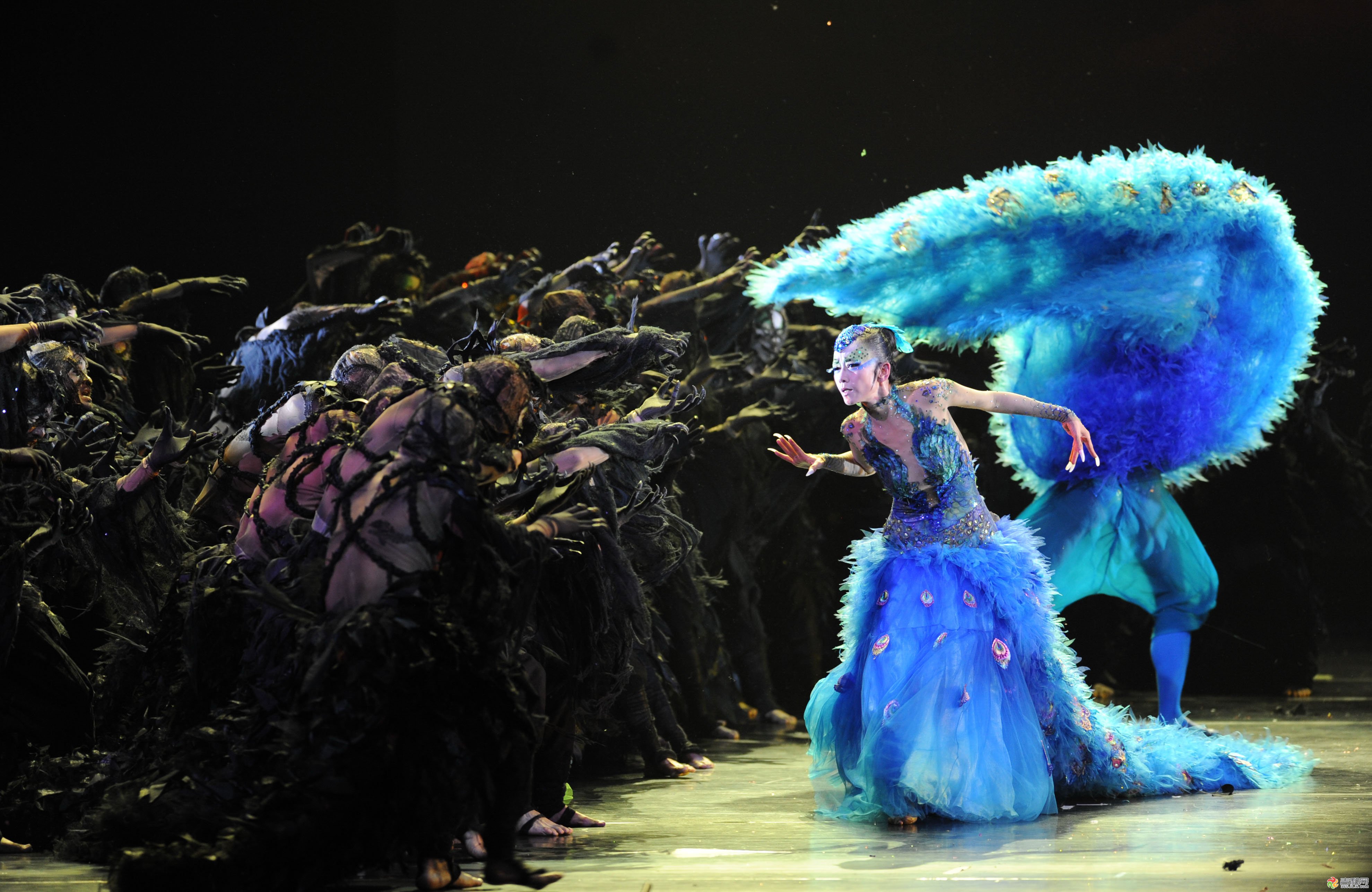
A image of the Peacock Dance play Peacock from 360 Baike. Clic[ https://p2.ssl.qhimgs1.com/t013480614b4bcc9a7c.jpg]for original source. The Peacock Dance is the soul of the Dai ethic dance art form. It is famous for its unrivalled lightness, softness and spirituality. Transcending simple animal imitation, it features a highly structured dance vocabulary comprising the “three bends” (smooth bending of the head, chest, waist, hips, knees and ankles) and the “one smooth side” movement (smooth movement of the same side of the hands and feet), as well as the dexterous “peacock’s beak” hand shape. These elements together elevate the charm of the peacock to a high level of artistry), and the “one smooth side” movement (the same-side movement of the hands and feet), together with the dexterous “peacock’s beak” hand shape, elevate the charm of the peacock to an artistic level. Dancers can interpret the solitude and elegance of a single peacock (Single Dance), the love of two peacocks (Double Dance) and the spectacle of a hundred peacocks singing together in a group dance. Peacock dance is an essential part of important festivals such as the Water Splashing Festival, the Closed Door Festival and the Open Door Festival, as well as religious ceremonies such as the Fine Buddha Dance. It connects the mundane and the sacred, conveying reverence for the beauty of nature and the desire for harmony and tranquillity (Lu Xinyi and Lu Qian, 2023, 118).
Elephant Foot Drum Dance image from 360 Baike. Clic[ https://www.gov.cn/jrzg/images/images/1c6f6506c2380f26188202.jpg]for original source. In sharp contrast to the softness of the Peacock Dance, the Elephant Foot Drum Dance exudes masculine strength. It is a chance for Dai men to demonstrate their courage and strength. The dancers carry long drums shaped like an elephant’s legs diagonally and use their palms, fingers, elbows and heels to strike them, producing deep, thick sounds that are crisp and exciting and as fast as a hail of complex drumbeats. This drumming is the soul of the dance and provides an emotional release. Whether a solo dancer is showing the majesty and power of an elephant, pairs of dancers are competing in a drumming contest, or a group is performing a neat and shocking dance, all of these performances reflect the bravery and resilience of Dai men, as well as their respect for life's vitality (Liu Jiabao and Yu Rui, 2021, 90).

The Gaguang Dance is a celebration of life. “Gaguang” means dancing around a drum and centers on the spontaneous joy of universal participation. During celebrations such as the Water Festival, men, women and children gather in a circle. Among the lively rhythms of elephant-footed drums, brightly lit fife gongs and other percussion instruments, people perform simple yet infectious steps — moving in and out, squatting and stepping — with their bodies swinging naturally. Although the movements are simple, when the crowd dances together to the unified, powerful drumbeat, the pure, collective joy that erupts instantly is extremely infectious. The Gaguang Dance vividly embodies the Dai people's hospitality, optimism and open-mindedness, as well as their heartfelt appreciation of communal harmony and unity (Huibo, 2024, 66).
The Dai ethic dance has a long historical imprint, with its origins stretching far back in time. The Peacock Dance has its roots in ancient beliefs (the peacock is considered to be a divine creature) and the veneration of natural beauty. As early as 120 AD, records exist of the Dai ancestors performing music for the Han Dynasty (Lu Xinyi and Lu Qian, 2023). In contrast, the Elephant Foot Drum Dance is closely linked to tales of strength (e.g. a young man beheading a dragon by mimicking an elephant's gait to create a drum in celebration of his triumph) and the Dai people's long-standing tradition of capturing, taming, and honouring elephants (Liu Jiabao and Yu Rui, 2021, 90). The Ga Guang dance has its roots in daily labour and community life, with the spontaneous dances performed in fields or to celebrate a good harvest gradually becoming standardised. The Dai ethic dance is a profound form of cultural expression and spiritual sustenance. The Peacock Dance expresses reverence for nature and the pursuit of harmony, and it is heavily influenced by Southern Buddhist culture. The Elephant Foot Drum Dance embodies the worship of the life force and resilience symbolized by the elephant, and the rhythm of the drums conveys emotion. The Ga Guang Dance vividly embodies the collectivist spirit and interpersonal warmth of the Dai people. Dancing in a circle naturally symbolizes equality, unity, and sharing, and is a collective declaration of their cheerful and optimistic national character.
In terms of artistic expression, the Dai ethic dance has formed a unique system. The Peacock Dance is renowned for its softness and spirit, characterised by the subtle “three bends” and “one smooth side” rhythm and delicate emotional expression (Liu Jiabao and Yu Rui, 2021, 90). The Elephant's Foot Drum Dance is renowned for its fusion of power and skill, with the perfect unity of drum rhythm and challenging steps (jumps and spins) showcasing the beauty of masculinity (Lu Xinyi and Lu Qian, 2023). The Ga Guang Dance, on the other hand, is renowned for its simplicity and harmony. The resonance of the group under the unifying drumbeats creates a powerful, infectious force that reflects the wisdom of “the great way is simple”. With its unique artistic charm and profound cultural heritage, the Dai ethic dance is a vibrant addition to the world of dance. The Peacock Dance pays tribute to the spirituality of nature; the Elephant Foot Drum Dance celebrates the power of life; and the Ga Guang Dance honours community harmony. Together, they interpret the wisdom of the Dai people, their harmonious coexistence with nature, their reverence for life's vitality, and their eternal pursuit of a better life. The rhythm of life in the land of peacocks is the core symbol of Dai cultural identity, extolling the nation's immortal spiritual poetry to the world.